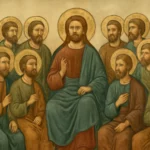
Disciple Thaddeus, known to many readers as Jude the Apostle or Judas Thaddaeus, is one of the more enigmatic figures among the Twelve Apostles of Jesus. In the biblical texts, he appears briefly, yet the tradition surrounding this apostolic figure has grown extensive over the centuries. This article explores who he was, the names by which he was known, the biblical mentions, the traditions about his ministry, and the legacy that has shaped how Christians remember the disciple Thaddeus in multiple churches and cultures. The goal is to offer a thorough, balanced portrait that reflects both scriptural grounding and historical tradition, while recognizing where later legends begin.
In early Christian lists, this disciple of Jesus appears with a variety of labels. The complexity of his identity arises from the way two or more Judas figures appear in the gospel lists, embedded within the same group of apostles. The figure most commonly associated with the epithet Lebbaeus is also called Thaddaeus, giving rise to the compound name Lebbaeus Thaddaeus in some manuscripts.
Variations of the name
Thaddeus (the simplest form in many listings)
Judas Thaddaeus (Judas with the surname Thaddaeus)
Jude or Judas the Apostle (a form that emerges in later Christian usage)
Lebbaeus (surname appearing alongside Thaddaeus in some texts)
Judas the son of James (a descriptor that appears in Luke and Acts for a different naming convention, leading to interpretive overlap with Thaddeus)
The semantic breadth of these names illustrates how a single apostolic figure could be identified in multiple ways across languages, manuscripts, and traditions. For good reason, modern readers and historians take care to distinguish between the historical person and the legendary material that grew up around him in later centuries.
Where Thaddeus Appears in Scripture
The canonical New Testament offers limited but meaningful references to this apostle. Scholarly study often centers on how Thaddaeus is named in the lists of the Twelve, and what those lists reveal about his place among the early Christian community.
Matthew 10:3 lists the apostles and includes the pair “Lebbaeus (whose surname was Thaddaeus)”. This provides a direct linkage between the surname Lebbaeus and the given Thaddaeus, establishing his identity within the group in a way that several traditions later attempted to harmonize.
Mark 3:18 likewise includes the group that comprises Simon the Cananean, Judas Iscariot, Judas the son of James, and Thaddaeus, underscoring the way in which different gospel writers navigated similar names among the Twelve.
Luke 6:16 refers to “Judas the son of James” as part of the close circle; some later harmonizations identify this Judas with Jude/Judas Thomas by way of tradition, further complicating straightforward identification.
Acts 1:13 repeats the naming of Judas son of James among the group of apostles who gather after the Resurrection narratives, highlighting his continuity as a member of the core circle beyond the Gospels.
From these canonical references, a few clear conclusions emerge. First, Thaddeus is indeed counted among the Twelve in multiple lists. Second, the name variations reflect the historical naming practices of second- and third-century Christian communities, as well as the way Latin, Syriac, Greek, and Armenian scribes rendered Hebrew/Aramaic names into vernacular forms. Finally, the connection between Jude the Apostle and Thaddaeus becomes a central thread in later tradition, as readers sought to unify the different “Judases” into a coherent set of apostolic figures.
Beyond the sparse mentions in Scripture, late antique and medieval Christian writers wove elaborate stories about the missionary career of the disciple Thaddeus. These accounts, often contained in apocryphal Acts and regional hagiographies, should be read as a mix of historical memory and local legend. They nonetheless illuminate how early churches imagined the reach and influence of this apostle.
In Edessa and Mesopotamia
A prominent strand of tradition places Thaddeus in the urban center of Edessa (modern-day Şanlıurfa in southeastern Turkey), a city notable in early Christian memory for its diverse religious culture and for connections to Syriac-speaking communities. In these accounts, he is said to have preached the gospel to local rulers and to have established Christian communities in the region. The portrayal of a mission in Edessa aligns with a broader pattern in which apostles were associated with the spread of the faith into bustling urban hubs in the Near East. It also highlights the way regional churches claimed a direct apostolic line to Jesus, a pattern that helped to anchor communal identity in the first centuries.
Armenia and the Caucasus
One of the most enduring and influential traditions about this apostle is his connection to Armenia. In Armenian Christian memory, Thaddeus is celebrated as a missionary who helped establish a church presence in the Armenian Highlands, contributing to the formation of what would become one of the oldest national Christian communities. Because Armenia adopted Christianity as a state religion in the early fourth century, the association of the disciple Thaddeus with Armenia helped to shape a national religious narrative. This tradition also intersects with the broader pattern of apostolic patronage, where a particular apostle is connected to a people or region through legendary acts of conversion, teaching, and community-building.
Later legends and the East
In several medieval and early modern sources, other regions of the East—such as Mesopotamia, Persia, and even India in some retellings—appear in stories about the spread of the Gospel by the apostolic company. While these details are often difficult to verify through canonical records, they reflect the widespread veneration of the apostle Thaddeus across various Christian communities. These legends testify to how the life and ministry of this figure became a canvas on which different Christian cultures could project their own hopes about apostolic authority, church formation, and the transmission of the Gospel message.
The Epistle of Jude and the Question of Writings
A further axis of interest concerns writings attributed to Jude, the same figure sometimes identified with Thaddeus. The Epistle of Jude in the New Testament is a brief letter addressed to ethical and doctrinal concerns facing early Christian communities. While most scholars treat the author as Jude (often understood as Jude, brother of James), Christians in some traditions have linked this Jude with the apostle Thaddeus or with the wider group of Jude-figures. This association has contributed to the sense in which the disciple Thaddeus is connected not only to missionary activity but also to early Christian exhortation and social ethics.
In addition to the Epistle of Jude, there are apocryphal acts and legends that speak of the apostolic preaching and miracles performed by the group including Thaddeus. These apocryphal texts are not part of the canonical New Testament, but they provide a window into how later communities imagined the role of the apostolic witnesses in the early church. Readers should distinguish clearly between canonical scripture and extra-canonical hagiography when engaging with these traditions.
In the framework of the early church, the apostle Thaddeus represents the model of a missionary disciple who contributes to the universal mission. Although the canonical record is brief, the subsequent biography of this apostle emphasizes several recurring themes in early Christian memory:
Faith in Jesus as the central message, proclaimed by a witness who had traveled beyond the earliest Jewish context.
Church founding and community formation in new urban centers and peripheries of the Roman world.
Pastoral guidance and exhortation through brief letters or homiletic traditions associated with his name.
Veneration across diverse Christian communities—from Eastern Orthodox and Catholic into Anglican and other traditions—demonstrating the wide reach of apostolic memory.
Ecclesial significance and patronage
The ecclesial significance of the apostle Thaddeus lies in how he helped to anchor a sense of universality for the church. By being associated with different regions and communities, this apostolic figure exemplifies the way early Christians understood the apostolic witness as something that transcends local boundaries. His memory also intersects with the broader patristic project of linking the Twelve with specific regions, churches, and testimonies to the gospel.
Patronage, Feast Days, and Cultural Legacy
Across Christian traditions, the memory of Thaddeus has been woven into a rich tapestry of veneration, each thread reflecting local piety and liturgical calendars. Important strands include:
Armenia and the Caucasus: Strong historical association with the Armenian church, contributing to the sense of a national Christian origin story.
Patronage of Armenia: He is honored as a protector and guide for Armenian Christians in some regional legends and iconography.
Patron saint of lost causes in many Roman Catholic communities under the title Saint Jude—a popular devotion invoked in desperate times.
Feast days: Dates vary by tradition—Roman Catholics commonly observe the feast of Saint Jude Thaddeus on October 28, while some Eastern churches celebrate related commemorations on dates such as June 19 or other liturgical days, depending on local calendars.
Iconography and art: In Christian art, this apostle is depicted in various ways—sometimes holding a Gospel, a staff, a quill, or a martyr’s sign—reflecting the diverse traditions that seek to visualize his role as a witness to the gospel.
The broad spectrum of his veneration demonstrates how the memory of the apostle Thaddeus has resonated in different Christian communities. This global footprint illustrates the early church’s impulse to recognize and honor those who bore witness to Jesus in far-flung regions.
Iconography, Devotion, and How the Apostle Is Remembered Today
The contemporary remembrance of the disciple Thaddeus in art and liturgy reflects the ongoing desire to connect believers with the apostolic witness. Different Christian traditions emphasize various aspects of his character:
In some icons, he is shown beside the other apostles, as a symbol of communal witness to the gospel.
In Marian and apostolic art cycles, he may be linked to scenes of preaching in urban centers and to the formation of early Christian communities.
In commemorations, sermons about Jude Thaddeus often highlight the virtue of steadfast faith in difficult times, tying the memory of the apostle to the hopeful appeal for divine intervention and perseverance.
For researchers and lay readers alike, it is important to separate canonical evidence from legendary elaboration while appreciating how both contribute to a living tradition. The enduring appeal of Thaddeus lies in his role as a bridge figure—someone who represents the expansion of the early church beyond its original borders and into a broader, more diverse world.
Why the Disciple Thaddeus Still Matters
Even though the biblical record is concise, the significance of the apostle Thaddeus continues to be felt in several enduring directions:
Ecclesial identity: His memory helps illustrate the early church’s self-understanding as a community with a universal vocation.
Regional legacies: The Armenian and Edessan associations show how apostolic memory reinforced local Christian cultures and histories.
Pastoral consolation: In Catholic devotion, the association of Saint Jude with difficult cases demonstrates how apostolic memory can offer practical spiritual solace to believers facing hardship.
Historical nuance: The multiplicity of names highlights the complexities of early Christian transmission and helps modern readers appreciate how sources developed over time.
In summary, the disciple Thaddeus is a figure whose minimal canonical footprint paradoxically invites rich exploration. His presence in the gospels, together with the abundance of later tradition, offers a window into how early Christians understood apostolic authority, mission, and the global reach of the gospel.
Key Takeaways
The figure is one of the Twelve Apostles and appears with several names in the biblical lists, including Thaddaeus, Lebbaeus, and Judas the son of James.
Scriptural mentions place him in the company of the early followers but do not provide extensive biographical detail, which left room for later tradition to fill in the gaps.
Traditions have placed this apostle in diverse regions—Edessa, Armenia, and the broader Near East—where he is credited with preaching, teaching, and helping to establish Christian communities.
He is linked to the Epistle of Jude and to later apocryphal acts, which have shaped devotional and artistic memory though they sit outside the canonical text.
In many Western Christian devotions, Saint Jude (the same figure) is famed as the patron of lost causes, a title that has made him a familiar figure in popular prayer life.
For readers seeking a deeper understanding, this article encourages consulting both canonical passages and credible historical summaries. The life of Thaddeus is a vivid reminder that the early Christian movement was both rooted in the eyewitness testimony of the Twelve and continually shaped by the stories and loyalties of countless communities who preserved their memories through liturgy, art, and local tradition.
If you would like, I can provide a glossary of terms mentioned in this article, a short bibliography of both canonical and apocryphal sources, or a halal-friendly reading list (for educational use) that includes primary sources and reputable secondary scholarship about Thaddeus and the other apostles.