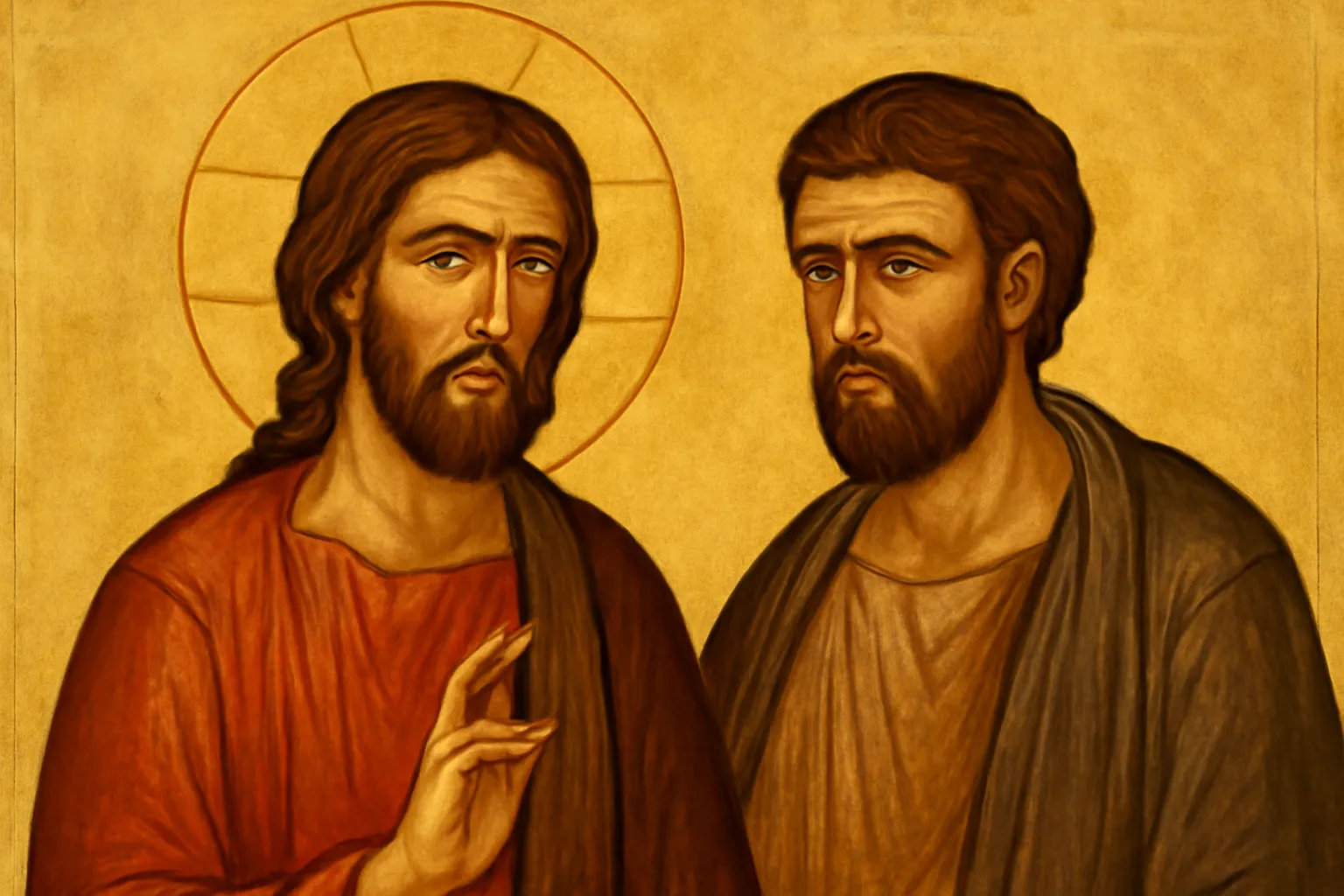
Did Jesus have a brother? This question sits at the crossroads of biblical interpretation, early Christian history, and theological reflection. The answer is not as simple as a single line, because it depends on how one reads the biblical text, what one means by family terminology, and which historical traditions are given priority. In this article, we explore the question through three lenses: biblical evidence, historical context, and theological debate. We will look carefully at what the New Testament says, how ancient readers would have understood kinship terms, and how different Christian traditions have interpreted the evidence over the centuries.
From the pages of the New Testament, several passages mention brothers and sisters of Jesus. The Greek word commonly translated as “brother” is adelphos, which can denote a literal brother, a half-brother, or more broadly a close kinsman depending on context. This linguistic nuance matters for understanding the threads of this discussion.
Key biblical references typically cited in this debate include:
Matthew 13:55-56 — “Is not this the carpenter’s son? Is not his mother called Mary? And are not his brothers James and Joses and Simon and Judas? And are not his sisters here with us?”
Mark 6:3 — “Is not this the carpenter, the son of Mary, and the brother of James and Joses and Judas and Simon?” And are not his sisters here with us?
John 2:12 — “After this he went down to Capernaum, with his mother and his brothers and his disciples.”
Acts 1:14 — “All these with one accord were devoting themselves to prayer, together with the women, and Mary the mother of Jesus, and with his brothers.”
Galatians 1:19 — Paul notes that he did not see another of the apostles except James the brother of the Lord.
From these passages, several interpretive options emerge. Some readers emphasize the explicit naming of brothers of Jesus and understand adelphos in a straightforward, biological sense. Others point out that adelphos can be used in broader ways, including extended kin or close associates, and that the word choice could reflect cultural usage rather than a strict biological relationship in every instance.
Additionally, there are important contextual cues. The parallel lists of “brothers” and “sisters” alongside Jesus’s mother Mary in Mark and Matthew suggest a larger household of kin associated with Jesus. In Acts 1:14, the presence of Jesus’s “brothers” together with Mary after the Resurrection is sometimes viewed as evidence that these individuals were known by the early church as part of Jesus’s nuclear or extended family. Some scholars argue that the term brothers of Jesus may indicate step-siblings (children of Joseph from a previous marriage), half-brothers (shared father or mother), or even cousins in certain cultural contexts. The text itself does not settle such questions with a single, explicit genealogical note.
When readers search for a definitive answer to did Jesus have a brother in a strictly biological sense, they often encounter disagreement that rests on interpretation of words, culture, and manuscript history. Some modern translations maintain the simple reading that Jesus had biblical brothers, while others stress the possibility that these figures were related in other ways or that the vocabulary reflects broader kinship terms common in the ancient world. The phrase “Did Jesus have a brother?” therefore becomes not merely a question of names, but of how to read kinship language in sacred texts and how to understand the family of Jesus within the early Christian movement.
In sum, the biblical evidence for Jesus’s brothers is explicit in several passages, yet the precise nature of that relationship—literal siblings, half-siblings, cousins, or close relatives—remains a matter of interpretation. The discussion typically centers on two broader lines of reasoning: linguistic usage in adelphos and the broader theological implications tied to the Virgin Birth and Mary’s perpetual virginity, which we will explore in subsequent sections.
Historical Context and Cultural Norms
To approach the question with historical sobriety, it helps to situate kinship terms and family structure within first-century Jewish and Greco-Roman society. In the ancient world, family identity could be shaped by a range of factors—bloodline, legal status, household arrangements, and social expectations. The use of words for “brother” and “sister” often extended beyond strict genetic relationships, and early Christians inherited a linguistic and cultural environment that sometimes blurred the lines between biological kin and spiritual kin.
Adelphos and related terms appear in multiple senses in the New Testament. In many Jewish and early Christian circles, adelphos could refer to:
Biological brothers and sisters.
Step-siblings or half-siblings (sharing one parent but not both).
Full or partial cousins, depending on regional usage and social conventions.
The phrase “brothers of Jesus” is thus not automatically a decisive marker of a specific familial arrangement without additional context.
Historical readers would also have considered Mary’s status and the missionary context of Jesus’s early followers. For some communities, Mary’s perpetual virginity (the belief that Mary remained a virgin for life) would have oriented their interpretation toward non-kinship explanations for the brothers’ presence. For others, particularly in later Reformation debates, the clearest reading often presses toward literal siblings. The historical conversation thus reflects a wider spectrum of expectations about integrity of doctrine, family structure, and the way sacred authors use kinship language to describe Jesus’s family network.
Theological Debate and Interpretive Traditions
Across Christian traditions, the question did Jesus have a brother has fed living theological questions, especially around the figure of Mary and the nature of Jesus’s family. Each tradition tends to emphasize certain doctrinal commitments, which shape how they interpret biblical passages and what they allow as possible explanations.
Roman Catholic and Marian Tradition
The Roman Catholic view has traditionally articulated the doctrine of Mary’s perpetual virginity (the belief that Mary remained a virgin before, during, and after the birth of Jesus). In this framework, the term brothers is often read as step-siblings or as the children of Joseph from a previous marriage, which would preserve Mary’s virginity while still acknowledging Jesus’s family in a broader sense.
Another possible reading is that the references to Jesus’s brothers might denote cousins or close associates. Some theologians suggest that the early Christian community used kinship language in ways that do not require strict genealogical interpretation.
Overall, these considerations lead to a nuanced conclusion: the brothers of Jesus in Scripture are acknowledged, but the precise biological status remains a matter of doctrinal interpretation rather than a categorical statement in the text itself.
Protestant and Evangelical Perspectives
Many Protestant traditions approach the issue with a default assumption of biological siblings unless there is explicit textual or historical reason to think otherwise. In these readings, the brothers of Jesus—James, Joses (often rendered Joseph), Simon, and Judas—are taken as literal brothers born to Mary and Joseph after Jesus’ birth.
Galatians 1:19 is sometimes cited to emphasize that James is recognized as “the brother of the Lord,” which supports a literal brotherly relationship in many Protestant readings.
Nevertheless, some modern Protestants also entertain the possibility of different kinship configurations (such as cousins) when the context suggests it, preserving a respectful approach to Mary’s virginity while acknowledging early references to siblings.
Eastern Orthodox Perspective
The Eastern Orthodox tradition leans into Mary’s perpetual virginity as well, though with slightly different nuances in language and emphasis. In many Orthodox writings, the figure of James is treated as the Brother of the Lord, but with the understanding that the Virgin Mary preserves a unique status that informs how one reads the familial terms in the gospel narratives.
Thus, the interpretation often balances the presence of Jesus’s brothers in the biblical text with a robust Marian doctrine, arguing that the language of adelphos may point to kinship within the household of Mary and Joseph while not necessarily contradicting Mary’s vow of virginity.
Key Biblical Passages and In-Depth Analysis
The following passages are frequently reevaluated by scholars and theologians when assessing the question, “Did Jesus have a brother?” Each passage can be read in light of linguistic nuance, manuscript variants, and historical context.
Matthew 13:55-56 and Mark 6:3
In both passages, Jesus’s “brothers” are named as James, Joses/Jose, Simon, and Judas, with additional unnamed sisters mentioned in Mark. These texts are often central to the discussion because they present a direct list of siblings by name. Critics of a purely biological reading point out that the term brothers may reflect broader kinship or social networks; supporters of a literal reading highlight the explicit naming and parallel structure across the two gospels.
The explicit naming of four brothers and the presence of sisters suggests a defined household structure that early readers would recognize as familial ties.
Some scholars note potential textual variants and the possibility that “brothers” may refer to close associates or leaders in the early Christian community, though the simplest read is that these were Jesus’s siblings.
The question then becomes whether these siblings are full siblings, half-siblings, or cousins; the text itself does not definitively resolve this.
John 2:12 refers to Jesus traveling with “his mother and his brothers” after the wedding at Cana. Acts 1:14 notes Mary and her “brothers” among the early believers following the Resurrection. These verses are often cited in tandem to show that Jesus’s family persisted into the post-resurrection Christian community and were active participants in the church life from the outset.
John 2:12 implies a familial inner circle that continued after Jesus’s public ministry began.
Acts 1:14 situates these brothers within the apostolic circle, underscoring their ongoing involvement in the earliest church.
Some readers infer that their presence signals a legitimate biological link, while others stress that the term brothers could still reflect a broader sense of kinship or spiritual kinship within the early community.
Galatians 1:19
Paul’s note that he saw “none of the other apostles except James the brother of the Lord” is often cited as evidence that James enjoyed a special status among Jesus’s brothers. The interpretation of this verse has two dimensions:
Interpretive emphasis on James as the brother of Jesus in a literal sense, which aligns with a biological reading of Jesus’s siblings.
Alternative readings that understand James as a prominent figure within the church who is identified by a familial title rather than a strict genealogical claim.
Scholars debate the implications of Paul’s statement for the broader question. If James is indeed the brother of Jesus in the biological sense, it strengthens the case for a textual reading that recognizes Jesus’s siblings as literal brothers and sisters. If, however, “brother” is used as a title or designation of kinship in a broader sense, the passage may be less decisive for the question of biological relationships.
Historical Evidence Beyond the Bible
As historians and theologians seek to triangulate the picture, extra-biblical sources from the early centuries of Christianity provide context for how Jesus’s family was understood in various communities. These sources do not always settle the question conclusively, but they add depth to the conversation by showing how early Christians framed the issue.
Hegesippus (as cited by Eusebius) and other early church writers occasionally mention James as a leading figure in Jerusalem, sometimes called “the brother of the Lord” or “the Jame of Jerusalem.”
Origen and Clement of Alexandria discuss the family of Jesus with reverence for Mary yet differ in how they interpret the kinship terms, reflecting the broad spectrum of early theological discussion.
Jerome (the translator of the Latin Vulgate) and subsequent Western patristic writers show a strong tendency to interpret Jesus’s brothers within the framework of Mary’s perpetual virginity, often presenting the brothers as step-siblings or cousins to preserve Marian doctrine while acknowledging scriptural references.
Across geographic regions, the way churches treated the issue varied. In some places, local traditions leaned toward strict literal readings; in others, they favored a more symbolic or titled sense of kinship.
What these extrabiblical voices reveal is not a single, unified consensus, but a consistent pattern: early Christians wrestled with the same questions, using linguistic, historical, and theological tools to interpret the texts. The diversity of early Christian opinion shows that the question “did Jesus have a brother” was never simply academic; it touched on the honor of Mary, the integrity of Jesus’s family, and the harmony between doctrine and scriptural witness.
Theological Implications for Faith, Doctrine, and Practice
The question of whether Jesus had brothers has meaningful implications for how Christians think about matters such as the Virgin Birth, Mary’s role in salvation history, and how the church understands kinship in the Body of Christ. While the question may seem highly specialized, it touches several core doctrinal trajectories:
Mary’s perpetual virginity vs. biological siblings—the debate influences how one views Mary’s role within the economy of salvation and her relationship to Jesus and the rest of Jesus’s family.
The meaning of adelphos in the New Testament—whether it should be read primarily as biological lineage, or as a broader designation that can include step-siblings, cousins, or close kin in a socio-religious context.
The status of James the brother of the Lord—whether he is to be understood as a literal brother or as a high-status figure within the early church who bore a familial title.
The broader question of historical reliability and how belief communities reconcile textual evidence with theological commitments.
For readers today, these debates illustrate a broader pattern in Christian theological reflection: difficult questions often await careful analysis of language, culture, and historical development. The way a tradition answers did Jesus have a brother can reveal how that tradition navigates the balance between doctrinal fidelity and scriptural interpretation, and how it teaches Christians to read their sacred texts with humility and care.
As you engage with this topic, here are practical ways to approach the question in a thoughtful, balanced manner:
Examine the texts in their context: Read the passages in their surrounding narratives to understand how kinship terms are used and how they relate to the broader story of Jesus’s life and ministry.
Consider linguistic nuance: Remember that adelphos does not always mean a strict, biological sibling in every ancient context. Be attentive to how kinship words function in different cultural settings.
Acknowledge diverse traditions: Recognize that different Christian traditions have arrived at different readings based on theological priorities and historical development.
Distinguish doxa from historia: Distinguish what is central doctrine (doxa) from what is historical detail (historia). A belief about Mary’s perpetual virginity is doctrinal for some traditions, and the discussion about Jesus’s brothers is often a related but distinct historical question.
The question “Did Jesus have a brother?” does not yield a single yes-or-no answer that fits every Christian tradition. The biblical data clearly present the existence of brothers and sisters of Jesus in several passages, and the historical context shows that kinship terms were used in ways that could be broader than strict biology. The theological debate that has surrounded this issue for two millennia demonstrates how interpreters weigh textual evidence against doctrinal commitments.
For contemporary readers, the most helpful approach is to recognize:
The existence of named brothers (James, Joses, Simon, Judas) in the New Testament.
The presence of Mary in early Christian life and leadership, as shown in Acts 1:14 and related passages.
That different Christian traditions have offered thoughtful, plausible readings, each grounded in sincere devotion to Scripture and to the broader Christian faith.
That the core of the question invites us to appreciate how early Christian communities navigated the interplay between family language, sacred history, and doctrinal development.
Ultimately, the question remains a fruitful lens through which to examine how the Bible speaks about family, how later readers integrated complex doctrinal commitments, and how the church, across centuries, has continued to interpret its sacred texts with care. Whether one reads did Jesus have a brother as a strict historical inquiry or as a gateway to understanding early Christian identity, the conversation reveals the richness and complexity of a faith that seeks to honor both the historical witness and the theological significance of Jesus Christ’s life and family.