Bible Reading for Beginners: How to Start Reading the Bible Daily
Starting a practice of bible reading for beginners can feel daunting at first. The Bible is a large, ancient collection of books with a variety of genres, from narrative history to poetry, prophecy to letters. Yet the core aim is simple: to encounter God’s message, to understand what it meant in its original context, and to discover how it speaks into your life today. This article is written for those who are new to Scripture and want a practical, sustainable way to read every day. We’ll cover common questions, practical steps, and ongoing habits that turn daily Bible reading into a meaningful and life-giving routine.
Why make Bible reading a daily habit?
Engaging with the Bible on a daily basis offers several benefits, especially for someone learning how to read the Bible effectively as a beginner. Here are a few reasons to establish a routine:
Consistency builds familiarity with the text, helping you notice themes, patterns, and connections you might otherwise miss.
Regular exposure to Scripture fosters spiritual growth and a growing sense of God’s presence in everyday life.
Reading daily creates a reliable time to reflect on life, ethics, and relationships through a biblical perspective.
For some, it becomes a source of comfort, guidance, and motivation for making wise choices.
As you embark on beginner Bible reading, remember that the goal is not to finish a certain number of chapters but to engage honestly with the text, to listen for what God might be saying, and to apply it in practical ways.
Getting ready: creating the right setup
Before you start a new to Bible reading journey, take a few small preparatory steps. These set you up for success and reduce common distractions.
Choose a comfortable format
Printed Bible with a notebook for jotting notes
Digital Bible app with a reading plan and daily reminders
A combination: a physical copy for quiet times and a digital version for quick reference
Set up a reliable time
Pick a time of day when you’re least likely to be interrupted. For many people, first thing in the morning or just before bed works best.
Commit to a duration that feels realistic. For beginners, even 10–15 minutes can be a meaningful start.
Use a simple routine: read, reflect, and respond.
Gather simple tools
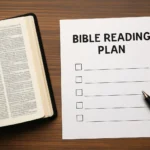
A reading plan (see below)
A notebook or journaling app to capture observations and questions
A pen or highlighter to mark verses or insights
A reliable translation that you can understand (see “Choosing a Translation”)
With these elements in place, you’ll be ready to begin bible reading for beginners with confidence rather than overwhelm.
Choosing a translation: finding the right fit for a beginner
One of the most important decisions for a new reader is selecting a Bible translation. The goal is readability and clarity so you understand what you’re reading without getting stuck on archaic language. Different translations offer different balances of accuracy, readability, and literary style. Here are a few guiding options:
Readable, modern English translations: Good for beginners who want clear language without losing meaning, such as the New International Version (NIV) or the English Standard Version (ESV) when they are in a more readable mode.
Paraphrase or easy-to-read versions: If you’re struggling with vocabulary, consider translations like the New Living Translation (NLT) or The Message for daily reading, then switch to a more literal version for study later.
Study Bibles: For beginners who want context, notes, maps, and guidance, a study Bible can be especially helpful.
Whichever you choose, aim for a translation you can read aloud, reflect on, and apply. If you’re unsure, try a few chapters in a couple of translations during the first week to see which one feels most accessible. Over time, you might keep more than one version handy for comparison or personal study.
Structure and approach: how to read as a beginner
There isn’t one right way to read the Bible. A flexible approach helps you stay engaged and prevents fatigue. Below are practical strategies tailored for beginners’ Bible reading that emphasize understanding, reflection, and practical application.
Read with a plan
Use a simple plan that guides you through a portion of Scripture each day rather than jumping randomly.
Many beginners benefit from starting with a small, fixed portion (such as a chapter or a few verses) to avoid overwhelm.
Include a variety of genres over time (narratives, psalms, wisdom literature, gospels, letters) to see how different voices communicate truth.
Observe, interpret, apply
Observe: What does the passage say? Who is involved? What is the setting?
Interpret: What does this mean in its original context? What is the author communicating about God, people, or life?
Apply: How does this verse or passage speak into your life today? What is one practical step you can take?
Ask guiding questions
What’s the main message or theme?
What does this teach me about God’s character?
What does this teach me about people or relationships?
Is there a command, promise, or example to imitate?
What’s one thing I can do in response?
Maintain a short journal
Keeping a simple journal helps you remember insights and track your growth. Consider including:
A brief summary of the passage in your own words
A list of key observations or questions
One application idea or prayer request
Structured plans for beginners: five practical options
Choosing a plan helps you stay consistent. Here are five beginner-friendly approaches to consider as you start daily Bible reading:
Option A: One-Guide Plan
Pick one book (e.g., the Gospel of John or the book of Psalms).
Read one chapter each day for a month.
Connect the themes to your life with a simple reflection.
Option B: Three-Verse Method
Read three verses each day, focusing on one key idea.
Write a single sentence summarizing the idea.
Pray or reflect on how this idea applies to your day.
Option C: Psalm-Proverb Daily Rhythm
Alternate between Psalms (poetic prayers) and Proverbs (practical wisdom) each day.
Note a principle you can apply that day or week.
Option D: Gospel Snapshot
Read a short passage from one of the Gospels (Matthew, Mark, Luke, or John).
Look for who Jesus is, what He did, and how people responded.
Record one insight about faith or discipleship.
Option E: Thematic Reading
Choose a theme (hope, mercy, faith, forgiveness, courage).
Find a few verses across different books that address that theme.
Compare how the theme is developed in different contexts.
How to stay consistent: building a habit that sticks
Consistency is the heartbeat of beginner Bible reading programs. The following practices help you maintain momentum over weeks and months:
Set a fixed time and place to read every day to anchor the habit.
Keep it short: a manageable length reduces the likelihood of skipping.
Use a reminder system (alarm, calendar notification, or buddy check-in).
Pair reading with a ritual, such as coffee in the morning or a quiet moment before bed.
Allow for flexibility: if you miss a day, return the next day without guilt.
Studying versus reading: when to study more deeply
There are times when you’ll want to go beyond daily reading and engage in deeper study. For new to Bible reading, distinguish between casual reading and intentional study. Consider the following approaches as you grow in confidence:
Study notes or a study Bible to gain historical context, authorship, and audience insights.
Commentaries and trusted resources can illuminate tricky passages, cultural background, and key terms.
Cross-referencing: compare passages that discuss similar themes to see broader biblical teaching.
Ask questions like, “What is the author’s primary message?” and “How does this point to Jesus or to life today?”
When you’re ready for deeper study, you can integrate these tools incrementally into your routine without losing the simplicity that helped you begin.
Reading the Bible with others can reinforce motivation, provide accountability, and enrich understanding. Consider these community options as part of your bible reading for beginners journey:
Join a small group or Bible study at a church or community center
Partner with a friend or family member for regular check-ins
Use online communities or discussion forums to share insights and questions
Participate in a devotional plan with others, sharing one takeaway per week
Even if you’re shy about group settings, starting with one trusted person can make a big difference in your consistency and understanding.
Common obstacles and practical solutions
Every beginner encounters challenges. Here are common hurdles and straightforward remedies for beginner Bible reading that help you stay on track:
Time pressure: Shorten the daily reading, but keep the habit. Consistency matters more than volume.
Hard-to-understand passages: Use a more approachable translation, read with a commentary, or seek a trusted explanation.
Feelings of guilt or guilt about missing days: reframe it as a new day to begin again, not a failure.
Distractions: create a quiet, dedicated space; turn off notifications; set a timer for focused reading.
Finding meaning: if a passage feels distant, ask what it reveals about God, people, or everyday life; write one concrete action you could take.
Tactics for better understanding: how to read well as a beginner
Reading the Bible with understanding is a skill you can develop. The following tactics help you move from simple reading to meaningful comprehension:
Context matters: identify the historical, cultural, and literary context to avoid misinterpretation.
Word studies: look up key terms and explore their meanings in the original languages or trusted dictionaries.
Character watch: observe how people respond to God and what their examples teach about faith and obedience.
Structure awareness: note how passages are organized—narrative progression, poetry, or argument lines.
Prayerful reading: invite God to illumine the text as you read, turning study into a conversation.
Safety nets for a sustainable practice
To preserve the health of your habit, consider these safeguards:
Revisit your goals every few weeks to ensure they’re still realistic and meaningful.
Rotate plans to keep things fresh—alternate between a narrative plan and a thematic plan.
Keep a recovery plan for holidays or busy seasons (e.g., switch to a shorter verse-per-day plan).
Sample routines you can adapt today
Here are a few ready-to-use routines that illustrate how you can structure bible reading for beginners. Feel free to adapt to your schedule and personality.
Routine 1: Morning Start
5 minutes of quiet breathing to settle the mind
10 minutes of reading one chapter from a short book (e.g., Mark, James, or Philippians)
2 minutes of journaling one insight and one practical step
Routine 2: Evening Reflection
Read a brief passage (2–3 verses) before bed
Read a short devotional note or commentary snippet for context
Pray through the passage, asking for help applying it tomorrow
Routine 3: Thematic Quick Start
Choose a theme (e.g., gratitude, patience, forgiveness)
Read two or three verses across different books that address that theme
Write one practical step you will take in the coming days
Measuring progress: what success looks like for beginners
Success in beginner Bible reading isn’t a numeric target alone. Consider both qualitative and practical indicators of progress:
You feel more comfortable navigating the text and finding passages.
You notice a growing ability to summarize what you read in your own words.
You are able to identify at least one personal application from each reading session.
You maintain a steady routine for a meaningful period (e.g., several weeks or months).
You begin to recognize how Scripture informs decisions, attitudes, or relationships.
Variations in language: phrases and SEO-friendly terms for readers
For searchability and semantic breadth, it helps to use variations of the core topic. In this article, you’ll see terms such as bible reading for beginners, beginner Bible reading, new to Bible reading, first-time Bible reading, and daily Bible reading routine. Each variation points to the same practice but broadens understanding and reach for different readers. If you’re creating content for a site, weaving these phrases naturally improves accessibility without compromising clarity.
Beyond the basics: evolving your practice over time
As you gain confidence in daily scripture reading, you’ll naturally want to deepen your practice. Here are gentle steps you can take when you’re ready:
Introduce a short study session few times a week to explore historical context and theology behind key passages.
Experiment with a two-translation comparison to sharpen understanding and appreciate nuance in wording.
Incorporate a short prayer or meditation on Scripture to connect belief and action.
Start a notebook dedicated to insights and life applications, not just verses memorized.
There are many resources designed to support beginner Bible reading. Here are a few categories and examples to consider, depending on your preference for structure and depth:
Reading plans: simple daily plans, monthly goals, or verse-a-day calendars
Study Bibles: helpful notes, timelines, and explanations of cultural background
Commentaries: accessible explanations for tricky passages
Devotional guides: reflectively paired readings and prompts
Introductory courses: short online courses or local classes on Bible literacy
When selecting resources, prioritize clarity, reliability, and alignment with your faith community’s beliefs. It’s perfectly fine to start with free online resources and a straightforward translation, then progressively explore more in-depth materials as your understanding grows.
Journaling prompts for beginners
Keeping a journal can be a powerful companion to bible reading for beginners. Here are prompts you can use after each session to deepen reflection:
What is one verse I want to memorize or recite today?
What does this passage reveal about God’s character?
What is one practical action I can take this week based on this passage?
What question do I still have after reading this?
Who can I share this insight with to encourage them?
Frequently asked questions about Bible reading for beginners
Below are quick answers to common questions beginners often ask themselves as they start their journey in daily Bible reading:
How long should I read every day? Start with 10–15 minutes and a short passage. Increase gradually as you become more comfortable.
What if I don’t understand what I’m reading? Turn to a study note, a trusted commentary for beginners, or a conversation with a friend or mentor. Reading in multiple translations can help as well.
Is it better to read large amounts or focus on a small portion? For beginners, small, focused portions with reflection and application tend to be more meaningful and sustainable than long, unfocused reading sessions.
Should I read the Bible in a year? A year-long plan can be motivating but isn’t essential. The goal is consistent engagement with Scripture, not rushing through it.
Can I still benefit from Bible reading if I’m not sure what I believe? Yes. Reading with honesty and openness can help you clarify beliefs, reveal questions, and introduce you to perspectives that can shape your faith journey.
To help you implement the ideas in this article, here is a practical checklist you can use today:
Choose a readable translation that you can easily understand.
Decide on a realistic daily reading time and place.
Select a simple reading plan, then start with a short portion (chapter or 2–3 verses).
Grab a notebook or journaling app for observations, questions, and actions.
Commit to a small routine: read, observe, interpret, apply, and record one takeaway.
Join a community or partner with someone for accountability and support.
Review your progress every few weeks and adjust the plan as needed.
embracing a lifelong journey with Scripture
Bible reading for beginners is not merely an initial step in religious practice; it is the doorway to a lifelong journey of discovering God’s voice in Scripture. By starting with a simple routine, choosing a friendly translation, and employing a practical reading plan, you set yourself up for steady growth. Remember, the aim of daily Bible reading is not to accumulate knowledge alone but to encounter God, to align your life with truth, and to respond with love and obedience. Stay patient with your pace, celebrate small wins, and embrace the learning that comes with every page you turn.
As you continue this journey, you’ll likely discover that the act of reading the Bible daily becomes less of a chore and more of a meaningful rhythm in your life. You’ll grow in clarity about your beliefs, wisdom for decisions, and compassion for others. Whether you call it beginner Bible reading, bible reading for beginners, or new to Bible reading, the core experience remains the same: God’s Word engaging your heart, shaping your mind, and guiding your steps each day. May your path be blessed with insight, patience, and a steady, hopeful cadence as you begin this lifelong practice.