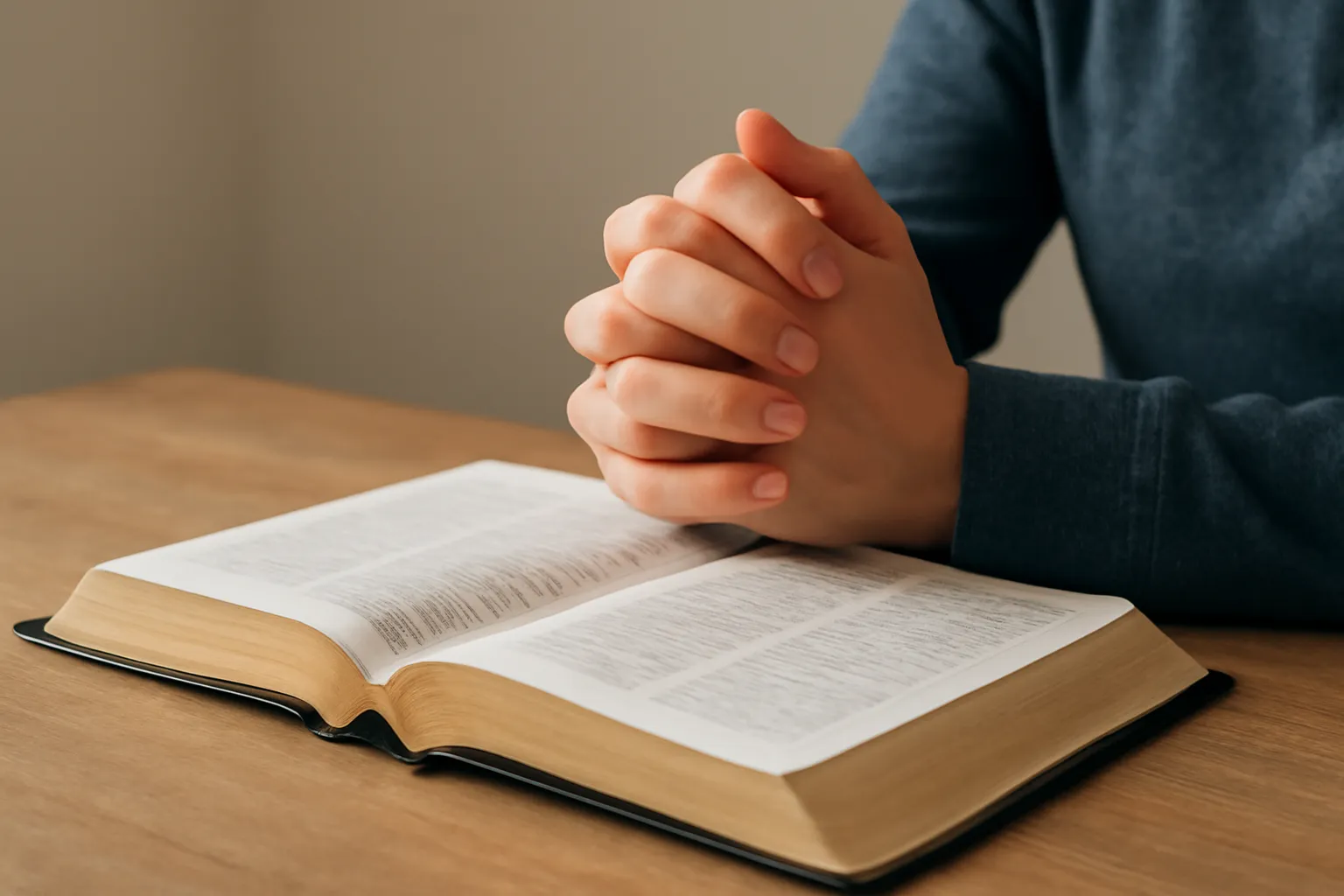
Bible Verses Before a Test: Calming Passages to Focus and Succeed offers practical guidance for students, professionals, and anyone facing a challenging exam or assessment. In the moments leading up to a test, turning to short, comforting Bible verses can help quiet nerves, center attention, and cultivate a mindset that favors clarity, confidence, and steady performance. This article gathers a broad set of verses, including calming affirmations, wisdom-oriented promises, and encouraging reminders that you can carry with you to the desk, the classroom, or the testing center.
Before a test, the brain can become overwhelmed by fear, self-doubt, and haste. Biblical verses offer more than spiritual comfort; they function as cognitive cues that prime the mind for focus, deliberate thinking, and steady breathing. When you recite or reflect on these passages, you may experience:
Reduced anxiety through the reminder that you are not alone and that there is a source of steady strength beyond yourself.
Increased attention as verses anchor your thoughts in a simple, meaningful message rather than spiraling worries.
Improved memory through repetition and deliberate contemplation of guiding truths.
Better decision-making under pressure, since verses often emphasize wisdom, patience, and proper perspective.
Calming verses to recenter your mind before a test
Verses that invite peace and courage
Isaiah 41:10 (KJV): “Fear thou not; for I am with thee: be not dismayed; for I am thy God: I will strengthen thee; yea, I will help thee; yea, I will uphold thee with the right hand of my righteousness.” Paraphrase: God is with you, so you can face the test without fear; your strength comes from Him.
Be still and know (Psalm 46:10, KJV): “Be still, and know that I am God.” Application: Pause, breathe, and let your sense of purpose return as you remember who sustains you.
Psalm 27:14 (KJV): “Wait on the LORD: be of good courage, and he shall strengthen thine heart: wait, I say, on the LORD.” Takeaway: Courage grows as you deliberately lean into calm trust.
Psalm 34:4 (KJV): “I sought the LORD, and he heard me, and delivered me from all my fears.” Note: Confidence grows when you acknowledge your fears and invite help.
Verses about peace in the moment and steady focus
Psalm 4:8 (KJV): “I will both lay me down in peace, and sleep: for thou, LORD, makest me to dwell in safety.” Practical use: A short line to recite when you feel unsettled before bed or during a late-night study session.
Philippians 4:6-7 (KJV): “Be careful for nothing; but in every thing by prayer and supplication with thanksgiving let your requests be made known unto God. And the peace of God, which passeth all understanding, shall keep your hearts and minds through Christ Jesus.” Impact: Replace anxiety with prayerful focus and receive peace that guards your mind.
Psalm 119:105 (KJV): “Thy word is a lamp unto my feet, and a light unto my path.” Use: Visualize the verse as a guiding light for the steps you take with the exam question paper in front.
Psalm 119:11 (KJV): “Thy word have I hid in mine heart, that I might not sin against thee.” Application: Commit key concepts to memory in a way that aligns with values and goals for ethical test-taking.
Proverbs 3:5-6 (KJV): “Trust in the LORD with all thine heart; and lean not unto thine own understanding. In all thy ways acknowledge him, and he shall direct thy paths.” Focus: Let your study plan be anchored in trust and guidance, not just self-reliance.
Romans 15:13 (KJV): “Now the God of hope fill you with all joy and peace in believing, that ye may abound in hope, through the power of the Holy Ghost.” Encouragement: A hopeful mindset can sustain you through long hours of preparation.
2 Timothy 3:16-17 (KJV): “All scripture is given by inspiration of God, and is profitable for doctrine, for reproof, for correction, for instruction in righteousness: That the man of God may be perfect, thoroughly furnished unto all good works.” Implication: The study of the Bible can be a model for thorough preparation and rigorous thinking.
Joshua 1:8 (KJV): “This book of the law shall not depart out of thy mouth, but thou shalt meditate therein day and night, that thou mayest observe to do according to all that is written therein: for then thou shalt make thy way prosperous, and then thou shalt have good success.” Practice: Develop a simple, repeatable ritual of reading, meditating, and applying.
Verses about wisdom, understanding, and guidance
Guidance for decision-making during a test
James 1:5 (KJV): “If any of you lack wisdom, let him ask of God, that giveth to all men liberally, and upbraideth not; and it shall be given him.” Usage: When confronted with a tricky question, pause, ask for wisdom, and proceed with a thoughtful approach.
Proverbs 16:3 (KJV): “Commit thy works unto the LORD, and thy thoughts shall be established.” Application: Begin with a clear plan and let your thinking align with purpose.
Colossians 3:2 (KJV): “Set your affection on things above, not on things on the earth.” Outlook: Keep priorities in view and avoid getting lost in petty distractions.
Psalm 121:1-2 (KJV): “I will lift up mine eyes unto the hills, from whence cometh my help. My help cometh from the LORD, which made heaven and earth.” Perspective: Remember that help comes from beyond yourself and your environment.
Incorporating Bible verses into a pre-test routine can be effective and personal. The following practical ideas help you translate verses into daily, actionable practice.
Choose a small set of verses that resonate with you for the current exam or course material. Focus on 3–6 core passages to avoid overload.
Create one-page cards or a note on your phone with the verses and a brief reflection on how they apply to the test. This makes it easy to reference in the moment.
Practice recitation aloud or silently. Repetition strengthens your memory and can calm your breathing at the same time.
Combine prayer or mindfulness with the verses. A short moment of quiet, followed by a verse, can anchor your thoughts before you begin.
Write the verses on your desk or on a sticky note near your paper. The visual cue reinforces the message as you work through the exam.
Pair verses with breathwork—inhale on a phrase, exhale with a calming word or intention (for example, inhale “calm,” exhale “focus”).
Here is a flexible, student-friendly ritual you can adapt. It is designed to take about 10–20 minutes and to bridge preparation with performance.
Quiet the environment: Sit in a comfortable, upright position. Turn off notifications and take two slow, deep breaths.
Review core verses: Read or recite 3–5 verses you have chosen. Focus on the meanings rather than trying to memorize every word at once.
Apply the verses to your situation: In a short sentence, describe how each verse guides your approach to the test (e.g., «This verse reminds me to stay calm and recall key information under pressure»).
Plan your time: Scan the exam outline, set a rough timetable for sections, and determine where you’ll pause to recite a verse if anxiety rises during the test.
Close with gratitude: End by thanking God or the Source you believe in for preparation, opportunity, and the chance to perform to the best of your ability.
Variations and variations of verses for semantic breadth
To give semantic breadth and to help you connect with different facets of the same truth, consider paraphrasing or reflecting on the same verse in different ways. Here are some examples:
Joshua 1:9 variation: “I’ve commanded you to be brave; not to fear, for God is with you wherever you go.”
Philippians 4:6-7 variation: “Bring everything to God with prayer, and let God’s peace guard your mind as you face the test.”
Psalm 119:105 variation: “Let Scripture guide your steps and illuminate the path you take through the questions.”
Proverbs 3:5-6 variation: “Trust deeply in God, not your own plan alone; invite Him into every decision about the test.”
Psalm 46:10 variation: “Pause, breathe, and remember that God governs the world and your moment.”
Common questions and practical considerations
Are these verses magical or guarantee success?
Verses themselves do not guarantee a perfect score, but they offer mental grounding, emotional regulation, and a framework for deliberate thinking. The goal is to reduce distractions, increase focus, and align your actions with a constructive, calm pace. In that sense, they can contribute to better performance by shaping how you approach the test rather than simply how you perform under pressure.
Begin by identifying the core message of the verse (for example, “do not fear,” “trust God,” “seek wisdom,” or “God is with you”). Then reflect on a concrete effect in the test setting, such as “when I read a difficult item, I will pause and breathe” or “I will take two minutes to outline my approach before answering.”
Different exam contexts may call for slightly different emphases. Here are quick micro-rituals you can adapt to fit:
Multiple-choice heavy exam: Focus on calm, clarity, and careful reading. Use verses like Psalm 46:10 and Psalm 119:105 as quick anchors.
Essay-based test: Emphasize wisdom and guidance. Pair verses like James 1:5 and Proverbs 3:5-6 with a brief plan to outline your answer before writing.
Timed, high-pressure test: Rely on peace and confidence from Philippians 4:6-7 and Joshua 1:9 to maintain a steady pace and prevent rushing mistakes.
turning verses into a reliable study companion
In the final analysis, biblical verses before a test function as tools for mental training, not as shortcuts. They help cultivate a state of calm readiness, a clear sense of purpose, and a proactive approach to challenge. By selecting a few verses that resonate with you, integrating them into practical routines, and using variations to reinforce their meaning, you create a personal toolkit for approaching tests with dignity, focus, and determination.
Whether you are preparing for a high-stakes final, a standardized assessment, or a routine quiz, these calming passages can become a steady companion. They remind you that you are not alone, that wisdom is available, and that you can move forward with steadiness and hope.
As you close this article, consider selecting your own 3–6 favorite verses from the list above (or from a public-domain Bible translation you prefer) and begin a simple routine tonight. In the days ahead, you may find that the practice of turning to these verses before you test becomes a natural habit—one that not only improves test performance but also reshapes your approach to challenges in other areas of life.