Why a Bible Verse on Faith Without Works Is Dead Matters Today
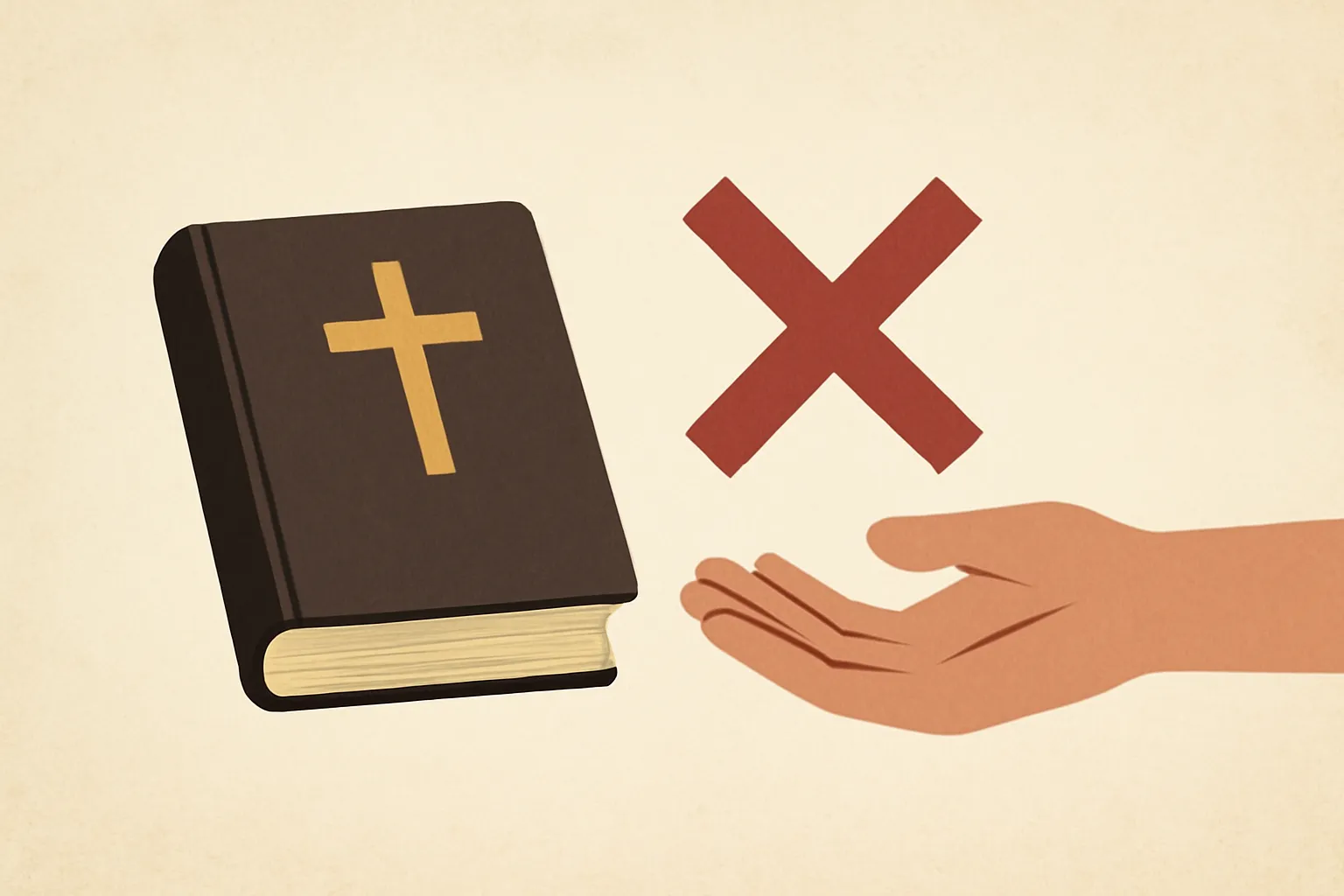
The phrase “faith without works is dead” has become one of the most discussed and debated lines in Christian thought. It sits at the intersection of belief and behavior, conviction and action, doctrine and daily life. In many English translations, the crisp, paradoxical dictum appears as a succinct challenge: can belief that does not translate into action truly be living faith? For readers who seek to understand the Bible, this question is especially tied to James 2:17 and its surrounding passage.
Throughout church history, scholars and laypeople have wrestled with how this verse relates to other teachings about faith, including the famous refrain that “justification is by faith” in some of Paul’s letters. This article opens up the key ideas, definitions, and implications of the verse commonly described as a bible verse on faith without works being dead, and it offers a careful, balanced look at how this can be understood in light of scripture as a whole. We will walk through its context, its examples (notably Abraham and Rahab), and its practical significance for life, worship, and social action.
What James 2:17 Says and Why It Is Controversial
The core statement appears in James 2:17 in the King James Version:
Even so faith, if it hath not works, is dead, being alone.
Different translations render this idea with small but meaningful differences, such as
“So faith by itself, if it does not have works, is dead”
(ESV) or
“Faith by itself, if it does not have works, is dead”
(NIV). The central claim is straightforward on the surface: faith that does not produce deeds is not truly alive.
To understand why this statement is both essential and controversial, we need to place it within the broader context of the Epistle of James. James addresses a community that is concerned with the sincerity of belief and the authenticity of discipleship. The book challenges a purely intellectual assent to God without the visible expression of that belief through action. The verse immediately follows a pair of questions and examples aimed at exposing a gap between what people say they believe and what their lives demonstrate.
Context and Meaning: Dead Faith versus Living Faith
Historical and Literary Context
The letter of James is often categorized as a practical exhortation about living out faith. In its early chapters, James emphasizes the relationship between belief and behavior. When James 2:14 asks, “What good is it, my brothers and sisters, if someone claims to have faith but has no deeds?”, it sets up the discussion that culminates in the statement about dead faith. The language is purposely provocative: if faith remains only in the mind and on the lips, it may fail to meet the demands of real life.
This approach contrasts with a common misunderstanding that faith and works are opposites or that they are in tension. Instead, James presents them as two aspects of the same life: genuine faith should produce tangible outcomes—kindness, justice, mercy, obedience to God’s ways, and acts of service toward others.
Key Distinctions: Intellectual Belief, Confession, and Action
Intellectual belief or assent to a proposition is not identical to a living, active trust in God.
Confession of faith without accompanying deeds can become hollow if it does not lead to transformation.
Living faith is faith that expresses itself in concrete actions—acts of mercy, generosity, justice, and faithful obedience.
The Theological Implications: How Faith and Works Relate
Faith That Is Alive and Active
A core implication of James 2:17 is that faith without works is dead because faith, when it is genuine, naturally leads to a transformed life. The presence of God’s Spirit is reflected in how a person loves others, serves the vulnerable, and keeps God’s commands. In this sense, works are not a means of earning salvation but the natural outcome of a salvation that has already begun in the heart.
Justification: By Faith and By Works
A frequent point of discussion is the verse that follows: James 2:24, which says, You see that a person is justified by works and not by faith alone. This has led to debate with other Scriptures that say justification is by faith apart from works (e.g., Romans 3:28). The common reconciled understanding is that justification in James emphasizes the demonstration of faith in the community and in daily life, while Paul’s teaching underscores the foundation of salvation as God’s gracious gift received through faith. Taken together, they portray a holistic picture: salvation is by faith, but true faith is never alone; it produces a life of obedience and love.
Biblical Examples: Abraham, Rahab, and Concrete Demonstrations of Faith
Abraham: A Faith That Was Active
The narrative of Abraham is frequently cited as a primary example of a living faith. James recalls Abraham’s willingness to offer his son Isaac as a test of trust, which demonstrated the fusion of belief and action. The command to sacrifice Isaac was not merely a test of obedience; it was the moment when Abraham’s faith manifested through a concrete action that reflected trust in God’s promises, even when the future seemed uncertain.
Rahab: A Candid Example of Faith in Action
Rahab the Harlot (Joshua 2) is cited by James as another model of living faith. Rahab’s actions—protecting the Israelite spies and aiding their escape—were rooted in a faith that believed God’s power and sovereignty. Her deeds publicly manifested her trust, and that visible trust was counted as righteousness. This example underscores that faith can be found in unexpected places, and it should be measured by the impact it has on courage, hospitality, and fidelity to God’s purposes.
Practical Implications: What This Means for Believers Today
Faith in Action: Daily Practices That Reflect Living Faith
If faith without works is dead, then authentic faith should translate into concrete practices. Here are some practical categories:
Charity and mercy: Providing for those in need, supporting the vulnerable, and sharing resources with generosity.
Justice and advocacy: Pursuing fairness, standing with the marginalized, and seeking to address systemic injustices that harm people.
Prayer and spiritual discipline: Cultivating a relationship with God that leads to humility, patience, and a posture of service.
Community life: Encouraging one another, nurturing accountability, and practicing hospitality.
Ethical living: Aligning choices with God’s will in areas like honesty, integrity, and compassion.
Living Faith in a Plural World
The question of how faith translates into action is especially relevant in diverse societies where people hold differing beliefs. The principle of living faith invites believers to engage respectfully with others while clearly embodying their convictions through acts of love and service. It also invites humility: actions should be measured by their impact on people’s well-being and by their alignment with Scripture, not by self-righteous appearances.
Common Misunderstandings and How to Avoid Them
Misunderstanding 1: Works Earn Salvation
A common pitfall is to interpret James 2:17 as a formula for earning salvation. To be clear: most orthodox Christian traditions teach that salvation is by God’s grace through faith, not by human merit. The verse, however, emphasizes that genuine faith will produce deeds as evidence of trust in God. So the issue is not a human scorecard but the coherence between belief and behavior.
Misunderstanding 2: Works Are Merely Social Service
While charitable acts are a crucial part of living faith, the New Testament links deeds to a broader obedience—loving neighbor, honoring God, and pursuing righteousness. Deeds are not merely social service in isolation; they are a fruit of a transformed heart, oriented toward God’s kingdom and the good of others.
Misunderstanding 3: Faith and Works Are Opposed to Grace
Reading James alongside Paul can create the impression of a rivalry. In reality, a consistent reading shows that grace and response are not contradictory. Grace invites trust; trust produces obedience. Thus, a robust faith that is truly confident in God’s grace will naturally produce works—because love for God and neighbor compels action.
Variations of the Phrase Across Translations
To broaden semantic breadth, here are several widely read renderings of the central idea that faith without works is dead, with a note on how wording shifts nuance:
“Even so faith, if it hath not works, is dead, being alone.” (KJV)
“So faith by itself, if it has no works, is dead.” (ESV)
“Faith by itself, if it does not have works, is dead.” (NIV)
“Faith by itself, if it does not have good deeds, is dead.” (NRSV alternative wording)
“Faith without deeds is dead.” (Concise paraphrase common in sermons)
Each rendering highlights a slightly different emphasis: the presence or absence of works, the completeness of faith, and whether alone or by itself conveys the intended meaning. The underlying message remains consistent: authentic faith is inseparable from action that reflects God’s will.
How to Read James 2:17 in Light of the Whole Bible
Scriptural Coherence: Old and New Testaments
In the broader biblical narrative, the call to love God with all your heart and to love your neighbor as yourself (the great commandment) is foundational. The instruction to care for the poor, the orphan, and the oppressed recurs throughout both testaments. A helpful approach is to read James 2:17 as a reminder that the true believer’s doctrine must become a life of obedient practice. This is not a rejection of faith as the means of salvation; rather, it is a call to trust that real faith becomes visible in deeds that honor God and bless people.
Practical Theological Balance
Theologically, this passage invites a balance: trust in God’s grace and devotion in daily living. A robust faith is not merely a mental assent or a spiritual emotion; it is an orientation toward God that reshapes motives, decisions, and relationships. When believers live out what they profess, they testify to the reality of the gospel in tangible ways.
The admonition that faith without works is dead is not a condemnation of belief itself but a declaration about the nature of true faith. A faith that is rightly aligned with God’s will cannot remain inert; it is compelled to love, serve, and obey. By examining James 2:17 in its literary context, recognizing the examples of Abraham and Rahab, and reflecting on its practical implications for justice, mercy, and daily conduct, readers can cultivate a more integrated faith—one that is both thoroughly biblical and deeply transformative.
Closing Thought: Living Faith as a Witness
In a world where beliefs are often private and actions publicly visible, a living faith demonstrates the gospel’s reality. It shows that faith is not merely a creed to be recited but a trust to be lived out. When the church and its members embody the convergence of belief and deed, they bear witness to the God who not only speaks truth but also acts in history to redeem and renew.