Creation Children’s Bible Story: A Kid-Friendly Guide to God’s Creation
What this kid-friendly guide aims to do
This article presents the Creation narrative in a way that is accessible to children, using simple language, warm imagery, and practical activities. By focusing on the seven days of creation, the story unfolds in a rhythm that young readers can remember. Throughout, we emphasize core ideas such as God’s power, creative purpose, care for the world, and the idea of rest as part of a healthy life. While many family-friendly retellings use familiar phrases, this guide also invites kids to engage with the story through questions, games, and hands-on exploration. We use variations of the creation children’s bible story to broaden understanding and ensure that families with different backgrounds can explore the tale together.
The Seven Days of Creation: A Day-by-Day Guide for Kids
In many child-focused retellings, the Creation story is described as seven days of activity. Each day has a focus and a simple rhythm that children can remember. Below is an illustrated, kid-friendly overview that can be used as a teaching outline, a bedtime story, or a Sunday-school lesson. For each day, you’ll find a short summary, key images to imagine, and questions to spark discussion.
Day 1: Light and the Separation of Day from Night
On the first day, God speaks and brings light into existence, separating light from darkness. The world shifts from night to day as God creates a clear rhythm for life. This day teaches children that God is powerful, that words have the power to create, and that light brings safety and clarity.
Key image: a bright sky turning from darkness to light.
Possible discussion prompt: How does light help you feel safe and awake?
Day 2: Sky and Waters, Separating Waters Above and Below
The second day introduces the sky and the way the earth sits between waters above and below. Children can imagine a vast ceiling of blue and clouds, with space for birds to fly and wind to blow. This day highlights order in creation—God organizes the world so living things can thrive.
Key image: a broad expanse of sky and air.
Discussion idea: Why do you think the sky needs to be separate from the waters below?
On the third day, God gathers the waters so that dry land appears, followed by an abundance of plants, trees, and fruit. This day introduces the idea that the world is full of life that sustains us. It’s a wonderful moment to discuss how plants provide food and shelter and how we can care for them.
Key image: green hills and fields full of vegetation.
Question to ponder: What is your favorite plant, and why does it matter to the world?
Day four adds the sun, the moon, and the stars to light the day and mark the seasons, days, and years. Kids learn about time and the way natural cycles help living things live in harmony with the world.
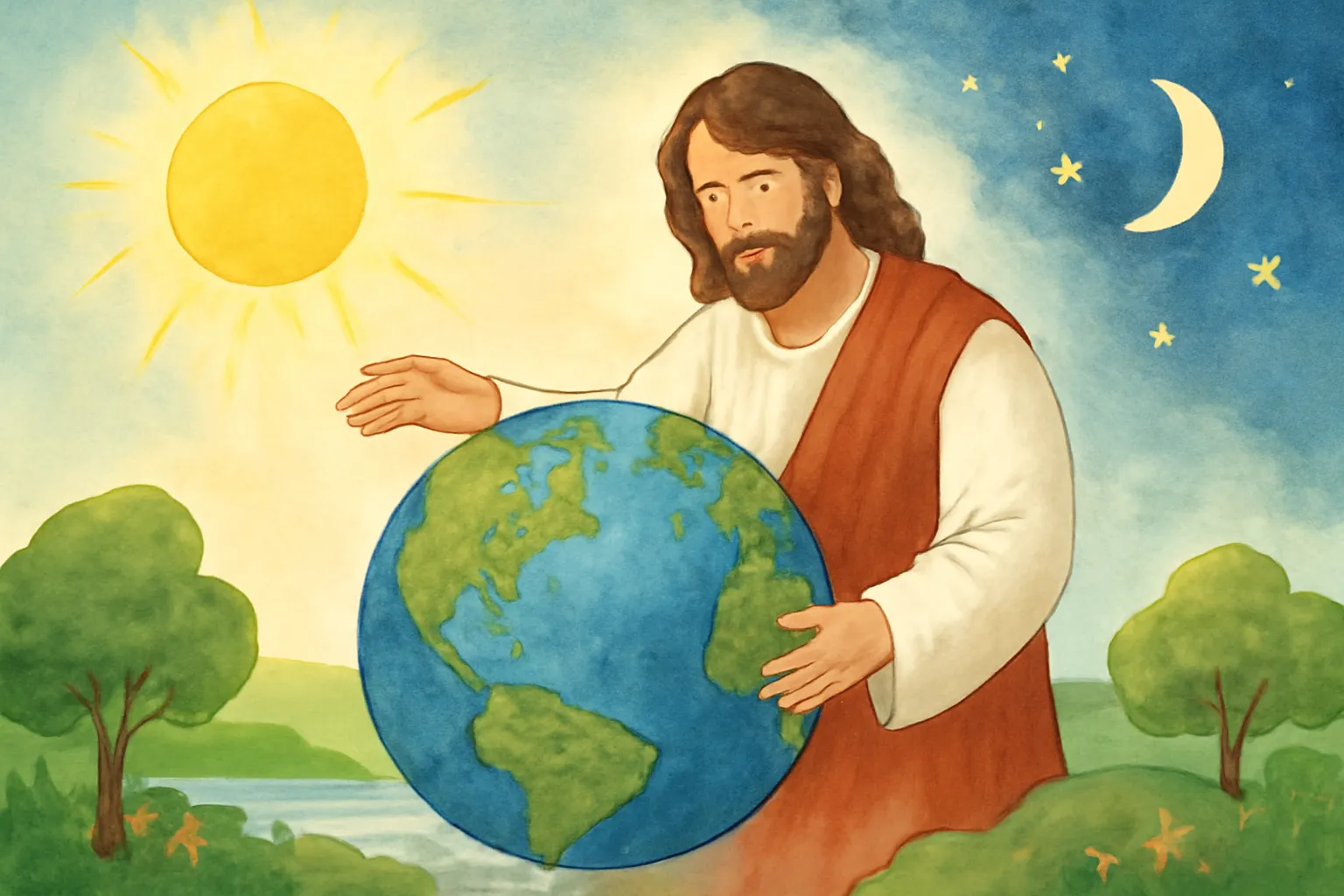
Key image: a bright sun by day and a glowing moon and stars by night.
Discussion idea: How do the sun and moon help you plan your day?
On the fifth day, God fills the waters with fish and the skies with birds. This day celebrates the diversity of creatures that fill the oceans and the air, inviting children to marvel at different kinds of life and the delicate balance of ecosystems.
Key image: a teeming ocean and a sky full of birds.
Question: What is one of your favorite animals, and what makes it special?
Day six introduces land animals and, most importantly, human beings. In kid-friendly versions, people are described as created in God’s image and given a responsibility to care for creation. This day highlights relationships, purpose, and the dignity of every human being.
Key image: animals roaming the land and people living in harmony with nature.
Discussion prompt: What does it mean to be made in God’s image, and how can you reflect that in your daily life?
Day 7: Rest and Blessing
On the seventh day, God rests and blesses the day. This day introduces the concept of rest and a sense of rhythm and gratitude. Rest isn’t just laziness; it’s a deliberate pause to appreciate creation, spend time with family, and notice the good things God has made.
Key image: a peaceful, rested world full of beauty.
Activity idea: share three things you are grateful for today and why you are glad to live in God’s world.
Core Themes and Gentle Lessons for Children
Beyond the sequence of events, the Creation story for kids is rich with themes that are easy to discuss. These ideas form a bridge between imagination and daily behavior, helping children connect faith with life.
God’s sovereignty: God speaks and the world comes into being. This helps children understand that a loving Creator has authority and care for all creatures.
Order and beauty: The clear pattern of creation shows God’s intention and goodness. Children can see how order helps life flourish.
Life and variety: The multitude of plants, animals, and people reveals God’s creativity and generosity. Diversity is a gift to be celebrated and protected.
Protection and stewardship: People are entrusted with caring for the world. Kids learn responsibilities like conserving resources, adopting eco-friendly habits, and treating animals with kindness.
Rest and rhythm: A sacred rhythm invites time for reflection, family, and gratitude. Rest helps children grow in patience and appreciation.
Who Is Involved in the Creation Narrative and What Do They Represent?
The kid-friendly creation story centers on God as the Creator who brings everything into existence through words. Imagery such as light, darkness, sea, land, plants, animals, and humans helps children visualize the story. Here are some quick portraits:
God – The benevolent, all-powerful Creator who loves creation and forms the world with intention.
Light vs. Darkness – The first distinction that brings clarity and safety.
Sky and Seas – The vast spaces that surround the earth and cradle life.
Plants and Animals – The living abundance that sustains and delights creation.
People – Made in God’s image, called to relationship with God and responsible care for the world.
Hands-On Activities to Bring the Creation Story to Life
Children learn best when they can touch, build, and explore. The activities below align with the seven-day narrative and reinforce memory, critical thinking, and values such as care and gratitude. Adapt these ideas for classrooms, families, or Sunday-school settings.
Creation Collage – Create a seven-panel collage or a large poster that represents each day: light, sky and waters, land and plants, sun/moon/stars, sea life and birds, land animals and humans, and rest. Use pictures, drawings, or stickers to illustrate each day.
Nature Walk with a Purpose – On a nature walk, identify elements that align with each day. For Day 1, observe light; for Day 2, observe the sky and the air; for Day 3, look for plants; Day 4, notice the sun and shadows; Day 5, listen for birds and look for fish in any nearby water; Day 6, observe animals and people; Day 7, practice quiet time or family rest.
Word Cards – Prepare cards with key terms (God, light, day, night, plants, animals, rest). Practice combining them into simple sentences to retell the story in your own words.
Creation Story Theater – A short, child-friendly skit with roles such as God, light, sea, birds, animals, and people. Use simple props and encourage kids to practice speaking lines with confidence and kindness.
Garden Time – Plant seeds in pots or a small garden. As you plant, discuss how living things grow and how we care for the earth by watering, weeding, and observing growth over time.
Discussion Starters for Parents and Teachers
Engaging children in dialogue helps deepen understanding and fosters curiosity. Use these gentle prompts to invite reflection, wonder, and personal connection to the Creation story.
What is your favorite part of the Creation story, and why does it stand out to you?
Why do you think God rested on the seventh day, and how can you practice rest in your own life?
In what ways can you be a helper to God by taking care of the world?
Which part of creation would you like to learn more about, and what questions would you ask?
Can you think of a time you used your voice or actions to bring something good into the world, similar to how God spoke and brought light?
Across different Bible translations and cultural retellings, the creation story for kids appears in a few different forms. Each variation preserves the core message of God’s creative power and care for creation while highlighting different aspects to help children relate the story to their own lives.
Seven-Day Creation variant – Emphasizes the week-long structure and the systematic progression through the days, which is familiar in many children’s Bibles and Sunday school curricula.
Creation in Story Form variant – A narrative approach with dialogue, imagery, and vivid scenes designed to engage a child’s imagination and emotions.
Creation Through Themes variant – Each day is tied to a theme like Light, Sky, Land, Sun/Moon/Stars, Sea Life and Birds, Land Animals and Humans, and Rest to help memory and understanding.
Creative Arts Variants variant – Using art, music, movement, and sensory activities to explore the creation story. Children can draw, dance, sing, or build models that represent each day.
Family-Centered Variants variant – Emphasizes prayer, shared family responsibilities for caring for creation, and everyday practices that reflect stewardship and gratitude.
Tip: When teaching or discussing with children, feel free to blend variations to match their age, attention span, and learning style. The aim is to communicate who God is, what God created, and how people should respond with gratitude, wonder, and care for others and the world.
Rest, Rhythm, and Sabbath: A Child-Friendly Window into God’s Rest
A simple but meaningful insight from the Creation narrative is the idea of rest. The seventh day is described as a day blessed by God and set apart. For children, this can become a practical practice: taking a break from busyness, slowing down, and appreciating the world. Kid-friendly ideas below help translate rest into meaningful action:
Quiet time with family, a shared meal, or a calm reading session.
Unhurried play, board games, or nature journaling to observe creation.
Gratitude moments: children name three things they are thankful for today.
Simple acts of care for creation, such as watering plants, picking up litter, or recycling.
Incorporating these practices makes the idea of rest tangible for kids and reinforces the message that rest is a gift that fosters relationship and reflection, not merely inactivity.
Conclusion: Why the Creation Story is a Gift for Children
The Creation narrative is a gift to children that blends imagination with truth, wonder with responsibility. When retold in kid-friendly language, accompanied by visuals, and reinforced through hands-on activities, the story becomes a living, breathing part of a child’s faith journey. Children gain a sense of belonging to a larger story—the story of a loving Creator who speaks, forms, fills, blesses, and invites relationship. The guide above is designed to help families and educators foster curiosity, gratitude, and responsibility—qualities that children can carry into adolescence and adulthood as they grow in faith, empathy, and stewardship for all of creation.