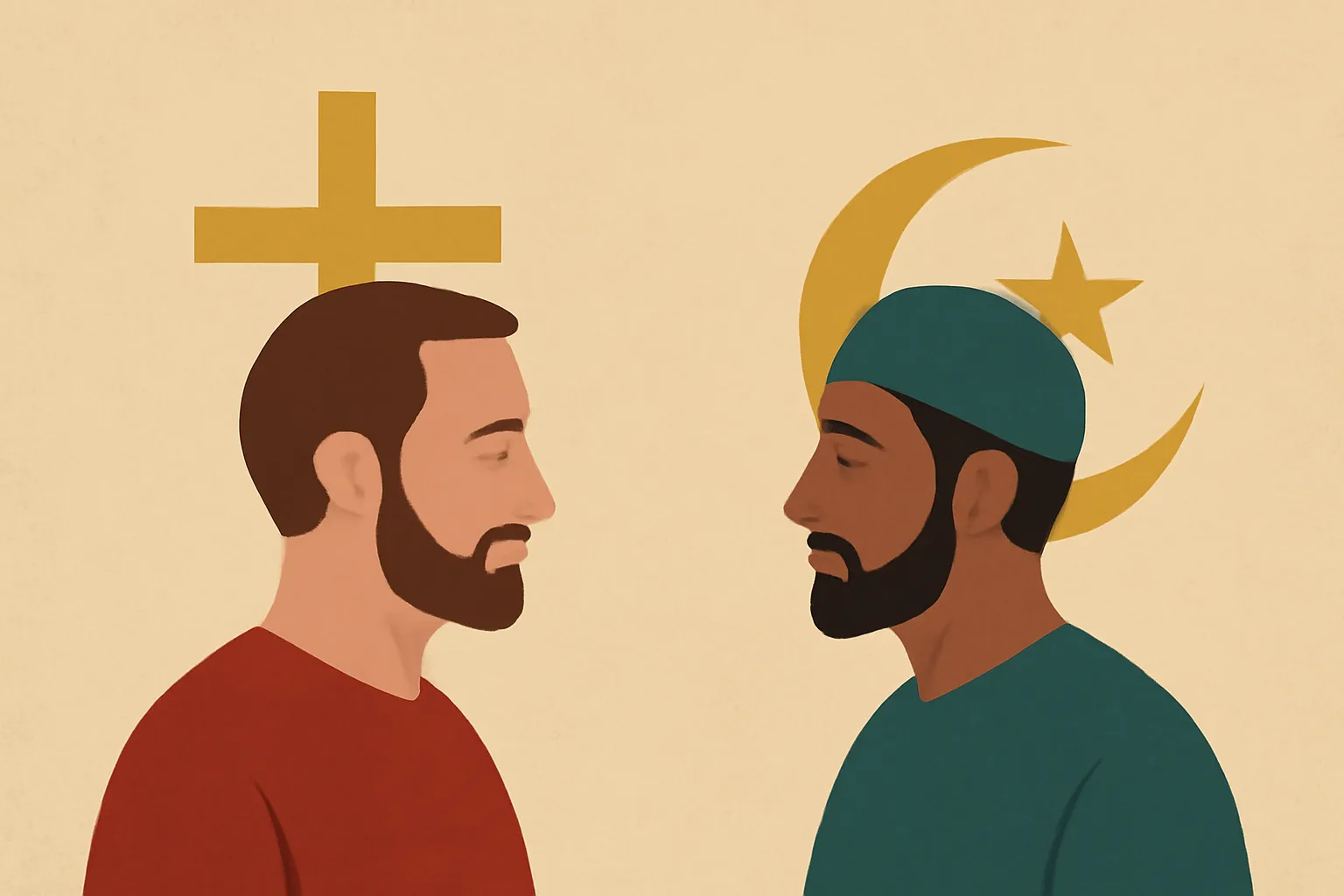
This article offers an accessible, in-depth look at Christian beliefs and Muslim beliefs, focusing on core doctrines, practices, and shared values. It surveys how two major world faiths understand the nature of God, the role of revelation, how believers relate to divine commandments, and how faith shapes daily life. While the two traditions differ in doctrine and ritual, they also intersect in important ways—sharing a reverence for monotheism, moral responsibility, prayer, charity, and the pursuit of justice. This overview uses a broad, respectful lens to capture the spiritual breadth that characterizes both Christian and Muslim communities around the world.
Overview: Core Commitments in Christianity and Islam
Both Christianity and Islam are rooted in a conviction that there is one Creator who has spoken to humanity through revelation. Both traditions affirm the importance of a moral code and a life oriented toward God, neighbor, and community. Yet they articulate these commitments through distinct doctrinal frameworks, sacred texts, and paths of devotion.
Monotheism as a foundational belief is central to both faiths, though expressed with different theological vocabulary.
Prophethood and Revelation—both hold that God communicates with humanity, guiding people through chosen messengers and sacred writings.
Scripture and Tradition—Christians typically emphasize the Bible (Old and New Testaments) as central, while Muslims emphasize the Quran as the literal word of God, complemented by the Hadith literature for guidance.
Salvation, grace, and judgment—both traditions teach accountability before God, though their theological routes to salvation involve different concepts like grace, faith, works, and divine mercy.
Worship and piety—daily prayers, communal gatherings, fasting periods, and acts of charity are common forms of devotion that strengthen the believer’s relationship with God.
Christian Beliefs: Core Doctrines
The Nature of God: Trinity and Creator
A central feature of most Christian confessions is the belief in the Trinity—the Father, the Son, and the Holy Spirit as three persons in one divine essence. This doctrine is rooted in Genesis and the New Testament’s accounts of Jesus and the early church. In contrast, Islam proclaims the absolute oneness of God, known as Tawhid, the indivisible unity of Allah. While Christians understand God as a triune being who reveals Himself in distinct persons, Muslims emphasize that attributing divinity to anyone or anything besides God constitutes shirk, the gravest sin.
Despite these differences, both traditions insist on the transcendence and sovereignty of God, the goodness of God’s creation, and God’s intimate concern for human beings. Some Christian theologians emphasize the relationality within God as a key insight for prayer and community, while Muslim theology centers on the insistent call to worship and obedience to a single, all-powerful God.
Christology and the Nature of Jesus
In Christianity, Jesus Christ is the central figure of faith. Christians affirm the incarnation—that God became flesh in Jesus—whose life, death, and resurrection provide the means of human redemption. Debates about the nature of Jesus—fully divine and fully human—have shaped Catholic, Orthodox, and Protestant teachings, and the variety of Christological formulations across traditions reflects a wide range of theological emphasis.
In Islam, Jesus (known as Isa) is regarded as one of the greatest prophets, born of the Virgin Mary, performing miracles, and delivering a message from God. Muslims do not view Jesus as divine or as the Son of God, and they do not accept the crucifixion as a substitute for human sin. Rather, they believe Jesus was raised by God and will return in the end times to restore justice. The Islamic portrayal emphasizes Jesus as a messenger who confirmed the earlier revelations and pointed toward the final revelation given to the Prophet Muhammad.
The Bible—a collection of books composed and assembled over centuries—encompasses a narrative of creation, law, prophecy, life, death, and resurrection. Christians affirm the inspiration and authority of Scripture, while interpreting it in light of tradition, reason, and community discernment. Different Christian communities place varying emphasis on scripture, tradition, and church authority in formulating doctrine and practice.
The Quran—believed by Muslims to be the literal word of God revealed to the Prophet Muhammad—serves as the primary source of guidance. Muslims also rely on the Hadith literature, which collects sayings and actions of the Prophet that illuminate how to apply Quranic guidance in daily life. The relationship between Quran and Hadith can vary across Muslim traditions, with different schools of jurisprudence emphasizing particular traditions for ethical decisions and rituals.
Salvation, Grace, and the Afterlife
In Christian teaching, salvation is often linked to faith in Jesus Christ, God’s grace, repentance, and participation in the life of the church. Interpretations vary: some emphasize justification by faith alone, others by faith being expressed through deeds and sacraments. The concept of atonement—how sin is reconciled with God—takes on rich diversity across denominations.
Islamic understanding centers on submission to God (Islam means submission) and living a life guided by the will of God as expressed in the Quran and Hadith. Salvation in Islam is closely linked to faith, righteous actions, obedience to God, and divine mercy. The day of judgment, and belief in heaven (Jannah) and hell (Jahannam), shape a sense of responsibility in daily conduct.
Sacred Practices: Worship, Sacraments, and Devotion
Baptism and initiation into the Christian community; signs of grace and repentance; different modes of immersion or sprinkler practices in various traditions.
Eucharist / Communion—a ritual meal commemorating Jesus’ Last Supper, understood as memory, sacrifice, or real presence depending on tradition.
Prayer life—structured liturgical prayer in churches, personal prayer, and contemplative practices across denominations.
Festivals and seasons—Advent and Lent in Christianity; Ramadan, Eid, and Hajj-related seasons in Islam (though Ramadan is universal across Sunna and various branches).
Moral and ethical disciplines—vows, fasting, almsgiving, and acts of mercy and service.
Muslim Beliefs: Core Doctrines
The Shahada, Tawhid, and Prophethood
The heart of Islamic belief is the Shahada—the testimony that there is no god but God (Allah) and that Muhammad is the messenger of God. This declaration frames the Muslim confession of faith and marks entry into the Muslim community. A related pillar is Tawhid, the affirmation of the oneness of God and rejection of any form of associating partners with God. Prophethood is considered a succession of messengers—from Adam through Noah, Abraham, Moses, Jesus, and finally the Prophet Muhammad—each delivering guidance but all summoning humanity to submit to the one God.
The Quran and Hadith
Muslims regard the Quran as the precise revelation transmitted through the Prophet Muhammad in the Arabic language. It provides a comprehensive code for belief and conduct. The Hadith literature—narratives about the Prophet’s words and actions—helps interpret Quranic injunctions and apply them to daily life. Across different Muslim traditions, scholars develop jurisprudence (fiqh) based on Quran, Hadith, consensus (ijma), and analogical reasoning (qiyas), which yields diverse schools of thought and practice.
Sharia, Ibadah, and Ethics
Sharia is commonly described as the divine law guiding personal conduct, family life, commerce, and broader social justice. It is derived from sources including the Quran and Hadith and interpreted by jurists to account for changing circumstances. While some communities emphasize a more formalized legal code, others stress personal conscience and community norms. Muslims also observe a framework of rituals—producing a rhythm of worship and discipline throughout the year.
Salvation and Judgment
In Islam, salvation is understood as alignment with God’s will and mercy. It is not earned solely by good deeds but through sincere faith and God’s grace. Belief in the Day of Judgment shapes accountability, with people held to moral standards in their thoughts, words, and actions. Muhammad’s role is that of a messenger who calls people back to monotheism, righteousness, and ethical behavior.
Sacred Practices: Prayer, Fasting, Charity, and Pilgrimage
Salah—the five daily prayers performed facing Mecca; a central routine that structure’s a Muslim’s day and links the community through shared times of worship.
Zakat—almsgiving or charity intended to purify wealth and support those in need; a concrete expression of social responsibility.
Sawm—fasting during the month of Ramadan, a discipline of self-control, gratitude, and spiritual reflection; its pre-dawn to sunset rhythm unites many Muslims in a common practice.
Hajj—the pilgrimage to Mecca required once in a lifetime for Muslims who are physically and financially able; it symbolizes unity, equality, and renewal of faith.
Shared Values and Common Ground
Monotheistic devotion to a single, transcendent God and a disciplined life in accord with divine guidance.
Revelation and guidance through sacred texts and prophetic messages that illuminate moral living.
Compassion and charity as practical expressions of faith—caring for the vulnerable, feeding the hungry, sheltering the homeless, and supporting families in need.
Justice and stewardship—a concern for social equity, ethical economic life, environmental responsibility, and the well-being of communities.
Prayer and worship as central habits that cultivate humility, gratitude, and remembrance of God.
Family and community as foundational social units that transmit values, nurture spiritual growth, and sustain communal life.
Ethics in daily life—truthfulness, mercy, patience, forgiveness, and respect for life across all stages.
In discussions about religion, it is helpful to recognize that both Christian and Muslim communities interpret these shared values in diverse ways. Different cultural traditions, historical contexts, and theological emphases shape how believers practice their faith. Yet the underlying aspiration toward virtue, accountability before God, and service to others remains widely recognized as a common thread.
Variations Within Religions: Diversity of Practice and Belief
Variations Within Christianity
Christianity is not monolithic. It encompasses a spectrum of traditions—often categorized broadly as Catholic, Orthodox, and Protestant—each with unique historical developments, liturgical styles, and interpretive approaches.
Catholicism emphasizes the authority of the Pope, the sacramental life, and the church as the steward of grace through seven sacraments, with a strong tradition of liturgy and Mary and the saints.
Orthodoxy highlights the continuity of the early church, the role of liturgy and mysticism in worship, and a conciliar approach to governance.
Protestantism encompasses reform movements that arose in the 16th century and beyond, often emphasizing scripture alone (sola scriptura), justification by faith, and a diversity of worship styles, ranging from liturgical to evangelical and charismatic expressions.
Islam also exhibits important diversity that shapes how believers practice their faith:
Sunni Islam—by far the largest branch; emphasizes the central role of community consensus and four major legal schools (madhahib) guiding practical jurisprudence.
Shia Islam—adheres to a distinct line of Imams and emphasizes the rightful leadership of the Prophet’s family, with varying jurisprudential traditions such as Ja‘fari law.
Ibadi Islam—primarily in Oman, with a distinct approach to jurisprudence that emphasizes moderation and consensus.
Sufism (Islamic mysticism)—not a separate sect but a spiritual tendency within Islam focusing on personal purification, inner knowledge of God, and devotional practices like dhikr (remembrance of God).
Historical Context and Interfaith Dialogue
The long histories of Christian and Muslim civilizations offer both shared moments and theological tensions. In different eras, communities have collaborated in science, philosophy, art, and social welfare, while at times facing conflict and misunderstanding. Modern interfaith dialogue seeks to build trust through education, mutual respect, and joint initiatives for peace, humanitarian aid, and social justice. Understanding the common ground and acknowledging differences helps communities interact in constructive and compassionate ways.
Structured worship appears in many forms: congregational prayers, sermons, and liturgy in Christian churches; the daily Salah in mosques and homes for Muslims. Both traditions encourage regular spiritual practices that shape one’s worldview and relationships.
Dietary Practices and Sacred Time
Dietary guidelines differ: many Christians observe conventions regarding fasting or abstaining from certain foods during seasons like Lent, while Muslims observe Halal dietary rules and the restrictions of haram foods. Observances of holy times—such as the Christian Sabbath or Sunday worship, and the Islamic holy month of Ramadan—provide structured opportunities for reflection, self-discipline, and communal solidarity.
Compassion, Charity, and Social Justice
Both faiths emphasize practical acts of charity and social responsibility. Muslims practice Zakat as a formal pillar of wealth redistribution, while Christians may emphasize charitable ministries, relief work, and social justice advocacy as expressions of faith. Across traditions, caring for orphans, the sick, prisoners, and marginalized communities is seen as a tangible expression of devotion to God.
Misconceptions and Clarifications
“All Christians and Muslims believe the same thing.” Not exactly. There are shared reverence for God and moral discipline, but core beliefs about the nature of God, revelation, the person of Jesus, and the path to salvation differ in meaningful ways. Understanding these differences requires careful study and respectful dialogue.
“Islam oppresses women.” This is a stereotype that misses the diverse experiences of Muslim women around the world. Islamic interpretations on gender roles vary; many communities emphasize education, family rights, and public participation, while others emphasize traditional norms. Dialogue should distinguish culture from doctrine and listen to women’s voices within communities.
“Christians do not fast or pray like Muslims.” Both traditions incorporate fasting and prayer, though the rhythms and purposes differ. Fasting in Ramadan emphasizes self-denial and solidarity with the hungry, while Christian Lent invites repentance and renewal. Prayer practices vary widely within each tradition.
“The two religions are inherently in conflict.” History includes periods of tension but also moments of cooperation, mutual learning, and shared humanitarian efforts. Engagement through education, dialogue, and joint service helps illuminate common ground and reduce fear.
This section is an invitation to readers to approach the topic with curiosity, humility, and a willingness to listen—recognizing that real knowledge comes from listening to believers’ own explanations of their faith.
Glossary of Key Terms
— the oneness of God in Islam.
— the Muslim declaration of faith: there is no god but God, and Muhammad is the Messenger of God.
— the Christian doctrine of Father, Son, and Holy Spirit in one Godhead.
— the holy book of Islam, believed to be the literal word of God revealed to Muhammad.
— sayings and actions of the Prophet Muhammad used as guidance in Islam.
— Christian rite commemorating Jesus’ last supper; varies in interpretation.
— the five daily prayers in Islam.
— charitable giving required of Muslims as a pillar of Islam.
— fasting during Ramadan in Islam.
— the pilgrimage to Mecca, a crucial pillar for Muslims who are able.
— Christian rite of initiation into the faith community.