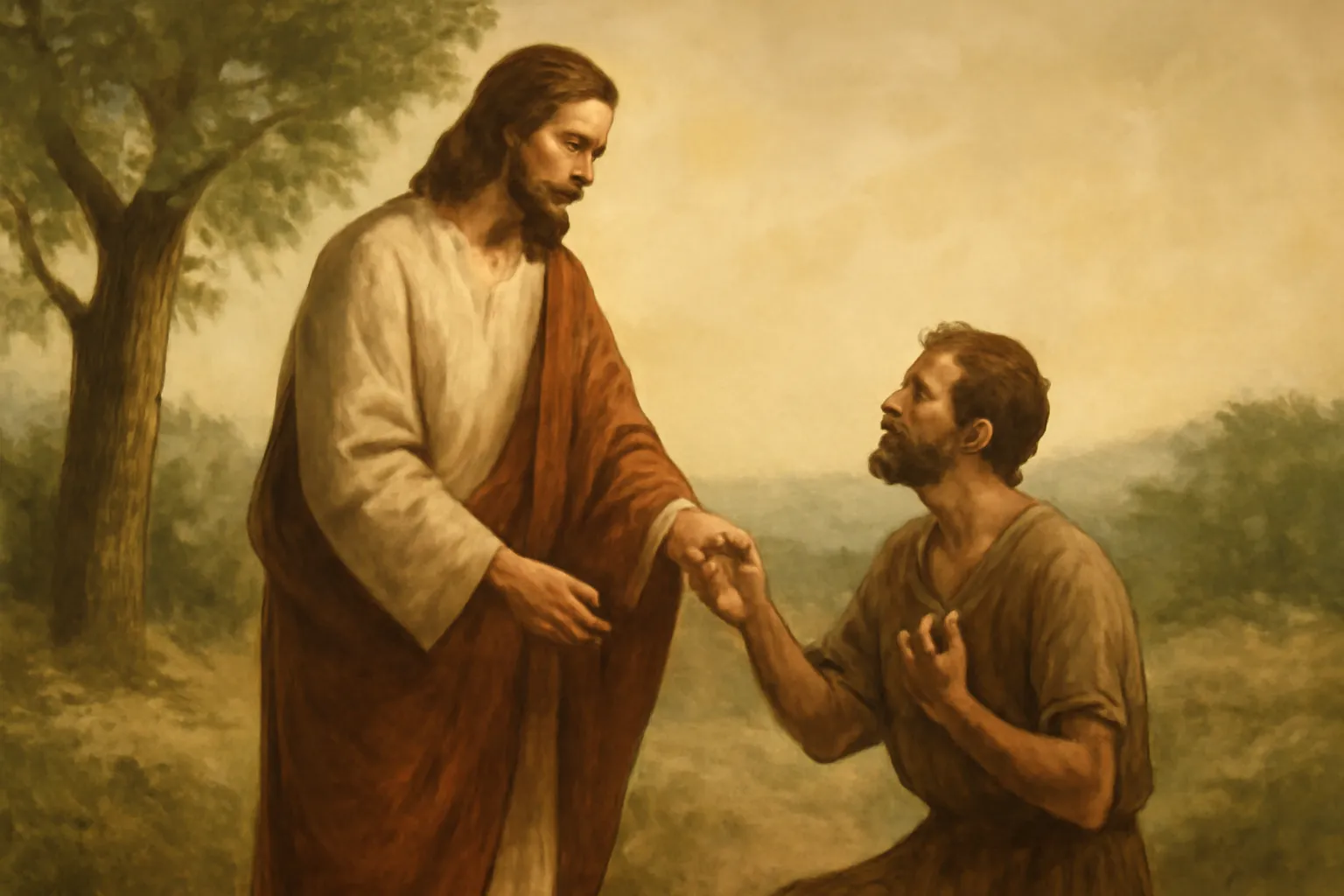
Within the collection of prayers and songs known as the Psalms, Psalm 27 stands out for its bold declaration and its intimate invitation to trust. At the heart of this psalm is a concise, yet profound, rhetorical question: “Whom shall I fear?” The question is not a promise that fear will never arise, but a statement of confidence that fear has a rightful place only in light of who God is. In many English translations, this question appears as “Whom shall I fear?” or “Of whom shall I be afraid?”, and alternative renderings—such as “Who shall I dread?” or “Who is there to fear?”—signal a shared idea across languages: fear is subject to the supremacy of God.
The Lord is my light and my salvation; whom shall I fear? The Lord is the stronghold of my life; of whom shall I be afraid?
This verse, traditionally attributed to David, functions as both a personal confession and a liturgical anchor. It speaks to a hearer who faces danger, uncertainty, or adversaries, while affirming that the divine attributes of God—light, salvation, and a stronghold—provide a complete security. The phrase “Whom shall I fear?” is thus not a denial of fear but a reordering of fear around God’s character.
Historical and Literary Context
To understand Psalm 27:1, it helps to situate it within its historical and literary setting. The psalm belongs to the corpus of lament and confidence poetry that traces the movement from distress to deliverance. While the exact historical moment is not stated in the text, many scholars view Psalm 27 as a trust psalm (a genre that emphasizes confidence in God in the face of opposition). The imagery in the verse—light, salvation, stronghold—is typical of biblical poetry where light dispels darkness, salvation means deliverance from danger, and a fortress represents enduring protection.
The phraseology also echoes Exodus and Sinai-era language—God as a guiding light and a protector in battle. In that sense, the verse serves as a bridge between individual longing and communal memory: God has delivered his people in the past, and that same God becomes a present guide and shield for the speaker. In your study or preaching, you may notice how the verse reinterprets fear from a purely personal emotion into a theological stance: fear is measured against God’s identity and deeds.
Thematic Analysis: Core Ideas Behind “Whom Shall I Fear”
The core ideas of Psalm 27:1 can be unpacked around three interlocking themes: God’s character, human fear, and fortified trust. By exploring these themes, readers gain a richer grasp of how the verse functions in personal devotion and communal worship.
God as light — Light in biblical imagery conveys guidance, revelation, and safety. When the psalmist says, “The Lord is my light”, the emphasis is on divine clarity in a world of confusion. Light exposes danger but also clarifies pathways to safety.
God as salvation — Salvation here is comprehensive: it includes rescue from enemies, deliverance in crisis, and the assurance of eternal security. To call God salvation is to trust in a present deliverer as much as a future rescuer.
God as a stronghold — A stronghold is a fortified place of refuge. In times of attack, the fortress offers stability and protection. The statement “the Lord is the stronghold of my life” translates life’s vulnerabilities into a scene of steadfast security anchored in God’s power.
Fear reframed — The rhetorical question, “Whom shall I fear?”, reframes fear from a potential dominating force to a subordinate emotion under the sovereignty of God. It invites honest emotion (feeling fear) while demanding a confident posture of trust.
Personal reliance in a community of faith — Although the verse is personal, it is often heard in the context of worship with others. The language invites believers to declare their trust together, strengthening communal courage.
Variations and Translations: “Whom Shall I Fear” Across Versions
Across Bible translations, the core meaning remains, but small shifts in wording illuminate different shades of emphasis. Here are several representative renderings that demonstrate semantic breadth while maintaining the same essential message.
King James Version (KJV) — “The Lord is my light and my salvation; whom shall I fear? The Lord is the strength of my life; of whom shall I be afraid?”
New International Version (NIV) — “The Lord is my light and my salvation—whom shall I fear? The Lord is the stronghold of my life—of whom shall I be afraid?”
English Standard Version (ESV) — “The LORD is my light and my salvation; whom shall I fear? The LORD is the stronghold of my life; of whom shall I be afraid?”
New Revised Standard Version (NRSV) — “The Lord is my light and my salvation; whom shall I fear? The Lord is the refuge of my life; of whom shall I be afraid?”
New American Bible (Revised Edition, NABRE) — “The Lord is my light and my salvation; whom should I fear? The Lord is the stronghold of my life; of whom should I be afraid?”
In addition to these standard translations, readers often encounter rhetorical or stylistic variations in English that expand semantic breadth. For example:
“Whom shall I dread?” — Emphasizes the absence of dread before the perceived threat because of God’s presence.
“Of whom shall I be afraid?” — A more formal cadence that mirrors some liturgical traditions.
“Who is there to fear?” — A slightly more classical rendering that invites a reflective pause.
“Who shall I fear in the face of God’s protection?” — A paraphrase that foregrounds divine protection as a confidence-shaping reality.
The bolded terms below point to the structural hinges of the verse and its interpretation. Understanding these key words helps readers see how Psalm 27:1 functions in both private devotion and public proclamation.
Light — Symbolizing guidance, truth, and presence; without light, pathways are obscured and fear grows.
Salvation — Beyond rescue from danger, salvation implies well-being, restoration, and an ongoing relationship with God.
Stronghold — A fortified place of security; a sanctuary where enemies are repelled and faith is stabilized.
Fear and afraid — Emotions that are real and human; the verse invites honest engagement with fear while anchoring it to God’s sovereignty.
The Lord — The personal, covenant God who acts in history and in the present; this is not a distant force but a relational presence.
How Psalm 27:1 Has Been Used in Worship and Personal Devotion
This single verse has informed countless worship songs, prayers, and sermons. It is frequently used in times of societal upheaval, personal crisis, and spiritual testing. The structure of the verse makes it versatile for both singing and spoken proclamation.
Corporate worship — The verse supplies a concise call to trust that can be set to music or spoken as a responsive reading during services.
Personal devotion — Individuals repeat the line as a reminder to reset their perspective when anxious thoughts surge.
Teaching and counseling — Ministers and counselors reference the verse to guide discussions about fear, courage, and dependence on God.
Practical Applications: How to Apply “Whom Shall I Fear” Today
Believers today can translate Psalm 27:1 into daily practice in several concrete ways. Below are actionable steps designed to translate theology into behavior and mindset.
Memorize and recite — Commit the verse to memory and recite it in moments of fear, uncertainty, or decision-making. Repetition helps reframe fear around God’s character.
Pair with prayer — Use the verse as a template for prayer: acknowledge God as light, salvation, and stronghold; present fears; then declare trust.
Mediate on the imagery — Spend time reflecting on the metaphors. Visualize God as a guiding light in a dark path, a shelter from the storm, and a defender in battle.
Integrate with Scripture — Connect Psalm 27:1 with related passages such as Psalm 23 (the Lord as shepherd and protector), Psalm 46 (God as a refuge and strength), and Romans 8 (in Christ, who shall separate us from God’s love?).
Practice in community — Share reflections with friends, family, or a small group. Hearing diverse perspectives on “Who shall I fear?” fosters collective courage.
Devotional Practices to Deepen Trust
Scripture journaling — Write a daily entry focusing on how God’s attributes in the verse apply to current life circumstances.
Guided imagery — Visualize God as a lighthouse or fortress and write or speak about how this changes decisions and responses to fear.
Song or psalm setting — Transform the verse into a short melody or hymn of dependence, then sing it in the morning or before sleep.
Frequently Asked Questions and Clarifications
Readers often raise questions about fear, obedience, and the role of God’s presence. The following brief clarifications address common uncertainties.
Is it wrong to fear? — Fear is a natural emotion in the face of danger. The biblical message is not a denial of fear but a call to orient fear under the reality of God’s presence and protection.
How does “light” dispel fear? — Light reveals truth and direction. When fear arises, knowing truth about God and one’s purposes with God helps dispel the fog of anxiety.
What about suffering and evil? — Psalm 27:1 offers a stance of trust that does not erase hardship but locates it under God’s sovereignty. The verse invites sufferers to draw near to God as shelter and guide.
How should I use this verse in difficult relationships or hostile environments? — In conflict, the verse can be a reminder to rely on God’s protection and to respond with wisdom, courage, and mercy, rather than fear-driven aggression.
Cross-References: Psalm 27:1 in the Whole Bible
The message of confident trust in God resonates beyond Psalms. Several biblical passages reinforce similar themes:
Psalm 23 — God as shepherd who leads to still waters and green pastures; a continued picture of intimate care and protection.
Psalm 46 — God as a refuge and strength, a present help in trouble; a strong parallel to the “stronghold” motif.
Isaiah 41:10 — A call not to fear because God is with the people, upholding them with his righteous right hand.
2 Timothy 1:7 — God gave a spirit not of fear but of power, love, and self-control; a New Testament expansion of the same theme.
Scholarly Perspectives: How The Verse Has Been Interpreted
The popularity of Psalm 27:1 has invited a range of interpretive angles. While not exhaustive, the following outlooks capture important dimensions:
Historical-critical view — Emphasizes the psalm’s place within Israel’s history of deliverance and its likely use in liturgical or ceremonial settings.
Canonical approach — Read in light of the whole Bible, highlighting continuity: God’s presence as guide and shelter from Genesis to Revelation.
Devotional/stewardship perspective — Encourages believers to steward fear, courage, and trust in daily life and leadership roles.
Important Observations for Readers Today
As you read Psalm 27:1 and its surrounding verses, you may notice a few important dynamic features:
Rhetorical strategy — The use of a question invites personal reflection and invites others to participate in the declaration of trust.
Balance of emotion and doctrine — The verse acknowledges fear while anchoring the soul in God’s identity and steadfastness.
Practical theology — The verse translates doctrine into lived practice: trust becomes a posture that shapes decisions and actions.
A Prayerful Declaration of Confidence
Psalm 27:1 remains a compact, powerful formula for resilience in a world of uncertainty. By proclaiming God as light, salvation, and stronghold, the psalmist reframes fear not as the primary voice but as a natural guest that ultimately yields to trust. The recurring question, “Whom shall I fear?”, becomes a lifelong invitation: whenever fear arises, look to God’s character and deeds, and let that gaze reorient the heart toward courage.
Whether you encounter fear in your daily routine, during times of spiritual testing, or in moments of crisis, you can use this verse as a touchstone. Repeat it, study it, and let its imagery shape your expectations and actions. In doing so, you align your life with a timeless truth: the Lord is my light, my salvation, and my stronghold, and in that divine presence, fear gives way to fearless faith.
For further study, consider reading Psalm 27 alongside its neighboring prayers in the same collection, listening for how the language of light, salvation, and protection resonates across different verses, and how various translations illuminate subtleties in meaning. The simple question—“Whom shall I fear?”—thus opens a broad dialogue about courage, reliance, and transformation under God’s watchful care.