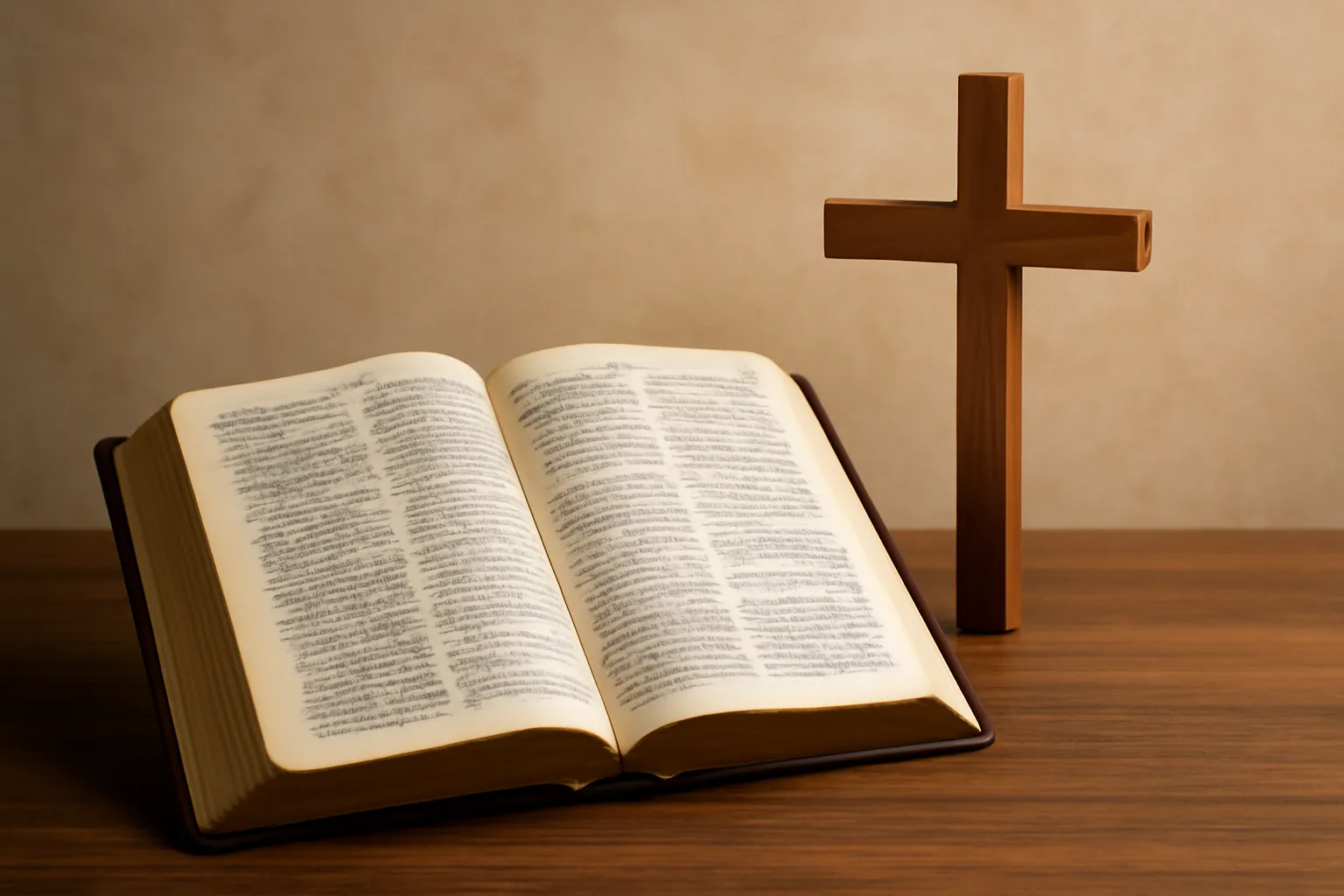
The Protestant Bible is the collection of sacred writings traditionally used by Protestant churches. It is often referred to as the Protestant Canon or Protestant Scriptures, and it shapes doctrine, worship, and everyday practice across denominations as varied as Lutheran, Reformed, Anglican, Baptist, and Pentecostal communities. While the term Protestant Bible is common, readers may also encounter phrases like Protestant edition, Protestant Bible tradition, or Reformation-era Bible—all pointing to the same core idea: a scriptural collection shaped by the Reformation and subsequent Protestant scholarship. This article explores what the Protestant Bible is, how it came to be, how it differs from other Christian canons, and how modern readers engage with its texts today.
Several defining characteristics mark the Protestant Bible as distinct from other Christian Bibles. The most central distinctions include the size and arrangement of the books, the treatment of certain ancient writings known as the Apocrypha (also called the deuterocanonical books in some traditions), and the theological emphasis that has guided translation and interpretation. Here are the key elements that set the Protestant Bible apart:
Canonical scope: The traditional Protestant canon comprises 39 books in the Old Testament and 27 books in the New Testament, for a total of 66 books.
Old Testament structure: The Protestant Old Testament is organized into the Law (Pentateuch), the Historical Books, the Poetry/Wisdom books, and the Prophets, revealing a particular arrangement that differs from Jewish and Catholic orders.
New Testament focus: The New Testament contains the four Gospels, the Acts of the Apostles, the Epistles, and the Book of Revelation, all regarded as central witnesses to Jesus Christ and early Christian faith.
Apocrypha/deuterocanonical books: While Catholic and Orthodox Bibles include additional writings in their canons, the traditional Protestant canon places these texts outside the official list, though many Protestant editions still present the Apocrypha as a separate supplemental section or omit it entirely.
Translations and textual base: Protestant Bibles have a long history of translations from the original languages (Hebrew, Aramaic, Greek) using a range of manuscripts, with modern editions often relying on critical texts and scholarly apparatus to inform translation choices.
From the outset, the phrase “Bible Protestant” invites attention to how faith communities interpret Scripture through the lens of sola scriptura (Scripture alone as the ultimate authority), while recognizing that various Protestant traditions exercise their own filters of interpretation and tradition within that framework.
A brief history of the Protestant Bible
The journey of the Protestant Bible is a story that runs from the oldest biblical manuscripts to contemporary study Bibles used in churches and homes today. It weaves together the development of biblical languages, the discipline of textual criticism, and pivotal moments in church history. The evolution can be summarized in several stages:
Long before Martin Luther and his contemporaries, Christians in different regions already used a wide range of biblical texts in worship and teaching. The Hebrew Bible (for the Old Testament) and the Greek New Testament served as the primary sources, but there was no universally fixed list of books across all Christian communities. Jewish and early Christian readers often spoke of Scripture with reverence, and early church leaders debated both content and authority. In this milieu, the church’s reading lists were growing, and certain books enjoyed wide acceptance while others were contested.
The Reformation and the shaping of the canon
The sixteenth century brought the Protestant Reformation, a movement that challenged numerous practices and sought a return to what reformers regarded as the true authority of Scripture. Central reformers like Martin Luther, John Calvin, and others argued for a canon grounded in apostolic authorship and early Christian usage, leading to two major outcomes:
The exclusion of the Apocrypha from the canonical list for most Protestant communities, and
A renewed emphasis on translations that made the Bible accessible to lay readers in the vernacular languages.
During this period, translation projects flourished. The German Bible of Luther popularized the idea of a vernacular Bible and produced a lasting cultural impact. In England, the King James Version (KJV) of 1611 became a landmark edition, combining scholarship, literary quality, and a theology aligned with Protestant convictions. The phrase “sola scriptura” gained traction as a guiding principle: Scripture alone is the ultimate authority for faith and practice, above church councils, traditions, or institutional decrees.
The Catholic response and the rise of separate canons
In response to the Protestant emphasis on Scripture, the Catholic Church reaffirmed a broader canon in the Council of Trent (1545–1563), including what Protestants called the Apocrypha as canonical books. This divergence helped crystallize a fundamental difference between the two streams of Western Christianity. Meanwhile, the Orthodox churches maintained different canons and ordering, reflecting a separate tradition that also valued certain texts outside the Protestant list.
The Protestant canon in detail
Understanding the Protestant canon means looking at the Old and New Testaments as they are typically organized in Protestant editions, while also noting how this arrangement differs from Jewish and Catholic canons. Below is a concise but thorough portrait of how the Protestant Bible is structured.
Old Testament: structure and content
The Protestant Old Testament gathers 39 books into familiar groupings. These divisions reflect a combination of the Torah (Law), historical narratives, wisdom literature, and prophetic writings. Key features include:
Law (Pentateuch): Genesis, Exodus, Leviticus, Numbers, Deuteronomy.
Historical Books: Joshua through Esther, tracing the story of Israel from conquest to exile and return.
Poetry and Wisdom: Job, Psalms, Proverbs, Ecclesiastes, Song of Songs, with related wisdom literature.
Prophets: Major and Minor Prophets, including Isaiah, Jeremiah, Ezekiel, Daniel, and the twelve minor prophets.
The order and grouping of these books reflect a particular theological and liturgical logic. The Old Testament in Protestant Bibles emphasizes the creation, fall, covenant, exile, and restoration themes that point forward to the New Testament fulfillment in Christ. It is written primarily in Hebrew (with some portions in Aramaic) and reflects a deep history of biblical interpretation within the Jewish and early Christian communities.
New Testament: structure and content
The New Testament in the Protestant Bible contains 27 books, arranged as follows:
Gospels: Matthew, Mark, Luke, John.
Acts: The Acts of the Apostles, a history of the early church.
Epistles: Romans through Jude, including letters attributed to Paul, James, Peter, John, and others.
Revelation: The Book of Revelation, a prophetic and apocalyptic text.
This collection centers on the life, teaching, death, and resurrection of Jesus Christ, and it presents the earliest Christian understanding of how God’s promises in the Hebrew Scriptures find their fulfillment in Jesus. The New Testament was written in Greek and reflects a diversity of authors, audiences, and theological emphases, yet it is treated as a unified witness to the gospel in Protestant faith and practice.
Book order differences and practical implications
Compared to Jewish biblical order and Catholic order, the Protestant arrangement often places the prophets at the end of the Old Testament and prints the Minor Prophets in a single block, followed by the New Testament. For readers, this ordering helps with doctrinal study and preaching, especially when connecting the fulfillment motifs of the prophets with the life of Christ in the gospels and the apostolic message in the Epistles.
Where the Apocrypha fits in
Many English and some other language Protestant Bibles historically included a section called the Apocrypha (books like Tobit, Judith, Wisdom, Sirach, Baruch, and 1–2 Maccabees, plus additions to Esther and Daniel) as a separate collection. The canonical status, however, was not accepted in the same way as the recognized 66 books. In contemporary Protestant practice, most editions either:
Exclude the Apocrypha entirely, or
Place it in a separate, non-canonical section, often labeled as Apocrypha, Deuterocanonical Books, or apocryphal literature.
Readers should be aware that the presence or absence of these writings in a given edition reflects doctrinal and scholarly choices rather than a single universal rule among all Protestants. Some denominations, study Bibles, and publishers continue to include the Apocrypha for historical or literary reasons, while others treat it as valuable literature but not inspired in the same way as the canonical books.
Translations and editions that shaped the Protestant Bible
The Protestant Bible’s reach and impact depend heavily on the translations that have carried the text into millions of homes and congregations. Here are several pivotal editions and the forces behind them:
King James Version (KJV, 1611): A landmark English Bible produced under royal sponsorship, celebrated for its majestic English style and enduring influence on English-speaking Christianity.
Geneva Bible (late 16th century): Highly influential among English reformers and early readers of the Protestant Scriptures, known for its accessible language and study notes.
Revised Version and English Bible tradition: Later English revisions that sought to update terminology and reflect ongoing manuscript discoveries.
New International Version (NIV) and New Living Translation (NLT): Modern translations emphasizing readability and balance between formal accuracy and natural language.
English Standard Version (ESV) and New American Standard Bible (NASB): Translations that aim for close adherence to the original texts (formal equivalence) while remaining readable.
Modern critical editions: Contemporary Bibles often rely on critical texts such as NA28 (Nestle-Aland) for Greek New Testament and HB/UBS5 for textual criticism, offering notes about manuscript evidence, translation choices, and textual variants.
In addition to English, Protestant Bibles exist in numerous languages, each reflecting a local history of worship, literacy, and mission. The translation enterprise is ongoing, with scholars and church leaders working to render meaning across cultural contexts while remaining faithful to the original languages and the convictions of Protestant traditions.
Several theological ideas are closely linked to how Protestants understand and approach the Bible. These concepts shape interpretation, preaching, and personal devotion. Some of the most influential are:
Sola scriptura (Scripture alone): The conviction that the Bible is the primary and ultimate authority for faith and practice, above tradition or church hierarchy.
Inspiration: The belief that the biblical authors were guided by God so that their writings convey truth in a reliable and trustworthy manner for faith and life.
Perspicuity (clarity) of Scripture: The idea that the essential matters of salvation can be understood by ordinary readers with diligent study, though interpretation is aided by context and scholarship.
Solà fide (faith alone) and sola gratia (grace alone): The understanding that salvation comes through faith in Christ and the gift of grace, with Scripture playing a central role in revealing this message.
Canon and authority: A recognition that the canon—what is Scripture and how it is to be interpreted—has been shaped by a long history of discernment within Protestant communities.
These theological commitments help explain why Protestant readers emphasize personal reading of the Bible, communal preaching, and the education of laypeople in Scripture. They also account for how Protestant communities approach doctrinal issues differently from other Christian traditions, while still sharing a reverence for the biblical text.
How different Protestant traditions handle the text
Within the broader umbrella of Protestantism, there are diverse approaches to Scripture that reflect historical, cultural, and doctrinal differences. A few representative patterns include:
Lutheran and Reformed traditions: Emphasize the authority of Scripture, the centrality of Christ in its interpretation, and the use of confessional documents (like the Augsburg Confession or the Westminster Standards) alongside the Bible.
Anglican/Episcopal and some Methodist contexts: Maintain a balance between Scripture, tradition, and reason, often using liturgy and catechism to interpret Scripture for worship and life.
Baptist and many evangelical communities: Prioritize the authority of Scripture for faith and practice, with a strong emphasis on the personal reading of the Bible, evangelism, and congregational governance.
Non-denominational and Pentecostal circles: Emphasize the ongoing work of the Holy Spirit in interpretation, discipleship, and lived experience of the Word, while still affirming standard biblical canons.
Across these traditions, the essential common ground is the belief that Scripture is God-breathed and authoritative, even as the exact approaches to interpretation, church governance, and doctrinal formulations can vary. The Protestant Bible thus serves as a unifying text for diverse communities while allowing a wide spectrum of theological reflection and practice.
Approaching the Protestant Scriptures as an informed reader involves a mix of historical understanding, linguistic awareness, and practical discipline. Here are some practical steps and resources that can help both new and seasoned readers engage with the Bible in a meaningful way:
Identify the genre: Recognize whether a passage is narrative, poetry, prophecy, wisdom, epistle, or apocalyptic literature. This helps interpret meaning and tone correctly.
Context matters: Consider the historical setting, audience, and purpose of each book. Cross-referencing passages can illuminate themes and fulfillments.
Use reliable translations: Choose a version that aligns with your reading goals—whether formal equivalence for precision or dynamic equivalence for readability. Be aware of footnotes and textual notes that explain choices and variants.
Study aids: Employ study Bibles, concordances, commentaries, maps, and historical background resources to deepen understanding.
Mentor and community: Engage with pastors, teachers, or study groups that can offer guidance, questions, and varied perspectives on difficult passages.
Practice interpretation with humility: Recognize that even well-informed readers discuss interpretive differences. Prayerful discernment, careful exegesis, and respect for others’ insights are part of responsible study.
For those who want a structured approach, many readers start with one of the Gospels (to grasp the core message about Jesus) and pair it with an Old Testament book that highlights a central theme, followed by a New Testament letter that applies that theme to early church life. This way, readers can see how the entire canon testifies to God’s plan in history and in faith.
Common questions about the Protestant Bible
To help clarify common inquiries, here are concise answers to some frequent questions about the Bible in Protestant circles:
Why does the Protestant Bible have 39 books in the Old Testament? It reflects the canon widely accepted in Jewish tradition and early Christian usage, though not all Christian communities share the exact same list; Protestants settled on the 39-book Jewish order as the basis for the Old Testament.
What happened to the Apocrypha? In most Protestant editions, these books are not part of the canonical Old Testament, though they may be included as a separate section or omitted entirely. Catholic and Orthodox canons treat some of these writings as canonical.
Are modern Protestant translations faithful to the original texts? Contemporary Bibles aim for accurate rendering from Hebrew and Greek, using critical editions and a breadth of manuscripts. Some translations prioritize close formal equivalence; others emphasize readability with careful attention to meaning.
What is the authority of Scripture in Protestantism? The doctrine of sola scriptura holds that Scripture is the supreme, ultimate authority for faith and practice, though community interpretation, tradition, and reason also play supportive roles.
How should I choose a Protestant Bible translation? Consider your goals: study and precision may favor versions like NASB or ESV; devotional reading may benefit from more natural language such as NIV or NLT. It’s often helpful to compare multiple translations.
the present-day Protestant Bible
Today, the Protestant Bible remains a living, active standard for faith communities around the world. Its 66-book canon—comprising 39 Old Testament books and 27 New Testament books—continues to shape worship, preaching, catechesis, and private devotion. The ongoing work of translation, textual study, and interpretation means that the Protestant Scriptures are continually clarified, updated, and made accessible in new languages and formats. Readers who study a Protestant edition will encounter not only Scripture itself but also a long history of interpretation, debate, and spiritual reflection that has accompanied the Bible through the Reformation and into modern times.
As you explore the Bible within this Protestant tradition, you may encounter terms like canon, inspiration, sola scriptura, and Apocrypha. Each term signals a thread in a larger tapestry: a tapestry of faith that holds to the conviction that God speaks to humanity through Scripture. Whether you are a student, a teacher, a pastor, or a curious reader, the Protestant Bible offers a robust resource for understanding who God is, what God has done in history, and how Christians live today in light of that testimony.