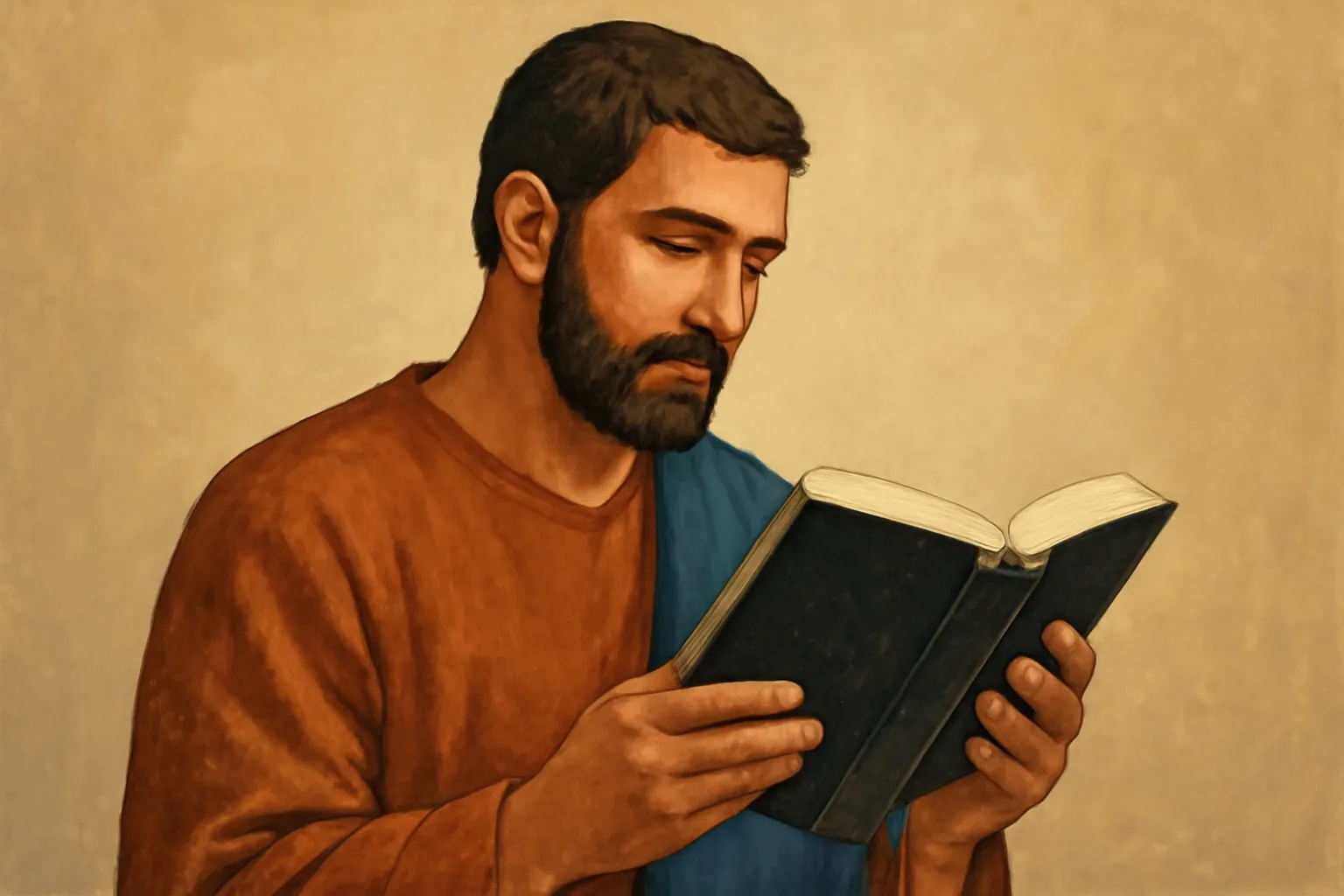
Revelation 7:14 sits at a pivotal moment in John’s apocalyptic vision, offering a vivid snapshot of the people of God in the midst of cosmic struggle. This article explores the question in the title: Who are the saints cloaked in white? By examining the verse in its original imagery, surveying how different scholarly traditions read it, and tracing its connections with other biblical motifs, we gain a broader and more nuanced understanding of the text. Readers will encounter several legitimate angles of interpretation, all focused on the theme of washing robes and the white clothing that signals purity, triumph, and divine vindication.
The verse that anchors this discussion appears in the mid-chapter panorama of Revelation 7. It follows the sealing of the 144,000 from the twelve tribes of Israel and introduces a vast crowd that no one could count from every nation. The line reads in classic phrasing:
These are they which came out of great tribulation, and have washed their robes, and made them white in the blood of the Lamb.
The imagery blends endurance under persecution with the paradoxical cleansing that comes through vicarious sacrifice. The same idea recurs in other visions within Revelation—white robes, ultimate inheritance, and the presence of God with his people in the New Jerusalem. This central image invites readers to ask: what does it mean to be among those who “come out of” tribulation clothed in white?
Textual Variants of the Verse
Different Bible translations render the same line with slight word choices, yet the core meaning remains stable across versions. Noting these variants helps illuminate the interpretive breadth:
KJV: These are they which came out of great tribulation, and have washED their robes, and made them white in the blood of the Lamb.
NIV: These are they who come out of the great tribulation; they have washED their robes and made them white in the blood of the Lamb.
ESV: These are the ones coming out of the great tribulation, and they have washed their robes and made them white in the blood of the Lamb.
NET and other academically inclined translations often expand the modal sense, clarifying that the action of washing and making white is ongoing through the blood of the Lamb, while maintaining the symbolic association with purification and righteousness.
Beyond mere wording, some scholars note that Revelation often uses parallel lines: a crowd from every nation, those who have endured, those who worship, and those who are sustained by divine provision. The recurrent motifs of purity and vindicatory justice are thus intertwined. A compact way to summarize the variants is this: the verse consistently depicts a people who have endured, have been cleansed, and stand in the presence of God because of the Lamb’s redeeming work.
Who Are the Saints Cloaked in White?
The central question—who are these saints—invites several well-supported lines of interpretation. While no single answer collapses all the data of Revelation, the main proposals can be arranged into a few broad categories. Each emphasizes different aspects of the text: endurance under persecution, participation in the whole history of salvation, and the symbol of righteousness through atonement.
Martyrs of the Great Tribulation
One traditional reading is that the verse points specifically to believers who suffered martyrdom during a future period of intense persecution—the “great tribulation” mentioned elsewhere in Revelation. Proponents of this view argue that:
The phrase “came out of the great tribulation” implies a sect or group of people who passed through a severe, externally caused trial.
Their cleansing by blood (the Lamb) signals a substitutionary atonement, consistent with Revelation’s emphasis on martyrdom as a path to witness and victory.
The imagery aligns with martyr themes elsewhere (for example, the martyrs under the altar in 6:9–11 who are vindicated and comforted by God).
In this reading, the “white robes” wipe away the stain of persecution and death, illustrating that faithfulness unto death is not a failure but a path to holiness and public vindication before the throne. Critics of this view, however, note that Revelation’s tribulation imagery is highly symbolic and that the chapter’s broader inclusivity—people from all nations—suggests a more universal reach than a single historical moment of persecution.
The Faithful of All Ages
A second, more broadly historical interpretation sees the verse as describing the eternal, universal people of God—the faithful across the entire era of the church. In this reading:
The phrase “these are they” introduces a perpetual reality rather than a one-time event.
The text’s vision of a crowd from every nation signals a universal church that is reconciled to God through Christ, not limited to a particular locale or era.
The cleansing “in the blood of the Lamb” is seen as the ongoing doctrine of justification by faith—believers are declared righteous because of Christ’s atoning work, not because of their own merit.
In this sense, Revelation 7:14 becomes a timeless portrait of the redeemed—reborn through baptismal grace, sustained by the Spirit, and finally perfected in the eschaton. The white robes symbolize not only past cleansing but ongoing sanctification in communion with the Lamb.
A Symbol of Righteousness in the People of God
A third approach emphasizes symbolism over a specific historical cohort. Here, the focus is on the imagery itself: white robes as a universal marker of purity, holiness, and the righteousness imputed by faith, rather than a strict description of a particular group’s identity or timing. In this reading:
“White robes” are a standard symbolic sign in Revelation for moral and spiritual cleanliness that God grants to his people.
“The blood of the Lamb” is the source of that cleansing, highlighting the central Christian conviction of substitutionary atonement.
The passage thus narrates a theological truth accessible to all believers who trust in Christ, regardless of their place or time in history.
This interpretation emphasizes the solidarity of all who belong to Christ: the saints are defined not primarily by the era of their endurance but by their relationship to the Lamb and the cleansing he affords. It also harmonizes with Revelation’s broader pattern of portraying the church as the bride, the temple, and the liturgical worshipers before God’s throne.
Symbolism of White Robes and the Blood of the Lamb
The core symbols in Revelation 7:14—white robes and the blood of the Lamb—carry layered meanings that illuminate the text for readers across traditions. Understanding these symbols helps illuminate why the verse resonates so deeply with themes of endurance, victory, and divine justice.
White robes signify purity, innocence, and moral rightness. In Revelation, white is repeatedly connected to those who stand before God in righteousness (see Revelation 3:4–5; 6:11; 7:9–17).
The blood of the Lamb signifies atonement, redemption, and the substitutionary sacrifice of Jesus Christ. The paradox of “blood” cleansing a robe that is whitened is a powerful theological emblem: the price paid by Christ is the means by which believers are made clean.
Washing and making white emphasize participation: believers are cleansed, not by their own efforts alone but through God’s gracious work enacted in Christ.
From a historical-theological perspective, the pairing of cleansing and persecution highlights a paradox common in Christian spirituality: suffering, when united to faith in Christ, becomes the avenue through which God’s mercy and righteousness are displayed. The imagery also foreshadows the eventual reversal of all things: where tears will be wiped away (7:17) and God will dwell with his people (7:15–17). The robe and the blood together point toward a salvific arc that begins with cleansing and culminates in intimate, divine presence.
Contexts within Revelation
To interpret Revelation 7:14 responsibly, it helps to read it in dialogue with surrounding passages. The broader narrative of Revelation moves through seals, trumpets, bowls, and visions of worship, divine protection, and cosmic judgment. Several contextual anchors are especially relevant:
Chapter 6 presents the opening of the seals and the emergence of martyrdom and persecution; the question of who will endure is central to the rest of the book.
Chapter 7:9–17 continues the scene with a vast multitude from every nation, providing the foreground for 7:14’s declaration about their origin from tribulation and their cleansing.
Chapter 3 and other sections where white robes feature as the attire of those who overcome (e.g., the promise to the one who conquers in Revelation 3:4–5).
The imagery of God “sheltering” his people and guiding them to springs of living water (reminiscent of 7:15–17) reinforces the pastoral aim of the vision: endurance, protection, and divine provision in the midst of conflict.
By situating 7:14 within this larger arc, readers can appreciate how the verse harmonizes with Revelation’s eschatological hope: the present trial is not the final word; God’s redemptive plan culminates in the triumph of the Lamb and the joy of worship in God’s presence.
Theological Implications and Applications
Beyond textual analysis, Revelation 7:14 offers practical and devotional implications for faith communities today. The verse speaks to spiritual resilience, community solidarity, and the hope of divine vindication. Some thematic applications include:
Endurance in suffering as a legitimate form of faithfulness, not a sign of spiritual weakness.
Assurance of cleansing through Christ’s atonement, which is available to all who believe, reaffirming the gospel’s universality.
Unity of the people of God across time and space, foreshadowing the eternal assembly in worship before the throne.
Hope in divine sovereignty—even in the midst of tribulation, God is at work toward a final, redemptive outcome.
For contemporary readers, this passage invites reflection on confession, identity, and perseverance. Churches may draw on these themes in preaching, catechesis, and liturgy—emphasizing baptismal identity (the cleansing of the robe), the ongoing need for sanctification, and the confidence that Christ’s blood secures a future where God’s presence ends all suffering.
Practical Study Questions and Cross-References
To deepen understanding, here are guiding questions and cross-references that scholars and students often explore. These prompts can be used for personal study, group discussion, or sermon preparation.
What does it mean to be “washed” and “made white” in Christian theology? How do different traditions explain the mechanism and timing of this cleansing?
In what ways does the phrase “great tribulation” function symbolically vs. literally across Revelation? How do futurist, historicist, and idealist readings interpret this term?
How does the imagery of white robes relate to other biblical motifs of righteousness (e.g., Isaiah 1:18; 1 Thessalonians 4:17; Matthew 5:8)?
What is the relationship between the crowd in 7:9–17 and the saints described in 7:14? Do these passages point to a single group or multiple, overlapping groups?
How do conceptions of martyrdom shape Christian ethics today? Can endurance under trial be framed as a form of witness that aligns with revelation’s imagery?
What pastoral lessons emerge from the tension between suffering and triumph in Revelation 7:14?
Cross-referencing key passages can illuminate the themes at work. Notable links include:
Revelation 3:4–5 on overcoming and being clothed in white.
Revelation 6:9–11 on martyrs awaiting vindication and their cries for justice.
Revelation 7:9–17 the larger assembly before the throne and the shepherding of the Lamb.
Isaiah 1:18 the cleansing imagery of whiteness and sin being washed away.
John 1:29 the Lamb of God who takes away the sin of the world, anchoring the atonement motif.
Historical and Denominational Perspectives
Diverse Christian traditions have nuanced takes on Revelation 7:14. While the core symbols remain constant, the emphasis shifts depending on theological frameworks and ecclesial history.
Evangelical and Protestant Readings
In many evangelical interpretations, the emphasis lies on the atonement through Christ and the assurance of salvation for believers who persevere. The white robes symbolize the imputed righteousness given to believers through faith, a central tenet in Protestant theology. The Great Tribulation may be viewed as a future event or as a symbolic picture of testing that believers endure across history, but the essential message remains: Christ’s blood cleanses, and those who trust him are clothed in righteousness.
In Catholic and Orthodox exegesis, Revelation contributes to a broader patrimony of liturgical spirituality. The imagery complements sacramental theology: baptism (washing), Eucharist (participation in the life and death of the Lamb), and the ultimate transformation of the faithful into the fullness of the Kingdom. The white robes are often read as the Church’s purification through grace and its ongoing sanctification, culminating in the eschatological fulfillment.
Prodigious Symbolism in Scholarly Studies
Critical and literary readings emphasize Revelation’s symbolic logic. The imagery of robes washed in the Lamb’s blood resonates with priestly liturgy and the corporate worship found in Revelation 4–5 and 19–22. These scholars highlight how the verse demonstrates the author’s method of weaving judgment, mercy, and worship into a single, coherent vision of salvation.
Frequently Asked Questions
Below are concise answers to common questions about Revelation 7:14 and its interpretation. These are offered to aid understanding and to provoke thoughtful study rather than to replace detailed exegesis.
Does Revelation 7:14 refer to a specific time period? Different traditions interpret the timing differently (future, symbolic of all eras, or a described moment in church history). The essential message—glorified endurance through faith in the Lamb—remains consistent across these readings.
What does “washing robes” signify? It signifies cleansing from sin and imputed righteousness granted through Christ’s atoning work, not a human moral achievement alone.
Why are robes white if the text mentions blood? The whiteness is a result of cleansing by the Lamb’s blood—an image of substitutionary atonement, where the price of sin is paid by Christ, allowing the believer to stand in holy presence.
Are «these are they» the same as the 144,000? Not necessarily; Revelation 7:4–8 refers to the 144,000 sealed from Israel, while 7:9–17 depicts a much larger crowd from every nation. The relationship between these groups is a subject of interpretive debate, often understood as inclusive rather than exclusive.
How should this shape Christian practice today? It offers encouragement to endure suffering, to recognize that cleansing and righteousness come through faith in Christ, and to participate in the worship and unity of the church as the eschatological hope unfolds.
For readers who want to explore Revelation 7:14 in greater depth, consider consulting a range of resources that span translation notes, commentaries, and theological essays. Helpful starting points include:
Commentaries on Revelation (covering historicist, futurist, and idealist approaches)
Introductory overviews of apocalyptic literature in the Bible
Articles on baptismal symbolism and the theology of atonement in Revelation
Ecumenical writings on the church’s mission amid tribulation and suffering
Each of these resources can illuminate how the phrase “these are they who came out of the great tribulation” interacts with broader biblical themes such as redemption, sanctification, mission, and eschatological hope.
In sum, the question “Who are the saints cloaked in white?” invites readers into a layered conversation about the nature of faith, the significance of Christ’s atonement, and the ultimate triumph of God’s kingdom. Whether viewed through the lens of martyrdom, universal salvation, or symbolic purity, Revelation 7:14 remains a powerful depiction of God’s people enduring in faith and clothed in the righteousness that only the Lamb can provide.
Ultimately, the passage invites ongoing reflection: how does a modern reader discern the call to perseverance in a world of trial? How does the message of cleansing invite empathy, justice, and hope for those who suffer? And how does the vision of a redeemed multitude—the white robes shining before the throne—shape worship, ethics, and the daily practice of faith in a world that yearns for peace?