Catholic life is deeply enriched by Scripture, and Catholic Bible study programs offer structured paths for readers to encounter the Bible within the Catholic faith. These programs vary in format—from classroom-style courses and parish modules to self-paced online curricula—and they emphasize how God’s Word is interpreted in light of Sacred Tradition, the Catechism, and the liturgy. A well-designed study program helps participants develop biblical literacy, grow in prayer, and learn how to read sacred texts with both historical context and spiritual meaning. Whether you are a beginner exploring the Bible for the first time or a seasoned reader seeking deeper explanations of sacred texts, a robust program can transform private study into a living encounter with Christ.
In this article, we explore the landscape of catholic bible study programs and highlight the most influential courses, curricula, and online resources. You will find practical guidance on selecting the right track, understanding format options, and building a sustainable study routine that fits your schedule and spiritual goals.
Top Catholic Bible Study Courses and Curricula
Below you’ll find a curated selection of widely used Catholic Bible study programs that have earned the trust of parishes, catechetical leaders, and individual learners. For each entry, we offer a brief description, typical duration, delivery method, and notable strengths. Although not every program fits every learner, together they represent the spectrum of high-quality Catholic Scripture study available today.
Great Adventure Bible Study: The Bible Timeline (The Bible Timeline) — Ascension Press
The Great Adventure Bible Study series, including The Bible Timeline, is one of the most popular avenues for Catholics to study Scripture in a structured, narrative way. Created by Jeff Cavins and colleagues, this curriculum guides participants through the overarching storyline of salvation history—from creation to the Church today.
Format: Video lessons, guided group discussions, and participant notebooks. Often conducted in small groups within a parish or as a home-study track.
Duration: The core timeline course typically spans 24–36 sessions, though many parishes offer condensed versions or extended follow-ups.
Key strengths: Clear storyline of salvation history, emphasis on how the Bible fits together, strong catechetical grounding, practical tools for reading Scripture in everyday life.
Who benefits: Beginners seeking a coherent map of the Bible, adults preparing for sacraments, small-group participants seeking community and accountability.
The Bible Timeline is designed to be used alongside a parish’s devotional life and liturgical seasons. By tracing covenants, kings, prophets, and the fulfillment in Christ, learners gain a framework for understanding individual books in context. The program’s emphasis on sequence, typology, and liturgical reading makes it a durable foundation for further studies.
Unlocking the Mystery of the Bible — The Great Adventure Series
Unlocking the Mystery of the Bible is another flagship course in the Ascension Press catalog that aligns well with the broader Great Adventure Bible Study approach. Co-authored by Jeff Cavins and Tim Gray, this program invites participants to see how the Bible unfolds as a single, coherent narrative that culminates in Christ.
Format: Video lectures, discussion guides, and participant workbooks; often run as parish programs or online cohorts.
Duration: Typically around 8–12 weeks for a standard module, with options for extended or accelerated formats.
Key strengths: Concise entry point for newcomers, strong emphasis on narrative flow, practical applications for prayer and daily life.
Who benefits: People seeking a manageable introduction to biblical structure, busy adults needing a shorter commitment, study groups seeking a shared foundation.
This course complements The Bible Timeline by offering a focused exploration of how key biblical events foreshadow or realize God’s plan in the New Covenant. Together, these programs provide a powerful ladder from Old Testament foundations to New Testament fulfillment.
A Biblical Walk Through the Mass — Dr. Edward Sri
A Biblical Walk Through the Mass focuses on the Catholic liturgy and the way Scripture informs the Mass. Created by Dr. Edward Sri as part of the Ascension Press catalog, this course helps Catholics recognize the biblical roots of the Church’s worship and understand how Scripture shapes every dimension of the liturgical life.
Format: Short video sessions, discussion prompts, and practical reflections for private prayer and parish study groups.
Duration: Often offered as a 6–8 week program, with options for ongoing study or integration into parish programs tied to the liturgical calendar.
Key strengths: Strong connection between Scripture and liturgy, accessible language, relevance to weekly Mass readings, devotion-enhancing insights.
Who benefits: Lectors and extraordinary ministers of Holy Communion, parishioners seeking to deepen liturgical understanding, RCIA participants seeking context for worship life.
For those who want to connect Scripture directly to the Mass they attend, this program can be transformative, helping participants hear echoes of biblical passages as they arise in the Roman Rite.
Word on Fire Catholic Bible Studies — Word on Fire Institute
The Word on Fire Institute offers a suite of Catholic Bible study resources anchored in the ministry of Bishop Robert Barron and the Word on Fire media brand. While best known for media productions, Word on Fire also provides study guides, video series, and recommended reading that make Catholic Scripture accessible to a broad audience.
Format: Video lectures, downloadable study guides, and discussion prompts; some material is integrated with Formed.org for streaming access.
Duration: Flexible; many studies run 4–12 weeks depending on the chosen series and parish format.
Key strengths: Strong visual and theological storytelling, clear Catholic interpretation, emphasis on evangelization and intellectual formation.
Who benefits: Adults seeking a robust, media-rich study, small groups exploring Catholic teaching, RCIA participants needing accessible explanations of Scripture.
Word on Fire studies pair well with personal devotion and liturgical seasons, offering an engaging blend of theology and accessibility for a broad audience.
Formed.org and Parish-Integrated Resources
Formed.org provides a broad library of Catholic media, including Bible studies, study guides, and faith formation curricula. While not a single course, Formed serves as a parish- and home-based education platform that aggregates many community-facing programs, including Scripture-focused paths and catechetical series.
Format: Streaming video, audio programs, interactive e-books, and guided discussions. Content ranges from beginner-friendly introductions to in-depth theological treatments.
Duration: Highly variable; learners can follow self-paced paths or join parish-led cohorts with periodic check-ins.
Key strengths: Convenience, high production value, diverse teaching voices, integration with parish formation programs.
Who benefits: Families, small groups, catechists, and individuals who prefer a digital, on-demand study library.
If your parish uses Formed, you can leverage its Bible studies in combination with other resources to create a cohesive, modular plan that fits your community’s schedule.
St. Paul Center for Biblical Theology — Catholic Bible Study Resources
The St. Paul Center specializes in Catholic biblical studies and provides a range of online courses, study guides, and multimedia content designed to deepen biblical literacy in light of Catholic teaching. While some offerings are independent of a single branded curriculum, the Center consistently emphasizes the unity of Scripture, Catholic doctrine, and the liturgical life.
Format: Online courses, downloadable resources, and live webinars; some programs are designed for parish use, others for personal study.
Duration: Varies by course; many programs run 6–10 weeks, with options for self-paced study.
Key strengths: Strong exegesis grounded in Catholic tradition, emphasis on the Church’s interpretation of Scripture, practicality for ministry formation.
Who benefits: Catechists, seminarians, lay ecclesial ministers, and anyone who wants a high-caliber Catholic approach to Scripture.
The St. Paul Center’s materials are especially valued for their clear theological framing and their tendency to connect Scripture to daily discipleship and parish life.
Other Notable Catholic Bible Study Resources and Curricula
In addition to the flagship programs above, several other faith-formation resources are widely used in parishes and homes. These options provide diverse entry points into Scripture study:
Ignatian-inspired studies that emphasize discernment, Scripture, and spiritual exercises.
Maryknoll and Loyola Press materials offering biblical catechesis and small-group guides for adults and youth.
Little Rock Scripture Study (by Loyola Press) for in-depth, small-group Bible study with Catholic interpretation and discussion guides.
Catholic study Bibles such as the Ignatius Catholic Study Bible (New Testament and Old Testament) that pair verse-by-verse notes with Catholic commentary and references.
When evaluating these options, consider not only the length and format but also how well the materials integrate with Catholic doctrine, the liturgical year, and the Church’s magisterial teaching.
Online Platforms, Communities, and How to Access Them
Today’s Catholic Bible study programs are increasingly digital, making high-quality Bible study accessible beyond parish boundaries. The following platforms and communities are widely used to support catholic bible study programs across the globe.
Ascension Press — A primary hub for The Bible Timeline and related Great Adventure series, with parish kits, leader guides, and participant materials.
Word on Fire Institute — Offers media-rich Bible study resources, theological education, and study guides aligned with Catholic teaching.
Formed.org — A library of Catholic content, including Bible studies, Lenten and Advent pathways, catechetical series, and family faith resources.
The St. Paul Center — Online courses, exegesis-focused studies, and parish-friendly materials that emphasize biblical theology.
Parish-based study groups — Many parishes curate their own study tracks that combine the above resources with local catechetical goals, making in-person or hybrid formats very common.
If you are exploring Catholic Bible study options on your own, a good path is to identify one or two core programs that fit your schedule and then supplement with resources from Formed.org or Word on Fire for broader context and catechetical depth.
How to Choose a Catholic Bible Study Program
With many excellent options available, choosing the right catholic bible study program comes down to aligning your goals, schedule, and preferred learning style. Consider the following criteria when evaluating courses.
Educational objective: Do you want a broad overview of the Bible’s narrative, or a targeted study of a liturgical topic, such as the Mass or Pauline letters?
Format and pacing: Are you looking for a self-paced online track, a live parish class, or a study group that meets weekly?
Time commitment: How many hours per week can you realistically devote to study, discussion, and reflection?
Depth and theology: Do you want a study that leans more toward accessible devotion, or one with rigorous exegesis grounded in Catholic tradition?
Community and accountability: Is a small-group setting important for your motivation and spiritual growth?
Integration with liturgy: Will the study complement your Mass attendance and liturgical seasons, or feel isolated from weekly worship?
Cost and accessibility: Consider course fees, materials, and whether digital access is needed for travel or remote participation.
A practical strategy is to start with a beginner-friendly program such as Unlocking the Mystery of the Bible or The Bible Timeline, then layer in more advanced exegesis or liturgy-focused studies like A Biblical Walk Through the Mass to deepen understanding as you grow.
Catholic Bible study programs can be tailored for various audiences, from ready-to-lead parish groups to individual adult learners and families. Here are some guidance points for common journeys.
Newcomers and seekers: Look for entry-level courses that emphasize the big picture of salvation history, glossary of biblical terms, and a gentle introduction to biblical interpretation within Catholic teaching.
Parish catechesis and RCIA: Choose curricula designed for group learning with discussion guides, catechetical notes, and alignment to liturgical seasons and rites.
Families and youth: Seek family-friendly formats, shorter sessions, and material that connects Scripture to daily life, family prayer, and school curricula.
Adult learners and scholars: Opt for studies with robust exegesis, original language insights, and connections to magisterial teaching, while preserving accessibility and pastoral application.
Beginning to Advanced: A Flexible Roadmap
You can structure your journey through catholic bible study programs in a way that gradually increases depth and breadth. Below is a flexible roadmap that many learners find effective.
Phase 1 — Foundations (4–8 weeks): Start with a broad, narrative-driven program like The Bible Timeline or Unlocking the Mystery to learn how Scripture flows from Genesis to Revelation and how the Old Covenant points to the New Covenant.
Phase 2 — Liturgical Connection (4–6 weeks): Add a course that links Scripture to the Mass, such as A Biblical Walk Through the Mass, to see how the Bible informs Catholic worship.
Phase 3 — Exegetical Depth (8–12 weeks): Engage a more rigorous study with commentary-backed materials from the St. Paul Center or Ignatian-inspired resources for deeper exegesis and theological reflection.
Phase 4 — Integration and Service (ongoing): Use Formed.org or parish study groups to integrate Scripture study with service, catechesis, and evangelization, weaving in prayer, lectio divina, and small-group formation.
Practical Tools and Study Aids
A successful Catholic Bible study program often relies on a thoughtfully curated set of tools. The following are commonly used aids that help learners engage Scripture in a meaningful way.
Study Bibles with Catholic annotations (e.g., Ignatius Catholic Study Bible) to provide footnotes, cross-references, and Catholic interpretations.
Commentaries and concordances that align with Catholic doctrine and bring historical context to the text.
Glossaries and lexicons to illuminate key Greek and Hebrew terms and their theological meanings.
Liturgical calendars and lectionaries to synchronize daily readings with the Church year.
Discussion guides and reflection prompts that promote meaningful group conversations and personal prayer.
Prayer aids such as lectio divina prompts, meditative prayers, and journaling templates to deepen spiritual practice alongside study.
The combination of sound study aids and thoughtful pedagogy helps ensure that learners not only memorize facts but also encounter Christ in Scripture, discern truth, and live out the Gospel in daily life.
Sample 4-Week Start-up Plan for Beginners
If you are just starting out, here is a practical four-week plan that leverages a popular entry-point program while offering room for personal reflection and parish involvement.
Week 1: Begin with an overview of the Bible’s narrative arc using The Bible Timeline. Watch introductory videos, read the opening chapters, and start a reflection journal with a short daily prayer based on the day’s reading.
Week 2: Move into the New Covenant section and examine how key prophecies point to Christ. Discuss in a small group or online forum and identify practical applications for daily life.
Week 3: Introduce liturgical connections by exploring A Biblical Walk Through the Mass or a parallel liturgical study. Observe how Scripture informs the Mass setting, readings, and responses.
Week 4: Combine personal study with group discussion. Create a simple plan to continue with a longer course such as the full Bible Timeline or Unlocking the Mystery of the Bible, depending on interest and time availability.
This starter plan is designed to be adaptable; you can compress or expand each week and tailor it to your group’s pace. The goal is to establish a reliable rhythm—reading, reflecting, discussing, and praying—so Scripture becomes a living conversation with God.
Parish and Diocesan Adoption of Bible Study Programs
Parishes and dioceses frequently adopt a cadence of Bible study that corresponds to liturgical seasons and sacramental prep. When parish leaders choose a Catholic Bible study program, they typically consider the following goals:
Strengthening catechetical formation for adults and youth
Providing a shared language for Scripture and Catholic teaching
Creating opportunities for small-group formation and volunteer leadership
Linking study with the Sunday readings, seasonal devotions, and parish celebrations
In practice, many parishes implement a combination of programs—The Bible Timeline for general adults and A Biblical Walk Through the Mass for those involved in liturgical ministries—while offering occasional enrichment sessions through Word on Fire or Formed.org for varied learning styles. This blended approach helps ensure that Scripture study remains accessible, doctrinally sound, and deeply pastoral.
How to Get Started Right Away
If you’re ready to begin a Catholic Bible study journey, here are concrete steps to help you succeed.
Assess your time and pick a program with a reasonable weekly commitment. If you have limited time, start with a modular 6–8 week course rather than a year-long plan.
Choose a format that suits you: in-person parish groups, small online cohorts, or self-paced study with digital resources. Many people thrive with a combination—a weekly meeting plus independent study on the days in between.
Find a community: join or form a small group. Group study often strengthens accountability, prayer, and shared insights.
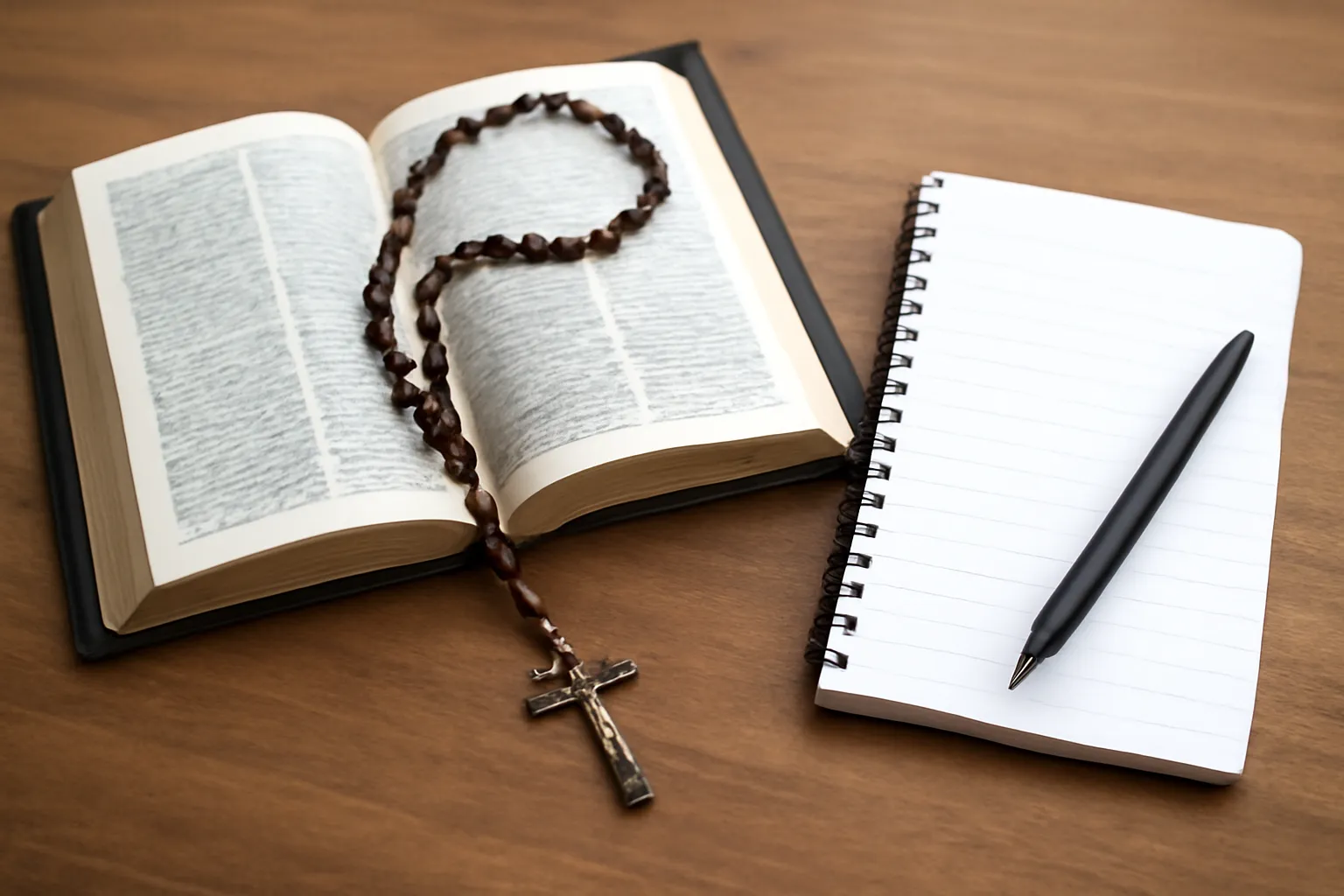
Prepare your study space: set aside a quiet corner, gather a Bible (preferably a Catholic study Bible), a notebook, and a reliable study guide or commentary.
Plan for prayer: pair study with a short, peaceful prayer time—read a passage, reflect on its meaning, and pray for guidance and insight.
Reading the Bible within the Catholic tradition is not simply about understanding what happened in ancient times; it is about inviting Christ into the present moment. The most fruitful catholic bible study programs emphasize:
Sound interpretation grounded in Sacred Scripture and Sacred Tradition, guided by Church teaching.
Lived faith where Scripture informs prayer, worship, and moral discernment.
Community where believers support one another in growth, accountability, and mission.
Prayerful reading that moves beyond information to transformation and encounter with God.
Frequently Asked Questions about Catholic Bible Study Programs
To help you navigate common questions, here are concise answers that reflect best practices and real-world experience.
What is the best entry-point program for beginners?
Many beginners benefit from The Bible Timeline or Unlocking the Mystery of the Bible, which lay out a clear narrative thread and provide practical reading strategies.
Are online courses effective for Catholic Bible study?
Yes. Online courses offer flexibility and access to expert teachers. Look for programs with interactive discussions, quality video content, and user-friendly study guides.
How long should a study last?
Short-to-medium-length programs (6–12 weeks) are excellent for beginners or busy adults; longer or multi-course tracks work well for sustained formation.
How can study align with liturgy?
Choose studies that connect to the Mass, lectionary, or liturgical seasons. For example, pairing a timeline course with a Mass-focused study can enhance liturgical literacy.
Conclusion: The Value of Catholic Bible Study Programs
Engaging with catholic bible study programs invites Catholics to deepen their relationship with Scripture within the fullness of Catholic faith. High-quality curricula—whether the Great Adventure suite, A Biblical Walk Through the Mass, or the multimedia resources from Word on Fire and Formed—provide structured pathways for growth, community, and spiritual renewal. These programs respect the integrity of Scripture, honor the Church’s teaching authority, and empower lay and clergy alike to read, interpret, and live the Word with conviction.
Whether you are seeking an introductory map of the biblical story, an excavation into theological themes, or a pathway that ties Scripture to worship and daily life, the landscape of Catholic Bible study programs offers plentiful options. The key is to choose a track that fits your goals, engage consistently, and cultivate a habit of prayerful study that leads to transformation in Christ.