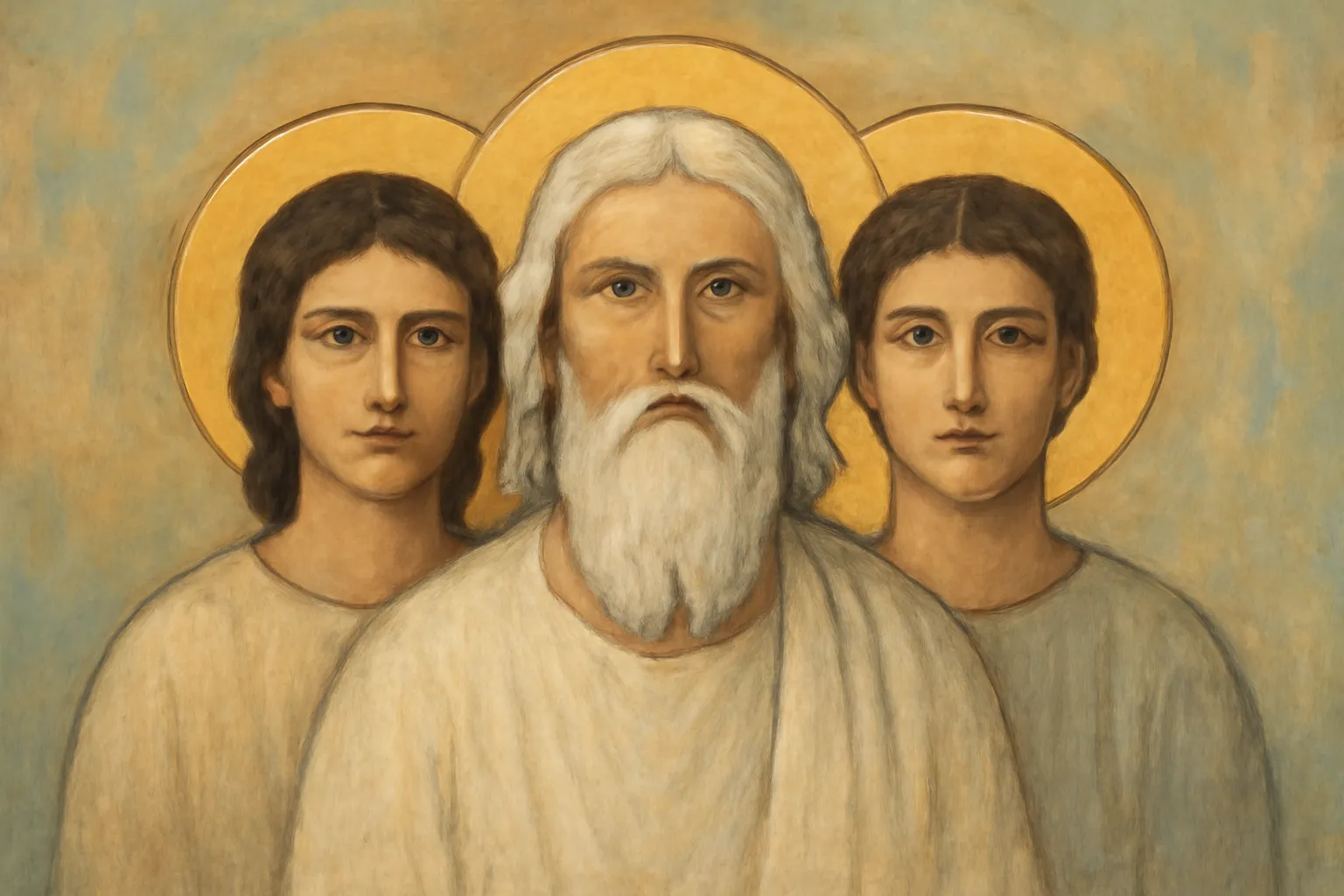
Three persons in one God is one of the most distinctive and sometimes perplexing statements in Christian theology. This article offers a comprehensive guide to the doctrine commonly known as the Trinity, explaining what it means to affirm three persons in one God, how the language developed in early Christianity, and what it means for faith, worship, and daily life today. Although the terminology can be unfamiliar, the core idea is that there is a single divine reality who reveals Himself in three distinct persons who are coequal, coeternal, and consubstantial. This guide uses a range of terms—three-in-one God, triune God, threefold God—to reflect the breadth of language used across Christian traditions, while staying clear about the essential claim: unity of essence with personal distinctions.
What does it mean that there are “three persons in one God”?
The phrase three persons in one God is both concise and robust. It asserts two foundational realities at once:
Unity of God’s essence: There is only one divine being, the single source of all that exists, perfectly transcendent and eternal.
Distinction among the divine Persons: Within the one divine reality, there are three distinct personal centers of consciousness who relate to one another and to the world in unique ways. These are traditionally named the Father, the Son, and the Holy Spirit.
In this language, the Father is not the Son or the Holy Spirit, and the Son is not the Holy Spirit. Yet they share the same divine essence or substance, so there is no division in the nature of God. The classic way to express this is one substance (ousia) in three persons (hypostases). In everyday terms, many scholars and theologians describe the Trinity as a unity with an inner diversity—one God who relates within Himself as Father, Son, and Spirit. This is the backbone of the doctrine of the Trinity, and it has been the subject of debate, reflection, and careful catechesis for two millennia.
Scriptural foundations for the Trinity
Proponents of the doctrine of the three persons in one God point to a number of biblical passages that, taken together, suggest both the unity and the distinction within God. While the exact term “Trinity” does not appear in the Bible, the following texts are frequently cited in support of the doctrine:
Matthew 28:19 — “Go therefore and make disciples of all nations, baptizing them in the name of the Father and of the Son and of the Holy Spirit.” This verse appeals to a triadic formula, underscoring both unity in the divine name and distinction among the three persons.
John 1:1–14 — The Logos (the Word) who is with God and is God, and who became flesh in Jesus. This passage supports the divine status of the Son and the intimate relationship between the Son and the Father.
John 14–16 — Jesus speaks of the Father sending the Helper, the Spirit, who will teach and guide the disciples. The Spirit is described as proceeding from the Father, and later in tradition as sent by the Son—highlighting both procession and distinct personal existence.
2 Corinthians 13:14 — “The grace of the Lord Jesus Christ, and the love of God, and the fellowship of the Holy Spirit be with you all.” A triadic blessing that points to the collaborative presence of the three distinct Persons in the life of the church.
Hebrews 3–4 and Colossians 1 — Passages that emphasize the unique, personal roles of the Son in creation and redemption, and the Spirit’s active work in sustaining and transforming creation.
Scholars also observe that the Old Testament contains hints that Christians later read as foreshadowing the Trinity—not explicit doctrine in the Hebrew Bible, but passages that invite reflection on the activity of God in multiple ways (for example, the plurality of God’s speech in Genesis or the person-like appearances of the Angel of the Lord). The consensus among most Christian traditions is that the New Testament reveals the full pattern of three in one God, and the church’s later creeds and confessions sought to articulate that pattern with clarity and pastoral care.
Historical development: from early reflections to the Nicene Creed
Understanding how the doctrine of the Trinity took shape helps clarify why Christians use the language of three persons in one God. In the earliest centuries of the church, believers wrestled with how to talk about Jesus Christ, the Holy Spirit, and the Father in ways that honored biblical witness without lapsing into theological error. The early church faced significant controversies that compelled formal definitions:
Arianism argued that the Son was a created being and not fully God—raising the risk of undermining the unity of God. The impulse to preserve the full divinity of Christ led to stronger formulation of the Son’s divine status.
Modalism (or Sabellianism) suggested that Father, Son, and Spirit are merely different modes or appearances of the same divine person rather than three distinct persons. The church rejected this to maintain both unity and personal distinction.
Partialism proposed that the Father, Son, and Spirit are parts of God (as in three thirds of God), which also failed to preserve the full indivisibility of divine nature.
Out of these debates emerged a robust, historically grounded articulation of the Trinity. The defining moment for many Christians was the First Council of Nicaea (325 CE), which condemned Arianism and affirmed the Son as begotten, not made, of the same essence as the Father. The key phrase “of one essence” (homoousios) became central. Later, the Nicene Creed refined language about the Spirit and clarified the relationship among the three persons. For many traditions, this period also helped crystallize how Christians should speak about God—without reducing God to a single form or accidentally dividing God into three gods. The three persons in one God formulation thus gained historical legitimacy as a careful balance of biblical witness, philosophical reflection, and pastoral care for the church’s life of faith.
Core concepts: unity of essence, personal distinctions, and the language of relation
Two key theological ideas are essential for understanding the doctrine of the Trinity in its classic form:
Ousia (essence) and hypostases (persons): The Father, Son, and Spirit share the same divine essence, yet each is a distinct hypostasis. This distinction prevents a conflation of the three and preserves personal identity and relationality within the Godhead.
Perichoresis (mutual indwelling): The persons of the Trinity so intimately relate to one another that they dwell within one another without merging. This helps theologians describe the unity of God without dissolving personal distinction.
Another important framework is the distinction between the economic Trinity and the immanent Trinity. The economic Trinity refers to how the triune God acts in the world—creation, redemption, and ongoing sanctification through the Father, Son, and Holy Spirit. The immanent Trinity, by contrast, concerns the internal life of God Himself, independent of creation. Theologians argue that both dimensions are true and that they illuminate how Christians understand God’s actions in history and God’s inner life beyond history.
The three persons in one God: the Father, the Son, and the Holy Spirit
Each of the three persons is fully God, coequal and coeternal, yet there is not a hierarchy that undermines the unity of God. Some summaries emphasize the distinct roles or relational dynamics within the Godhead, while others stress that all three are involved in creation, redemption, and ongoing presence in the world. Here is a concise look at each person, alongside the way theologians often describe their relationship to one another:
The Father: Often described as the source or origin in the Godhead, the Father is associated with the realm of omnipotence, providence, and the ultimate initiator of salvation history. The Father’s authority is not a mere power over the Son or Spirit; rather, in the three in one God, the Father engages in a loving relationship with the Son and the Spirit.
The Son (the Word): The Son is eternally begotten of the Father and, in the incarnation, took on human nature in Jesus Christ. The Son’s work is central to creation and redemption, and the Son is active in revelation, salvation, and the giving of grace to humanity. The eternal generation of the Son is a phrase used to describe this timeless relationship.
The Holy Spirit: The Spirit proceeds from the Father (and, in Western traditions, from the Son as well, a point of difference in some traditions). The Spirit’s work includes convicting, guiding, empowering, and renewing creation. The Spirit is often described as the one who applies the work of Christ to believers, sustains the church, and grants spiritual gifts for ministry and witness.
In articulating these distinctions, Christian theologians insist on co-equality and co-eternity: no person is inferior to another, and the Trinity is not a hierarchy of divinity. The rhythm of association among the Father, Son, and Spirit is characterized by mutual love and eternal fellowship, which theologians sometimes illustrate with the image of a perfect, perpetual circle of giving and receiving love.
Practical implications: worship, baptism, prayer, and daily faith
Belief in the three persons in one God shapes how Christians worship, pray, and live out their faith. Several practical implications emerge:
Baptismal formula: The command to baptize “in the name of the Father and of the Son and of the Holy Spirit” (Matthew 28:19) grounds Christian baptism in the Trinity. This formula emphasizes both unity (one divine name) and the triadic form of God’s self-revelation. Many churches recite or—when appropriate—teach their congregations to recite the baptismal formula as a meaningful act of initiation into the Trinity’s life.
Prayer life: Christians often direct prayers to the Father, through the Son, in the power of the Holy Spirit. The Trinity provides a framework for understanding how God can be approached in worship and how Christ’s mediation and the Spirit’s intercession sustain believers in conversation with God.
Worship and liturgy: Corporate worship acknowledges the triune God as the author of creation and redemption. Hymns, creedal confessions, and liturgical prayers frequently reflect triune language, shaping both doctrine and devotion.
Spiritual formation: The roles attributed to the Father, Son, and Spirit in salvation history invite believers to relate to God in multifaceted ways—honoring the Father’s will, receiving Christ’s atonement, and inviting the Spirit’s transformation into Christ-like character.
In addition, the doctrine of the Trinity has implications for ethical life and ecclesial unity. Recognizing that God Himself is a communion of love encourages Christian communities to cultivate healthy relationships, practice reconciliation, and pursue unity in the Spirit, even amid disagreements. The Trinity becomes not merely a philosophical concept but a pattern for how Christians relate to one another and to the world with humility, courage, and trust in God’s ongoing work.
Common misunderstandings and how theologians respond
Even with careful teaching, the doctrine of the Trinity can invite misunderstandings. Here are a few frequent questions and the orthodox responses that help maintain the historic balance of one God with three persons.
Is the Trinity three gods? No. The church affirms one divine essence shared by the three persons, not three separate gods. The unity of the divine nature remains intact while personal distinctions exist within God.
Are the persons in the Trinity modalists? No. Modalism suggests God appears in three different modes at different times, but the Trinity teaches that the Father, Son, and Spirit exist as distinct persons who relate to one another. The personal distinctions are timeless and real, not merely masks for a single divine form.
Why can’t we say the Spirit comes from the Father and the Son in some traditions (the filioque issue)? The filioque clause (Latin for “and the Son”) is a historical, doctrinal debate about the Spirit’s procession. Some traditions teach the Spirit proceeds from the Father alone, others from the Father and the Son. This is a point of ecumenical discussion and does not overturn the core conviction that the Spirit is fully God and truly humanly present among believers.
What about God’s oneness if Jesus is God? The teaching affirms the full divinity of the Son while maintaining the unity of God. The Son is not a separate god; he is the eternal Word of God who shares the same divine essence as the Father and the Spirit.
Creeds and confessions: a short tour of key statements
Throughout church history, creeds and confessions have sought to summarize the faith once delivered to the saints, including the central claim of the three persons in one God. Here are two especially influential ones:
Nicene Creed (325, expanded in 381): This creed explicitly affirms the full divinity of the Son and, with later wording, the divinity of the Spirit, while maintaining the unity of God—“We believe in one God, the Father Almighty, … and in one Lord Jesus Christ, the only-begotten Son of God, and in the Holy Spirit.” The Nicene formulation became the standard reference point for orthodoxy regarding the Trinity in the Western and many Eastern churches.
Athanasian Creed (often called the Quicunque Vult) : A more detailed doctrinal statement that robustly defends the Trinity and the incarnation, with a strong emphasis on the equality and fullness of the divine persons and the necessity of the unity of God in the worship life of the church.
These creeds are not just ancient documents; they are living theological tools that help churches articulate what they believe about the three persons in one God in worship, catechesis, and daily life. The aim is to guard the church from error while inviting believers into a more intimate understanding of God’s triune life.
Variations in language across traditions
Across Christian traditions, you will encounter a variety of phrases that express the same underlying conviction that there is a threefold Godhead functioning in unity. Some common expressions include trinitarian theology, three-in-one God, the triune Godhead, triune personal God, and three-personed God. While different traditions may emphasize particular aspects (for example, the Father’s sovereignty, the Son’s redemptive work, the Spirit’s sanctifying presence), the shared core remains: one God, three distinct persons, and shared divine essence. Those variations in language can reflect different historical contexts, theological emphases, and pastoral aims, but they still point toward the same central mystery and hope.
Impact on Christian ethics and the church’s mission
The doctrine of the three persons in one God has implications beyond theology proper. It shapes how Christians understand love, community, and mission. A few guiding reflections include:
Relational foundation: The Trinity presents God as relational from all eternity. This can encourage believers to cultivate hospitality, mercy, and mutual giving within communities, mirroring the divine pattern of love and fellowship.
Equality and mutual submission: Within the Trinity there is equality among the Persons. This can inform attitudes of gender equality, leadership, and the distribution of giftedness in church life, with a commitment to unity in diversity.
Grace, not coercion: The Triune life reveals that God’s actions in salvation are mutual and gracious, not coercive. God invites, persuades, and enables, especially through the Spirit, rather than forcing a single, uniform will.
Mission and witness: The Father’s sending of the Son and the Spirit’s empowerment of the church is a model for the church’s mission—bearing witness to the truth about God’s love and justice in the world.
A modern reader’s guide: how to approach the Trinity in daily life
For contemporary Christians, the doctrine of the three persons in one God can be a source of comfort and challenge. Here are practical steps for engaging with this mystery in everyday faith:
Study the biblical text: Read passages like Matthew 28, John 14–16, Colossians 1, and Hebrews with attention to how the Father, Son, and Spirit relate to one another and to creation.
Participate in communal worship: Join in liturgies and prayers that intentionally use triune language, helping you internalize the rhythm of God’s triune life.
Pray with the Trinity: Develop a personal practice that orients prayer toward the Father, through the Son, in the Spirit—recognizing that God is present in personal and communal worship.
Examine your beliefs respectfully: When encountering challenges or questions about the Trinity, seek informed, pastoral guidance and explore the historical creeds and confessional statements that have stood the test of time.
Glossary of key terms
Ousia (essence or substance):
The divine nature shared by the Father, Son, and Holy Spirit.
Hypostasis (person):
The distinct personal subsistence within the one Godhead.
Perichoresis (mutual indwelling):
The interpenetration and unity of the divine persons in a perfect communion.
Immanent Trinity:
The internal life of God as it is in Himself, independent of creation.
Economic Trinity:
God’s actions in salvation history and creation as disclosed to the world.
Homoousios:
“Of the same essence,” a key term in the Nicene Creed defining the Son’s divinity as equal to the Father.
Trinity:
The doctrine that there is one God in three persons: Father, Son, and Holy Spirit.
embracing mystery with clarity and faith
To say there are three persons in one God is to embrace a mystery that is at the heart of Christian faith. It is a claim about the inner life of God that has shaped Christian worship, ethics, and mission for centuries. The doctrine of the Trinity is not merely an abstract puzzle; it is a declaration about the God who reveals Himself as love in three persons, who creates a world out of that love, who redeems humanity through the Son, and who sustains all things by the Spirit. For believers, this means approaching prayer, scripture, and community with a posture of reverent awe and practical responsibility, trusting that the one God who is Father, Son, and Spirit invites us into a life of participation in His triune life. The phrase three in one God thus points beyond a formula to a relationship—God with us, God for us, and God within us—an invitation to live in the divine fellowship that has always been and always will be.