Understanding baptism in the Bible is essential for students of Scripture, church history, and personal faith. This article surveys key bible references about baptism, offering language, themes, and questions to guide study. We will move from the model of Jesus’ baptism to the Great Commission, through the New Testament’s episodes in Acts, and into theology that ties baptism to faith, repentance, death, and life in Christ. The goal is not to settle a single doctrinal conclusion but to equip readers with a broad, careful map of passages, motifs, and ways to approach them in study and worship.
Throughout this article, you will see verses in context, brief quotes, and notes about how scholars and traditions understand baptism. While the exact practice—whether by immersion, pouring, or sprinkling—has varied in Christian history, the central meanings—entrance into the people of God, cleansing from sin, identification with Christ, and empowerment by the Spirit—are consistently highlighted across the biblical record.
Before diving into specific verses, it helps to name a few core themes that repeatedly surface when Christians read about baptism in Scripture:
Obedience and Commission: Baptism is commanded as a response to faith and as a mark of discipleship and mission.
Water and the Spirit: Baptism often intersects with the Spirit’s gift, indicating a transition from old to new life.
Death and Resurrection: Baptism is frequently described as union with Christ in his death and resurrection, leading to a transformed life.
One Body, Many Instances: Baptism appears within the corporate life of the church as a rite that unites diverse people into one Body.
Faith, Repentance, and Forgiveness: The rite is linked to faith in Christ and the forgiveness of sins.
Jesus’ Baptism: The Model and Theological Prelude
Key references: Matthew, Mark, and Luke
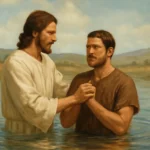
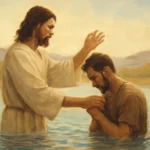
Jesus’ baptism in the Gospels is presented as a model for his followers. The events reveal the Trinitarian dimensions of baptism and foreshadow the ministry to come.
Matthew 3:13-17 – Jesus comes to John, is baptized, and the Spirit descends like a dove while a voice from heaven proclaims Jesus as God’s beloved Son. This passage anchors baptism in the person and mission of Christ and introduces the Spirit’s empowerment for his ministry.
Mark 1:9-11 – Parallel account emphasizing the heavenly affirmation: “You are my beloved Son; in you I am well pleased.”
Luke 3:21-22 – The Holy Spirit descends upon Jesus as he prays, affirming the divine Sonship and the Spirit-led path that begins with baptism.
From these accounts we learn several important truths: baptism foreshadows Jesus’ commissioning, it marks the beginning of his public ministry, and it introduces the Spirit’s presence that will empower the early church. For readers and students, these passages invite reflection on the role of Jesus as the prototype of righteousness and the pattern for Christian initiation.
The Great Commission and the Baptismal Imperative
Commissioned mission: baptize and teach
The Great Commission places baptism at the center of Christian mission and disciple formation. The act is not an end in itself but a doorway into a life of following Jesus in every nation.
Matthew 28:19-20 – “Go ye therefore, and teach all nations, baptizing them in the name of the Father, and of the Son, and of the Holy Ghost, teaching them to observe all things whatsoever I have commanded you.”
Mark 16:16 – “He that believeth and is baptized shall be saved; but he that believeth not shall be damned.”
These verses highlight two interwoven commitments: belief in Christ and obedient baptism. They also reflect the church’s mission to proclaim the gospel to every people group, with baptism as the visible sign of entry into the new community that belongs to the Triune God.
Baptism and Repentance: The Forgiveness Context
Baptism as an expression of repentance and forgiveness
Several New Testament texts connect baptism with repentance, confession, and the forgiveness of sins. In many passages, baptism is the public response to hearing the gospel and turning to God.
Mark 1:4 – “John did baptize in the wilderness, and preached the baptism of repentance for the remission of sins.”
Luke 3:3 – “preaching the baptism of repentance for the remission of sins,” preparing the way for Jesus and inviting response.
Acts 2:38 – “Repent, and be baptized every one of you in the name of Jesus Christ for the remission of sins, and ye shall receive the gift of the Holy Ghost.”
These passages emphasize that baptism is connected to a turning toward God, a cleansing from sin, and the gift of the Spirit. They also illustrate that baptism is linked to confession of faith in Jesus as Lord and Messiah.
Entering into Christ: Union with His Death and Resurrection
Baptism as participation in Christ’s death and new life
Paul’s letters develop a robust theology of baptism as a figure and means of deep spiritual transformation. The imagery of dying with Christ and rising to newness of life anchors the meaning of baptism for Christians across generations.
Romans 6:3-4 – “Know ye not that so many of us as were baptized into Jesus Christ were baptized into his death? Therefore we are buried with him by baptism into death, that like as Christ was raised up from the dead by the glory of the Father, even so we also should walk in newness of life.”
Colossians 2:12 – “Buried with him in baptism, wherein also ye are risen with him through faith of the operation of God, who hath raised him from the dead.”
Galatians 3:27 – “For as many of you as have been baptized into Christ have put on Christ.”
These verses connect baptism to the believer’s identification with Christ’s death, burial, and resurrection. The language of burial and rising emphasizes a decisive transformation—an entry into a life shaped by the risen Christ and empowered by his Spirit.
Baptism in the Early Church: Examples and Applications in Acts
Illustrative cases from the Book of Acts
Acts offers several concise narratives that show baptism within real-church settings: conversion experiences, missionary outreach, and the expansion of the gospel across geographic and cultural boundaries.
Acts 2:41 – “Then they that gladly received his word were baptized: and the same day there were added unto them about three thousand souls.”
Acts 8:36-39 – The Ethiopian eunuch asks, “See, here is water; what doth hinder me to be baptized?” Philip responds, and they go down into the water, he is baptized, and the Spirit halts the pursuit. This passage emphasizes the immediacy and simplicity of baptism once faith is professed.
Acts 10:44-48 – The Holy Spirit falls on Gentiles who hear the word, then they are baptized in the name of Jesus Christ. The event demonstrates God’s inclusion of the Gentiles and the compatible sequence of faith, baptism, and Spirit’s gift.
Acts 16:14-15 – Lydia’s household is baptized after her response to the message, illustrating household baptism and the communal dimension of faith and baptism.
Acts 19:5 – Ephesians who had been baptized unto John’s baptism are re-baptized in the name of the Lord Jesus. This reflects the transition from one baptismal understanding to a fuller apostolic teaching about Jesus’ lordship.
From these accounts we gain a sense of baptism as ecclesial sign—a sign that marks entry into a community that acknowledges Jesus as Lord and follows his teaching. They also highlight the role of faith prior to baptism in the early church’s understanding of salvation and new life.
Common Theological Connections: Spirit, Water, and the Community
How water and Spirit relate in biblical baptism
The Bible presents baptism as a practice that often intersects with the Holy Spirit’s work. Some passages emphasize water as the outward sign, while others stress Spirit-given life that accompanies or follows baptism. Different Christian traditions interpret this relationship in nuanced ways; however, several passages provide a helpful common ground for study:
John 3:5 – “Except a man be born of water and of the Spirit, he cannot enter into the kingdom of God.”
Acts 2:38 – The baptism of water accompanies forgiveness and Spirit-given life: “the gift of the Holy Ghost.”
Romans 6:4 – Emphasizes life in the Spirit by metaphor of burial and resurrection, complementing the outward act of baptism.
In summary, baptism functions as an outward symbol and a catalyst for inward transformation, with the Spirit often signifying the essential dynamic of new life in Christ.
Practical Study Guide: How to Reading Baptism Passages
Study steps and questions for personal or group use
To study baptism passages effectively, consider a structured approach that respects literary context, historical setting, and theological aims. Here are practical steps and questions you can use in quiet time or in a study group:
Context first: Read the surrounding text to understand what the author is addressing. What comes before and after the baptism narrative or teaching?
Key terms: Identify terms like baptism, repentance, remission, remission of sins, Spirit, and death and resurrection. How are they defined in the passage?
Christ-centered focus: How does the passage point to Jesus Christ—who he is, what he accomplished, and what it means to follow him?
Church implications: What does the text suggest about the church’s practice, community life, or mission?
Cross-reference connections: Note cross-references that deepen the theme (for example, linking Romans 6 with Colossians 2 or Galatians 3).
Ethical implications: How should a believer live in light of baptism’s meaning: dying to sin, walking in newness of life, and bearing witness to the gospel?
When planning a study session, you may organize the verses into thematic bundles (e.g., “Baptism and Salvation,” “Baptism and Spirit,” “Baptism in Acts”) and discuss how each bundle contributes to a cohesive biblical theology of baptism.
Frequently Asked Questions and Clarifications
Common questions about baptism in the Bible
Is baptism necessary for salvation? The biblical text presents baptism as closely tied to faith and repentance in several passages (e.g., Acts 2:38; Mark 16:16; 1 Peter 3:21). However, most theologians distinguish between the act of baptism and the salvation that comes through faith in Christ. Many traditions teach baptism as a means of grace that accompanies or follows faith rather than a “work” that earns salvation by itself.
What role does the Holy Spirit play in baptism? The Spirit is often associated with baptism in Scripture, whether as the sign accompanying the rite (Acts 2:38) or as the agent who brings life and empowerment (Acts 10:44-48). The exact sequence may vary across passages, but the overlap is clear: baptism and Spirit-enabled life belong to the same divine plan for believers.
Is baptism valid for infants or only for adults? The biblical data most clearly reflect adult or voluntary baptism in response to faith and repentance (e.g., Acts 2:38; Mark 1:4). Debates about infant baptism have historical roots in church tradition and theological interpretation. Many communities practice infant baptism as a sign of the covenant and inclusion within the church, while others reserve it for those who can profess faith. Studying related passages (e.g., household baptisms in Acts 16:15; 1 Corinthians 1:16) can illuminate different perspectives and why communities disagree.
What is the primary mode of baptism? The Greek word baptizo means “to dip, immerse, or wash.” In biblical contexts, immersion is often inferred from descriptions of going into water and coming up again (e.g., Acts 8:38-39). However, the text does not always specify the method in every narrative. Different traditions emphasize immersion as the original practice, while others accept pouring or sprinkling as valid expressions of the same rite.
How should we approach “one baptism” in Ephesians 4:5? The verse states, “one Lord, one faith, one baptism.” Interpreters discuss whether this refers to a single, normative baptism in the name of Jesus, baptism in the Trinity, or the unity of the church across diverse practices. The key takeaway is the biblical preference for unity and continuity in the baptismal rite across the church’s life.
For contemporary believers and communities, the biblical references to baptism invite several practical applications. Baptism remains a public profession of faith, a spiritual turning toward God, and a pledge to participate in the life of the church and mission in the world. The verses encourage readiness to respond to God’s grace, to seek a life shaped by the gospel, and to welcome others into the community through baptism and discipleship.
When approaching baptism today, many readers find it helpful to articulate a concise summary of its biblical meaning: baptism is an outward sign of inward faith, symbolizing death to sin and resurrection to new life, while linking the believer to the church as the Body of Christ and to the Spirit’s empowering work. This summary, grounded in verses across the New Testament, can guide personal reflection, catechesis, and pastoral practice.
A Glossary of Key Terms for Bible Study
Brief definitions to aid study and discussion
Baptism: The Christian rite of initiation that signifies repentance, faith in Christ, and incorporation into the church; often associated with water immersion, symbolizing the believer’s death to sin and resurrection to new life.
Remission: Forgiveness or pardon of sins; frequently linked with baptism in biblical texts (e.g., Acts 2:38).
Spirit: The Holy Spirit, the divine presence who empowers believers, dwells within them, and marks them as Christ’s own; often connected to baptism’s fullness of life.
Discipleship: The process of following Jesus, learning his teachings, and living out the gospel; baptism commonly appears as the initiation into the disciple community.
Union with Christ: A theological concept describing how believers participate in Jesus’ death and resurrection through baptism and faith (Romans 6, Colossians 2).
Final Reflections: A Biblically Informed Path to Understanding Baptism
Baptism, as presented in the Bible, is a multifaceted and deeply meaningful rite. It situates the believer within the story of God: creation, fall, redemption in Christ, empowerment by the Spirit, and the ongoing life of the church. The verses gathered above provide a map for study, meditation, and community practice. As you explore these references, you will encounter a consistent trajectory: faith in Christ leads to obedient baptism, which in turn inaugurates a life of transformation and mission under the Spirit’s guidance and within the people of God.
Whether you are studying for personal enrichment, preparing for a baptismal class, or teaching a youth group, these passages offer concrete anchors for discussion, prayer, and study plans. Remember that the aim of engaging with baptism in Scripture is not only to understand a ritual but to grow in faith, community, and witness—the ongoing work of God in and through his people.