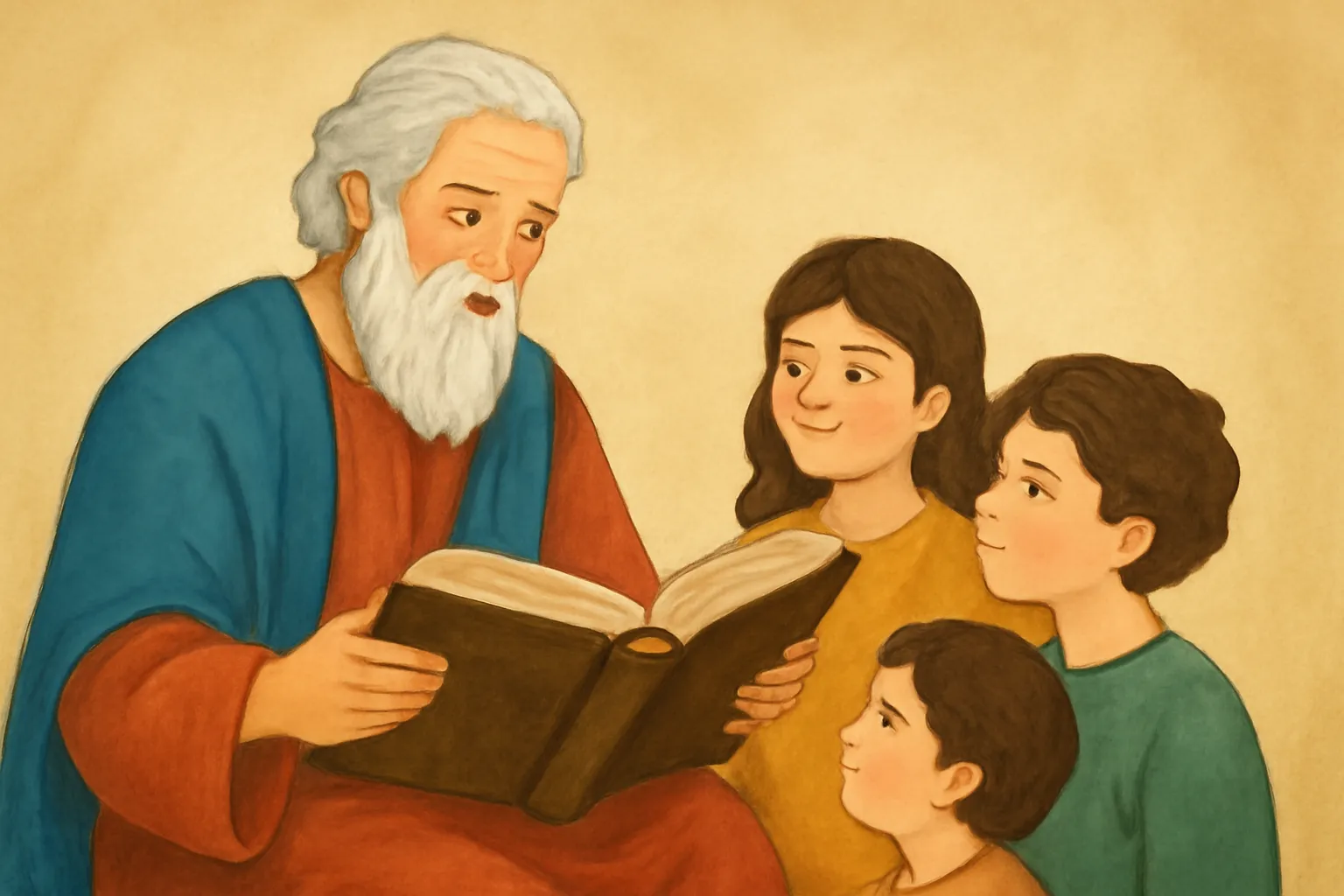
Understanding the Bible Story Bible: A Timeless Compendium for Every Reader
The phrase “Bible Story Bible” evokes a collection that gathers the most enduring narratives of sacred scripture into a readable, approachable format. This kind of resource aims to honor the original texts while presenting them in a way that is accessible to readers across ages and backgrounds. When people refer to a Bible Story Bible, they often mean a curated anthology that blends narrative retellings, context notes, and helpful study aids—creating a bridge between ancient stories and modern understanding. In practice, a story bible like this becomes a companion for classrooms, households, and personal devotional life, offering a structured path through biblical stories that have shaped cultures for centuries.
Beyond merely recounting events, a well-crafted bible story bible emphasizes themes that recur across the biblical arc: faith, hope, mercy, courage, justice, and reverence for the divine. The aim is not to replace the texts themselves but to illuminate them—providing a doorway through which readers can approach the source material with confidence and curiosity. The result is a resource that remains timeless because it speaks to fundamental human questions in ways that survive shifting eras and literary fashions. This article surveys what makes a Bible Story Bible a valuable tool for readers who desire timeless Bible stories presented in a coherent, reader-friendly form.
What is a Bible Story Bible? Variants and Purpose
At its core, a Bible Story Bible is a curated collection that retells or summarizes key episodes from both the Old Testament and the New Testament. It may be marketed as a story bible for families, a student resource used in seminars, or a devotional aid for individual readers. The exact format can vary, but several common elements tend to define this genre:
Formats and Editions
Illustrated story bibles designed for children, with vivid pictures that complement concise narratives.
Narrative-driven editions that move through major arcs—Creation, Exodus, the Psalms in parallel with the life of Christ—while offering optional sidebars for deeper study.
Adult-friendly compilations that keep the original text or close paraphrase while adding scholarly notes and devotional prompts.
Interfaith or ecumenical versions that present the stories with sensitivity to different religious traditions and perspectives.
Why readers turn to a Bible Story Bible
To gain accesible entry points into complex stories that can seem distant when read in isolation.
To discover themes and connections across books and periods, seeing how a single narrative thread weaves through the whole Bible.
To support group study with curated discussion questions and prompts that stimulate conversation.
To cultivate memory and familiarity with the canonical stories, which strengthens both personal faith and literary literacy.
Core Elements of a Timeless Bible Stories Collection
A truly timeless Bible stories collection blends several design components to sustain its usefulness across generations. Here are the pillars that commonly anchor this kind of resource:
Narrative retellings that preserve essential plot points while adapting language for contemporary readers and listeners.
Context notes that illuminate historical, cultural, linguistic, and theological settings without losing narrative flow.
Cross-references to related stories, themes, and biblical passages that invite readers to explore internal connections.
Discussion questions and reflection prompts that encourage critical thinking, moral discernment, and personal application.
Maps, timelines, and glossaries to anchor readers in geography and chronology and to demystify unfamiliar terms.
Character sketches and mini-biographies that provide perspective on the people who populate the stories.
When these elements are harmoniously combined, the Bible Story Bible becomes more than a collection of tales; it becomes a learning landscape that invites readers to observe, question, and apply the lessons embedded in biblical stories. The goal is not to reduce complexity but to create a reliable entryway for thinking biblically about life, ethics, and the divine-human relationship. In this sense, the story bible functions as a bridge between the ancient text and contemporary readers.
For younger readers, the Bible Story Bible often features engaging illustrations, child-friendly language, and short, self-contained chapters. The aim is to nurture curiosity while modeling a pattern of reading that invites questions. For families, a well-designed story bible can become a nightly rhythm—read a story together, discuss a prompt, and connect it to everyday life. In this context, the Bible Story Bible supports parental guidance by providing predictable structure and accessible vocabulary while preserving the integrity of the narratives.
Students and educators
In classrooms and study settings, a bible story bible can supplement curricula by offering structured units that align with learning objectives. Educators appreciate clear summaries, context notes, and discussion questions that prompt critical analysis of source materials, genre, and historical context. For students, the resource can help build literacy skills—summarization, paraphrasing, evidence-based reasoning—while fostering respect for diverse interpretations and traditions.
Scholars and pastors
Scholarly-minded readers may use a story bible as a gateway to deeper exegesis, offering curated references that point toward more rigorous study. For religious leaders and pastors, these collections can provide sermon outlines, thematic threads, and narrative arcs suitable for teaching, preaching, and counseling. Even in these settings, the best Bible Story Bible preserves the reverence and complexity of the original texts, while presenting insights that inform practical ministry.
Interfaith and cultural literacy
Beyond the boundaries of a single tradition, a bible story bible can contribute to interfaith literacy by presenting the Bible’s stories with sensitivity to other faiths and cultures that engage with the text. Readers who approach the Bible as part of a broader human story—rather than as a single doctrinal authority—benefit from a resource that emphasizes universal themes such as justice, mercy, resilience, and the search for meaning. In this sense, the story bible can function as a bridge for dialogue and mutual understanding among communities.
Notable Stories Often Included in a Bible Story Bible
Although every edition varies, many timeless collections foreground a core set of biblical stories that illuminate the arc of salvation history, ethical exhortation, and spiritual wonder. Here are some of the stories frequently featured, with a brief note on why each matters in a Bible Story Bible context:
Creation and the Fall — Foundations for understanding humanity’s relationship with God and the world.
Noah and the Flood — Themes of obedience, judgment, mercy, and covenant.
Abram/Abraham and Sarah — Faith, trust, and the origin of promise amidst uncertainty.
Moses and the Exodus — Liberation, law, and divine provision in community life.
Israel’s Wilderness Wanderings — Rebellion, repentance, and formation as a people.
David and Goliath — Courage, faith, and the tension between power and righteousness.
Daniel in the Lions’ Den — Integrity under pressure and the sovereignty of God in exile.
Jonah and Nineveh — Mercy, repentance, and the breadth of God’s reach beyond borders.
Jesus’ Parables — Rich, compact teachings about the kingdom of God and everyday grace.
Jesus’ Miracles — Power shown through acts of compassion, healing, and restoration.
Crucifixion and Resurrection — The central narrative of hope and divine victory over death.
Within a Bible Story Bible, these stories are often paired with contextual notes, cross-references to related passages, and reflective prompts that help readers connect the ancient narratives to contemporary life. The exact selection can differ by edition, denomination, and intended audience, but the patterns above are widely recognizable as core pillars in many timeless compilations.
Practical Ways to Use a Bible Story Bible in Study and Daily Life
To maximize the value of a Bible Story Bible, readers are encouraged to engage actively with the material. Here are practical strategies that work well in homes, classrooms, and study groups:
Pair retellings with the biblical text—read a narrative in the story bible and then consult the actual verses to notice wording, nuance, and emphasis.
Annotate and reflect—use the margins or a notebook to jot down insights, questions, and personal applications arising from each story.
Use discussion prompts—tackle the discussion questions included in the volume to deepen understanding and practice critical thinking about ethical implications.
Create thematic clusters—group stories by common themes such as obedience, covenant, exile, or hospitality to observe how the Bible treats similar topics across books.
Incorporate maps and timelines—use geographical and chronological tools to situate events within the broader biblical world and history.
Develop a reading plan—map out a journey through the collection across weeks or months, balancing shorter stories with longer narratives for steady learning.
These methods help transform a story bible from a passive book into an active study companion. The timeless stories become more than text on a page; they become occasions for contemplation, dialogue, and growth in wisdom and character.
The Role of Interpretation, Context, and Respect for the Text
A responsible Bible Story Bible acknowledges that interpretation matters. The most effective editions provide historical context, explain genre distinctions (narrative, poetry, prophecy, gospel), and offer notes on authorship and audience. This framework helps readers avoid simplistic readings and instead approach the biblical stories with nuance. For example, recognizing the difference between a prophetic oracle and a historical narrative can prevent misreading poetic language as literal fact. Similarly, understanding the cultural context of ancient Near Eastern law, hospitality customs, and religious practices enriches comprehension and empathy toward the people in the stories.
Readers should also be mindful of translation choices. A Bible Story Bible might present parallel translations, glossaries for key terms, and notes explaining how different versions handle tricky phrases. Respect for text and tradition goes hand in hand with critical inquiry, enabling readers to appreciate the depth of the narratives without losing sight of their spiritual significance.
Variations Across Traditions: What to Expect in Different Editions
Because the Bible spans many traditions and communities, a story bible can vary in tone, emphasis, and scope. Some editions prioritize a strong narrative arc, while others emphasize devotional or moral themes. Some may include:
Ethical reflections tailored to contemporary life, highlighting justice, mercy, and care for neighbors.
Liturgical or devotional framing that aligns with specific worship practices or spiritual disciplines.
Children’s adaptations with simplified language and colorful artwork to engage younger readers.
Scholarly appendices offering concise essays on archaeology, philology, and biblical criticism for advanced readers.
For readers seeking a timeless Bible stories collection appropriate to a particular faith context or educational setting, it helps to preview the preface and notes that describe the edition’s approach. Some readers prefer a more conservative presentation that foregrounds doctrinal interpretation, while others seek a broader, more inclusive frame that invites questions from diverse faith perspectives. Regardless of the edition, the best Bible Story Bible remains committed to clarity, reverence for the text, and a clear path to application in daily life.
In today’s reading environments, the design of a Bible Story Bible matters almost as much as its content. A well-made edition implements accessibility features and aesthetic choices that support comprehension and retention while honoring the sacred material. Key aspects include:
Clear typography and readable layout that reduce cognitive load for readers across ages.
Balanced illustration and text so images illuminate rather than overwhelm the narrative.
Accessible language that preserves meaning while avoiding unnecessary complexity for oral reading or early learners.
Consistent organization—stories grouped by theme, chronology, or literary genre to reinforce connections.
Supplementary material such as glossaries, maps, and timelines that enhance learning without interrupting the flow of reading.
These design choices support a reader’s journey through a collection that presents biblical stories as a coherent whole. When readers encounter a well-structured story bible, they are more likely to notice recurring motifs—promises kept, journeys of faith, acts of mercy, and the tension between human frailty and divine faithfulness. The result is a resource that remains relevant across generations because it speaks to universal human experiences while honoring particular religious traditions.
Keeping Faith with the Source While Making It Accessible
A prominent goal of the Bible Story Bible is to translate sacred material into language and forms that are approachable without compromising the integrity of the stories. This balance requires thoughtful editorial decisions: what to paraphrase, what to quote, what to annotate, and how to frame questions that invite responsible discussion. The best editions:
Respect the reverence due to sacred narratives while offering practical insights for modern life.
Provide clear cross-references that reveal how stories echo across the biblical corpus.
Offer reflective prompts that help readers translate ancient wisdom into everyday decisions—whether at home, in the classroom, or in pastoral ministry.
In this light, the story bible becomes not merely a teaching tool but a companion for personal growth. Readers are encouraged to approach the text with curiosity and respect, to listen for ethical and spiritual lessons, and to consider how these ancient narratives can inform contemporary choices about justice, compassion, and community life. The enduring value of the bible story bible lies in its ability to connect past and present through storytelling that invites reflection and action.
The Enduring Value of the Bible Story Bible
Throughout history, storytellers and educators have turned to the Bible Story Bible as a means of transmitting wisdom, shaping moral imagination, and fostering a sense of shared memory. By presenting timeless Bible stories in a coherent, reader-friendly format, this kind of resource helps readers cultivate familiarity with foundational narratives while encouraging thoughtful interpretation and vital discussion. Whether you are exploring the stories for the first time, revisiting them with a fresh perspective, or guiding others through them, the bible story bible offers a robust framework for learning, reflection, and growth.
In a world that often moves quickly from one sensational headline to the next, a well-crafted Bible Story Bible invites a slower, more deliberate form of engagement. It invites readers to listen deeply to ancient voices, to notice the human and divine dimensions of each tale, and to discern how the timeless truths contained within biblical stories can illuminate present-day choices, relationships, and communities. By bridging the gap between sacred text and everyday life, the story bible remains a living instrument—an instrument of clarity, compassion, and enduring hope for every reader.