In every church, classroom, and family setting, bible object lessons offer a dynamic way to translate scriptural truth into tangible understanding. An object lesson from Scripture uses a simple, concrete item or demonstration to illustrate a principle, a parable, or a promise. The goal is not to entertain but to illuminate, helping learners connect with biblical truth in a memorable way. When done well, these lessons bridge the gap between text and life, inviting participants to reflect, discuss, and apply what they have learned to their relationships with God and with others.
This article is designed to be a practical guide: it explains what a bible object lesson is, shares creative ideas for selecting props and activities, and provides freely usable examples you can adapt for various ages and settings. You’ll find ideas for everyday objects, nature-based demonstrations, recycled and low-cost props, and modern takes that engage audiences who live in a tech-driven world. Whether you are a Sunday school teacher, a small-group leader, a parent, or a youth pastor, you’ll discover ways to embed engaging visual cues into your teaching that point toward lasting spiritual lessons.
A bible object lesson is a teaching method that uses a tangible item to reveal a spiritual truth found in Scripture. Unlike a mere storytelling exercise, an object lesson connects a concept to a concrete representation. It engages multiple senses, invites participation, and creates a compact narrative arc: setup, demonstration, and application. When used well, the experience helps learners remember the message long after the class ends.
Key characteristics of an effective biblical object teaching include:
Clarity: The object and the truth should align clearly without confusing detours.
Conciseness: A brief demonstration is often more memorable than a long lecture.
Scripture: A short verse or passage anchors the lesson in God’s Word.
Relevance: The lesson should connect to everyday life and current needs.
Engagement: Invite participation, questions, or a short discussion to deepen understanding.
Takeaway: End with a practical application or challenge that moves learners toward action.
For many, the best object lesson ideas are those that can be adapted to different ages—from children to adults—and to different contexts, including classrooms, family devotions, and ministry settings. The core aim is to convey a biblical truth with memorable symbolism so that learners can carry the lesson into their daily routines and relationships.
Core Elements of Successful Object Lessons
There are several components that consistently make bible object lessons effective. Understanding these can help you craft your own demonstrations rather than simply copying ideas.
Intentional design: Choose object(s) that visually illustrate a truth and plan a short, focused sequence.
Age-appropriateness: Tailor the complexity of the concept and the level of interaction to the audience.
Scriptural anchor: Introduce or reference a Bible verse that frames the lesson’s message.
Interaction: Include a moment for participants to engage—hold, pass, vote, act, or discuss.
Application: Finish with a concrete, doable takeaway that links the lesson to daily life.
Reflection: Allow a brief moment for questions, prayer, or personal reflection to seal the learning.
Creative Ideas for Bible Object Lessons
Everyday Objects that Spark Truth
Everyday items often work best because they are familiar and accessible. A bible object lesson using common objects can reveal profound truths without asking learners to abandon their surroundings.
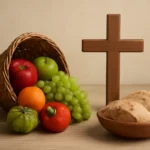
Bread and hunger: Use a loaf or a set of crackers to illustrate Jesus as the “bread of life” (John 6:35). Break a piece and discuss nourishment that lasts beyond the stomach—spiritual sustenance that comes from Jesus.
Stones and faith: A few smooth stones can symbolize the foundation of faith, or the stones set up as reminders of God’s faithfulness (Joshua 4).
Coins and stewardship: Show a jar of coins to talk about faithful giving, the value of what God entrusts to us, and how generosity reflects the heart of God.
Cloth or ribbon and unity: Use tied or woven pieces to discuss unity in the body of Christ and how each member is connected through love (Colossians 3:14).
Nature provides a natural backdrop for truths about God’s creation, providence, and care. An object lesson outdoors can be especially vivid and memorable.
Seeds and growth: Plant seeds in small cups or soil-filled bags to illustrate how faith grows and requires care, watering, and time (Matthew 13:31-32).
Rocks and rivers: A miniature stream or a small rock showing steady flow can illustrate perseverance, resilience, and living water (John 4, James 1).
Leaves or trees: A leaf changing color can symbolize transformation by the Spirit, or a tree’s roots can represent roots of faith in God (Psalm 1).
Recycled and Low-Cost Props: Creative, Budget-Friendly
You do not need expensive props to communicate a powerful message. Recycled materials can carry rich symbolism and teach stewardship.
and renewal: Demonstrate renewal and new life by transforming bottles into a simple project (e.g., a water filter model or a plan for environmental stewardship).
Paper cups and community: Use stacked cups to discuss teamwork and the idea that God builds His church one person at a time.
Strings or yarn and connection: Create a web showing how believers are connected through love and prayer.
Interactive and Participatory Lessons
Engagement increases retention. Involve the audience through hands-on tasks, questions, or collaborative demonstrations.
Pass-it-along object: Use a small item and invite learners to pass it around after a short statement about sharing the Gospel, exploring how God’s grace travels outward.
Matching game: Pair a symbol with a verse or truth, then let participants guess why they belong together.
Group construction: Build a simple structure with blocks or cups, then discuss how unity and cooperation reflect the body of Christ.
Free Examples of Bible Object Lessons You Can Use Now
Below are ready-to-use examples. Each example includes the materials, a concise setup/script, and the teaching points you can adapt for age and setting. These are designed to be adaptable and freely shareable in churches, classrooms, or family devotions.
Example 1: The Bread of Life Object Lesson
Materials: a loaf of bread or several slices, a plate, a napkin, a small sign that says “Bread of Life.”
Setup/Script:
Place the bread on the plate and present the sign “Bread of Life.”
Explain that bread sustains physical life, but Jesus offers spiritual nourishment that lasts beyond today.
Break the bread into two or three pieces and share a short reflection on how Jesus gave His life for us.
Close with a short prayer thanking God for sustaining us and inviting Jesus to be our daily bread.
Teaching Points: Jesus is the true sustainer; spiritual nourishment comes from faith in Him; disciples are invited to depend on Him daily.
Example 2: Stones of Remembrance
Materials: several small smooth stones; a marker to label each stone with a promise (e.g., “God keeps His promises”).
Setup/Script:
Explain that the people of Israel set up stones to remember God’s faithfulness. Each stone can symbolize a way God has helped us.
Ask participants to recall a time God was with them and place a labeled stone in a basket or display.
Share a brief Scripture reference (e.g., Joshua 4) and invite a moment of reflection.
Teaching Points: God’s faithfulness is a pattern in history and in personal life; memory anchors gratitude and trust.
Example 3: The Lost Sheep Parable with a Balloon
Materials: a helium balloon labeled “Lost,” a small stuffed sheep or a picture, a timer.
Setup/Script:
Explain the parable of the Lost Sheep (Luke 15). The balloon represents the one who is lost and the shepherd’s search.
Hide a small sheep figure in a visible area and set a timer for a brief search activity.
When the sheep is found, celebrate as a group and discuss the joy of restoration.
Teaching Points: God values every person; He searches for the lost and brings them home; inclusion and celebration accompany repentance.
Materials: a clear pitcher of water, a small cup, a few tea bags or lemon slices.
Setup/Script:
Discuss Jesus’ statement about living water (John 4). Pour water from the pitcher into the cup.
Invite learners to pray for refreshment and renewal, just as water refreshes the body.
Optionally add lemon or tea for a sensory cue to illustrate spiritual refreshment and joy.
Teaching Points: Christ offers renewal that satisfies the deepest thirst of life; spiritual refreshment leads to a transformed life.
Example 5: Seeds of Faith
Materials: several small seed packets or dried beans, a pot or cup with soil, water.
Setup/Script:
Explain that faith begins small like a seed and grows with care, time, and the sun of God’s truth.
Plant seeds in the soil, water gently, and discuss daily disciplines that help faith grow (prayer, reading Scripture, fellowship).
Teaching Points: Growth in faith is incremental; discipleship requires ongoing nurture and patience.
Example 6: The Net Full of Fish
Materials: a small fishing net or a mesh bag, paper fish cutouts with names or needs written on them.
Setup/Script:
Share the calling of the disciples by Jesus to be fishers of men (Matthew 4). Use the net to symbolize reaching out to others.
Ask participants to name one person they can share God’s love with this week, placing their “need” into the net.
Teaching Points: Share the Gospel; every believer has a role in gathering others into God’s family; mission is a communal effort.
Example 7: A Cup of Kindness
Materials: several disposable cups, water, a marker to label cups with acts of kindness.
Setup/Script:
Label each cup with a kind action (e.g., forgive, listen, serve, share, encourage).
Fill cups with water to illustrate how small acts of kindness can overflow into the lives of others.
Teaching Points: Kindness is contagious; our actions ripple outward and reflect God’s love.
Example 8: Armor of God Mini-Display
Materials: simple props representing pieces of armor (belt, shield, helmet, breastplate, sandals), a short verse references (Ephesians 6).
Setup/Script:
Place the items in a line or on a small display. Explain each piece and its spiritual meaning.
Discuss how believers are equipped to stand firm in faith, with prayer as a crucial element of readiness.
Teaching Points: Spiritual warfare is real, but God provides protection and strength through faith, truth, and prayer.
Example 9: The Lantern of Hope
Materials: a small lantern or flashlight, a piece of dark cloth to symbolize night, a verse about light and guidance (Psalm 119:105).
Setup/Script:
Darken the space slightly and reveal the lantern as a symbol of God’s guidance.
Read or paraphrase Psalm 119:105 and discuss how God’s Word lights our path even when life feels dark.
Teaching Points: God provides direction through His Word; believers are called to illuminate the world with truth and love.
Example 10: The Prayer Chain
Materials: a string or yarn, clothespins or small chips with names or needs, a wall or board to display the chain.
Setup/Script:
Each participant writes a prayer request on a label and clips it to the chain.
As prayers are offered, connect the labels into a continuous chain to symbolize unity in prayer.
Teaching Points: Prayer connects believers across time and distance; together we bear one another’s burdens.
Example 11: Reflection Mirrors
Materials: small mirrors or reflective surfaces, a verse about identity in Christ (2 Corinthians 5:17).
Setup/Script:
Ask participants to look into the mirror and reflect on who they are in Christ.
Share a short devotional about new creation and the value God places on each person.
Teaching Points: Identity in Christ shapes our actions; we reflect God’s image in daily life.
Example 12: The Petals of Graciousness
Materials: several paper petals or small cards, a vase or jar, a marker.
Setup/Script:
On each petal write a fruit of the Spirit or a gracious action (love, joy, peace, patience, kindness, goodness, faithfulness, gentleness, self-control).
Place petals in the vase and read aloud each trait, discussing how Christians practice these qualities in daily life.
Teaching Points: The fruit of the Spirit grows in community and personal discipline; grace is cultivated through practice.
Practical Tips for Crafting Your Own Bible Object Lessons
Whether you are preparing for a weekly class, a special event, or a family devotional, these practical tips can help you design bible object lessons that resonate.
Know your audience: Consider age, attention span, and cultural context. Adapt the complexity of the concept and the level of participation accordingly.
Start with a clear aim: Define the single truth you want learners to take away. Build the object lesson around that aim.
Scripture first, then object: Introduce a brief verse or story that anchors the lesson before introducing the object.
Plan for interaction: If possible, include a moment for learners to handle the object, respond to a prompt, or participate in a quick activity.
End with application: Offer a concrete, doable step learners can take during the week—an action, a thought, or a prayer.
Be adaptable: If you cannot obtain a particular prop, brainstorm alternatives that convey the same truth using different materials.
Safety and accessibility: Ensure materials are safe for the age group, easy to clean up, and accessible to everyone in the room.
Adapting Object Lessons Across Ages and Settings
A strong bible object lesson can be scaled up or down to fit a variety of contexts. Here are a few strategies:
Youth and young adults: Incorporate current-life analogies, quick demos, and opportunities for small-group discussion to deepen insight.
Children: Use bright visuals, hands-on activities, and shorter sessions. Emphasize storytelling and concrete outcomes.
Families: Encourage a brief home-based activity that families can do together after the lesson, reinforcing the message in daily life.
Adult education: Connect object lessons to broader theological themes, historical contexts, or practical ministry applications.
Closing Thoughts: The Power of Visual Demonstration
The beauty of a well-crafted bible object lesson lies in its ability to translate abstract spiritual truths into concrete experiences. A simple object, well-timed questions, and a clear biblical anchor can transform a classroom into a place of discovery. When learners first encounter a physical symbol that embodies a truth, they are more likely to remember and model that truth in the days ahead. That is the heart of object-based teaching: it helps scripture come alive, fosters communal reflection, and invites ongoing growth in faith.
If you are just starting, begin with one or two core truths you want to emphasize—identity in Christ, God’s faithfulness, the call to love others—and build your lesson around an accessible object that naturally illustrates that truth. Over time, you will accumulate a personal library of versatile ideas and ready-to-use templates, each designed to spark curiosity, deepen understanding, and cultivate a lifestyle of following Jesus.
For more inspiration, consider compiling a personal or church resource file of bible object lesson ideas and their corresponding materials. You can categorize them by theme (grace, forgiveness, trust, service), by object type (everyday items, nature, recycled materials), and by audience (kids, teens, adults). Keeping notes on what worked well and what could be refined will help you tailor future lessons and maintain freshness in your teaching.
In the end, the most effective biblical object teaching is not about a single clever demonstration; it is about guiding learners toward a living encounter with God through His Word. Let your object be a bridge, not a distraction; let your questions invite discernment, and let your takeaway propel action. By combining thoughtful props, relevant scripture, and meaningful application, you can create bible object lessons that equip, inspire, and transform.