Bible prophecies about Israel have shaped centuries of faith, interpretation, and hope for people across many traditions.
From the earliest covenantal promises to the eschatological visions of exile, regathering, and the restoration of a prophetic role for the land and people, the biblical narrative presents Israel as a focal point in the drama of God’s redemptive purposes. This article surveys the major strands of prophecy about Israel, highlighting the language, the scriptural contexts, and the ways readers have understood these prophecies in different eras. It is written to inform and to encourage careful, thoughtful engagement with the biblical text and with the ways communities read it today.
Foundations in the Covenant: The Land, the Seed, and the Blessing
The biblical story begins with promises that frame Israel’s identity and destiny. Three interwoven components—land, descendants, and blessing—are central to the Abrahamic Covenant, which in turn shapes later prophetic expectations about Israel.
Land promise: God commits to giving the land of Canaan to Abraham’s descendants as an eternal possession (Genesis 12:7; 15:18; 17:8). The land is not merely a geography; it is associated with covenantal legitimacy, the place where God’s blessing would be experienced by the nations.
Seed and blessing to nations: God’s promise to make Abraham a great nation and to bless those who bless him (Genesis 12:2-3) implies a future line of descendants who will carry God’s purposes into the world. The promise of a kingly line emerges from this seed picture, culminating in messianic expectations.
Everlasting covenant: The language of an enduring relationship between God and Abraham’s descendants underlines that the relationship is not merely conditional on human faithfulness; it has a divine durability that shapes later prophecies about the people of Israel.
In the prophetic books, these thematic strands reappear with fresh urgency: a people in land, a people who experience both privilege and responsibility, and a people whose future role in God’s plan remains inseparably tied to their identity as Israel.
Exile, Return, and Restoration: The Hermeneutic of Dispersal and Gathering
A major arc in biblical prophecy concerns the experience of exile and the promise of return. The prophets repeatedly speak of a present judgment that leads to a future restoration—political, spiritual, and cosmic in scope. The language of exile is both concrete (Babylon, Assyria) and symbolic (separation from God’s presence, defilement of the land). The prophecy about gathering and restoration demonstrates the idea that Israel’s discipline has a trajectory toward renewal and mission.
Prophetic motifs of exile and return
Return after captivity: Jeremiah 29 and the post-exilic returns in Ezra-Nehemiah illustrate a pattern in which God’s people are called to rebuild and renew a covenantal life in the land after a period of judgment (Jeremiah 29:10-14; Ezra 1–6; Nehemiah 2–7).
New covenant and internal reform: Jeremiah 31:31-34 envisions a time when God writes the law on the hearts of his people, signaling a renewal that goes beyond mere external obedience and toward a transformed community.
Valuable prophecies of return and revival: Ezekiel’s vision of dry bones (Ezekiel 37) and other passages describe a national awakening and the restoration of renewed life to the house of Israel.
Prophetic anticipation of leadership and service: The prophets envision a people who would live in a way that bears witness to the nations, even as they reestablish worship, justice, and mercy in the land.
The theme of exile and restoration is a lens through which many readers understand not only historical events but also future expectations: a people shaped by exile who are destined for a renewed calling in the world.
Jerusalem and the Temple: The City as Symbol and Stage
Jerusalem and the temple are central in prophetic literature, both as a physical locale and as a symbolic center of divine-human encounter. The prophets describe Jerusalem not only as the capital of Israel but as the focal point of God’s plan for the nations. The restoration of Jerusalem is often tied to the return of exile and to renewed worship in the land.
Prophetic portraits of Zion and the temple
Zion as a place of blessing and instruction: Isaiah and Micah picture Zion as the mountaintop from which the word of the Lord goes out to the nations (e.g., Isaiah 2:2-4; Micah 4:1-5), signaling the universal reach of Israel’s God.
Temple-centered vision: The prophetic books envision a future where true worship operates from a restored temple and where the city serves as a beacon of righteousness and justice.
Jerusalem under judgment and mercy: The prophets do not sanitize the city’s history; they hold both its privilege and its responsibility before God, and they describe a time when God will vindicate his people and reconcile the nations to himself.
The language about Jerusalem and the temple reflects a deep conviction that geography and worship are tightly bound to God’s purposes in history. For many readers, Jerusalem remains a symbol of covenant fidelity and the longing for God’s presence to dwell fully among his people.
The Messiah and Israel: An Expectation with Global Reach
A robust stream of prophecy centers on the Messiah—born in the line of David, anticipated by the prophets, and recognized as the one who would rescue Israel and bring blessing to the nations. The reinterpretation of these passages in the New Testament and in various Christian and Jewish traditions has influenced how people conceive of Israel’s role in salvation history.
Key messianic prophecies and their themes
Lineage and reign:Messiah from the house of David (Isaiah 11:1-5; Jeremiah 23:5). The expectation is not merely a political deliverer but a ruler who embodies justice, wisdom, and righteousness.
Divine role for the Messiah: Isaiah 9:6-7 portrays the coming child as a divine king who will bring peace and justice, a theme that resonates with perspectives on Israel’s national restoration and spiritual renewal.
Birthplace and meaningful prophecy: Micah 5:2 points to Bethlehem as the birthplace of the ruler in Israel, highlighting the humble origins of what will become a world-changing figure.
Enduring significance for Israel: Romans 11:26 and other New Testament passages discuss Israel’s ongoing place in God’s plan, indicating that the salvation narrative has a future dimension for the people of Israel.
The Messiah’s role in these prophecies is not only about personal salvation but about the formation of a renewed covenant community that would embody God’s blessing to all nations. Different traditions emphasize different aspects—some stress national restoration for Israel, others highlight a more universal scope of salvation that flows through Israel to the world.
Gog and Magog: Nations at the End of the Age
The prophecies about Gog and Magog (notably in Ezekiel 38–39) present a dramatic scene in which hostile forces from the north and other regions converge against Israel. The text emphasizes God’s ultimate sovereignty, the judgment of the nations, and Israel’s vindication. This material has been interpreted in various ways across traditions: some see it as a literal future invasion tied to eschatology, while others read it as symbolic of spiritual conflict or as a historical/prophetic frame for repeated cycles of conflict in the land.
Divine intervention: God acts decisively to defend Israel and demonstrate his supremacy over nations that oppose his purposes.
Judgment and mercy: The prophecy foregrounds consequences for the aggressors but also the opportunity for repentance and restoration among the people of God.
Enduring dignity of Israel: Even amid danger and judgment, Israel is the stage for God’s deliverance and the unfolding of his plan for the nations.
Israel in Eschatology: Regathering, Reunification, and the Universal Horizon
A central curiosity for many readers is how the various strands of prophecy describe Israel’s future in the end times. A number of texts point to a regathering of the dispersed people and a renewed national and spiritual life in the land, while other passages emphasize the ultimate sovereignty of God over history and the transformation of all things in the final chapter of the story.
Regathering and national restoration cues
Two-time regathering language: Several prophetic passages speak of a second regathering that renews the people in a way that prepares them for God’s purposes in the last days (Isaiah 11:11-12; Ezekiel 37; Zechariah 8:7-8).
Jerusalems’ centrality in prophecy: The city is repeatedly described as the focal point for divine activity and judgment, a place where God’s presence and promises are publicly manifested among the nations.
Universal dimensions: Even the most Israel-centered prophecies often point beyond Israel to a restoration that serves God’s redemptive purposes for all peoples, signaling a broader mission that includes the nations.
Modern Israel and Prophecy: Classic Readings and Contemporary Reflections
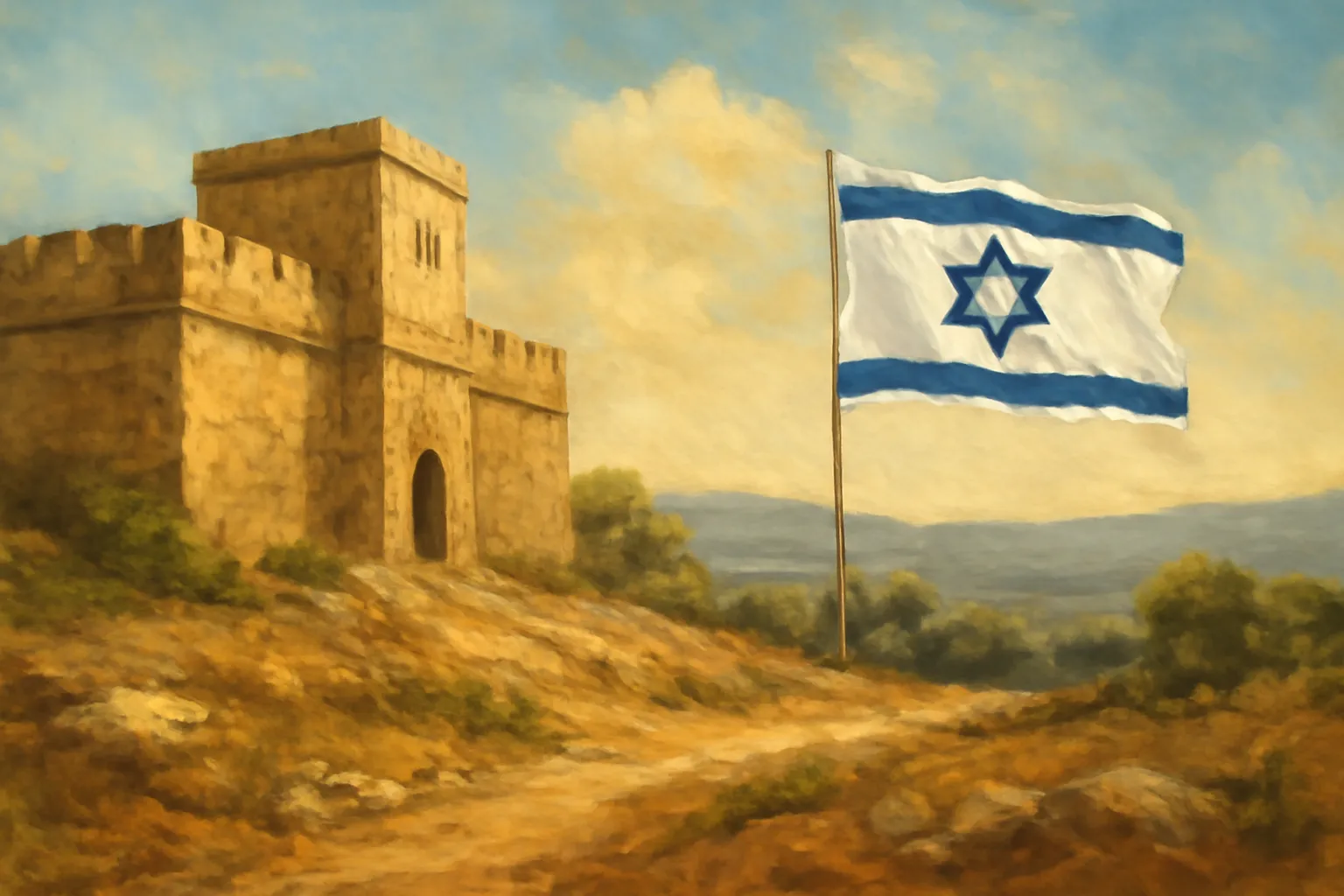
The founding of the modern state of Israel in 1948 and subsequent events, such as the 1967 reunification of Jerusalem, have prompted extensive discussion about how biblical prophecy should be interpreted in the modern era. Readers across traditions have offered a spectrum of views, from literal fulfillment of national regathering to symbolic readings that understand “Israel” as a spiritual people or as a representative focus of a broader redemptive plan.
Two common interpretive approaches
Premillennial/dispensational perspective: This approach often reads certain prophecies as predicting a literal regathering of the Jewish people to their ancestral land, the rebuilding of a temple, and a sequence of end-time events. Proponents typically see the modern state of Israel as a partial fulfillment that points to a future, climactic fulfillment in which national Israel plays a central role.
Covenant or non-dispensational reading: In this view, many prophecies are interpreted as rooted in covenants with Israel but not necessarily requiring a political-national fulfillment in every stage. The focus may shift to spiritual regathering, repentance, and the inclusion of Gentiles within a renewed people of God, with Israel’s significance understood in a broader, covenantal sense.
Regardless of the interpretive framework, the prophecies about Israel invite readers to consider questions about land, identity, vocation, and the malevolent or benevolent use of power. They also challenge communities to reflect on how they relate to Israel in the present age, whether through solidarity, study, prayer, or service to the vulnerable.
Major Thematic Threads in Prophecy About Israel
Land as vocation: The land is not merely a geographic prize; it carries the vocation of Israel as a people set apart to bear witness to the God of justice and mercy.
Enduring peoplehood: Israel’s identity persists through exile, oppression, and renewal, underscoring a resilient sense of nation and covenant.
Messianic expectation: The Messiah is a figure who unites divine kingship, righteous rule, and universal blessing, with Israel as the stage where this drama unfolds.
Jerusalem as litmus and beacon: Jerusalem functions as a symbolic center of worship and a real political site, serving as a touchstone for understanding God’s plans with the world.
Judgment and mercy: The prophets consistently balance judgment on idolatry, injustice, and national arrogance with mercy, restoration, and the invitation to repentance.
Questions, Debates, and How Readers Engage the Prophecies Today
The prophecies about Israel have sparked a rich and sometimes contested dialogue among scholars, clergy, and lay readers. Some of the central questions include:
Does modern political Israel fulfill biblical prophecy? Some traditions view the 1948 establishment and subsequent events as a sign of prophetic alignment; others caution that biblical prophecy often transcends or reinterpret mid-20th-century political milestones.
Is Israel’s regathering primarily national, spiritual, or both? Interpretive traditions differ on whether regathering is primarily a political return to a homeland, a spiritual return to the covenant, or a combination of both.
What is the role of the church in prophecies about Israel? Some readers emphasize solidarity with Israel as part of the church’s witness, while others emphasize the distinct and continuing identity of the people of God as both Israel and the broader spiritual community.
How should readers interpret passages like Gog and Magog? Is this a literal end-time event, symbolic instruction about spiritual warfare, or a historical forecast with multiple fulfillments?
What is the ultimate telos (end) of prophecies about Israel? Across traditions, interpreters ask whether the ultimate aim is national restoration, universal peace, the restoration of worship, or the renewal of all things through the Messiah.
The Bible presents Israel not merely as a historical people but as a living thread through which the drama of salvation-history unfolds. The prophetic visions about Israel emphasize that God’s purposes in history are not accidental but deliberate, marked by promises, judgments, transformations, and ultimate restoration. For readers today, these prophecies offer:
Historical insight: They illuminate how ancient covenants, political realities, and spiritual commitments shaped the past and continue to influence present understandings of land, nationhood, and faith.
Spiritual reflection: They invite deeper consideration of how covenants shape contemporary life—personally, communally, and in the way communities relate to Israel and to the broader world.
Hopeful anticipation: They sustain a sense of purpose and direction for those who believe that God remains at work in history, guiding nations and peoples toward a future in which justice, peace, and righteousness prevail according to his design.
As readers continue to study prophetic texts, it can be helpful to approach them with a few guiding practices: read them in their literary and historical setting; compare multiple biblical witnesses across both the Old and New Testaments; acknowledge the diversity of interpretive traditions; and seek to discern what these prophecies reveal about God’s character, his faithfulness, and his ongoing invitation to participate in his redemptive work.
In sum, bible prophecies about Israel offer a rich tapestry of themes—covenant faithfulness, land and identity, exile and return, Jerusalem’s destiny, and the coming Messiah—that together form a compelling account of Israel’s role in the unfolding story of God’s kingdom. Whether read as a historical sequence or a living, future-oriented promise, these prophecies invite readers to engage with the Bible not merely as a repository of ancient words, but as a dynamic conversation about God’s purposes for his people and for the world.