Baptist and Catholic — Two Major Christian Traditions
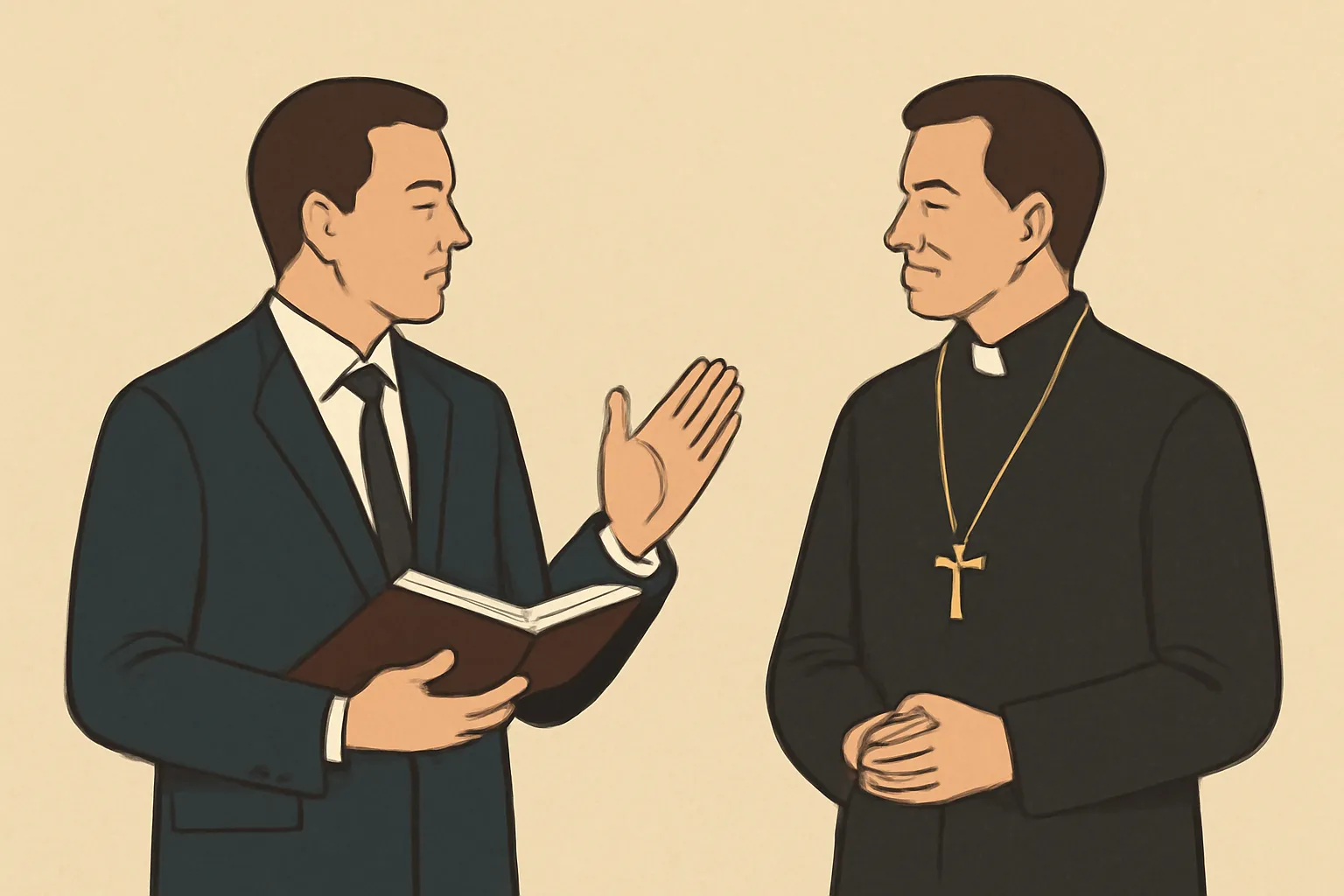
When people discuss baptist tradition in contrast to Catholic belief, they are often engaging with two of the largest streams of Christianity. This article offers a careful, balanced look at Baptist v Catholic perspectives across three core dimensions: beliefs (doctrines about God, salvation, and the nature of the church), practices (worship, sacraments, and church life), and history (origins, development, and key turning points). Readers should expect a clear, not sensational, comparison that highlights where these two paths converge and where they diverge.
It is helpful to recognize that the phrase Baptist v Catholic signals not a single monolithic system but rather two broad families. The Baptist tradition emphasizes local church autonomy, believer’s baptism, and Scripture-driven worship. The Catholic tradition centers on a universal church with rooted sacramental life, apostolic succession, and a unified magisterium. In the pages that follow, we will explore Baptist–Catholic differences in a way that respects both communities and invites informed understanding.
Historical Background: The Origins and Development of Two Traditions
The story of Baptist history begins in the early modern period, with roots tracing to groups that practiced believer’s baptism and asserted local church autonomy. The movement emerged in places like England and the Low Countries during the 16th and 17th centuries, influenced by Anabaptist currents and the broader Reformation. Early figures such as John Smyth and Thomas Helwys helped establish congregations that emphasized personal faith, congregational governance, and baptism upon confession of faith. In the long arc of Baptist development, distinct strands—General Baptists and Particular Baptists, for example—emerged and later spread around the world through missionary work and migration.
By contrast, the Catholic Church traces its continuity back to the earliest Christian communities in the Mediterranean basin. The term Catholic (from the Greek katholikos, meaning «universal») reflects the idea of a worldwide church guided by apostolic succession. The central narrative of Catholic history includes pivotal epochs such as the Great Schism (1054), which divided the Western church from the Eastern, and the medieval era in which sacramental life and the Papal office took on a more formalized structure. The Council of Trent (1545–1563) responded to the Reformation by articulating Catholic doctrine on grace, justification, and the seven sacraments, while the Second Vatican Council (1962–1965) initiated reforms in liturgy, ecumenism, and church engagement with the modern world.
When one asks about Baptist–Catholic dialogue, it is not merely a history lesson but a study of how two traditions interpret faith, practice, and community life. The history of baptist v catholic differences is therefore as much about continuity as it is about critique: continuity in the sense that both claim to follow Jesus Christ, and critique in the sense that they disagree on authority, sacraments, and the shape of the church.
Timeline snapshot
Baptist history: Emergence in the 17th century with an emphasis on believer’s baptism and congregational governance.
Catholic history: Uninterrupted lineage from the apostles according to Catholic teaching, with creedal formulations and a hierarchical structure.
Key doctrinal turning points in Protestant-Catholic dialogue include the Reformation, the Council of Trent, and the Second Vatican Council.
Contemporary ecumenical efforts aim to understand common ground while honoring distinct identities.
Authority, Scripture, and Tradition: Where Do We Stand?
A central axis in the baptist v catholic conversation concerns who has authority to teach, interpret, and apply the faith. The two traditions diverge on how Scripture and Tradition relate to one another and who guides the church in interpreting the Bible.
In the Catholic Church, Scripture and Sacred Tradition are seen as a single deposit of faith entrusted to the Church. The Magisterium—the teaching authority of the Church, embodied in the Pope and the bishops—interprets both Scripture and Tradition to define doctrine and guide practice. This framework holds that some truths are not explicit in the Bible alone but are handed down through the generations as part of the apostolic succession. The result is a unified approach to faith that encompasses not only what is written but also how the living church has understood it for centuries.
The Baptist view: Scripture alone and local interpretation
In the Baptist tradition, the principle often summarized as sola scriptura asserts that the Bible is the ultimate authority for faith and practice. The emphasis is on the sufficiency of Scripture and the accountability of each local congregation to God rather than to a centralized magisterium. This does not mean a rejection of tradition, but Baptist communities typically value historical Christian writings as helpful but not authoritative in the same way as the biblical text. Local church autonomy is a hallmark; each congregation governs its own affairs, selects its pastor, and interprets Scripture in light of its conscience and the guidance of the Holy Spirit.
Apostolic succession vs local church governance: Catholics claim continuity of leadership through a lineage of bishops dating back to the apostles; Baptists stress voluntary associational relationships and local church autonomy.
Magisterium vs pastoral leadership: Catholic interpretation rests with the Pope and bishops; Baptist interpretation rests with elders and, in many cases, the broader congregation.
Your Bible and tradition vs the Bible plus church life: Catholic practice includes liturgy, sacramental theology, and patristic writings as interpretive guides; Baptist life centers on Scripture’s authority and the preaching of the Word.
Sacraments and Worship: The Heartbeat of Practice
How a community practices faith often reveals its core convictions about the nature of grace, worship, and community life. In baptist v catholic comparison, the most visible differences tend to surface in sacramental theology and the way worship is structured.
Number and understanding of sacraments/ordinances
Catholic Church: Teaches that there are seven sacraments that confer grace, administered through sacramental rites. These are Baptism, Confirmation, the Eucharist, Penance (Reconciliation), Anointing of the Sick, Holy Orders, and Matrimony.
Baptist tradition: Typically recognizes two ordinances (or ‘constituted acts’)—baptism and the Lord’s Supper—as ordinances that symbolize grace but do not themselves convey grace in the same way Catholic teaching holds for the sacraments. Baptists see baptism and communion as outward signs of inward faith and commitment rather than channels of grace.
Baptism: Mode, meaning, and eligibility
The rite of baptism lies at the center of Baptist identity. In Baptist churches, baptism is believer’s baptism—immersion in water following a personal confession of faith in Christ. Infants are not baptized in the Baptist tradition because they cannot yet profess faith. This belief is rooted in the understanding that baptism is an obedience-driven response to personal faith and a public declaration of allegiance to Christ.
In the Catholic Church, baptism is administered to infants as well as adults and is the first of the sacraments. It is understood as the beginning of new life in Christ and the entry into the Church, removing original sin (in Catholic theology) and initiating a lifelong process of sanctification. The Catholic rite includes a ritual prayer, water, and the invocation of the Trinity.
Eucharist/Communion: Real presence vs symbolism
In Catholic practice, the Eucharist is central to worship and is understood as the Real Presence of Christ in the elements—what is often described as Transubstantiation. The faithful participate in the Mass as a sacramental re-presentation of Christ’s sacrifice on the cross. This sacramental act binds the community to the historic, liturgical life of the Church.
For many in the Baptist tradition, the Lord’s Supper is a symbolic remembrance of Jesus’ death and resurrection. It is typically observed periodically (monthly or quarterly) and is viewed as an ordinance rather than a sacrament conferring grace. Participation is common to those who have professed faith in Christ, and the emphasis is on memorial faithfulness and communal fellowship.
Liturgy and worship style
Catholic worship often follows a fixed liturgical pattern that changes by season and feast days. The Mass (the central act of Catholic worship) combines reading Scripture, prayer, and the sacramental action of the Eucharist within a structured framework. The liturgy is communal, historically rich, and deeply influenced by centuries of tradition.
Baptist worship tends to be more flexible and locally shaped. Services may emphasize expository preaching, congregational singing, prayer, and responsive readings. The absence of a centralized liturgy reflects the broader Baptist value of local church autonomy and congregational participation.
Church Life and Governance: How Each Community Organizes Itself
Governance matters as much as doctrine in shaping the everyday life of a faith community. The Baptist and Catholic worlds approach church life, leadership, and authority differently.
Leadership structures
Catholic Church: Features a hierarchical structure with the Pope at the top, followed by cardinals, archbishops, bishops, priests, and deacons. The Catholic understanding of ordained ministry includes the idea of holy orders and a sacramental priesthood that participates in the life of the church across generations.
Baptist churches: Emphasize local church autonomy. Each congregation governs itself, calls its own pastor, and governs its finances, membership, and church discipline. While some Baptist denominations form associations or conventions for cooperative ministry, ultimate authority rests with the local church body and its members.
In the Catholic Church, ordination is a sacramental act conferring a character that enables a clergyman to celebrate the sacraments. Priests, bishops, and deacons have distinct roles within a shared sacramental life. The Pope’s role as bishop of Rome is central to Catholic ecclesiology.
In the Baptist tradition, ordination is typically a recognition of a pastor’s or elder’s calling rather than a sacramental act. It does not transfer to a universal priestly status; rather, ordained leaders serve under the authority of the local church and its members. Many Baptist groups maintain a plurality of elders or pastors within a single congregation or across a network, but the emphasis remains on congregational discernment.
creeds, discipline, and ecumenical engagement
Catholics affirm a historic set of creeds and doctrines that bind the church across time and geography. Catholic identity often goes hand in hand with continuity of worship, liturgy, and sacramental life. The church also participates in ecumenical dialogues with other Christian communities, including the Baptist tradition, to promote mutual understanding, shared service, and doctrinal clarity where possible.
Baptists place strong emphasis on congregational discernment and the authority of Scripture within the local church. Some Baptist groups participate in broader associational life or denominations for mission and mutual support, but the final decision-making power resides with each congregation.
Mary, Saints, and Intercession: Distinct Practices and Beliefs
The way each tradition treats Mary, the saints, and intercession reveals deep theological trajectories about how Christians relate to the fellowship of believers across time.
Mary and the saints in Catholic devotion
In the Catholic Church, Mary and the saints occupy a place of honor within the communion of saints. Catholics may practice intercessory prayer to Mary and the saints, asking them to bring petitions before God. This practice is rooted in a belief in the church’s unity across heaven and earth, and it is regularly expressed within liturgy and devotional life.
Reformulated stance in the Baptist tradition
In the Baptist tradition, devotion to Mary and the saints is generally not part of doctrinal piety. Emphasis falls on a direct relationship with God through Christ, without mediation through Mary or the saints. Worship and prayer typically center on God the Father, Son, and Holy Spirit, and the emphasis is often on personal faith and the priesthood of all believers.
Salvation, Justification, and Sanctification: How One Becomes Holy
The questions of how a person is made right with God, how grace is received, and how sanctification unfolds have historically been a site of divergence in the baptist v catholic dialogue. These topics touch the deepest layers of faith and practice.
Justification: Faith, grace, and works
In many Baptist churches, the doctrine of justification by faith alone (sola fide) is a central tenet. It holds that a person is declared righteous before God solely through faith in Jesus Christ, apart from works, and that grace initiated by God leads to salvation.
The Catholic Church teaches that justification involves grace freely given by God, received through faith, and lived out in charity. Catholic teaching emphasizes that faith is active through love and that grace is cooperated with in the process of sanctification. The historic Council of Trent clarified the Catholic understanding of justification in response to Reformation critiques, reaffirming the ongoing role of grace and the necessity of good works as fruits of faith.
Sanctification and perseverance
Both traditions affirm that salvation includes transformation and holy living. Catholics describe sanctification as participation in the life of grace through the sacraments, virtuous living, and the pursuit of holiness, sometimes described with the language of cooperating with grace to grow in virtue. Baptists often frame sanctification as progressive, Spirit-enabled growth in Christlikeness that follows justification, with an emphasis on obedience to Scripture and spiritual disciplines within the local church.
Purgatory, heaven, and eternal state
The Catholic tradition includes the doctrine of purgatory for the purification of souls before entering heavenly life, a concept rejected by most Baptist groups. Baptists typically emphasize the immediate transition to heaven or hell at death, with a common expectation of the final judgment described in Scripture.
Ethics, Social Teaching, and Mission: Shared Witness and Distinct Emphases
In public life, both Baptist communities and Catholic parishes engage questions of ethics, social justice, and public witness. While there is overlap in many areas of moral teaching, each tradition often prioritizes different avenues for applying faith in society.
Conscience, freedom, and religious liberty
The Baptist emphasis on individual conscience and religious liberty flows from the broader Reformation emphasis on the authority of Scripture and the freedom of the church from state control. In many contexts, Baptists advocate for the separation of church and state as a safeguard for religious liberty and the integrity of confession.
The Catholic approach to public life emphasizes the universal moral law and the social teaching of the Church, including the dignity of the human person, the common good, and the preferential option for the poor. The Catholic tradition speaks from the perspective of a global church with centuries of institutional life and a consistent call to serve marginalized communities.
Mission and ecumenism
Both traditions are active in mission and outreach. The Baptist tradition has a robust missionary heritage, emphasizing evangelism, church planting, and education. The Catholic Church has a centuries-long missionary movement that spans continents and cultures, rooted in the belief that the Church is universal and called to bring the Gospel to all nations.
Worship as a form of witness
Worship style reflects theological convictions about God, Christ, and the church. The Baptist focus on scriptural preaching, congregational singing, and simple, biblically centered worship contrasts with Catholic liturgical worship that centers on sacramental life, beauty, ritual, and the celebratory rhythm of the liturgical year.
Discerning Common Ground: Similar Beliefs and Shared Goals
Despite the differences described above, Baptist v Catholic comparisons also reveal substantial areas of agreement. Both traditions confess essential Christian beliefs about the Father, Son, and Holy Spirit; both affirm Jesus as Savior and Lord; both recognize the authority of the Bible as a sacred document (though interpreting it through different lenses); and both advocate for moral conduct, community service, and love for neighbor.
Shared essentials
The deity and person of Jesus Christ, who saves and reconciles humanity to God.
Holy Spirit involvement in the life of believers and in empowering the church for mission.
The necessity of faith and repentance in responding to God’s gracious invitation.
A commitment to proclaim the Gospel and serve the needs of the poor and vulnerable.
Areas to approach with charity
Different frameworks for authority and tradition, while valuing the Bible as a central source of truth.
Diversity within both traditions across cultural and regional contexts, which means that not all congregations or parishes practice identically.
A shared interest in fostering sincere worship, ethical formation, and a hopeful vision for the world.
Comparative Summary: The Baptist Tradition Compared with the Catholic Tradition
In Baptist–Catholic comparison, several core contrasts stand out, while a number of commonalities emerge as well. The following concise synthesis helps crystallize the major differences and overlaps.
Core differences at a glance
Authority: Baptists emphasize local church autonomy and sola scriptura; Catholics emphasize the Magisterium and apostolic succession.
Sacraments/Ordinances: Catholics teach seven sacraments that convey grace; Baptists typically observe two ordinances as symbolic acts of faith.
Baptism: Baptists practice believer’s baptism by immersion; Catholics practice baptism of infants as a sacrament and adulthood as appropriate.
Worship: Catholic worship is often liturgical and sacramental; Baptist worship is usually more flexible, sermon-centered, and congregational.
Mary and the saints: Catholic devotion includes Mary and the saints; Baptist practice tends to focus prayer directly to God through Christ, with less emphasis on intercession of saints.
Joint service and community outreach in shared neighborhoods or cities, emphasizing common social concerns such as care for the vulnerable and peacebuilding.
Mutual education about each other’s traditions to reduce stereotypes and misunderstandings.
Dialogue about Scripture interpretation, Church authority, and the roles of laity and clergy in church life.
Understanding the Baptist–Catholic Landscape
The comparison of baptist v catholic perspectives reveals two traditions shaped by different historical experiences, theological emphases, and ecclesial practices. The Baptist tradition offers a model of local church life, believer’s baptism, and Scriptural authority anchored in the principle that individuals should respond to Christ in faith. The Catholic Church presents a vision of a universal, sacramental church with a long continuity of apostolic succession and a formalized structure that preserves and interprets Christian faith across generations.
For readers seeking to understand how Baptist–Catholic differences manifest in daily life—inside worship, education, family life, and public witness—this article provides a framework. It is possible to appreciate the strengths of both traditions while recognizing their distinct paths. Whether one describes the conversation as a baptist v catholic dialogue, a Baptist–Catholic comparison, or a study of the baptist Catholic relationship, the goal remains the same: to know Christ better, to grow in faith, and to contribute to a more just and compassionate world.