Daniel and the Lions’ Den: A Complete Guide to the Biblical Story and Its Lessons
The story of Daniel and the lions’ den is one of the best-known narratives in the Bible, prized for its clear drama, moral clarity, and enduring spiritual lessons. It unfolds in a context of political risk, personal integrity, and miraculous deliverance, offering readers a powerful example of faith under pressure. In this comprehensive guide, we will explore the biblical account, its historical and literary background, the key figures involved, the theological themes at stake, and the practical lessons that modern readers can draw from the lions’ den episode. We will also consider how this story has been interpreted across traditions and how it has influenced art, literature, and faith practice.
The Story at a Glance
In its simplest form, the tale of Daniel and the lions’ den can be summarized in a few crucial movements:
Daniel, a remarkable administrator in the Persian empire, earns the trust of King Darius through his exceptional service and unassailable character.
Jealous rivals plot against Daniel, persuading the king to issue a decree that, for a limited time, people must worship only the king or face punishment.
Daniel remains steadfast in prayer and devotion to God, defying the royal edict and continuing to pray openly as had been his custom.
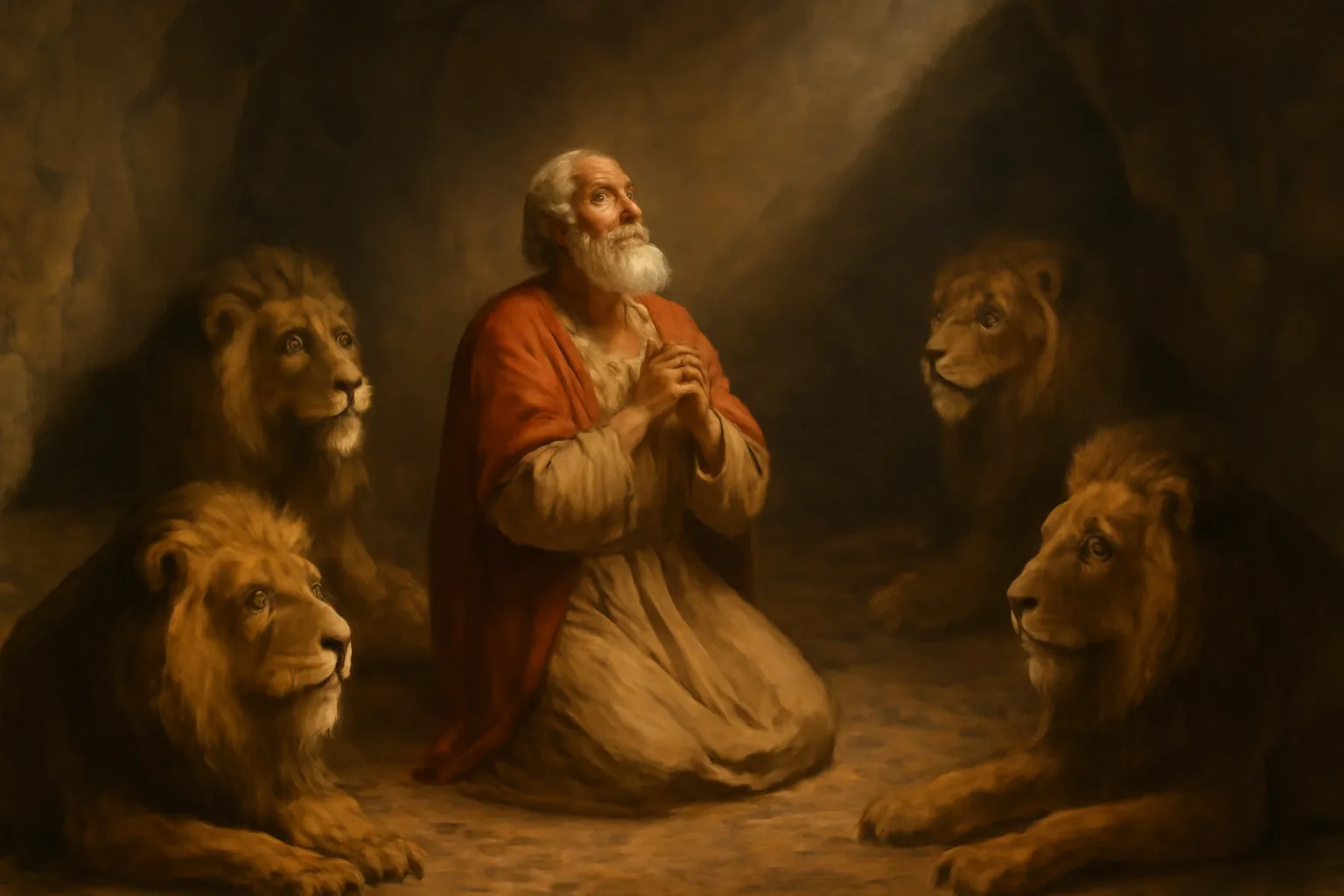
Daniel is thrown into the lions’ den, a grim chamber with hungry predators, while the king laments his decision.
God miraculously sustains Daniel, and he emerges unharmed the next morning, prompting the king to recognize Daniel’s God as superior to all others.
The conspirators who plotted against Daniel are punished, and a proclamation is issued affirming the sovereignty of Daniel’s God.
Historical and Literary Context
The lions’ den episode sits within the broader narrative world of the Book of Daniel, a unique biblical text that sits at the crossroads of history, prophecy, and wisdom. Scholars generally place the events of Daniel during the Persian period, after the fall of Babylon, when foreign governors administered provinces under a king who was advised to preserve order and maximize stability. The figure of Daniel stands as a model of integrity, discernment, and loyalty to the divine commands even when political loyalties and career advancement tempt a person to compromise.
From a literary standpoint, the Daniel story blends several genres: royal court intrigue, miracle stories, and exemplary narratives designed to teach moral and theological lessons. The text uses vivid drama and character contrast—Daniel’s steadfast faith against the scheming officials; a compassionate king who wants to honor his own decree but must uphold it; and a miraculous deliverance that demonstrates the power and care of the God of Abraham, Isaac, and Jacob. Some scholars also note the stylistic devices common to ancient Near Eastern wisdom literature: motifs of fate, dream interpretation, and covenant fidelity under trial.
Another important dimension is the linguistic and textual context. The Book of Daniel contains sections in both Aramaic and Hebrew, reflecting its broad audience and literary aims. The lions’ den narrative sits within this larger collection of stories that often invite readers to weigh political power against divine sovereignty. Understanding this backdrop helps readers interpret the bold courage of Daniel and the surprising actions of the Persian king in the aftermath of the episode.
Characters and Their Roles
The lions’ den tale pivots on a handful of central figures, each with a distinct role in shaping the moral and theological message:
Daniel — A trusted advisor to the king, renowned for his wisdom, integrity, and unwavering faith. Daniel’s practice of prayer and his refusal to bow to any god or human authority apart from the God of Israel anchor the drama and provide the model for steadfast devotion under oppression.
King Darius — The ruler who seeks to govern a vast empire and who, by chance or design, issues a decree that tests Daniel’s fidelity. Darius is torn between honoring the law of the land and honoring the evident righteousness of Daniel; his eventual acknowledgment of Daniel’s God is a turning point in the narrative.
The conspirators — A group of high officials who envy Daniel’s elevated status and use their political influence to trap him. Their plot showcases how envy and political scheming can threaten a faithful person when religious devotion is framed as disobedience to the state.
The lions — The literal agents in the den who become the setting for a miraculous divine intervention. The den’s environment amplifies the danger Daniel faces and amplifies the dramatic resolution when he is unharmed.
Daniel’s reputation and authority within the Persian empire are established through consistent excellence, ethical leadership, and unwavering trust in God.
The king, impressed by Daniel’s competence, appoints him over the entire kingdom, provoking jealousy among other officials.
The conspirators craft a decree: for thirty days, no one may pray to any god or human except the king. Violation of this edict would result in casting into the lions’ den.
Daniel remains faithful to his customary prayer routine—three times daily facing Jerusalem—and is observed by the conspirators who report his conduct to the king.
King Darius realizes the trap but feels bound by his own oath. He orders Daniel to be cast into the lions’ den, hoping for mercy from Daniel’s God.
Overnight, Daniel is left in the den but is miraculously spared. The next morning, a living Daniel is found, unharmed, by all who feared the decree.
The king is relieved and greatly encourages the people to revere Daniel’s God, whom he praises publicly for deliverance from the den of lions.
The conspirators and their families are punished according to the law and thrown into the lions’ den themselves, illustrating a reversal of fortune and the power of divine justice.
Theological and Moral Themes
Faith under Pressure
The lions’ den episode is often cited as a premier example of faith under pressure. Daniel’s decision to pray openly in defiance of a royal edict demonstrates a prioritized allegiance to God over political convenience. The narrative doesn’t present Daniel as reckless but as remarkably purposeful: his faith shapes his daily routines, even when those routines become dangerous. For readers today, the story raises questions about how to balance civic responsibilities with religious convictions and how to respond when conscience clashes with law or policy.
Daniel’s practice of prayer is central to the story. In a moment of crisis, Daniel does not abandon his ordinary pattern of supplication. The consistent discipline of prayer is portrayed as a source of strength and a direct channel of divine communication. This has led many readers to interpret prayer not merely as a personal habit but as a public act of fidelity that can inspire courage in others and appeal to God for protection and justice.
Divine Deliverance and Sovereignty
The miraculous deliverance in this story underscores the sovereignty of the God of Israel over political powers, earthly danger, and natural forces. The lions, once symbols of threat, become tools through which a larger truth is demonstrated: the living God is capable of intervening decisively in human history to defend the innocent and to reveal himself to rulers and people alike. This theme has been a source of comfort and conviction for generations of believers who place their trust in God’s ultimate control over circumstances that seem overwhelming.
Justice and Reversal
The narrative also presents a strong sense of divine justice. Not only is Daniel delivered, but the conspirators and their families are punished in a dramatic reversal of fortune. This element reinforces the biblical claim that human schemes do not prevail against God’s purposes and that protective justice attends the faithful, even when the immediate consequences appear grim.
Daniel’s conduct offers a model of integrity in public service. He does not use his position for personal gain, nor does he hide his religious identity to win favor. The story thus serves as a call to ethical leadership, reminding readers that character, not merely competence, is essential for those who operate in political or organizational settings.
From the lions’ den narrative, readers can extract several practical lessons that span personal life, community ethics, and public engagement. Here are some actionable takeaways that resonate across cultures and faith traditions:
Stand firm in integrity even when social or political pressure escalates. Daniel’s example shows that consistency in core convictions is possible and admirable, even when it cost him.
Prioritize prayer and spiritual disciplines as sources of strength. Daniel’s routine prayer is presented as the foundation of his courage and perseverance.
Trust in divine justice and in God’s ability to intervene. The deliverance matters less about the dramatic rescue than about the affirmation that God is present in situations of danger.
Navigate power wisely by respecting lawful authority while discerning when divine commands supersede human orders. The story invites thoughtful reflection on the relationship between faith and civic life.
Respond to opposition with wisdom—not with arrogance or retaliation, but with faithful conduct that leaves room for God to act in due time.
Practice hospitality and humility toward others, including those who oppose you. The narrative’s turning point—when the king explains his realization and proclaims Daniel’s God—highlights how one’s integrity can influence even skeptical rulers.
Interpretive Lenses Across Traditions
Jewish Interpretation
In Jewish tradition, the lions’ den story is read as a tale of fidelity within exile and as a demonstration that the God of Israel transcends foreign powers. The narrative is often used to discuss the proper response to oppressive rulers and the hope that God preserves the people of Israel in difficult times. It also foregrounds the virtue of loyalty to God’s commandments, even when such loyalty appears costly in the eyes of empire.
Christian Interpretation
Christians have historically seen Daniel as a forerunner to Christ in certain respects: a faithful servant who remains obedient to God under pressure, and a participant in a broader story of God’s rescue of his people. The lions’ den is sometimes read allegorically as a sign of Christ’s own suffering and deliverance, drawing parallels between Daniel’s trust in God and Jesus’ trust in the Father during cruciform endurance. Across denominations, the narrative is used to encourage courage, prayer, and reliance on God’s sovereignty in times of trial.
Academic and Literary Perspectives
From a scholarly vantage point, the lions’ den tale is scrutinized for its rhetorical structure, its role within the political satire of the era, and its function as a didactic narrative. Critics explore how the story uses dramatic tension to articulate a theology of power, obedience, and divine intervention, while also examining its historical plausibility and its place within the broader arc of Daniel’s visions and prophecies.
Common Questions and Clarifications
Was Daniel guilty of disobeying the king? Daniel did not disobey the king personally but continued to worship the God of Israel as was his habit. The decree specifically prohibited prayer to any god or human other than the king for a set period. Daniel’s actions were consistent with his religious obligation.
Did Daniel survive by luck or by a miracle? The text presents Daniel’s survival as a miraculous intervention by God, not as luck. The den’s safety is attributed to divine action that shut the lions’ mouths and preserved Daniel through the night.
What happened to the accusers? The conspirators and their families fall victim to the same law they used to trap Daniel, receiving a reversal of fortune that underscores the narrative’s justice motif.
The question of historical accuracy vs. theological message is common. Most readers acknowledge the moral and theological purposes of the story, recognizing that ancient biblical narratives often weave history, symbolism, and faith commitments to convey enduring truths.
The powerful imagery of Daniel and the lions’ den has left a durable imprint on culture. Across centuries, artists, writers, and filmmakers have drawn on this episode to illustrate themes of courage, deliverance, and the triumph of righteousness over power. In literature, the narrative has appeared in allegories, sermons, and devotional writings that emphasize how faith sustains people in crisis. In visual arts, depictions of Daniel in the den, the moment of deliverance, and the king’s awe have been used to evoke divine protection and the mystery of providence. In music and theater, the lions’ den has inspired works that explore fear, faith, and the moral resolve required to stand for one’s beliefs in the face of overwhelming opposition.
Read the narrative in a contemporary translation and then compare with a more literal version to catch nuances in phrasing and emphasis.
Map the characters and their motives. Create a simple character chart that distinguishes Daniel’s integrity from the conspirators’ jealousy and the king’s dilemma.
Note the pivotal phrases: the king’s decree, Daniel’s prayer practice, and the blessing or praise that follows deliverance. Examine how these phrases frame the moral arc of the story.
Consider the context: what does the story suggest about the relationship between power and faith in a foreign empire? How does this comparison speak to contemporary issues of religious liberty and government authority?
Reflect personally: which aspect of Daniel’s approach—his prayer life, his prudence, his steadfastness—could you incorporate into your own daily routines and decisions?
How to Teach or Discuss the Lions’ Den in Various Settings
In a classroom or Bible study group, use the step-by-step outline to guide a structured discussion about courage, obedience, and divine intervention.
In a sermon or devotional, emphasize the contrast between a political decree and divine law, inviting listeners to consider how they would act in Daniel’s position.
In family study, create a simple timeline poster and a discussion guide for kids and adults, focusing on the themes of prayer, integrity, and trust in God.
The Enduring Significance of the Lions’ Den Story
The tale of Daniel and the lions’ den remains a foundational narrative for readers who seek courage, hope, and a robust understanding of how faith interacts with real-world pressures. It presents a scenario in which a single person’s fidelity to God becomes a potent witness to others, including a king who eventually reveres the God of Daniel. The story affirms that divine protection is not a guarantee of worldly safety in every moment, but it is a reliable assurance that God’s purposes prevail and that justice—often delayed—will be realized. In this sense, the lions’ den is not merely a miracle tale; it is a call to integrity, prayer, and resilient trust in the God who matters most.
Whether you encounter this story as a devotional anchor, a historical curiosity, or a literary masterpiece, the lessons from Daniel in the den of lions invite a thoughtful, prayerful, and courageous response. By studying the figures, the context, and the themes, readers can gain practical insights for living faithfully in a complex world while maintaining hope in the face of danger. In the end, the message of Daniel and the lions’ den is simple and profound: faithfulness to God can withstand even the fiercest threats, and God’s sovereignty remains a reliable, transformative reality across time and culture.
As you reflect on Daniel and the lions’ den, consider how the story’s core commitments—integrity, prayer, courage, and trust in divine deliverance—might shape your choices, your leadership, and your daily life. The lions’ den challenges every reader to discern, endure, and witness to the power of God in a world that often seems governed by fear, power, and chance. In that challenge lies the enduring value of this ancient narrative: it invites us to place our confidence not in human schemes, but in the God who can keep us safe in the most unlikely and perilous circumstances.