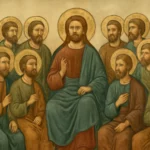
The ministry of Jesus Christ stands at the center of Christian faith as a comprehensive narrative of purpose, teaching, and action. This guide offers an accessible exploration of Jesus’ ministry, its aims, methods, and enduring significance. We will trace how the itinerant teacher traveled through towns and countryside, proclaimed the Kingdom of God, healed the sick, challenged religious authorities, trained a circle of followers, and prepared people for a new understanding of salvation. By examining his mission and teachings in context, readers can gain a clearer view of how the gospel ministry reshaped religious life then and continues to influence biblical interpretation today.
The ministry of Jesus encompasses three interwoven dimensions: proclamation, practice, and formation. On one hand, he proclaimed a heraldic message about the Kingdom of God—a realm breaking into human history where God governs with justice, mercy, and love. On the other hand, he demonstrated the values of that Kingdom through acts of mercy, compassion, and restoration. Finally, he formed a community of learners whose lives would reflect those values in the world. In literature and sermon, scholars often speak of the prophetic mission of Christ, which called people to repentance and faith while offering a new path to relationship with God. The result is a dynamic model of ministerial life that blends teaching with service, doctrine with practice, and belief with action.
Origins, Call, and Purpose of the Messenger
The ministry of Jesus Christ did not arise in a vacuum. It emerged from a historical and theological expectation of God’s ongoing work among the people of Israel and, more broadly, for all humanity. Early in the life of the public mission, readers encounter a purposeful calling: Jesus is not merely a moral teacher; he is the fulfillment of a long arc of revelation. This does not minimize his humanity or his dependence on God; rather it situates him as a figure who embodies divine intention for salvation and eternal life.
The baptism and temptation accounts in the gospel narratives frame the Messianic mission as a decisive turn. At his baptism, Jesus is identified as the beloved Son, and the Spirit’s descent marks the empowerment for public ministry. From this moment onward, Jesus’ ministry centers around three core questions: Who is God calling us to become? What is the nature of the Kingdom of God? How shall people respond in faith and obedience? Across the events of his ministry, the answer to these questions unfolds through preaching, healing, and the formation of a new community.
Timeline and Phases of His Public Work
The life of the public ministry of Jesus can be viewed in several phases, each with distinctive emphases and settings. Below is a concise outline that highlights how the message and methods evolved as he traveled and taught.
Phase I: Galilean Ministry — In towns around Galilee, Jesus teaches in synagogues, preaches about the Kingdom of God, and performs healings and exorcisms. This phase emphasizes accessibility, relational teaching, and the showcasing of divine benevolence to ordinary people.
Phase II: Travel into Judea and Samaria — As the crowd grows, Jesus travels beyond his traditional base, engaging with different communities, debating tradition, and offering interpretations of the law that emphasize mercy, intent, and inner transformation.
Phase III: Transition and Challenge in Jerusalem — The ministries become more confrontational with religious authorities as questions of authority, purity, and seating on the path of true discipleship arise. This phase culminates in heightened tension leading toward the final days.
Phase IV: Passion, Resurrection, and Commission — The events surrounding the crucifixion, the discovery of the empty tomb, and post-resurrection appearances form the climactic arc. The ministry continues in another form through commission to the disciples to carry the message forward to all nations.
The heart of the ministry of Jesus Christ rests on a coherent and transformative set of teachings. Across parables, sermon blocks, and dialogues, he reframes how people understand God, neighbor, and themselves. The following themes recur with vivid clarity and practical instruction.
Love of God and Neighbor
A central pillar of the Jesus’ message is love—love for God and love for neighbor. The command to love God with all one’s heart, soul, and strength sits beside the command to love one’s neighbor as oneself. The practical implication is inclusive action: hospitality to the stranger, care for the poor, justice for the vulnerable, and forgiveness extended even to enemies. In the gospel ministry, love is not a private sentiment but a public, costly, and transformative practice.
The Kingdom of God and Its Ethics
The term Kingdom of God presents the central eschatological horizon of the ministry. It refers to God’s reign, inaugurated in principle through Jesus’ life and teaching and anticipated in fullness at the end of the age. Ethical implications include humility over power, mercy over ritualism, and faith as trust rather than mere adherence. In this sense, the mission of Jesus seeks to realign priorities—placing the values of mercy, justice, and reconciliation at the forefront of daily life.
Repentance, Faith, and Transformation
The preaching of repentance is a distinctive feature of this ministry. Repentance involves a turning away from self-destructive or idolatrous paths and turning toward God’s purposes. Coupled with faith, repentance becomes the pathway to transformation. The gospel ministry invites people to trust in God’s mercy and to participate in God’s work in the world with new motives and new power. The parables often illuminate how small acts of trust become channels of God’s grace in a broken world.
Forgiveness, Mercy, and Social Healing
Forgiveness is not a private sentiment but a social and spiritual catalyst. The ministry of Jesus Christ models how forgiveness frees individuals and communities from guilt, shame, and cycles of retaliation. Mercy, coupled with healing, demonstrates that the Kingdom’s concerns include physical restoration as a visible sign of spiritual renewal. In many narratives, healing is paired with teaching, illustrating that true restoration involves both body and soul, policy and heart.
Authority, Parables, and Public Discourse
The itinerant teacher uses parables—simple stories with profound truths—to illuminate complex divine realities. Parables invite listeners to discern meanings for themselves, revealing moral and spiritual depths beyond bare instruction. The discourse often challenges assumptions about authority, ritual purity, and the proper posture of learners before God. This method anchors the gospel ministry in accessibility and invites personal engagement with the message.
Miracles in the ministry of Jesus Christ serve as signs of the coming Kingdom and expressions of compassionate care. They are not mere wonders but demonstrations of God’s will to heal, restore, and restore dignity to those sidelined by illness, poverty, or stigma. The miracles function as both acts of mercy and theologies-in-action: they reveal who God is and what God intends for creation.
Healing of the sick and restoration of livelihoods, including the restoration of sight, mobility, and strength.
Expulsion of spirits and liberation from bondage, symbolizing liberation from sin and fear.
Control over nature through storms and bread multiplied for the crowds, illustrating God’s sovereignty and abundance.
Raising the dead as a concrete sign of life in the age to come and certainty about the power of God in the Messiah’s ministry.
The inclusion of marginalized groups—women, the poor, the socially outcast—into displays of healing and mercy demonstrates the inclusive reach of the gospel ministry. In this light, the compassionate works of Jesus do more than relieve suffering; they reframe social norms and invite communities to participate in the divine life.
The ministry of Jesus Christ is inseparable from the formation of a new community. The twelve apostles and a widening circle of followers become agents and witnesses of the story Jesus began to tell. The process of formation includes instruction, modeling, and sending. The disciples learn by listening, watching, and practicing under the guidance of the Master, then become bearers of the same message to others.
Disciples and Close Followers
The relationships within the inner circle reveal both human fragility and aspirational faith. The ministry of Jesus Christ intentionally cultivates leadership that emphasizes service, humility, and accountability. The disciples transition from learners to leaders who will continue the mission after the Ascension, carrying forward a message that calls others into a life of trust, obedience, and courageous witness.
Women, Marginalized Figures, and Inclusive Practice
A striking feature of the gospel narratives is the prominent role women and other marginalized people play in the ministry. Women often accompany Jesus, provide material support, and proclaim the news of resurrection to others. This inclusion holds up a countercultural vision of community where worth is not determined by status or background but by shared participation in God’s gracious work.
Opposition, Controversy, and Ethical Tensions
The gospel ministry does not unfold without conflict. Jesus faces criticism from religious authorities, debates Sabbath practices, and challenges imply deeper questions about authority, purity, and the interpretation of scripture. These encounters clarify what it means to live under God’s rule in a world where human agendas often clash with divine purposes. Yet even in controversy, the message remains focused on mercy, truth, and reconciliation.
Locations, Travel, and the Shape of a Traveling Ministry
The geography of the ministry of Jesus Christ matters for understanding how his message reached diverse audiences. The itinerant pattern enabled him to preach, demonstrate compassion, and critique systems from multiple vantage points. Key regions include Galilee, where much of the teaching took place among villages and in open spaces; Judea and Samaria, where audiences ranged from skeptical scholars to curious crowds; and Jerusalem, the focal point of religious life and the setting for some of the most consequential events.
Galilee: A region of rural towns, markets, and synagogues—a testing ground for parables and healings.
Jerusalem: The spiritual capital where debates with leaders intensify and the path toward realization of prophecy sharpens.
Bethany and Jericho: Contexts for demonstrations of faith and moments of dramatic teaching.
Capernaum: A base of operations with significant miracles and authoritative teaching.
The travel narrative of the ministry of Jesus Christ highlights his accessibility and willingness to cross cultural and religious boundaries in order to communicate his message. The itinerant lifestyle models a form of leadership that is less about centralized power and more about presence, authenticity, and service.
Death, Resurrection, and the Aftermath of the Mission
The culmination of the earthly ministry of Jesus Christ is the crucifixion, followed by the resurrection. These events anchor the Christian understanding of atonement, victory over sin, and the revelation of God’s power to give life beyond death. The resurrection is not only a historical claim; it functions as a transformative event that validates the teaching, confirms the authority of Jesus, and energizes his followers for mission.
After the resurrection, appearances and teachings reaffirm the core message and equip the disciples for the work ahead. The Great Commission—to make disciples of all nations, baptizing and teaching—serves as a commissioning for ongoing ministry. This moment signals a transition from a single historical ministry to a global and enduring mission that transcends time, culture, and circumstance.
Legacy, Impact, and Contemporary Relevance
The ministry of Jesus Christ leaves a lasting legacy that continues to shape Christian theology, worship, and ethics. Its influence is felt in how communities understand mission, compassion, and moral responsibility in the modern world. The following points summarize why the ministry remains impactful for believers today:
Mission clarity: The świad narrative shows a clear aim to reveal God’s presence, invite repentance, and foster faith that translates into action.
Ethical imagination: The teachings challenge readers to reimagine power, status, and social relationships through the lens of mercy and justice.
Community formation: Discipleship provides a model for training, accountability, and shared purpose in faith communities.
Inclusivity: The inclusion of marginalized voices demonstrates a universal invitation that transcends cultural barriers.
Hope in renewal: The focus on healing, restoration, and life beyond death offers a hopeful framework for addressing personal and communal suffering.
Today’s readers encounter the ministry of Jesus Christ in multiple modes: biblical study, liturgical prayer, ethical reflection, social service, and cross-cultural outreach. Each mode invites engagement with the core claims of Jesus’ life: that God is at work in the world, that human beings are invited into a transformative relationship with that work, and that following Jesus means embodying the Kingdom’s values in daily life.
Below is a compact glossary that helps readers track the language commonly used to describe the ministry of Jesus Christ. The terms are intentionally framed to support study and reflection across different traditions and scholarly approaches.
Kingdom of God — The central eschatological reality Jesus proclaims, a realm where God’s will is fulfilled, justice flows, and mercy leads the heart toward reconciliation.
Repentance — A turning away from self-centered goals toward alignment with God’s purposes, often accompanied by a change of life.
Faith — Trust in God’s promises and in Jesus as the revelation of God’s saving work.
Discipleship — The process of learning from Jesus, imitating his example, and participating in his mission.
Salvation — The deliverance and restored relationship with God that is offered through Jesus’ life, death, and resurrection.
Miracle — A sign or demonstration of God’s presence that confirms the message and reveals compassion for human need.
Parable — A short, vivid story used by Jesus to teach deeper spiritual truths in a memorable way.
Great Commission — The apostolic mandate to proclaim the gospel and make disciples of all nations, resulting in ongoing ministry after Jesus’ earthly life.
Readers may wish to engage the material by reflecting on how the ministry of Jesus Christ challenges their own communities and daily routines. The following prompts are offered for personal study or group discussion:
In what ways does the message of the Kingdom of God require a reordering of priorities in contemporary life?
How do Jesus’ actions of compassion illuminate the relationship between faith and works in a modern context?
What are the implications of Jesus’ inclusive ministry for contemporary issues of social justice and human dignity?
How can a community today model the rhythms of preaching, healing, and discipleship that characterized the first followers?
The study of the ministry of Jesus Christ invites a holistic approach: read the texts with attention to what is proclaimed, observed in practice, and formed within a community of learners. By balancing doctrinal understanding with ethical application, modern readers can participate in the ongoing story of God’s work in the world.
How to Approach the Narrative: A Reading Guide
For those seeking to grasp the breadth of Jesus’ mission, a structured reading approach can help. Consider the following steps, which mirror the way the earliest followers encountered the events:
Character focus: Track Jesus’ interactions with various groups—disciples, crowds, opponents—and note how his responses reveal his priorities.
Thematic mapping: Identify recurring motifs such as mercy, faith, forgiveness, and the reversal of expectations.
Contextual awareness: Pay attention to the historical, cultural, and religious setting to understand why certain scenes provoked strong responses.
Application: Translate the ancient message into concrete actions that reflect beliefs about God, neighbor, and society.
As a living tradition, the ministry of Jesus Christ invites ongoing interpretation. Different Christian communities emphasize various aspects—prophecy, mercy, doctrine, or mission—yet all share a common thread: a call to know God more deeply and to participate in God’s work in the world with courage, humility, and love.