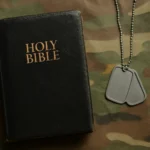
Warrior Prayers: Daily Prayers for Courage and Strength is a guide to a timeless practice that has strengthened countless individuals when facing hardship, danger, or moments of deep uncertainty. These prayers are not mere ritual; they are a framework for turning fear into focus, hesitation into discipline, and vulnerability into resilience. Across ages and cultures, people have turned to sacred words, affirmations, and invocations to arm the heart and steady the will. In this article, we explore what warrior prayers are, why they endure, and how to incorporate them into a daily routine that cultivates courage, strength, and steadiness of purpose.
The lineage of warrior prayers stretches across civilizations and belief systems. In some traditions, these prayers were spoken or sung before battles, not to guarantee victory over others, but to secure victory over fear within oneself. In others, they served as mental rehearsals: a way to imagine the terrain of a conflict, prepare the body for action, and align intention with action. Whether framed as a benediction, a supplication, or a compact with the divine, the core aim remains consistent: to prepare the spirit for what lies ahead and to anchor the will in a sense of purpose greater than the moment’s pressure.
Historically, warrior prayers have borrowed imagery from armor, training, and discipline. A shield, a spear, a cloak of light, a steady breath—all these images function as metaphors for inner resources. The practice is practical as well as spiritual: it creates a predictable ritual of centering, sets a cadence for onset of action, and establishes a mental rehearsal that can reduce anxiety when real-world stakes rise.
In modern life, the battlefield is not only a field of combat but a spectrum of challenges: a presentation at work, a medical procedure, a difficult conversation, a personal loss, or a marathon of long days. Warrior prayers adapt to these contexts by focusing on the same core resources: courage, clarity, perseverance, and grace under pressure.
Core Themes in Warrior Prayers
Although there are many shapes and voices within warrior prayers, several recurring themes anchor the practice. Understanding these themes helps you recognize the patterns and borrow language that resonates with your own life.
Protection—asking for safety of body and integrity of purpose, while acknowledging boundaries and limits.
Fortitude—cultivating mental and physical stamina to endure discomfort, fatigue, or fear.
Focus— sharpening attention on what matters most in the moment, discarding unnecessary noise.
Discipline— committing to a routine and showing up even when motivation wanes.
Humility— recognizing vulnerability and seeking guidance or assistance when needed.
Gratitude— sustaining morale by naming things that support growth, not just the battle outcome.
Purpose— anchoring action in a larger good or meaningful aim beyond self-interest.
Restoration— balancing action with recovery, recognizing that rest is a form of strength.
Different traditions emphasize different facets, but the overlaps are substantial. A modern practice can weave these common threads into a daily cadence that is personal, inclusive, and adaptable to changing lives and contexts.
Daily Practices for Courage and Strength
Establishing a daily rhythm around warrior prayers turns a sporadic gesture into a reliable engine for resilience. Here are practical, scalable practices you can adopt, adapt, and experiment with.
Morning Invocation — Start your day with a brief prayer or affirmation that frames courage as a habit rather than a feeling. A line such as “I step into this day with strength of body, clarity of mind, and a calm heart” can set a tone for hours to come.
Breath-Centered Preparation — Pair your words with breath: inhale as you lift your intention; exhale as you release tension. A simple rhythm like four counts in, four counts out can be repeated for several cycles.
Powerful Phrases — Choose a few core phrases to repeat mindfully: “I am capable. I am present. I endure.” Keep them in your repertoire and rotate them to prevent abstraction.
Midday Check-In — Pause briefly to scan your body and emotions. If fear or fatigue arises, recite a two-sentence micro-prayer that re-centers you on purpose.
Evening Reflection — Close the day with gratitude for what you faced and what you learned. Use this time to acknowledge small wins and plan for tomorrow.
Journal of Courage — Maintain a small notebook of moments when you practiced the prayers and the outcomes, no matter how modest. This builds evidence of growth and resilience.
Consistency over Perfection — It’s better to practice in a compact, repeatable form every day than to attempt long, sporadic sessions. Short, reliable rituals compound over time.
In designing your daily routine, consider three components: intention, technique, and tempo. Intention is the reason you pray—what you are seeking to protect or achieve. Technique includes the specific words, breath patterns, and physical posture. Tempo refers to how you space these prayers throughout the day, aligning them with activities such as waking, commuting, or transitioning between tasks. A simple, scalable structure might look like morning, midday, and evening moments, each containing a concise prayer, a breath cycle, and a note of gratitude or resolve.
Prayers for Specific Situations
Having a repertoire of prayer variants for different kinds of challenges makes the practice more actionable. Below are examples you can customize. Each example foregrounds a particular scenario while retaining the core themes of courage, strength, and purpose.
Before a Challenge
Before you undertake a tough task—public speaking, a performance, an exam, a difficult conversation—try this compact invocation:
“Grant me calm resolve, clear sight, and steady hands. May I act with integrity, endure with patience, and finish with grace.”
In the Face of Fear
When fear rises, you can honor it without letting it dictate your course:
“I acknowledge the fear, and I do not surrender to it. Let courage be my compass, and let hope hold my steps.”
Before Sleep or Rest Period
Even as you prepare to rest, the warrior’s mind can review the day and recharge for tomorrow:
“May rest restore my body, and may tomorrow’s trials meet me with renewed strength. I lay down with gratitude for every challenge overcome.”
In Recovery or Healing
Recovery prayers are not passive; they honor the process and call forth inner resilience:
“Sustain me with patience and paired pace of healing. Let every breath carry healing energy, and let patience be a shield against frustration.”
During Transition or Uncertainty
Transitions invite both danger and opportunity. A transitional prayer might sound like:
“Guide me through uncertainty with clarity. Help me discern the next right action, and grant me the courage to take it.”
Variations Across Cultures and Traditions
Warrior prayers are culturally diverse, reflecting distinct worldviews while sharing universal aims. Exploring variations helps you discover language and imagery that resonates with you, and it also shows the flexibility of the form to support people across belief systems and life circumstances.
Christian traditions often frame warrior prayers as calls for protection and perseverance, echoing themes of spiritual armor, steadfast faith, and endurance through trials. Imagery such as the “armor of God,” the shepherd’s courage, and the faithful heart against fatigue recur in many forms.
Muslim traditions may emphasize trust in God (tawakkul), perseverance (sabr), and courage exercised with humility. Dua (supplication) can be structured as a concise petition for strength and safety in the face of danger.
Hindu and Buddhist frameworks frequently employ disciplined practices, ethical courage, and inner illumination. Warrior prayers can be linked to ideas of righteous action (dharma) and calm presence (samadhi) in the midst of turmoil.
Indigenous and tribal paths often center on harmony with nature, ancestral guidance, and rites that frame power as responsibility rather than domination. Animal totems, elemental imagery, and land-based metaphors amplify a sense of belonging and duty.
Secular and athletic contexts treat warrior prayers as motivational mantras or mental rehearsals designed to improve focus and performance, not tied to a specific creed but to a shared human pursuit of peak experience under pressure.
Across these traditions, the form remains flexible: a few well-chosen phrases, a breath, a moment of stillness, and a decision to act with courage. You can borrow language from multiple sources, adapt it to your own life story, and keep the core intent intact: to arm the spirit for what lies ahead while remaining open to growth and repair.
Crafting Your Own Warrior Prayer
Designing a personal warrior prayer is a creative practice as well as a spiritual or secular one. Here is a simple, repeatable process you can follow to craft prayers that feel true to you:
Identify your anchors — What matters most to you in times of challenge? Safety, integrity, family, service, learning, or healing? List three core anchors.
Select imagery — Choose one or two images that evoke strength and protection (for example, shield, shield-bearer, steady lamp, mountain, harbor, forge).
— A single sentence or half-dozen words that capture your intent for the moment (e.g., “I stand firm, I breathe, I begin again.”).
Incorporate a breath cue — Attach a simple breath pattern that helps you anchor the line in the body (inhale 4, hold 2, exhale 6).
— End with a forward-looking commitment (e.g., “I will act with courage today” or “I will seek help when needed”).
Test and refine — Try your prayer in different contexts over a week. Notice what lands and what feels forced, then adjust.
Here are two ready-to-use templates you can personalize. The first is concise for a quick-and-ready moment; the second is more expansive for a longer ritual.
“Courage, steady breath, clear purpose. I rise to the challenge with a calm heart. Amen.”
Expanded Daily Invocation
“Armor of resolve, shield of patience, and sword of truth,
I stand ready to face what comes with strength and care. May my path be guided by compassion and clarity; may I act with integrity, seek help when needed, and honor the dignity of all involved. Today I choose courage.
Language and Imagery in Warrior Prayers
The language of warrior prayers often relies on robust, tactile imagery that makes abstract resilience concrete. Armor, shields, swords, fire, mountains, rivers, light, night—these elements help to translate internal states into external cues that the body can respond to. Bold imagery is not about aggression alone; it’s about preparing for action while remaining mindful and ethical. When you craft or select imagery, consider these goals:
Clarity — The image should point to a specific action or disposition (e.g., “steady hands,” “clear sight”).
Accessibility — The metaphor should be easy to remember and repeat, especially under stress.
Ethical framing — The image should support a path of responsibility, not domination or harm.
Internal resonance — Use terms that rise naturally in your own language and experience.
By blending universal motifs with personal metaphor, you create a living practice rather than a fixed script. Your warrior prayer becomes a partner in your growth, capable of adapting as your circumstances change while preserving the essential heart of courage and strength.
Prayers for Mindset and Focus
A cornerstone of warrior practice is shaping the inner state before action. Mindset prayers help you align perception, emotion, and intention. Here are several examples you can adapt to sharpen focus:
“I release what I cannot control and attend to what I can influence.”
“My attention is a laser; my fear is a passing cloud.”
“One breath, one choice, one step forward.”
“I am present in this moment; I am prepared for the next.”
“Courage is a habit I cultivate through daily practice.”
Integrating these thoughts into a daily routine helps prevent the mind from spiraling into worst-case scenarios. When fear or doubt arises, reciting a short line can interrupt the pattern and re-center attention on constructive action.
Practical Exercises and Routines
Beyond recitation, several practical exercises reinforce warrior-prayer training. These activities cultivate physical readiness, emotional steadiness, and mental resilience, which together produce higher performance and better recovery.
Daily posture practice — Stand tall, shoulders back, neck aligned, weight evenly distributed. Pair this posture with a two- or three-line prayer and a measured breath cycle.
Cold exposure or contrast therapy — If possible, integrate a brief cold exposure, or finish a hot-cold contrast routine, while repeating a stabilizing prayer. The conditioning strengthens stress tolerance and shows you you can regulate arousal.
Movement ritual — A sequence of slow-to-fast movements (e.g., sun salutations, push-ups, planks) paired with a one-sentence meditation on purpose.
Gratitude journaling — End workouts or challenging days by naming three things that allowed you to persevere, reinforcing a positive feedback loop for the brain.
Skill rehearsal — Break down a difficult task into small steps and rehearse the critical moment in your head with a short warrior line before each step.
These exercises are not just about toughness; they are about building a dependable architecture for facing adversity. The more you practice, the more slowly fear will arrive uninvited and the more naturally courage will rise in you.
The Role of Community and Shared Phrases
While warrior prayers are deeply personal, sharing phrases and rituals within a community can amplify their effect. When people multiple together in group practice—whether in a family, among teammates, or in a faith- or values-based group—the resonance and accountability deepen. Shared phrases can create a sense of solidarity, and ritual repetition can anchor the group during tough times.
Group recitation — In team settings or family gatherings, a brief group reading of a personal prayer or shared creed can set a constructive tone for the day.
Workshops and circles — Regular meetings to craft, revise, and practice warrior prayers foster growth and mutual support.
Digital communities — Online forums, social groups, or apps can host daily prompts, shared prayers, and reflective prompts that keep practice visible and accessible.
Even when you practice alone, you can design a digital or physical reminder system that connects you to a broader community. A simple method is to post a short prayer on a sticky note by your computer, your mirror, or your wallet—some physical cue that nudges you back into the practice.
Modern Adaptations and Digital Communities
In the modern era, warrior prayers have found space in podcasts, guided meditations, and mobile apps. Some users prefer biblically or philosophically grounded lines, while others lean toward secular motivational language. The adaptability is a strength: you can curate a personal library of prayers drawn from diverse sources, filter for what resonates, and create a living toolkit that you can tailor to each day’s demands.
When engaging with digital communities, a few practices help sustain depth and authenticity:
Source integrity — Prefer currencies of language that feel true to you and avoid blindly copying phrases that don’t align with your beliefs or values.
Context awareness — Recognize the difference between public performance and private practice; your true growth often happens in quiet space.
Personalization — Adapt shared phrases to your own life story; insert specifics about your challenges and your goals facing each day.
Mindful consumption — Balance the influx of quotes and ideas with time for reflection; use digital prompts as a scaffold rather than a replacement for internal dialogue.
Ultimately, modern adaptations should shepherd you toward greater self-mastery and more compassionate action. They should help you bear the weight of responsibility you carry and transform it into a constructive force in your life and the lives of others.
Common Structures and Phrases for Warrior Prayers
Many warrior prayers share structural patterns that you can study and imitate. Here are some common formats, along with examples you can borrow and adapt. Use them as templates to create consistent, meaningful practice:
Concise invocation — A single sentence that anchors the moment. Example: “Courage above fear; action with care.”
Three-part cadence — Purpose, power, and protection: “I claim purpose, I summon strength, I seek protection.”
Breath-linked mantra — A line that aligns with breathing: “Inhale strength, exhale doubt.”
Posture and line — A line paired with a physical stance: “I stand tall as the mountain; I move with the river’s flow.”
Refrain and renewal — A repeated phrase that returns in cycles: a refrain you say at each moment of transition.
When crafting your own lines, consider language that emphasizes agency (“I choose,” “I act,” “I endure”) as well as connection to others and to the larger purpose you hold dear.
Closing Reflections and Next Steps
Warrior prayers offer a practical and humane way to cultivate inner resources—courage, resilience, focus, and compassion—while meeting the challenges of daily life. They are not about denying fear or suppressing vulnerability; they are about acknowledging fear with honesty and choosing action that aligns with your deepest values. The practice grows stronger the more you engage with it, whether through a few sentences each morning, a short ritual before a difficult task, or a longer, contemplative session in the evening. By weaving these prayers into your life, you create an inner sanctuary that travels with you wherever you go, a steady source of clarity and resolve when the world feels heavy or uncertain.
To begin, choose a starting point that feels authentic: a brief morning line, a breath-based invocation, or a short practice that you can repeat daily for two weeks. Reflect on what works, what feels awkward, and what you want to carry forward. Over time, your warrior prayers will reflect your growth and your changing circumstances, and they will help you stay anchored in your purpose while you navigate whatever challenges come next.
Remember, the aim is not to pretend that life is easy, but to equip yourself with a reliable method for meeting difficulty with courage and integrity. With consistent practice, the practice itself becomes a source of strength—a well you can drink from again and again, no matter how long the journey or how fierce the wind.