The Call of St Matthew is one of the most celebrated paintings in European art, commonly referred to as The Calling of Saint Matthew in English, or simply The Call of Saint Matthew when discussed in more formal contexts. Painted by Caravaggio around 1599–1600 for the Contarelli Chapel in Rome, this work marks a turning point in the history of Western painting. It merges a deeply human approach to sacred subjects with an innovative visual language that reshaped Baroque art. The painting’s power lies not only in its narrative clarity but also in the way it translates a biblical moment into a concrete, contemporary scene—one that invites the viewer to witness a divine summons in a modest, sunlit tavern. In many respects, this single canvas performs what the broader movement would later achieve: making faith feel immediate, accessible, and intimately present.
A moment in history: Caravaggio, the Counter-Reformation, and a Rome that looked inward
To appreciate the Call of St Matthew, it helps to situate it within its historical moment. The late 16th and early 17th centuries in Rome were a time of intense religious reform and vigorous artistic experimentation. The Counter-Reformation encouraged artists to present Catholic doctrine and virtue with clarity, directness, and emotional impact. Caravaggio answered this call with a style that was at once reverent and radical. He chose a scene from the Gospels—the moment when Jesus calls a tax collector named Matthew to follow him—and placed it in a familiar social space: a tavern where men count coins and debate the meaning of life as calmly as they count their money.
The painting was commissioned for the Contarelli Chapel in the church of San Luigi dei Francesi in Rome, a site dedicated to Saint Matthew. The chapel itself functioned as a visual catechism, teaching the faithful through images that spoke to them in recognizable terms. Caravaggio’s intervention was not to idealize or distant the sacred from the viewer but to bridge the gulf between pious intention and everyday experience. In doing so, the artist demonstrated a paradox that would become a hallmark of Baroque painting: sacred events could unfold in ordinary spaces, and the divine could enter through a door that felt both startling and completely natural.
In addition to its religious function, the Call of St Matthew belongs to a broader artistic program. Caravaggio produced several related works for the Contarelli Chapel, including the companion piece often titled St Matthew and the Angel (or The Inspiration of Saint Matthew) and other canvases that explored the life and vocation of the apostle. The juxtaposition of these images created a visual narrative arc within the chapel, guiding worshippers through stages of calling, contemplation, and action. The public reception of the work was mixed at first, as some patrons and critics struggled with Caravaggio’s unflinching realism and the way he placed sacred persons among ordinary men in a brightly lit, unpolished space. Over time, however, the painting’s power became undeniable and enduring.
The scene and composition: a table, a call, and a moment of recognition
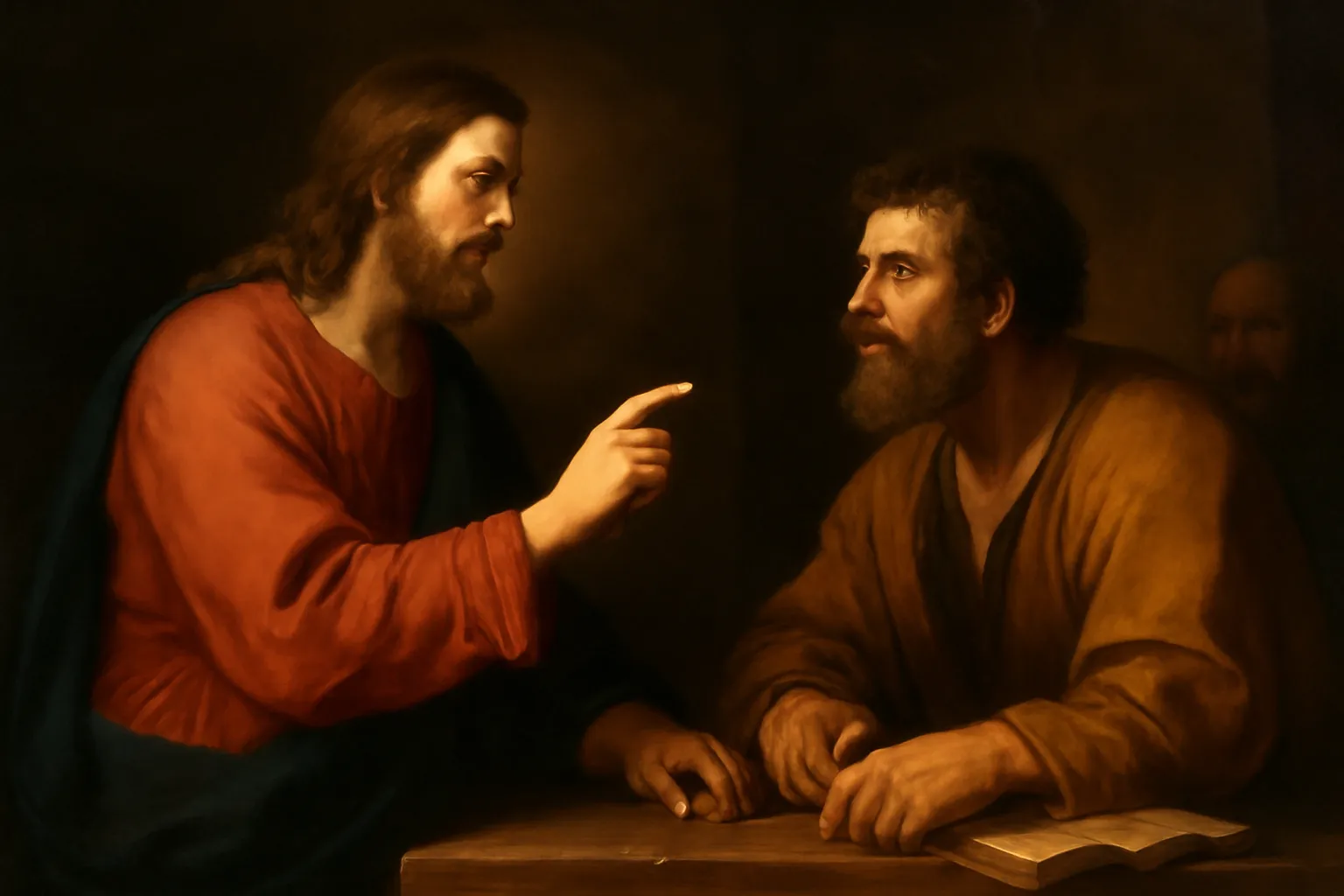
The Call of Saint Matthew presents a carefully arranged drama in a small, almost stage-like interior. A beam of light enters from the left, cutting across a dark room and illuminating a group of men gathered around a table. The central action concerns a moment of recognition and invitation: Jesus Christ appears at the threshold or within the illuminated field, gesturing toward the men at the table with a quiet, decisive movement. The man who will come to be identified as Saint Matthew sits at the right side of the table, distinguished by his proximity to the light and by the posture that suggests a moment of decision—an instant of turning toward a new vocation.
What makes this scene powerful is not a single obvious gesture but a constellation of cues—facial expressions, body language, and the way light travels across the figures. The figures around the table are rendered with the palpable texture of skin, clothing, and the rough wooden surface of the table. Their faces are a study in ambiguity and curiosity: some show surprise, others indifference, and a few seem almost resigned to the routine of their day. Into this ordinary moment, the extraordinary interrupts: a call, a summons from beyond the ordinary, a reminder that life can pivot on a single decision.
As viewers, we are drawn into the narrative by several compositional strategies. Caravaggio uses diagonal lines and a careful distribution of light and shadow to create a momentum that draws the eye from the left side of the frame toward the right, where the figure of Matthew sits near the edge of the light. The social dynamic—the tension between the sacred moment and the secular setting—becomes a visual argument about vocation: calling does not appear as a grand ceremony but as a suggestion that arrives in the midst of daily activity. In this way, the painting’s drama unfolds as much in what is seen as in what is implied: a divine invitation to leave behind a crowded table for a life of discipleship.
Who is Saint Matthew in the scene, and what is he doing?
Saint Matthew is the tax collector or the man seated at the table who is most closely linked to the money-counting activity around him. He is depicted among his companions as someone who is embedded in the ordinary routines of commerce and governance of the community.
The men around the table personify the worldly concerns of wealth, status, and social networks. Their presence ensures that the scene remains relatable to a wide audience; it underscores the idea that the divine call can emerge from within a familiar, even prosaic, setting.
Jesus Christ, entering with a calm authority, embodies the moment of spiritual intervention. His gesture, a pointed finger or an extended arm, functions as a sign of invitation and authority—the biblical imperative to follow is communicated through a precise, human motion rather than a ceremonial gesture.
Several scholars note that Caravaggio’s Call of St Matthew deliberately foregrounds a narrative moment that could be overlooked in a more traditional iconography. The scene asks the viewer to consider what it means to be called to a vocation—not to a distant or improbable achievement, but to a path that intersects with daily life, work, and responsibility. The painting thereby reframes the idea of a miracle as something that can occur in a rented room, among ordinary people, at an ordinary hour.
Technique and style: light, realism, and psychological depth
Caravaggio’s mastery of chiaroscuro (the contrast of light and dark) and tenebrism (a dramatic, nearly theatrical use of shadow) is central to the painting’s impact. The left-hand lighting does more than illuminate figures; it creates a stage for revelation. The light is not merely decorative; it functions as a moral and narrative engine. It highlights Christ and Matthew, and it draws attention to the decision that lies ahead, while the surrounding darkness outside the beam reminds us of the unknown consequences that follow a call.
Several features of the Call of Saint Matthew demonstrate Caravaggio’s distinctive approach to realism and psychological depth:
Naturalistic figures: The men around the table wear contemporary clothing, speak with contemporary gestures, and exhibit expressions that feel observable in real life, not idealized or allegorized.
Grounded setting: The tavern interior, the rough surfaces, and the everyday tools on the table all contribute to a palpable sense of place, making the sacred moment click into the present.
Dynamic composition: Caravaggio’s arrangement uses a shallow space and a strong diagonal that directs attention and creates a sense of immediacy, as if the viewer could step into the scene.
Gesture and gaze: The posture of the figures, including the attention of the onlookers and the hint of movement in Christ’s arm, convey a nuanced, human drama that invites identification and empathy.
The technique also reflects Caravaggio’s belief that art should be accessible and emotionally direct. He trained the viewer to recognize themselves in the scene, to feel part of the dialogue between the earthly and the divine. In this sense, the Call of St Matthew is a masterclass in how formal innovation (like dramatic lighting) can serve a moral and spiritual purpose.
Symbolism and meaning: vocation, social order, and a new humanity
Beyond its visual drama, the painting is rich in symbolism tied to the concept of vocation and the radical reorientation of a life. The call occurs against the backdrop of a social order defined by commerce, taxation, and governance. In Catholic theology, the apostles are not just witnesses; they are chosen to participate in the work of salvation. Caravaggio makes this idea tangible by placing a recognizable figure (Matthew, a tax collector) at the center of the moment when Jesus extends the invitation to follow him.
Key symbolic threads in the Call of Saint Matthew include:
Money and numbers: The ledger and the money on the table symbolize worldly concerns and the temptation toward material concerns. In the presence of the divine, these concerns become the very site of transformation—money becomes a tool, not a trap.
Light as revelation: The beam of light that illuminates Christ and Matthew suggests illumination of conscience and the dawning of vocation. Light is not a mere backdrop; it is a sign of grace acting in the moment.
Ordinary life as sacred ground: The tavern setting asserts that salvation can enter through ordinary work and daily routines. This is a characteristic assertion of Catholic Counter-Reformation art: the moral life is lived out in the flesh, in concrete places and actions.
Call and response: The relationship between Christ and Matthew is not only about a one-way invitation; it is a dynamic exchange. The viewer is invited to consider their own sense of vocation and the ways in which they respond to a call that may come in unglamorous moments.
Art historians often contrast the Call of St Matthew with earlier, more stately depictions of holy figures. Caravaggio’s version replaces idealized sanctity with an accessible immediacy. It suggests that sainthood is not exclusively the domain of extraordinary revelations but can emerge from everyday choices and acts of faith. In this sense, the painting can be read as a meditation on discipleship as a decision taken in the middle of ordinary life, rather than as a rarefied moment isolated from daily concerns.
Relation to other works in the Contarelli Chapel and their narrative arc
The Call of St Matthew sits within a program of images that illuminate different facets of St Matthew’s life and vocation. The companion piece, often discussed as St Matthew and the Angel, presents a later moment of inspiration rather than the initial call. Together, these canvases offer a dialogue about how vocation is perceived, perceived, and acted upon. The entire chapel becomes a visual meditation on how the Gospel message translates into concrete action in the world.
Scholars also note how Caravaggio’s Call interacts with the viewer’s sense of time. The moment depicted is not an instantaneous event but a threshold: the candidate for discipleship stands at a brink, glancing toward a door that opens into a life of following Christ. The composition suggests that the decision is as much about what one stops doing (the crowd around the table, the preoccupation with money) as about what one starts doing (leaving the table, stepping toward a new mission).
Reception, interpretation, and the painting’s lasting impact
Since its creation, the Call of St Matthew has been a touchstone for debates about realism, sacred art, and the role of the artist in shaping religious experience. Some early commentators were startled by the way Caravaggio placed Saint Matthew in a secular, almost contemporary setting. Others celebrated the painting as the pinnacle of how sacred narratives could be made present, immediate, and morally persuasive. Over the centuries, critics and historians have highlighted several enduring features:
Grounded spirituality: The painting presents a spiritual moment in a physical space that viewers can recognize and enter.
Emotional realism: The facial expressions and body language of the figures convey a palpable psychological drama that invites empathy.
Innovative lighting: The use of light to frame the drama became a model for countless Baroque painters and beyond, influencing how narrative energy is conveyed visually.
Civic and doctrinal resonance: The scene speaks to a Catholic audience about the universal call to repentance and service, encouraging believers to see themselves within the story of salvation.
In the broader art historical arc, the Call of Saint Matthew is typically cited as a foundational work of Baroque visual language. Its impact can be seen in the subsequent generations of painters who adopted and adapted Caravaggio’s approach to light, gesture, and dramatic tension. In modern times, it has inspired numerous films, exhibitions, and scholarly essays that explore how religious art can engage contemporary audiences by evoking familiarity and wonder at the same time.
Location, conservation, and viewing tips
The original setting of the Call of St Matthew is the Contarelli Chapel within San Luigi dei Francesi in Rome. The painting’s location is not incidental: the space is designed to frame the narrative and to guide contemplation within a liturgical environment. The chapel’s architecture, the relative scale of the canvas, and the surrounding works all contribute to how a viewer experiences the scene. If you plan a visit to Rome, seeing this canvas in situ offers insights that reproductions cannot fully convey—the way the light enters the chapel, the hush of the space, and the wall’s color and texture all add layers of meaning to the call itself.
Conservation records reveal how closely restorers have studied the painting to preserve its delicate balance of light, shadow, and color. The earthy palette—the browns, ochres, and deep shadows—requires careful maintenance so that the dramatic chiaroscuro remains legible. If you are viewing the painting in person, consider the following tips:
Watch from a modest distance to see how the light fall on the figures changes as you move: this reveals Caravaggio’s intention that the viewer participate in the moment of recognition.
Notice the texture of the men’s clothing and the wood on the table; the surface details amplify the painting’s tactile realism.
Observe the gaze lines: where the eye leads, the viewer’s attention follows. The composition invites you to consider your own response to a call you may not have anticipated.
Read the textural contrast between the illuminated figures and the darker background; this contrast is not merely aesthetic but structural to the narrative.
For those unable to travel, high-quality reproductions and virtual tours can still convey much of the painting’s impact. The Call of St Matthew remains a benchmark by which later generations measure how an image can narrate a moment of grace with humility and immediacy.
Variations on the theme: alternative titles and semantic breadth
Throughout scholarship and exhibition catalogs, the painting appears under several related titles. These variations reflect the same core event and deepen our understanding of how different languages and traditions name the moment of vocation. Common variants include:
The Calling of Saint Matthew
The Call of Saint Matthew
The Call to Saint Matthew (emphasizing the act of invitation)
Saint Matthew and the Call (highlighting the figure and moment together)
Calling of Saint Matthew (a shortened, more modern phrasing)
These synonyms are more than linguistic footnotes; they point to the painting’s multifaceted meaning. The Call is not a single verb but a constellation of activities—an invitation, a response, a transformation, and a public proclamation of faith. The variations in title also reflect how audiences in different eras have grappled with the balance between miracle and realism, between sacred inevitability and human choice. When discussing the work, using several of these expressions can help broaden the analysis and reveal additional layers of interpretation.
Thinking about the work today: why the Call of St Matthew endures
What makes the Call of St Matthew endure in the collective imagination is its capacity to render a powerful spiritual truth through a scene that feels lived-in and accessible. The painting invites a conversation about vocation that is not limited to priests or monks but is relevant to anyone who must decide where to direct their talents, their attention, and their loyalties. It suggests that a life of purpose can begin in a moment of decision, even in a place as ordinary as a tavern, surrounded by coworkers and concerns.
From a broader perspective, the work is a touchstone for how art can serve as a bridge between sacred themes and secular life. It demonstrates that religious experience does not require grandiose settings or distant ideals; instead, it can be encountered in the precise, intimate moment when a person senses an invitation to a different path. The painting’s lasting appeal lies in its ability to preserve that delicate balance between the visible and the invisible, between what we see on the canvas and what the scene implies about human and divine interaction.
What to take away: a concise guide to understanding the Call
Context matters: The painting emerges at a moment when the Catholic Church sought to communicate faith in immediate, relatable terms.
Vocation is central: The call represents a universal theme—the invitation to follow a transformative path, even when life is busy or ordinary.
Realism and drama go hand in hand: Caravaggio demonstrates that naturalistic detail and emotional intensity can work together to produce a powerful religious narrative.
Light is narrative: The dramatic illumination does more than illuminate; it reveals, guides, and frames meaning in the scene.
Location matters: Seeing the work in its original space helps appreciate how architecture, lighting, and surrounding works contribute to meaning.
Closing thoughts: the Call that continues to speak to new audiences
The Call of St Matthew remains a landmark not only for its artistic achievement but for its enduring message. It teaches that grace can act in the middle of daily life, that vocation can emerge from a moment of decision under ordinary circumstances, and that the divine can walk into a room, draw back the curtain of ordinary reality, and invite a person to follow a new path. Caravaggio’s masterpiece does not merely illustrate a biblical scene; it engages viewers in a quiet dialogue about responsibility, identity, and the boundaries between the sacred and the secular. In that sense, the Call of Saint Matthew continues to be relevant today—an invitation to observe closely, to listen for a call, and to recognize the extraordinary within the ordinary world around us.
Whether you refer to it as the Call of St Matthew, the Calling of Saint Matthew, or the Call to Saint Matthew, the painting remains a luminous example of how art can illuminate faith and entice viewers to consider their own moments of vocation. It stands as a testament to Caravaggio’s genius and to a late Renaissance–early Baroque synthesis that would influence generations of artists. It is, in every sense, a doorway opened by light, inviting us to step through and see what happens when a moment of possibility becomes a life’s direction.