Bible Verses Christ Birth: Scriptures About Jesus’ Nativity
The nativity of Jesus stands at the center of Christian faith and tells a story that spans prophecy, angelic annunciation, humble birth, and divine revelation breaking into human history. This article surveys the key bible verses about Christ’s birth, showing how the birth narratives in the Gospels of Luke and Matthew connect with Old Testament prophecies, and how theologians understand the incarnation and its significance for faith, worship, and daily life. Readers will encounter the events, characters, and themes that accompany the moment when God became flesh and dwelt among us.
Across the scriptures, the birth of Christ is described with variety and depth. The gospel writers emphasize different facets of the same event: the humble origins of the Messiah, the fulfillment of long-awaited prophecies, the inclusion of Gentiles in God’s plan, and the inauguration of a new era in salvation history. This article presents the material in a structured way, with references to verses about Jesus’ birth, while highlighting the core ideas that have shaped Christian devotion for two millennia.
Prophetic Foundations: Old Testament Expectation of the Birth of the Messiah
Long before Mary and Joseph held a newborn baby in Bethlehem, the scriptures hinted at a coming Messiah whose birthplace would be central to God’s redemptive plan. Several strands of prophecy and promise point toward the birth of Christ as a pivotal moment in history.
Virgin Birth Prophecies
Isaiah 7:14 — A sign will come from the Lord: a virgin will conceive and bear a son, and he will be called Immanuel, “God with us.” This prophecy is often cited as articulating the virgin birth motif that many Christians associate with Jesus’ nativity.
Matthew 1:22-23 — Matthew explicitly links Jesus’ birth to Isaiah’s prophecy, noting that the event is fulfilled in the birth of Jesus to Mary. The phrase “the virgin shall conceive and bear a son” becomes a focal point for understanding the incarnation in the Christian story.
The Ruler From Bethlehem: Micah’s Message
Micah 5:2 — The prophecy identifies Bethlehem as the place from which a future ruler will come, whose origin is from of old, from ancient times. This sets the stage for the gospel accounts to locate Jesus’ birth in the city of Bethlehem.
The Seed of David and the Covenant Promise
2 Samuel 7:12-16 and related passages underscore the promise that heightens expectations for a descendant of David who will reign. The nativity accounts connect Jesus to the Davidic line, reinforcing the claim that Jesus enters the world as the rightful king in the divine plan.
Genesis 12; 22 (the Abrahamic blessing and the call of faith) provide a broader backdrop in which Jesus’ birth is seen not only as an event for Israel but as a moment that invites all nations into the story of God’s redemptive purpose.
In sum, the Old Testament readings frame the birth of Christ as a fulfillment of prophecy, a sign of God’s faithfulness, and a turning point that inaugurates a new chapter in salvation history. When readers approach the nativity narratives with these expectations, they hear the stories not only as events that happened long ago but as revelations that call for response in faith and worship.
The Nativity Narratives in the Gospels
Two primary accounts give us the story of Jesus’ birth: the gospel according to Luke and the gospel according to Matthew. Each presents a distinct angle while sharing essential elements that identify Jesus as the long-awaited Messiah. Readers encounter the annunciation, the journey, the events surrounding birth, and the responses of those who encounter the newborn Savior.
Luke’s Portrait: Annunciation, Magnificat, and the Shepherds
In Luke’s account, the emphasis is on accessibility, humanity, and a world-wide scope of salvation. The story begins with the announcement to Mary and unfolds through the perspectives of Zechariah, Elizabeth, Mary, the shepherds, and Simeon.
Annunciation to Mary (Luke 1:26-38) — A divine messenger reveals that Mary will conceive the Son by the Holy Spirit, and she responds with faith and obedience. This moment foregrounds the humble beginnings of Jesus’ life and the faith of those who trust God’s promise.
Mary’s Magnificat (Luke 1:46-55) — Mary’s song of praise emphasizes God’s mercy and the reversal of fortunes for the humble and hungry. The language highlights the kingdom ethics that accompany Jesus’ birth.
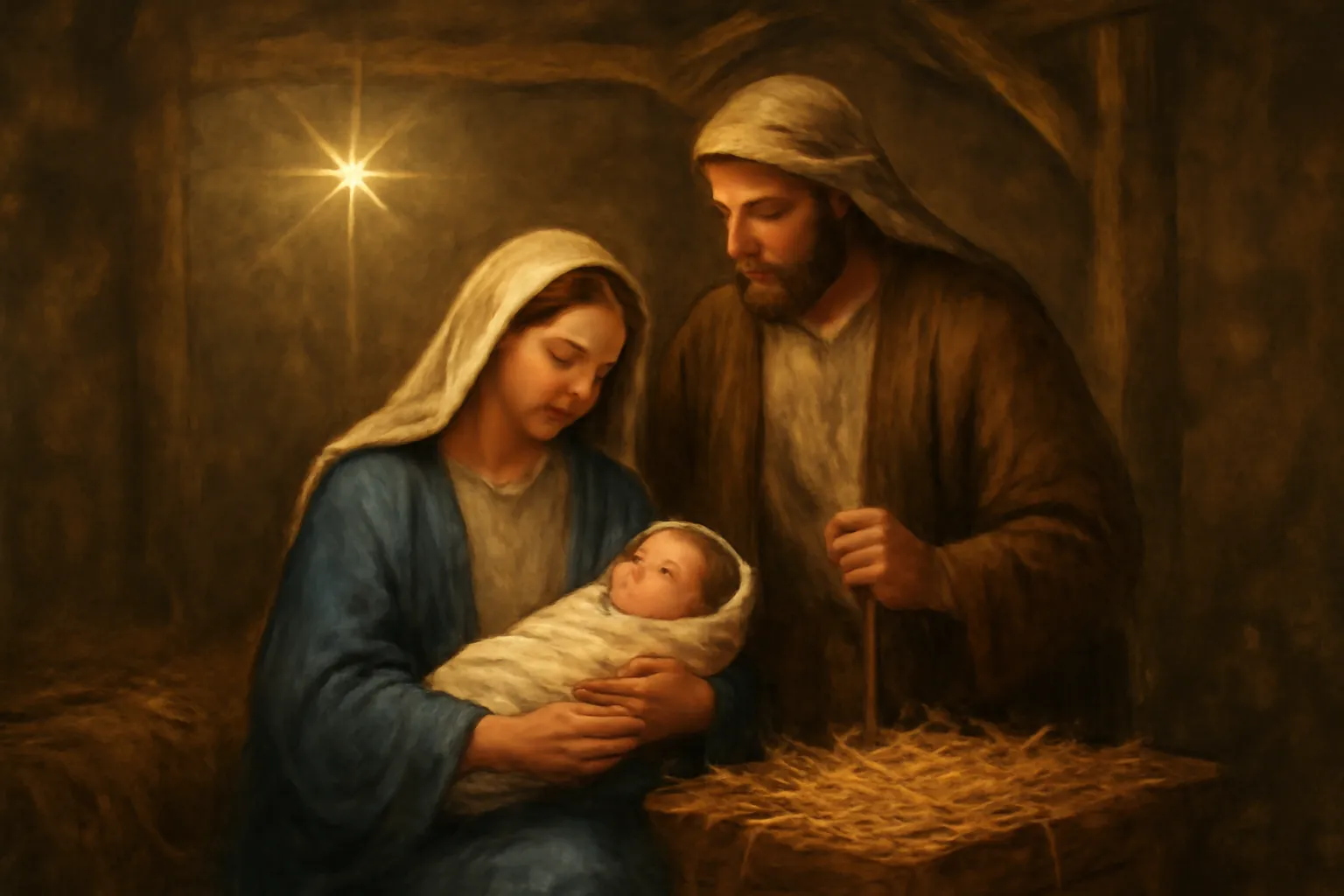
Birth in Bethlehem (Luke 2:4-7) — Mary and Joseph travel to the city of David for the census, and Jesus is born among animals in a stable, identified by the manger setting as a sign of humility and accessibility.
Angels and the Shepherds (Luke 2:8-20) — A heavenly chorus declares good news for all people, and shepherds, representing ordinary workers, become witnesses. This signals the universal offer of salvation to all nations and classes.
Presentation in the Temple (Luke 2:22-38) — Simeon and Anna affirm the child’s destiny to bring salvation to both Israel and the nations. The event frames Jesus as the culmination of Israel’s hopes and a light to the Gentiles.
Luke’s narrative presents the nativity as an event that inaugurates a new era of grace and inclusion. The story invites readers to see the birth of Jesus as good news that is meant to be announced to the marginalized and to every corner of the world.
Matthew’s Perspective: Genealogy, Dreams, and the Visit of the Magi
Matthew’s account places greater emphasis on the legal and royal dimensions of Jesus’ birth. The storyline connects Jesus to Jewish ancestry and to fulfillment of specific prophecies, while also highlighting the tension and danger surrounding the newborn king.
Genealogy and Birth Narrative (Matthew 1:1-25) — Matthew traces Jesus’ legal lineage to David and Abraham, underscoring the Messianic expectation and the fulfillment of God’s promise to Israel.
An Incognito Beginning: The Dream of Joseph (Matthew 1:18-25) — Joseph’s righteous response to Mary’s pregnancy is shaped by a divine dream, emphasizing obedience and trust in God’s plan even when it defies social norms.
The Visit of the Magi (Matthew 2:1-12) — Wise men from the East come seeking the newborn king, guided by a star. Their journey highlights the reaching breadth of salvation beyond Israel to include Gentiles and seekers from distant lands.
The Flight to Egypt (Matthew 2:13-15) and the Return to Nazareth (Matthew 2:19-23) — After Herod’s plot to destroy the child, Joseph, Mary, and Jesus depart for Egypt and later return, fulfilling what the prophets had spoken about the Messiah’s place of origins.
Matthew’s narrative thus foregrounds the royal lineage of Jesus and the way his birth disrupts the political and social order of the day, while still pointing to the fulfillment of prophecy and the broad significance of Jesus’ entry into the world.
Between Luke and Matthew, readers encounter a rich tapestry: a child born to a young woman in humble circumstances, witnessed by shepherds, and acknowledged by Gentile sages; a child whose birth is marked by both humility and glory; and a birth that signals the arrival of God’s kingdom in ways that invite faith, trust, and mission.
Below are some central ideas drawn from bible verses about Christ’s birth, presented as focused themes with brief explanations. Each item includes a reference so readers can explore the full text in their preferred Bible translation.
The Word Became Flesh (John 1:14) — The incarnate presence of God in the person of Jesus marks a definitive moment in which the divine life enters human history in a new and intimate way. The idea of dwelling among humanity is central to understanding the nativity’s significance.
Immanuel: God with Us (Matthew 1:23; Isaiah 7:14) — The name Immanuel communicates that the birth is not merely a human event but a divine presence among people, bridging heaven and earth and inviting trust in God’s promise.
Birth in Bethlehem (Micah 5:2; Luke 2:4-7) — The fulfillment of the prophecy about Bethlehem anchors Jesus’ origin in the heart of Israel’s story and shows how place matters in salvation history.
Messenger Announcements (Luke 1:26-38; Luke 2:10-11) — Angels announce the good news to Mary and the shepherds, highlighting the universal nature of God’s invitation and the accessibility of salvation to both the humble and the faithful.
Comfort and Hope for All Peoples (Luke 2:10-11; Luke 2:32) — The shepherds’ witness and Simeon’s blessing connect Jesus’ birth to a broader mission that includes all peoples and nations, foreshadowing the expansion of God’s covenant family.
Fulfillment and Response (Matthew 1:24-25; Luke 1:38) — The newborn’s life invites a response of obedience and trust: to name him, to follow his way, and to align one’s life with God’s redemptive purposes.
Gentile Recognition (Matthew 2:1-12) — The Magi’s visit signals that the birth of Christ has significance beyond Israel, foreshadowing the inclusion of Gentiles in the story of God’s mercy.
These themes recur throughout the nativity stories and provide a framework for understanding how the birth narratives function theologically. The incarnation is not only about a baby in a manger but about God’s plan to reconcile humanity to himself through Jesus, inviting a response of faith, worship, and mission.
Theological Significance of Jesus’ Birth
The birth of Christ carries profound theological weight for Christian faith. It is a cornerstone of the doctrine of incarnation, the claim that the eternal God took on human flesh in the person of Jesus. The nativity also embodies several key theological themes that shape Christian worship and practice.
Humility and Accessibility
The scene of Jesus’ birth—humble surroundings, anonymous parents, and humble observers—models a divine approach that is humble and accessible. The gospel writers emphasize that the Savior comes to the lowly and to those who recognize their need. This motif invites believers to welcome the divine gift with simple faith and trust.
Fulfillment of Scripture
The nativity stories show how God’s promises, proclaimed centuries earlier, come to pass in real time. The life of Jesus as described in Luke and Matthew demonstrates that scriptural fulfillment is not merely literary; it is the shaping of human history by the divine plan. The use of prophecies, genealogies, and fulfillment statements underscores the continuity between Testaments and the unity of God’s redemptive message.
Universal Scope
From the shepherds to the Magi, the narratives reveal that the birth of Jesus has implications for all nations. The invitation to the gospel is not limited to a single people group; rather, the nativity signals a mission to bring light to all peoples and to invite all humanity into God’s family through faith in Christ.
Christ as the Center of Salvation History
Jesus’ birth functions as a hinge in salvation history: it marks the transition from waiting for the promised Messiah to the present reality of God’s salvation entering the world. The nativity’s drama—annunciation, journey, encounter, challenge, and response—maps onto the broader arc of the gospel message: God’s love, human response, and transformative power for followers of Christ.
Approaching the birth narratives with a learning mindset can deepen understanding and foster meaningful worship. Here are practical steps and questions to guide study and reflection:
Compare the accounts (Luke 1-2 vs. Matthew 1-2): note the differences in audience, emphasis, and the types of signs each writer highlights. Consider what each author wants readers to know about Jesus’ identity and mission.
Track recurring motifs—humility, revelation, fulfillment, worship, and mission—and observe how they develop across the two gospels. Look for language that signals the inauguration of a new era in salvation history.
Reflect on prophecy and fulfillment—identify specific references to Old Testament passages and think about how their fulfillment in Jesus shapes a reader’s understanding of God’s faithfulness.
Contemplate response—examine how different characters respond to the birth: Mary’s faith, Zechariah’s caution, the shepherds’ wonder, the Magi’s worship, and Herod’s fear. What does their response teach about appropriation of divine revelation?
Apply the themes to life—consider how the messages of humility, inclusion, and mission speak to contemporary faith communities, family devotions, and personal prayer.
For personal devotion, a simple method is to read a block of text (Luke or Matthew) and then journal a short reflection on a guiding question, such as: “What does the birth of Christ reveal about God’s priorities for the world today?” or “How can I participate in the mission that begins with the nativity?”
Reflection Questions for Groups and Growing in Faith
What does the nativity tell us about God’s character? Consider themes of mercy, faithfulness, and generosity that emerge from the birth narratives.
How does the inclusion of Gentiles in the Magi story expand our understanding of God’s plan?
In what ways does humility mark the arrival of Jesus, and how should humility shape our own worship and service?
Why is Bethlehem a meaningful location in the birth narrative, and how does place influence expectancy and hope?
How do the nativity accounts invite a response of faith and action in the life of a modern church or family?
The birth of Jesus is not only a historical event to be remembered; it is a living narrative that continues to shape faith, worship, and mission. The biblical verses about Christ’s birth invite readers to encounter the mystery of God becoming human, to marvel at God’s plan to reach the nations, and to respond with reverent awe and active discipleship. From the humble manger in Bethlehem to the divine revelations declared by angels, and from the narrative arcs of Luke and Matthew to the broader tapestry of scripture, the nativity remains a cornerstone of Christian identity and hope. May readers approach these verses with a stance of worship, gratitude, and a life oriented toward the gracious purposes God demonstrates in the birth of His Son.
As you continue to explore the scriptures about Christ’s birth, you may want to keep in mind these guiding ideas: the incarnation is a revelation of God’s nearness; the fulfillment of prophecy demonstrates God’s unbroken faithfulness; the universal scope of salvation invites all people to draw near; and the response of faith—in awe, praise, and mission—rejoices in the gift of a Savior who is with us.