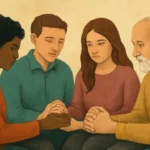
The Bible is filled with invitations and instructions to come together in harmony, unity, and mutual care. Across both Testaments, God calls His people to dwell not as isolated individuals but as a community built on love, truth, and shared purpose. In this guide, we explore a wide range of scriptures that speak to the themes of unity, peace, and fellowship, showing how believers are invited to be knit together in the body of Christ and to reflect a shared life that bears witness to the world.
The verses below are organized to highlight how togetherness appears as a divine design for human flourishing. We will consider foundational declarations of unity, the peace that sustains communal life, and the everyday acts of fellowship that shape churches, families, and friendships. Throughout, you will find the verses presented in a form that emphasizes their core messages, with paraphrased notes to broaden semantic understanding while preserving the integrity of the original messages.
Unity is not merely a feeling but a concrete way of living together. It involves alignment of mind and spirit, mutual support, and a shared commitment to the good of others. The Bible presents unity as a divine gift and a disciplined practice—something the church must pursue with intentionality, humility, and grace.
Foundations in the Old Testament
Psalm 133:1 — «Behold, how good and how pleasant it is for brethren to dwell together in unity!» (A concise affirmation: harmonious living among brothers and sisters is both delightful and right.)
Ecclesiastes 4:9-12 — «Two are better than one; because they have a good reward for their labour. For if they fall, the one will lift up his fellow…» (A practical description of shared labor, mutual support, and the strength that comes with partnership.)
Proverbs 27:17 — «Iron sharpeneth iron; so a man sharpeneth the countenance of his friend.» (Friendship and accountability are part of healthy fellowship.)
In these early reflections, we glimpse a design for social life where people are not isolated atoms but connected beings whose growth depends on healthy relationships. The language of dwelling together in unity points to shared space, shared purpose, and shared burdens that strengthen the whole community.
New Testament Teachings on Unity
John 17:21 (KJV) — «That they all may be one; as thou, Father, art in me, and I in thee, that they also may be one in us: that the world may believe that thou hast sent me.» (Jesus prays for oneness among believers as a powerful witness to the world.)
Ephesians 4:3-6 (KJV) — «Endeavouring to keep the unity of the Spirit in the bond of peace. There is one body, and one Spirit, even as ye are called in one hope of your calling; one Lord, one faith, one baptism.» (A call to preserve the Spirit-led unity through peace and shared confession.)
Romans 12:16-18 (KJV) — «Be of the same mind one toward another. Mind not high things, but condescend to men of low estate. Be not wise in your own conceits. Rejoice with them that do rejoice, and weep with them that weep. Be of the same mind toward one another. If it be possible, as much as lieth in you, live peaceably with all men.» (A blueprint for humble, peacemaking community life.)
1 Corinthians 1:10 (KJV) — «Now I beseech you, brethren, by the name of our Lord Jesus Christ, that ye all speak the same thing, and that there be no divisions among you, but that ye be perfectly joined together in the same mind and in the same judgment.» (A strong appeal against faction and for unified thinking around Christ.)
Colossians 3:12-14 (KJV) — «Put on therefore, as the elect of God, holy and beloved, bowels of mercies, kindness, humbleness of mind, meekness, longsuffering; forbearing one another, and forgiving one another, if any man have a quarrel against any: even as Christ forgave you, so also do ye. And above all these things put on charity, which is the bond of perfectness.» (Charity and forgiveness knit a community in peace and patience.)
Galatians 3:28 (KJV) — «There is neither Jew nor Greek, there is neither bond nor free, there is neither male nor female: for ye are all one in Christ Jesus.» (In Christ, divisions of identity are reconciled into a shared spiritual identity.)
1 Corinthians 12:12-27 (KJV) — The body has many members, and though there are differences in gifts, all are essential to the whole; when one suffers, all suffer; when one is honored, all rejoice. (Unity in diversity: diverse gifts form a single functioning body.)
John 13:34-35 (KJV) — «A new commandment I give unto you, That ye love one another: as I have loved you, that ye also love one another. By this shall all men know that ye are my disciples, if ye have love one to another.» (Love as the defining mark of true community.)
1 John 1:7 (KJV) — «But if we walk in the light, as he is in the light, we have fellowship one with another, and the blood of Jesus Christ his Son cleanseth us from all sin.» (Fellowship grows out of shared life in the light of Christ.)
Across these passages, a clear trajectory emerges: unity is not a passive backdrop but a dynamic practice of life together. It requires alignment of hearts with truth, a willingness to lay down personal agendas for the common good, and ongoing dependence on the Spirit who empowers genuine harmony.
Peace is more than the absence of conflict; it is the constructive atmosphere that enables honest relationships, honest praise, and honest accountability. The biblical vision for peace in community includes welcome, reconciliation, and steady perseverance in love. When Christians prioritize peace, they reflect the gospel’s reconciling work and create space for authentic fellowship to take root.
Romans 12:18 (KJV) — «If it be possible, as much as lieth in you, live peaceably with all men.» (A practical baseline for daily conduct in a diverse community.)
Hebrews 12:14 (KJV) — «Follow peace with all men, and holiness, without which no man shall see the Lord.» (Peace and holiness go hand in hand in the life of a community seeking God.)
Hebrews 10:24-25 (KJV) — «And let us consider one another to provoke unto love and to good works: Not forsaking the assembling of ourselves together, as the manner of some is; but exhorting one another: and so much the more, as ye see the day approaching.» (Peace grows in sustained gathering and mutual exhortation.)
Matthew 5:9 (KJV) — «Blessed are the peacemakers: for they shall be called the children of God.» (Active peacemaking is a defining characteristic of a gospel-shaped community.)
Romans 14:19 (KJV) — «Let us therefore follow after the things which make for peace, and things wherewith one may edify another.» (Peace is not merely tolerance; it is edifying one another in truth and love.)
When peace anchors a group, differences can be navigated with grace rather than with withdrawal or anger. The call to peace does not erase disagreement; it reframes disagreement as a pathway to greater understanding and deeper relationship through patience, humility, and mutual respect.
Fellowship: The Shared Life and Mutual Edification
Fellowship is a lived experience of belonging in which believers share in worship, learning, service, meals, and daily life. It is the everyday fruit of unity and peace, visible in how a community cares for the vulnerable, disciplines itself in love, and invites others into the story of God’s grace.
Acts 2:42-47 (KJV) — The early church devoted themselves to the apostles’ teaching, fellowship, breaking of bread, and prayers; many shared meals and gave to each other as anyone had need. (A vivid model of communal life that embodies fellowship as shared practice.)
1 Thessalonians 5:11 (KJV) — «Wherefore comfort yourselves together, and edify one another, even as also ye do.» (Encouragement and edification are ongoing acts within fellowship.)
Colossians 3:16 (KJV) — «Let the word of Christ dwell in you richly in all wisdom; teaching and admonishing one another in psalms and hymns and spiritual songs, singing with grace in your hearts to the Lord.» (Worship and teaching fuse to form communal life that builds others up.)
1 John 4:11 (KJV) — «Beloved, if God so loved us, we ought also to love one another.» (Love in action is the language of fellowship in the community.)
1 Peter 3:8 (KJV) — «Finally, be ye all of one mind, having compassion one of another; love as brethren, be pitiful, be courteous.» (A concise portrait of mutual care and polite, Christlike conduct.)
The thread running through these verses is clear: fellowship is not a superficial social activity; it is a spiritual formation project. It shapes character, deepens trust, and allows believers to reflect the love of Christ in tangible ways. When communities practice true fellowship, they become beacons that draw others toward the gospel, offering a compelling counter-narrative to isolation and fragmentation.
Practical Ways to Live Out Bible Verses About Coming Together
While verses give us a theological framework, practical steps translate vision into daily life. Below are ideas drawn from Scripture that churches, families, and individuals can adopt to cultivate unity, peace, and fellowship in tangible ways.
Practice regular gatherings: Prioritize regular assemblies—worship services, liturgical gatherings, or small groups—so that the body remains connected, encouraged, and accountable (Hebrews 10:24-25; Romans 12:16-18).
Pursue reconciliation: When conflicts arise, pursue reconciliation quickly with humility and truth-telling wrapped in love (Matthew 5:9; Ephesians 4:31-32).
Commit to shared mission: Engage in collaborative acts of service, missions, and community outreach that reflect a common purpose beyond personal preferences (Philippians 2:2-4).
Practice hospitality and table fellowship: Welcome others into shared meals, prayer, and conversation as a practical expression of fellowship and inclusion (Acts 2:42-47; Romans 12:13-16).
Cultivate a culture of edification: Encourage one another with words of affirmation, scriptural teaching, and constructive correction that builds up (1 Thessalonians 5:11; Colossians 3:16).
Guard unity with humility: Avoid divisions by prioritizing the common good, valuing diverse gifts, and acknowledging that all are one in Christ (1 Corinthians 12:12-27; Galatians 3:28).
Pray for one another: Regular intercession strengthens bonds, fosters empathy, and aligns hearts with God’s will (James 5:16; 1 John 3:11-18).
These practical steps are not a checklist to earn favor with God, but a way of embodying the gospel where life together becomes an advert for the Kingdom. Each action—gathering, forgiving, teaching, serving—adds a thread to the fabric of a community that reflects the unity and love of Christ.
Common Questions About Coming Together in the Bible
Why does the Bible stress unity even in disagreements?
The Bible recognizes that differences exist but teaches that unity is rooted in a shared allegiance to Christ. The goal is not uniformity for its own sake but a shared life shaped by truth, love, and the Spirit’s work within the body. Verses like Ephesians 4:3-6 and Romans 12:16-18 model pursuing harmony while upholding essential beliefs.
What does biblical unity look like in a diverse church?
Biblical unity honors diversity of gifts, backgrounds, and perspectives while centering on Christ. The body of Christ metaphor in 1 Corinthians 12:12-27 illustrates that unity does not erase differences; it binds them together in mutual care and interdependence.
How can a church cultivate peace amid real-world tensions?
Peace is fostered by confession, forgiveness, courageous conversations, and a willingness to lay aside personal aims when they hinder the common good. Hebrews 12:14 and Romans 12:18 point toward pursuit of peace as a practical habit, not a one-time decision.
What is the role of fellowship in spiritual growth?
Fellowship multiplies grace: through shared teaching, encouragement, and accountability, believers grow in faith and love. Personal transformation happens best when community is a supportive, truth-telling, and prayerful environment (Colossians 3:16; Acts 2:42-47).
A Call to Model the Life of Togetherness
The biblical vision of coming together—across unity, peace, and fellowship—is a generous invitation to a life that reflects God’s own nature. In the Trinity, in the church, and in every healthy community, coming together is not a convenience but a divine design. It is through one anothering—loving, bearing with, correcting, praying for, and delighting in one another—that the world sees the gospel lived out in real time.
As you reflect on these verses and their practical implications, consider how your own church or circle of friends can grow in these three strands. Ask God to deepen your unity in truth, cultivate lasting peace in daily interactions, and expand your fellowship through acts of service, hospitality, and mutual encouragement. The Bible does not call us to a sterile conformity but to a radiant harmony that testifies to the reality of Christ’s life among us.