The Mosaic Covenant meaning is a key to understanding how the Bible presents God’s relationship with Israel. Also called the Sinaitic Covenant or the Covenant of Moses, this biblical arrangement centers on the giving of the Law, the establishment of a people set apart, and a system of worship that would shape national identity for centuries. This article surveys what the Mosaic Covenant meaning entails, how it was formed at Sinai, what obligations it imposed, and how biblical interpreters have read its significance across Jewish and Christian traditions. By tracing its contours—moral, ceremonial, civil, and eschatological—we explore how this covenant functions within the biblical narrative and why it remains a focal point of discussion about law, grace, obedience, and promise.
A concise way to describe the Mosaic Covenant meaning is to see it as the formal agreement God made with the Israelites after the Exodus, through which He revealed His laws and organized their communal life around worship, justice, and holiness. Within biblical terms, this is not a single commandment but a comprehensive framework that includes the following elements:
The revelation of the Ten Commandments and a broad body of Torah (the first five books of the Bible and related statutes).
The appointment of a mediator (Moses) who would convey God’s will and oversee the people’s obedience.
The establishment of a distinct priesthood and a central place of worship—the tabernacle during the wilderness journey, and later the temple in Jerusalem for many generations.
A system of rituals, sacrifices, and purity laws designed to address human sinfulness and the need for atonement.
A shared sense of blessing and cursing tied to covenant faithfulness, including tangible outcomes such as land, prosperity, or exile.
In this sense, the Mosaic Covenant meaning is not merely a set of rules but a covenantal program: God reveals Himself, invites a people to live in a distinctive way, and promises covenantal blessings contingent on loyalty and obedience. This is why the covenant is often described as conditional—obedience leads to blessing, while disobedience invites consequences. Yet even within the conditional frame, the covenant also points to God’s steadfast mercy, future restoration, and the enduring idea that Israel’s vocation serves as a light to the nations.
Historical Context and Canonical Foundations
The events surrounding the covenant unfold in a specific historical trajectory. After the Exodus from Egypt, the people encamped at Mount Sinai, where God spoke to them through Moses and granted the terms of the covenant. The primary biblical books that anchor the Mosaic Covenant meaning are the books of Exodus, Leviticus, Numbers, and Deuteronomy. Key moments include:
Exodus 19–24, where God prepares the people, declares the covenant terms, and performs acts that validate the divine authority behind the law.
The giving of the Decalogue (the Ten Commandments) and attendant statutes that articulate moral obligations.
The establishment of the tabernacle and the priestly order as part of the worship system that would sustain covenant life in the wilderness and beyond.
Deuteronomy, which re-states and interprets the law for a new generation about to enter the land, reinforcing the covenant’s themes in a historical-theological frame.
In biblical summaries, the Mosaic Covenant meaning is closely tied to the interface between God and Israel as a people group. It is the vehicle through which God shapes a distinct national vocation—centered on holiness, justice, and dependence on God for blessing in the land. This framing helps readers understand why the covenant is more than a mere code of conduct: it is the constitutional backbone of Israel’s identity in the biblical story.
Core Components of the Covenant
To grasp the Mosaic Covenant meaning, it helps to identify its core components. These form the architecture of life under the Sinai covenant and show why its meaning extends beyond mere legalism into the realm of relationship and vocation.
Divine Revelation at Sinai
The covenant begins with a theophany—the authoritative revelation of God’s will to His people. This is not private instruction but an unveiling addressed to the whole community. The revelatory moment includes proclamations about who God is, what He requires, and how He will dwell among His people. The theological takeaway is that the law originates in God’s character and purposes, not merely as human invention.
The Written Law and the Commandments
Central to the Mosaic Covenant meaning is the written law given at Sinai. The Torah comprises moral, ceremonial, and civil instructions. The best-known subset is the Ten Commandments, but the covenant also encompasses a broad array of statutes governing worship, ritual purity, social justice, dietary practices, and civil administration. Interpreters often highlight that the law’s purpose is twofold: to reveal divine holiness and to form a community capable of living in obedience to God’s will.
God seals the covenant through a ceremonial framework that includes sacrifices, blood rites, and ratification ceremonies. The phrase “the blood of the covenant” in Exodus 24 underscores the seriousness and binding nature of the oath. This is not merely symbolic; the ceremony expresses profound solidarity between God and Israel and codifies the seriousness of obedience and obedience’s consequences.
The Mediator and the People
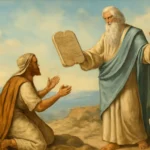
Moses acts as the primary mediator who communicates God’s will and facilitates the people’s response. The relationship between the divine revelation and human reception hinges on this mediating role. The covenant thereby frames a prophetic-royal leadership structure in which Moses, and later the priesthood, sustains the covenant community’s identity and worship.
Blessings, Curses, and the Conditional Nature
A distinctive feature of the Mosaic Covenant meaning is its explicit linkage between obedience and outcome. The biblical text presents a lattice of blessings for fidelity and curses for disobedience, a pattern that emphasizes moral accountability within the covenant relationship.
Blessings for obedience include national security, prosperity, fertility of land, successful harvests, and a stable social order. These blessings are framed as tangible signs of God’s favor and the people’s fidelity.
Curses for disobedience encompass military defeat, famine, exile, moral decay, and social disruption. The prophetic literature repeatedly warns that defection from the covenant leads to consequences that reflect the covenant’s seriousness.
Scholars note that the system of blessings and curses functions pedagogically. It teaches the community what it means to live under God’s rule and how life apart from that order leads to disorder. In this sense, the Mosaic Covenant meaning has a didactic purpose: it trains Israel to relate to God with reverence, gratitude, and dependent faithfulness.
Dimensions: Moral, Civil, and Ceremonial Law
The law given at Sinai is not uniformly categorized in one strand but spans several dimensions that interact and sometimes overlap. Understanding the triad of moral, civil, and ceremonial law helps illumine the Mosaic Covenant meaning and its practical implications.
Moral law expresses timeless ethical norms such as fidelity, honesty, justice, and respect for human life. The Ten Commandments are often read as the core of this dimension, underscoring universalizable moral principles within the covenant context.
Civil or constitutional law regulates Israel’s national life—laws about governance, war, taxation, social welfare, and community order. These statutes articulate how a holy people should organize itself in society.
Ceremonial or sacrificial law governs worship, ritual purity, festivals, priestly duties, and the tabernacle’s functioning. This dimension reveals how Israel approaches God and maintains ritual cleanliness and atonement for sin.
Interpretive debates often arise about how these categories apply today. Some traditions see the ceremonial and civil elements as fulfilled or superseded in Christ, while the moral law is viewed as timeless and binding for all people. The Mosaic Covenant meaning thus invites careful exegesis about how law, grace, and covenant relationship coexist in biblical theology.
The Tabernacle, Priesthood, and Mediated Access
One distinctive feature of the Sinai framework is the establishment of mediating institutions that enable a holy God to dwell with an imperfect people. The tabernacle (and later the temple) functioned as the central locus of divine presence. The priesthood—Levitical priests, in particular—administered rites that made worship possible in the midst of human sinfulness.
The tabernacle’s structure and rites symbolize how relationships with God require arrangement, order, and sacrifice.
The priesthood provides mediated access to God through offerings, calendar-driven rituals, and purity regulations.
The institution of the priesthood also highlights the covenant’s communal, not merely individual, dimension—Israel as a people under divine rule.
For biblical interpreters, these features underscore that the Mosaic Covenant meaning is as much about worship architecture as about moral codes. The worship system is designed to preserve a sense of holiness in the camp, guide communal life, and teach the people to depend on divine mercy as they strive to live righteously.
The Land Promise and National Identity
A central aspect of the Sinai covenant is the land promise. God’s terms to Israel include the expectation that obedience will secure the people a homeland, security, and prosperity. In the biblical narrative, the land becomes a tangible sign of covenant fidelity, a stage on which the drama of obedience and disobedience plays out. The Mosaic Covenant meaning therefore cannot be fully separated from the national vocation of Israel—the calling to be a holy nation and a royal priesthood for the world’s sake.
However, the story also shows that failure to uphold the covenant has consequences, including loss of land and exile. The prophetic books repeatedly interpret national misfortune in covenant terms, linking historical events to covenant faithfulness. In this sense, the Mosaic Covenant meaning is a dynamic and ongoing thread within Israel’s history, shaping expectations about restoration and renewal.
Scholars and theologians often distinguish between the Abrahamic Covenant and the Mosaic Covenant, while also noting their interconnection. The Abrahamic covenant (begun with Abraham in Genesis) is typically described as an unconditional promise—land, descendants, and blessing to all nations—rooted in divine election and divine faithfulness. The Sinai covenant, by contrast, emphasizes a formal response to God’s revelation through obedience to a detailed law code and ritual practice.
Nevertheless, the Mosaic Covenant does not stand in isolation from the broader biblical arc. In many biblical visions, the Abrahamic promise remains in view as the overarching arc toward which the Mosaic legal and cultic system serves. In Christian interpretation, this is often seen as pointing to the coming of Christ and the fulfillment of the entire covenant program in a new and superior covenant. In Jewish interpretive wisdom, the continuity between these covenants persists within the unity of God’s ongoing plan for Israel and the nations.
New Testament Reflections and Interpretive Trajectories
The Mosaic Covenant meaning is re-engaged in the New Testament in several key ways. Two strands are especially important for understanding how Christians and Jews read the Sinai covenant in light of later revelation:
Fulfillment and supersession in Christ (where some traditions view Jesus as fulfilling the law’s righteous standards and inaugurating a new covenant rooted in grace).
Tutoring or pedagogy (where the law functions as a tutor to lead people to Christ, as Paul argues in Galatians and Romans), teaching about sin, faith, and righteousness apart from works of the law.
Key biblical passages frame these conversations. Jeremiah 31:31–34 speaks of a future New Covenant that will be written on the heart, signaling a shift from external ritual to internal transformation. Hebrews 8–10 presents Christ as the mediator of a superior covenant, with the old covenant’s sacrifices being reinterpreted as shadows that find their fulfillment in the new order. These texts do not erase the Mosaic Covenant meaning, but they refract it through the lens of the person and work of Jesus and the ministry of the Spirit. For readers who emphasize continuity, the civil and ceremonial elements may be viewed as typological or fulfilled in the new order, while the moral code continues to reveal God’s character and standards for human conduct.
Interpretive Variants: Jewish and Christian Perspectives
The meaning of the Sinai covenant has been interpreted in diverse ways within Jewish and Christian traditions. Each stream emphasizes different facets of what the Mosaic Covenant meaning entails for faith, practice, and identity.
Jewish Interpretation
In Jewish reading, the Mosaic Covenant stands as a binding, perpetual framework that governs Jewish life in relation to God. The Torah remains central to worship, pedagogy, and community life. Jewish thinkers often stress:
The historicity of Sinai as the moment when God publicly revealed the covenantal agreement to the people.
The enduring relevance of the Torah as the guide for ethical behavior and social justice.
The covenant’s role in shaping national and spiritual identity, including the ongoing work of the people of Israel in living as a holy nation.
Christian Interpretation
For Christians, the Mosaic Covenant is frequently understood through the dual lenses of critique and fulfillment. Some highlight the law’s moral law as timeless, while viewing ceremonial and civil aspects as fulfilled or transformed by the person and work of Christ. Others emphasize the continuity of God’s plan—God’s righteousness and grace operating through faith in Christ, while still recognizing the ethical demands of Scripture as part of the Christian moral life. Common themes include:
The Law as tutor that leads to Christ (Galatians 3:24–25).
The New Covenant inaugurated in Christ, with the Spirit enabling obedience from within.
The ongoing ethical call to holiness, justice, and mercy that aligns with the moral dimension of the Sinai law.
These strands illustrate how the Mosaic Covenant meaning remains a living field of interpretation, inviting readers to connect ancient covenantal life with contemporary faith.»
Even though the form of the Sinai covenant has undergone dramatic theological shifts in Christian theology, its biblical significance continues to shape modern faith communities in several ways:
Identity and vocation—The Sinai experience helps believers understand what it means to be a people called to live in a particular way under God’s authority.
Moral guidance—The ethical components of the law offer enduring principles on justice, mercy, honesty, and human flourishing.
Worship and fellowship—The covenant’s emphasis on worship practices and the maintenance of sacred space informs Christian worship sensibilities and Jewish liturgy alike, even as those practices adapt to new covenants.
Scriptural literacy—Understanding the Mosaic Covenant meaning fosters deeper engagement with Scripture as a unified narrative of revelation, sin, mercy, and redemption.
Scholars and lay readers alike often wrestle with questions such as: How should the law be applied in a modern context? What parts of the Mosaic system point to timeless moral truths? How does the Old Covenant relate to the New Covenant in the life of the church or synagogue? Engaging these questions with care helps readers appreciate the covenant’s complexity and its enduring impact on biblical faith.
To capture the breadth of conversations around the Sinai covenant, it is helpful to recognize several terminological variations that convey related but distinct ideas. These include:
Sinaitic Covenant — Emphasizing the location of the revelation at Mount Sinai.
Covenant of Moses — Highlighting the mediator and the human agency involved in delivering the law.
Mosaic Law — Focusing on the legal corpus that arises from the covenant, including moral, ceremonial, and civil statutes.
Torah — The broader scriptural domain that includes legal material central to the covenant’s life.
Law of Moses — A traditional phrase used in some theological and ecclesial settings.
Different readers may use these terms interchangeably or with nuanced distinctions. The essential point is that each label points to a coherent cluster of divine revelation, legislative content, ritual practice, and covenantal relationship that defines how Israel relates to God within the biblical story.
Limitations and Cautions in Interpreting the Mosaic Covenant Meaning
Because the Sinai covenant spans ancient contexts, its application to contemporary life requires careful hermeneutics. Scholars warn against importing the exact civil or ceremonial laws from ancient Israel wholesale into modern settings without considering historical, cultural, and theological distances. A few guardrails help:
Preserve the dignity of scriptural authority while distinguishing between moral laws that reflect God’s character and ceremonial laws tied to ancient temple worship.
Recognize the covenant’s framework as part of a larger biblical arc that culminates in Christ, without disregarding continuity where appropriate.
Acknowledge the covenant’s function as part of Israel’s identity formation and as a pointer to God’s redemptive plan for the nations.
These cautions enable readers to appreciate the Mosaic Covenant meaning as a foundational moment in biblical history that continues to illuminate how faith communities understand law, worship, justice, and divine faithfulness.
How to Read the Mosaic Covenant Meaning Today
For students of Scripture, several practical approaches help interpret the Sinai covenant in a way that is faithful to the text and relevant to contemporary life:
Historical-critical perspective examines the covenant in its ancient Near Eastern milieu, comparing it with neighboring treaties to illuminate its structure and purposes.
Canonical-theological reading traces how later biblical writers understand the covenant and how it relates to the Abrahamic promises and the coming Messiah.
Ethical-practical approach extracts enduring moral principles about justice, care for the poor, honesty, and community life that translate across generations.
Interfaith dialogue engages Jewish and Christian interpretations to appreciate how the same textual core can yield different but compatible convictions about worship and holy living.
Ultimately, the Mosaic Covenant meaning is best understood as a multidimensional construct: a revelation of God’s character, a legal and liturgical framework for communal life, and a narrative thread that points toward a more complete fulfillment in the biblical story. When read with humility and care, it invites readers to reflect on what it means to love God with heart, soul, mind, and strength, and to love one’s neighbor as oneself—the ethical heartbeat that the Sinai covenant both embodies and anticipates in the biblical witness.
In summary, the Sinai or Mosaic Covenant represents a landmark moment in biblical history. It crystallizes how divine revelation, human response, worship, and national vocation intersect under the banner of God’s steadfast love. Its meaning is not exhausted by one category—law, ritual, or promise—but emerges most clearly when these strands are understood in relation to one another, within the broader arc of Scripture. By exploring its layers—divine revelation, written law, tabernacle worship, moral imperatives, and the covenant’s land and nation-building ambitions—readers gain a richer picture of how the Bible presents God’s purposes for Israel and the human race. The Mosaic Covenant meaning thus remains a vital key to navigating biblical theology, ethical reflection, and faith formation in communities shaped by Scripture.
For readers who want to continue exploring, here are some guided prompts and topics that engage with the Mosaic Covenant meaning from different angles:
Compare and contrast the Sinaitic Covenant with the Abrahamic Covenant in Genesis and their respective roles in biblical narrative.
Explore how the ceremonial law anticipated the role of sacrifice in the biblical economy and how that anticipates New Testament themes.
Analyze the prophetic critique of covenant faithfulness in books like Deuteronomy, Jeremiah, and Hosea, and how covenantal fidelity is linked to the people’s survival and flourishing.
Study how the New Covenant passages reframe the purpose of the Sinai commandments for Christian readers while preserving ethical imperatives.
Investigate how Jewish interpretation preserves the covenant’s relevance in daily life, laws, and worship, especially in light of independence, exile, and diaspora.