The saying often summarized as “John 11:25 meaning” sits at a pivotal moment in the Gospel of John. In a narrative saturated with signs, dialogue, and conflict, this single declaration—delivered by Jesus in the midst of Mary and Martha’s grief—presents a profound claim about who Jesus is and what life looks like for those who trust him. This article explores John 11:25 meaning from multiple angles: its immediate context, its theological depth, its implications for faith in today’s world, and how different Christian traditions interpret the message that Jesus is the Resurrection and the Life.
John 11:25 meaning in context: the scene that frames a timeless truth
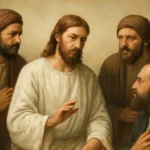
Context is essential for grasping the full weight of John 11:25 meaning. The chapter centers on the sickness and death of Lazarus, the brother of Mary and Martha, in the village of Bethany near Jerusalem. Jesus’s delayed arrival—intentionally allowing the situation to unfold—sets the stage for a revelation that is both personal and universal. When Jesus finally arrives, Martha expresses a confession of faith that foreshadows the deeper claim Jesus is about to make. She says, in effect, that she believes God will act on behalf of those who love him, but Jesus responds by moving from miracle worker to cosmic revealer of himself.
In this encounter the reader sees a transition: from sympathy and demonstration of power to a direct proclamation about identity and destiny. The immediate question in the conversation is not merely, “Will Lazarus live again?” but, “Who is this Jesus who speaks with authority about life beyond the tomb?” The answer, offered through Jesus’s words and actions, anchors John 11:25 meaning in a claim about person and time: Jesus is the one who embodies resurrection and life in himself, not merely the agent of life in a broader moral sense. The verse functions as a hinge between sorrow and hope, between the grave and an eternal horizon that begins in the present moment for those who believe.
The core claim: I am the Resurrection and the Life
Central to the meaning of this verse is the explicit declaration Jesus makes: I am the resurrection and the life. This is not only a promise about life after death; it is a claim about Jesus’s own nature and his relation to all human experience of mortality. By naming himself in this way, Jesus aligns his person with the two dimensions of salvation Christians emphasize: future hope (the resurrection) and present vitality (eternal life, starting now through faith).
To grasp the breadth of John 11:25 meaning, it helps to reflect on two connected ideas that Jesus ties together in his response to Martha:
Resurrection: the event or reality in which life conquers death. In John’s gospel, resurrection is not primarily a future tick of the calendar but a person’s act of restoring life, a power that is active in Jesus’s ministry and culminates in his own death and resurrection.
Life: the quality and duration of relationship with God that Jesus offers. It is not merely endless existence but a transformed, abundant life that begins in trust and obedience to Jesus.
A concise way to phrase the John 11:25 meaning is this: Jesus identifies himself as the source and guarantor of true life—both the life that conquers death in the age to come and the life that begins in fellowship with him in the present. The phrase foregrounds a central conviction of the Gospel of John: belief in Jesus brings a dynamic, life-giving relationship with God that transcends mortality.
What does “I am the Resurrection and the Life” imply about time and memory?
The statement carries temporal weight. It looks backward to the reality of Lazarus’s death, but it looks forward to a future consummation when all who are in Christ will be raised. Yet it is not solely a future hope. In the moment of dialogue, Jesus offers a present invitation: those who believe in him are given access to life even amidst death. This dual orientation—present experience rooted in future hope—becomes a hallmark of John’s Christology and a key element of the reading of John 11:25 meaning across generations.
the Resurrection means in John’s Gospel
In John’s Gospel, the term resurrection is less about a single future event and more about a person—Jesus himself—who embodies life restored after death. This is different from some other Jewish and Greco-Roman ideas about bodily continuity after death. Here, the emphasis is on a transformed life that begins in relationship with Jesus and culminates in the ultimate renewal of creation. The idea of resurrection is inseparable from belief in Jesus as the Messiah and the Son of God, because only in him does life regain its rightful and surging quality after the rupture of death.
Interpretations of the Resurrection in relation to John 11:25 meaning often highlight:
The continuity of life after death for believers, rooted in Christ’s power over death.
The hope that death itself is not the final word, since Jesus has overcome its power.
The assurance that God’s promises—found in faith in Jesus—hold true beyond the grave.
Resurrection as revelation of Jesus’s identity
Beyond the theological claim about life after death, the resurrection in John reveals who Jesus is. He is not merely a teacher or miracle worker; he is the divine Word who reveals the Father, the author of life, and the giver of eternal hope. The moment of Martha’s confession—and Jesus’s response—underscores that faith in him is the path to real life, because through Jesus, God’s redemptive work reaches human history at the deepest level.
the Life means in John’s Gospel
The companion concept to the Resurrection in John 11:25 is the Life. This life is not only future-leaning; it is an invitation to experience a transformed existence in a broken world. When Jesus speaks of life, he is inviting people to participate in a dynamic relationship with God where love, truth, and obedience create a present reality that anticipates the renewal of all things.
Several dimensions of Life in John can be highlighted:
Life as relationship with Jesus: believing in him is the doorway to truly living.
Life as a present reality that shapes daily decisions, values, and actions.
Life as eternal quality that persists beyond physical death, rooted in union with Christ.
In this light, John 11:25 meaning expands beyond a slogan about life after death. It proclaims a way of life that begins now and reaches forward into eternity, grounded in the person and power of Jesus.
Different Christian communities emphasize distinct facets of John 11:25 meaning, yet all are drawing from the same core claim: Jesus is the source of true life. Here are some representative angles:
Evangelical and Protestant: Emphasize personal faith in Jesus as the gateway to eternal life and a confident hope in the resurrection. The verse is often cited in preaching as a comfort for those facing illness or death and as a potent invitation to trust in Christ for present and future life.
Catholic: Highlight the continuity between faith and the sacramental life, including the hope of the resurrection, the grace encountered in the sacraments, and the communal dimension of life in Christ through the church. The story is read within the larger arc of salvation history and eschatology.
Orthodox: Focus on the transformative process of theosis—becoming more like God—through participation in Christ, with an emphasis on resurrection as restoration of communion with God and the community, often framed within liturgical life and prayer.
Liberal or historical-critical: May explore John’s theological aims and literary artistry, examining how the author uses the Martha-Mary-Lazarus narrative to reveal Jesus’s identity and to address questions about faith, doubt, and salvation in the Johannine context.
Prospective readers and pastoral counselors: Use the verse to comfort people in grief, to articulate hope for those who are sick, and to encourage trust in God’s timing and purposes, even amid suffering.
Literary and linguistic dimensions of John 11:25 meaning
John’s Gospel is rich with rhetorical devices, and the phrase I am the Resurrection and the Life is part of a broader pattern of Jesus’s self-identifications, often introduced by the formula I am (ego eimi in Greek). These “I Am” statements connect Jesus to divine self-identification (paralleling God’s name in the Hebrew Bible) and place him at the center of salvation history. The linguistic weight of the claim is not merely philosophical; it is a claim of salvific power that is tangible in the scene with Lazarus and transformative for those who witness it.
Several literary notes enrich the John 11:25 meaning for readers today:
The narrative uses concrete, bodily imagery—death and life in a way that human beings experience—so that readers feel the stakes in the moment with Martha and Mary.
The dialogue blends pastoral tenderness with theological boldness, showing that faith is not a distant abstraction but a lived relationship.
The tension between delay and intervention mirrors the tensions people experience when God seems absent or late, yet the outcome demonstrates trust in divine wisdom.
What does John 11:25 meaning look like in everyday life? Here are some practical takeaways for faith communities and individuals:
Hope in grief: The verse offers a template for grieving with faith—acknowledging pain while anchoring hope in Christ’s presence and power.
Assurance of eternal life: Believers are invited to trust that life is secure in Jesus, even when physical life wanes.
Present vitality: The life Jesus offers is not a distant reward; it shapes decisions, relationships, and ethics today, creating a more compassionate, truth-telling, and hopeful community.
Faith as response: The question “Do you believe this?” echoes through time. Contemporary readers are called to respond with a personal and communal yes—trusting Jesus as the source of life and the conqueror of death.
Hope-centered mission: A confident belief in Jesus’s life-giving power motivates acts of service, care for the dying, and engagement with the marginalized who suffer from death-saturated fear.
Across Bible translations, the core claim remains stable, but wording varies in small ways that illuminate different nuances. Here are representative renderings related to the heart of John 11:25 meaning and its companion clauses:
I am the resurrection and the life (common rendering in many English Bibles) – emphasizes Jesus as the source of both resurrection and life.
I am the one who raises the dead and gives life (a paraphrase found in some study Bibles) – highlights action attributed to Jesus.
I am the resurrection and the life; he who believes in me will live – a compact rendering of the promise attached to belief.
Variations in the conditional statements about belief and life (“though he dies” and “never die”) show the continuity between bodily mortality and spiritual existence, and translators often adjust cadence for readability while preserving meaning.
Because John 11:25 meaning depends on a narrative voice that emphasizes identity, relationship, and future hope, readers should attend to how different translations reflect the same theological horizon. The essence remains a declaration that life is found in Jesus, and that belief in him transforms how humans live in the present and what they anticipate beyond the grave.
The Gospel of John repeatedly structures its argument around signs, confession, and revelation. The raising of Lazarus is the climactic sign prior to Jesus’s own passion, and John 11:25 meaning receives extra weight because it is embedded in a scene where Jesus demonstrates power over death while inviting Martha (and the reader) into a deeper confession of faith. The architecture of the text suggests a deliberate link between belief, life, and imminent cross-work. In this sense, the verse serves as a hinge between the advent of the cross and the assurance of resurrection, presenting Jesus as both the cause and the guarantee of life for those who believe.
When communicating the message of John 11:25 to contemporary audiences, pastors often balance doctrinal clarity with compassionate pastoral care. Consider these approaches:
Frame the verse within the broader gospel narrative, showing how belief in Jesus both resolves present fear and shapes eternal hope.
Use the Lazarus episode to discuss personal grief, illness, and the mystery of God’s timing, emphasizing that faith does not erase pain but transfigures it with hope.
Encourage practical steps of trust: prayerful petitions, communal support, and living out the life Jesus offers through acts of mercy and justice.
Highlight the invitation to respond: “Do you believe this?” as a timeless question inviting personal decision and ongoing discipleship.
In sum, the meaning of John 11:25 centers on Jesus’s self-identification as the source of life and the conqueror of death. It invites believers into a twofold life: a present experiential relationship with God that begins now, and a future hope of resurrection that culminates in the full, unbroken presence of God with his people. The verse anchors Christian confidence by tying belief in Jesus to both immediate transformation and enduring eternity. Across traditions, the core claim remains the same: in Jesus, life is not merely preserved but renewed; death is not final, because the One who speaks the word of life stands with us in every season of loss and longing. By engaging with the full variety of John 11:25 meaning—through context, theology, and pastoral application—readers can come away with a richer, more hopeful understanding of who Jesus is and what he offers to all who believe.