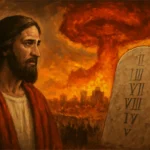
The question of end times sits at the intersection of history, theology, and daily faith. Among the core topics that have shaped Christian belief for two millennia is how Jesus himself spoke about what tends to be called the eschatological horizon—the moment when the present age gives way to God’s full manifestation of wisdom, justice, and salvation. This article surveys the most influential passages where Jesus speaks about the end, outlines the common interpretive frames scholars use to read these texts, and offers a practical lens for readers today who want to understand what Jesus wanted his followers to know, anticipate, and do in light of those teachings.
Key Passages: Where Jesus Speaks About the End
Across the three Synoptic Gospels—Matthew, Mark, and Luke—there is a shared pattern: Jesus speaks in a context of teaching and confrontation about the temple, the coming catastrophe for Jerusalem, and a future moment when the Son of Man will return. The most sustained and widely discussed articulation is often labeled the Olivet Discourse, because Jesus delivered it on the Mount of Olives with the temple and the city in view. Below are the principal passages and the ways scholars summarize their content.
Matthew 24–25: The Olivet Discourse
In Matthew 24–25, Jesus answers his disciples’ questions about when the temple will be destroyed and what will signal his coming and the end of the age. The structure typically highlighted is as follows:
Warnings and signs that precede the end: deceptive messengers, wars, rumors of wars, famines, earthquakes, and persecution. The emphasis is not on a single sensational sign but on a pattern that unfolds over time.
Perseverance under trial: Jesus calls his followers to endure, to remain faithful, and to maintain a steadfast witness even when difficult times come.
Abomination of desolation: a pivotal moment mentioned in verse 15 (often understood as a desecrating act in the temple), which signals intensified peril and cosmic upheaval.
The cosmic signs: tribulation leading to a dramatic display of divine sovereignty—signs in the heavens, upheavals in nature, and a visibility of God’s action in history.
The coming of the Son of Man: the core expectation that the powerful, decisive intervention of God will culminate in the parousia, a visible and undeniable fulfillment of God’s plan.
Parables of watchfulness: the faithful steward, the ten virgins, and the talents offer moral guidance about readiness and responsible discipleship in light of uncertain timing.
Mark 13: The Parallel Account
The Gospel of Mark presents a strikingly parallel version of this discourse. Mark’s emphasis is often read as more compact and urgent. Key components include the warnings about false prophets and misleading signs, a call to endurance during the tribulation, and the reminder that no one knows the day or the hour of the coming judgment. Mark also foregrounds the ethical summons to watchfulness and service aligned with Jesus’ teaching about the faithful response in time of trial.
Luke 21: The Temple Discourse
In Luke 21, the discourse is framed with a particular emphasis on the temple’s destruction and the wider cosmic and political upheavals that will accompany the end. Luke’s version highlights the inevitability of persecution for faithful followers and the importance of prayer for strength. The sequence of events, signs, and the exhortation to stand firm in faith while facing peril is presented with Luke’s characteristic emphasis on mercy, justice, and the care of the marginalized during times of upheaval.
Beyond the Olivet Discourse, Jesus’ teachings about the end surface in parables and sayings that blend future orientation with present ethics:
The parable of the fig tree (echoed in multiple gospels): attentive waiting and knowing that seasonal signs help readers discern the timing without setting fixed dates.
The wise and faithful servants and the foolish virgins: these stories emphasize readiness, trustworthy leadership, and the disciplined practice of faith in the absence of explicit timing.
Parables of stewardship (like the parable of the talents): the end-time horizon functions as a calling to responsible living, evangelistic urgency, and care for others while awaiting God’s intervention.
Interpretive Approaches to Jesus’ End-Times Speeches
Readers and scholars vary in how they place Jesus’ end-time utterances within historical timeframes and within the broader arc of biblical prophecy. Four major interpretive frameworks recur in scholarly and devotional discussions:
Preterism
Preterists tend to see many of Jesus’ prophecies as largely fulfilled in the first century, especially related to the destruction of Jerusalem in 70 CE. They argue that Jesus spoke about events that would soon fulfill his warnings, and that his primary aim was to reassure and embolden his followers to endure catastrophe with faithfulness, while God’s judgment and mercy were already at work in history.
Futurism
In Futurist readings, the most dramatic and dramaticized components of Jesus’ prophecies are understood as primarily yet-to-occur events that will unfold toward the end of the age. This framework often highlights a distinct, future period of Great Tribulation, cataclysmic signs in creation, and a visible, global return of Christ.
Historicism
Historicism reads the prophecies as unfolding throughout the timeline of church history. Different eras or movements are interpreted as fulfilling various aspects of Jesus’ eschatological language. Proponents see a long continuum of fulfillment rather than a single near-term moment or a purely distant future.
Idealism
The Idealist or symbolic approach emphasizes the timeless, spiritual realities behind Jesus’ words. End-times imagery is understood as representing ongoing spiritual battles—between faith and doubt, between justice and oppression—rather than a precise, chronological forecast.
Thematic Threads Across Jesus’ End-Times Teachings
While the details differ across passages and interpretive frameworks, certain themes recur consistently and help readers discern what the texts are about beyond predicting dates:
Watchfulness and readiness: Jesus repeatedly refuses to reveal the exact moment of the end, urging his followers to stay spiritually alert, prayerful, and morally prepared.
Signs of the times: The discourse emphasizes a pattern of signs—cultural upheaval, persecution, witness to the gospel, upheavals in nature—that point toward a climactic intervention by God.
Tribulation and suffering: The end is associated with distress and testing, yet it is framed as a context in which faithfulness is tested and refined.
The coming of the Son of Man: The anticipated return is a decisive, decisive act of God that will bring justice, vindicate the faithful, and establish God’s reign in full.
Ethical imperatives: In every reading, the end-times discourse presses Christians toward character—truthfulness, generosity, evangelism, mercy—so that faith remains active, not merely theoretical.
Historical and Theological Context
The end-times conversations sit within a broader Jewish and early Christian apocalyptic milieu. Jesus speaks in a language and imagery drawn from Old Testament prophecy, Jewish apocalyptic literature, and the pristine prophetic tradition that expects God to intervene in human history. The imagery—cosmic upheaval, celestial signs, the Son of Man, the gathering of the elect—serves as a language for unveiling God’s action in time. Yet Jesus’ teachings also foreground ethics and community: the end is not merely a forecast but a call to faithful living, a challenge to discernment, and a summons to mission. In this sense, Jesus’ end-times speeches fuse the vision of a transformed future with practical instruction for the present.
For readers in any era, Jesus’ end-times teaching offers more than speculative curiosity. It presses a posture of humility about timing, a commitment to discernment, and a focus on faithful witness in everyday life. Here are some practical angles to consider:
Read with humility: Recognize that different faithful traditions interpret the timing differently. The emphasis should often be on readiness and faithful living rather than pinpoint accuracy about dates.
Stay rooted in mission: Jesus’ end-times discourse is closely linked with the mission to preach the gospel to all nations and to care for the vulnerable amid upheaval.
Develop discernment: The passages warn against sensationalism and false signs. Discernment involves theological reflection, communal listening, and ethical responsibility.
Live hopefully and justly: The promise of the coming Lord should inspire both hope and transformation, not fatalism or escapism.
Common Questions About Jesus and the End
Does Jesus expect the end to come in our lifetime?
Many readers wonder whether the end is imminent for them personally. Most scholars would say the text does not specify a single generation as the ultimate timeframe. Jesus emphasizes watchfulness and readiness rather than a fixed timetable. This means believers are called to be prepared in every era, living with integrity and mission against the backdrop of an uncertain future.
Are there specific dates or timelines in Jesus’ sayings?
The overwhelming emphasis across the Gospel accounts is that no one knows the day or the hour. The purpose of the end-time discourse is not to provide a calendar but to shape the life of the disciple—how to live faithfully when signs appear, how to resist fear, and how to pursue justice in the meantime.
What is the “Great Tribulation”?
The term Great Tribulation appears in some eschatological readings and is associated with intense distress preceding the return of Christ. Interpretations differ: some view it as a historical period of persecution in the early church, others see it as a future, climactic phase. A common thread is that tribulation tests faith, but it is framed within the assurance of God’s ultimate victory.
What is the relationship between prophecy and ethical living?
Across the texts, prophecy and ethics are inseparable. The end-times imagery is not merely about a timetable but about how to live now—committed to truth, mercy, hospitality, and the proclamation of good news to those in need. The church is invited to prepare a people who are faithful in suffering, generous in service, and steadfast in hope.
What is meant by the “coming” or “parousia”?
The term often translated as parousia refers to the coming or presence of the Lord. In the New Testament context, it signals a visible, decisive, and transformative intervention by God in history. Readers differ on how to chart the timing, but most agree that the parousia consummates the divine plan and inaugurates the full realization of the Kingdom.
Terminology to Know While Reading Jesus on the End
To navigate the discussion, it helps to be aware of key words that recur in these passages:
Kingdom of God or Kingdom of Heaven: central theological frame; the coming reign where God’s will is fulfilled.
Parousia: the coming, presence, or arrival of a notable figure; in this context, God’s decisive presence through Jesus.
Tribulation: a period of testing, crisis, or distress preceding the fulfillment of God’s promises.
Abomination of desolation: a provocative act understood as a signal of impending upheaval within the sanctuary context.
Watchfulness or wakefulness: the ethical call to remain vigilant in faith and conduct.
Gospel to all nations: the missionary horizon that marks the global scope of Jesus’ message even as the end times approach.
Historical and Theological Context Revisited
When reading Jesus’ end-times words, it helps to remember they sit at the crossroads of prophecy, history, and hope. Theological interpretation has always sought to balance the immediate historical moments in which Jesus spoke (the fragile, contested first-century world around Jerusalem) with the long arc of God’s redemptive work through the church across ages. The diverse interpretive approaches reflect a faithful impulse: to honor the text’s authority while recognizing that time and culture shape how a generation hears the message. The end-times discourse, then, becomes less about constructing a precise forecast and more about cultivating a faithful posture—one that remains awake, compassionate, and bold in witness regardless of how the timeline unfolds.
For readers who want to explore deeper, a few scholarly and devotional avenues tend to yield rich insights:
Commentaries on the Synoptic Gospels that compare the Olivet Discourse across Matthew, Mark, and Luke.
Studies on ancient Jewish apocalyptic literature to understand the imagery Jesus used.
Historical works on how different Christian traditions have interpreted end-time prophecies over the centuries.
Pastoral writings that emphasize ethical living and mission as the proper response to eschatological teaching.
Conclusion: Reading Jesus on the End with Faithful Imagination
Jesus’ teachings about the end times are not a simple map to a timetable but a complex invitation: to recognize signs without collapsing into sensationalism, to endure through testing with grace, and to live as people who carry forward God’s mission even as the world groans under the weight of brokenness. By engaging with the key passages in Matthew, Mark, and Luke, by weighing the major interpretive frameworks with careful attention to the Gospel’s own calls to justice and mercy, readers discover a robust vision: the end is not the end of possibility but the threshold of God’s most complete revelation of love in Christ. In this light, the decades and ages of the church’s life become a witness to the one who is coming—Jesus, the Son of Man, who invites all people to a future rich with hope, responsibility, and grace.
Whether you approach these texts as a student of history, a person of prayer, or a pastor guiding a community through uncertain times, the core message remains clear: watchfulness, justice, and mission belong together. The end times, in Jesus’ words, are not merely about catastrophe but about the intrusion of God’s new creation into the old order, a moment when faith is proven true and love becomes a witness to the coming Kingdom.