God Has Perfect Timing Verse: Bible Meaning and Encouragement
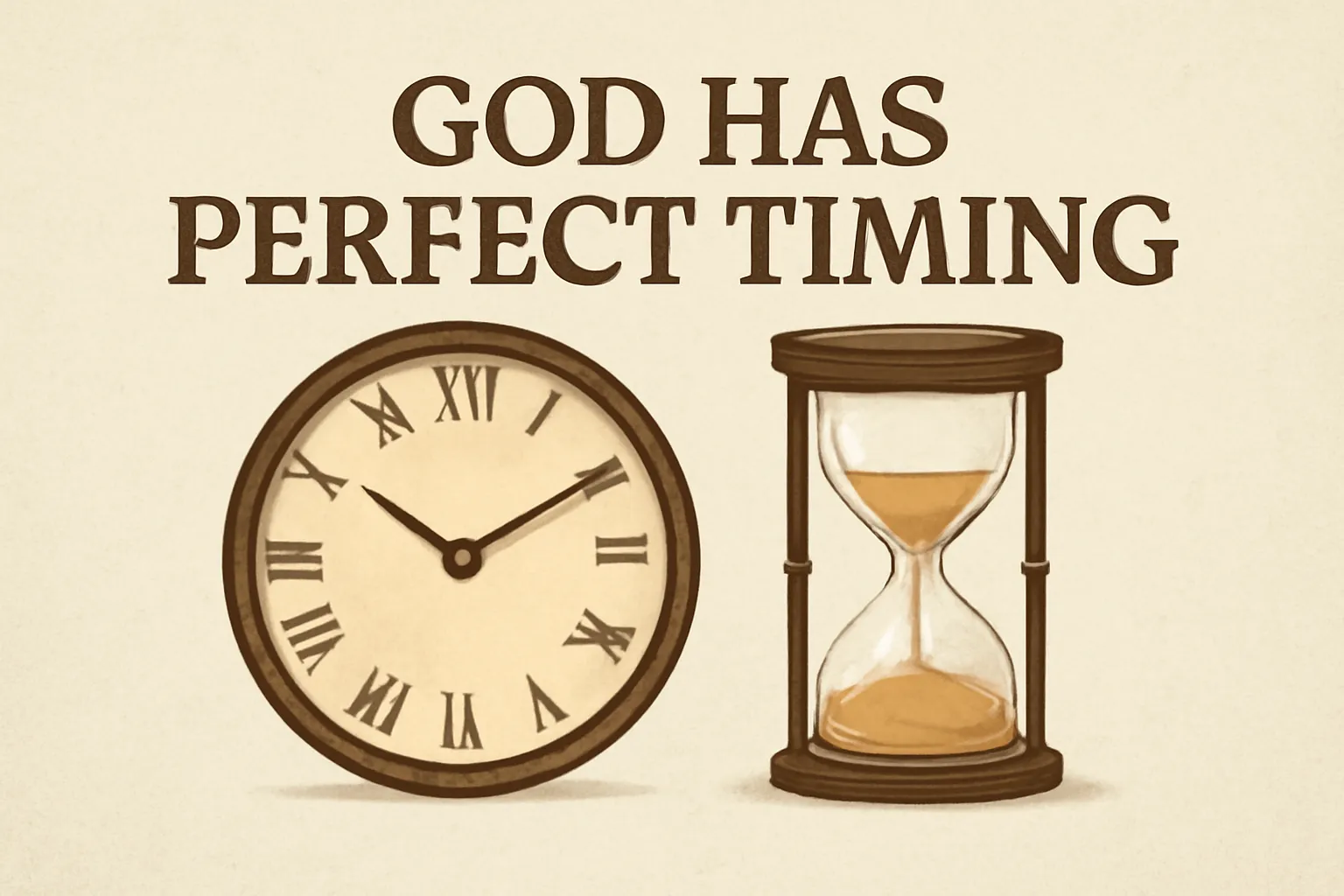
In the life of faith, few truths are as comforting as the conviction that God has perfect timing. The idea that the Creator of the universe orders the moments of our lives with wisdom can steady a restless heart and renew hope in seasons of waiting. This article explores the meaning behind the phrase God has perfect timing, examines biblical verses that point to divine timing, and offers practical guidance for living with confidence when answers seem delayed. We will explore variations of this theme—phrases like God’s perfect timing, the perfect timing of God, and divine timing—to show how biblical writers and later believers understood time as a sacred dimension of faith.
Understanding the Promise: What does “God has perfect timing” mean?
Perfect timing is not about predictability in human terms. It is about alignment with God’s purposes, wisdom, and love. When we say God has perfect timing, we affirm several interconnected truths:
God is sovereign: He governs past, present, and future with unchallengeable wisdom. His sovereignty does not erase our feelings, but it provides a framework in which our lives can be ordered for our good and His glory.
God is loving and wise: The timing He chooses reflects His character—merciful, holy, and faithful. Even delay can be a form of grace that preserves, guards, or molds us into a truer version of ourselves.
There is a season for every purpose: The Bible repeatedly teaches that life has rhythms—times to plant, to grow, to pause, and to reap. The claim that the perfect timing of God is at work invites patience and trust rather than panic or pride.
Key Bible Verses on Divine Timing
The Bible speaks time and again about the idea that there is an appointed time for all things. Below are several passages that theologians and believers have used to reflect on God’s timing in daily life. Each is followed by a brief explanation to connect the verse to the idea of waiting, faith, and trust.
Ecclesiastes 3:1-8 — A Season for Everything
To everything there is a season, and a time for every matter under heaven.
This classic passage frames life as a cycle of ordained seasons. The truth is not fatalistic but pastoral: God orders times for birth and death, planting and uprooting, weeping and laughing. When we hear God has perfect timing, Ecclesiastes reminds us that not all events are random; there is a divine calendar at work beyond our sight.
Galatians 4:4-5 — When the Fullness of Time Had Come
When the fullness of time had come, God sent forth his Son, born of woman, born under the law, to redeem those under the law.
Here the apostle Paul points to a decisive moment in salvation history. The language of the fullness of time signals God’s sovereign pacing in human history. For modern readers, it offers the conviction that even dramatic redemptive events unfold according to a divine clock—one that is trustworthy, even if we cannot read it in advance.
Habakkuk 2:3 — The Vision Is Yet for an Appointed Time
For the vision is yet for an appointed time; it hastens to the end—it will not lie. If it seems slow, wait for it; it will surely come, it will not delay.
This verse acknowledges human impatience and invites patient anticipation. It reinforces the idea that God’s plans have integrity and will arrive at the right moment. The phrase appointed time captures the sense that timing is not random but divinely scheduled.
Psalm 27:14 — Wait for the Lord
Wait for the Lord; be strong, and let your heart take courage; wait for the Lord.
Waiting is not passive in this verse; it is an act of courageous faith. The call to wait on God acknowledges that true strength and heart-led courage come from trusting the outline of divine timing rather than forcing our own pace.
Psalm 31:15 — My Times Are in Your Hand
My times are in your hand.
This short line expresses intimate trust: the narrator recognizes that their personal schedules—difficulties, opportunities, and the progression of life—are held by God. It is a prayer and an orientation: when life feels out of control, anchor your days in God’s sovereignty.
Romans 5:6 — At the Right Time Christ Died
For while we were still weak, at the right time Christ died for the ungodly.
The emphasis here is not merely on timing in history but on the compassion that motivates action. The phrase at the right time resonates with the broader claim that our salvation occurs in a context defined by God’s wisdom, not by human entitlement.
1 Peter 5:6 — Humble Yourselves at the Proper Time
Humble yourselves, therefore, under the mighty hand of God so that at the proper time he may exalt you.
Humility and patience are linked. The verse suggests that a posture of dependency—often expressed through humility—prepares us for God’s timing, which can bring elevation or blessing in ways we might not anticipate.
James 5:7-8 — Be Patient, Waiting for the Lord’s Coming
Be patient, therefore, brothers, until the coming of the Lord. See how the farmer waits for the precious fruit of the earth, being patient about it, until it receives the early and late rains.
The agricultural metaphor grounds our waiting in ordinary life. Just as a farmer waits for rain and harvest, believers are urged to endure and endure with hope, knowing that life’s harvests emerge in God’s time.
Isaiah 55:8-9 — God’s Ways are Higher Than Ours
For my thoughts are not your thoughts, neither are your ways my ways, declares the Lord.
A reminder that divine timing sits within a horizon of divine wisdom. Human plans can be good and well-intentioned, yet they pale beside God’s strategic, perfect timing that often operates beyond our vantage point.
For I know the plans I have for you, declares the Lord, plans for welfare and not for evil, to give you a future and a hope.
When we trust that God’s timing includes good intentions, we find courage to persevere through uncertain seasons. The verse anchors the believer’s expectation in a larger, loving design.
How God’s Timing Differs from Human Timing
It is natural to think in terms of when vs. now. Yet the biblical concept of timing invites a different stance: trust in a narrative larger than our immediate circumstances. Some features of divine timing worth noting:
Patience as a virtue: Biblical timing often requires patient endurance rather than quick outcomes. The call to wait is not passivity but a disciplined faith that uses waiting to grow character and depth of faith.
Purpose behind delays: Delays can serve purposes such as refining character, widening mercy, or opening doors we could not foresee. The goal is alignment with God’s aims, not simply relief from discomfort.
Awareness in waiting: Waiting well means staying engaged with God—through prayer, Scripture, community, and service—so that the delay becomes a field for spiritual formation.
Practical Ways to Live with Confidence in God’s Timing
Belief in God’s perfect timing should translate into daily habits that center your heart on Him. Here are practical steps that can help you live with a confident posture during seasons of waiting.
Pray with honesty: Bring your confusion, frustration, and longing to God. Prayer is not a denial of reality but a conversation that realigns your perspective with divine purposes.
Cultivate patience: Patience is more than endurance; it’s a hopeful perseverance that trusts God’s timing even when progress feels invisible.
Study the promises: Return to the verses shared above. Let them reframe your expectations and remind you that you are not left to navigate time on your own.
Seek wise counsel: Community can help you discern when a door is opened, when to wait, and how to respond to opportunities that align with God’s purposes.
Practice gratitude: Even in waiting, gratitude allows you to acknowledge God’s faithful past faithfulness and to anticipate future provision.
Developing a Daily Rhythms Toolkit
The following small practices can reinforce the conviction that God has perfect timing for your life:
Begin and end each day with a short prayer acknowledging God’s sovereignty over time.
Keep a “timing journal” where you note small events that occurred at just the right moment, reinforcing trust in God’s pacing.
Memorize a couple of timing verses (for example, Ecclesiastes 3:1 and Psalm 31:15) and recite them during moments of waiting.
Common Misconceptions About Timing
In the journey of faith, some misunderstandings about timing can lead to frustration or spiritual despair. Clarifying these misconceptions can help believers hold a healthier perspective.
Misconception: God will always grant my preferred timeline. Reality: God’s plans often require us to adapt to His schedule, not the reverse. What He provides in His timing can exceed what we initially imagined.
Misconception: Delays signify disobedience. Delays do not automatically indicate rebellion; they can be opportunities for growth or redirection toward a better path.
Misconception: Waiting means inactivity. Biblical waiting is active trust—continuing to seek God, to serve, and to grow in faith while the answer unfolds.
Prayer can become a meaningful dialogue with God about timing. The following prompts can guide personal reflection or group devotional time:
Ask God to reveal His perspective on your current season and to align your heart with His purposes.
Invite Him to show how you can grow in patience, humility, and trust in this moment.
Invite gratitude for the ways He has shown faithfulness in prior seasons, as a reminder that He will continue to be faithful with the timing of future blessings.
Variations on the Theme: Additional Ways People Talk About Timing
Beyond the precise phrase God has perfect timing, believers often speak of timing in related ways. Here are some variations you might encounter in sermons, devotionals, and Christian literature:
God’s timing and God’s sovereignty
The belief that the perfect timing of God brings about redemption or rescue at precisely the right moment
Conversations about divine timing in personal decisions, such as career changes, relationships, or healing
References to the appointed time for important events in Scripture and in contemporary faith communities
Real-Life Scenarios: How Timing Becomes a Faith Builder
Real stories from faithful people illustrate how the concept of perfect timing plays out in ordinary life. Here are illustrative scenarios, with the idea of god has perfect timing verse deepened into practical experience:
A student waits for a scholarship that seems delayed but later opens doors to opportunities the student didn’t foresee, highlighting the fullness of time in action.
A family seeks employment and experiences a series of near-misses, only to receive a job offer in a season that allows for relocation and better family stability—an example of patient trust rewarded.
A church faces a leadership transition and learns to lean into community wisdom, developing a stronger ministry for the next season.
Trusting the Timing, Embracing the Journey
When we say God has perfect timing, we commit to a posture of faith that refuses to reduce life to a scattered series of random events. Instead, we acknowledge that time itself is a sacred dimension in which God’s plans unfold. The Bible’s teaching on timing is not a promise of instantaneous results but a trustworthy invitation to endure, hope, and grow. In every season—whether of waiting, transition, or breakthrough—the belief in divine timing can nourish a resilient faith. It can move us from anxious striving to peaceful obedience, from skepticism about the future to confidence in God’s good purposes. Ultimately, the call is simple: cultivate patience, cling to God’s promises, and trust that the appointed time for each good thing will come—precisely as God intends.
If you are navigating a difficult waiting period, consider reciting and reflecting on the verses highlighted above. Let the language of timing anchor your heart in God’s character: He is trustworthy, He is wise, and He is at work even when you cannot see His hands. In this sense, the truth of God’s perfect timing is not only a doctrinal statement but a daily practice—an invitation to live with faith that refuses to abandon hope.