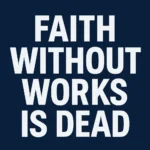
Faith and works are two words that travelers in the same conversation sometimes treat as rivals. Yet in many traditions they are understood as two sides of a single dynamic: what we believe shapes what we do, and what we do tests what we believe. This article explores the relationship between belief, trust, and action, and asks how a living faith translates into tangible conduct. Whether you come from a religious tradition that stresses grace, a community that emphasizes service, or a secular background that wonders how conviction becomes conduct, the questions are similar: How does inner conviction become outward behavior? What tensions arise between pure belief and practical deeds? And how can individuals and communities nurture a faith that remains hopeful, humane, and ethically coherent?
In everyday speech, faith is often described as trust in something larger than oneself—trust in God, in a set of ethical principles, or in the possibility of meaning. Works are the concrete expressions of that belief: acts of kindness, adherence to moral norms, commitments kept over time, or social contributions that reflect one’s values. When people talk about faith in action, they mean that belief is not a private mood or a mere sentiment; it becomes a pattern of behavior, a way of living that others can observe.
The relationship can be summarized in a simple, practical phrase: belief informs behavior, and behavior tests belief. This reciprocity is central to most discussions of belief-driven conduct, creed-informed ethics, and spiritual practice in ordinary life. Across cultures, you will find the same core idea expressed in different words: a faith that is not lived is easily described as hollow; deeds without belief risk becoming rote or mere performance. A robust account of faith and works seeks to illuminate how to keep both elements in a healthy and hopeful balance.
Historical and Theological Foundations
The question of how belief and action relate has deep roots in religious history. Texts, councils, and teachers over centuries have wrestled with the tension between inner assurance and outward righteousness. Exploring these foundations helps us understand not only ancient debates but also contemporary practice.
Biblical Foundations
In many Christian communities, for example, the question centers on passages such as James 2:14-26 and Romans 3-4. Some traditions highlight the idea that faith without works is dead, underscoring that genuine belief naturally yields ethical behavior and fruitfulness in life. Other traditions stress that grace is the essential starting point: one is saved by trust in God, not by the accumulation of good deeds. Yet most voices within the Christian story converge on a shared conviction: true belief cannot remain private; it braids itself into compassion, justice, and service.
Historical Debates: Reformation to Modernity
The Reformation era highlighted a robust debate about whether faith alone suffices for righteousness or whether works must accompany faith. Reformers often argued that salvation by grace through faith is a gift, while recognizing that genuine faith will invariably produce a life of obedience and charity. Opponents emphasized that good conduct is a necessary witness to genuine belief. In later centuries, Catholic, Protestant, and Orthodox theologians developed nuanced positions, using terms like justification, sanctification, and synergy to describe how trust in God interacts with ethical living.
Beyond Christianity: Parallel Notions in Other Traditions
While this article centers on the Christian conversation about faith and works, other faith traditions offer complementary perspectives. In many contexts, belief is inseparable from practice, with ritual, service, and moral discipline considered central to spiritual growth. For instance, in traditions that emphasize social ethics, a life of compassion and service often serves as the most visible expression of inner conviction. A broad survey reveals a common thread: a sincere inner life seeks outward expressions that relieve suffering, promote fairness, and foster community.
Perspectives Across Traditions: How Belief Becomes Action
Different communities prioritize different paths from belief to behavior. By surveying multiple perspectives—particularly within Christian traditions—readers can gain a more nuanced understanding of how faith and works inform daily life without collapsing into legalism or laxity.
Protestant Emphasis: Faith Alone and a Faith That Produces
Many Protestant traditions foreground the principle of sola fide (faith alone) as the basis of justification. Yet they also insist that authentic trust in God will naturally produce good works as evidence of a changed life. Therefore, the emphasis sits on grace as the starting point, with obedience and charitable action growing out of that grace. In practice, this means that believers are called to lives characterized by honesty, mercy, and a commitment to justice—works that flow from a living creed.
Catholic and Orthodox Perspectives: Cooperation with Grace
In Catholic and Orthodox theology, the relationship between faith and works is often described as a cooperation with divine grace. Here, salvation is not a one-time event but a process—often called sanctification—in which belief and practice reinforce each other. Rituals like baptism, participation in the sacraments, and ongoing moral formation are understood as means by which grace is administered and sustained. Consequently, service, charity, and mercy are not optional add-ons but integral expressions of a life rooted in God.
Eastern Orthodox and Other Traditions: Theosis and Synergy
In Eastern Christianities, the idea of theosis (becoming one with God) emphasizes a dynamic synergy between belief and practice. Prayer, fasting, and disciplined ascetic habits are not merely acts of rule-keeping; they are channels through which grace transforms the person. Faith and works are thus woven together in a lifelong journey toward greater holiness and likeness to Christ.
The Psychology and Sociology of Belief in Action
Beyond doctrinal positions, the question of how belief becomes action has a robust empirical and psychological dimension. Understanding the motivations, social contexts, and cognitive processes that translate conviction into conduct helps explain both consistency and failure in real life.
Motivation: From Conviction to Commitment
People act on their beliefs for a variety of reasons: a sense of moral obligation, a desire to align life with a sacred narrative, or the social rewards of belonging to a community that embodies shared values. When trust is deep—rooted in personal experience or communal testimony—the resulting behavior tends to be more persistent and less dependent on external incentives.
Social Context and Accountability
Belief rarely exists in a vacuum. Family expectations, religious communities, workplaces, and civic groups shape how beliefs are expressed. In supportive communities, accountability and constructive feedback help individuals align their deeds with their professed beliefs. Conversely, in environments that reward hypocrisy or stigmatize vulnerability, sincere belief may retreat behind a façade of virtue signaling rather than genuine transformation.
When identity is tied to a moral narrative—such as being a caregiver, a steward of the environment, or a protector of the vulnerable—the actions that emerge tend to be coherent with that narrative. In these cases, faith-based motivation supports long-term commitment, resilience in hardship, and a durable sense of purpose.
Translating inner conviction into outward conduct can take many forms. The following pathways are not mutually exclusive; rather, they demonstrate how belief can inform everyday life, social responsibility, and communal uplift.
In the Home: Everyday Ethics and Nurturing Relationships
Compassionate caregiving for family, neighbors, and the vulnerable.
Honesty and integrity in intimate spaces—financial transparency, trustworthiness, and fidelity to promises.
Hospitality and generous sharing of time, food, and space with others.
Peaceful dispute resolution and constructive communication in family life.
In the Workplace: Ethics, Leadership, and Service
Fair treatment of colleagues, equitable practices, and anti-harassment commitments.
Service-minded leadership that prioritizes the well-being of workers and customers.
Honoring commitments and following through on promises, even when it’s inconvenient.
Ethical decision-making that weighs impact on people, communities, and the environment.
In the Community: Civic Engagement and Social Responsibility
Volunteering time and resources to help the marginalized and ease suffering.
Advocacy for justice and policies that promote human dignity and fair treatment.
Charitable giving and sustainable stewardship of resources.
Community building through dialogue, mutual aid, and shared projects.
In Activism and Service: From Belief to Systemic Change
Organizing for reform in education, health care, or housing to reduce inequities.
Cross-cultural solidarity that respects difference while pursuing common goods.
Nonviolent action that seeks change without causing harm to the vulnerable.
Reflection and critique of one’s own communities to avoid stagnation or complacency.
Common Questions and Debates
No survey of faith and action would be complete without addressing common questions and potential missteps. Below are some recurring concerns and a few clarifying responses.
Is Faith Without Works Really Faith at All?
Many theologians would say that a belief that remains private or inward, without any outward expression that benefits others, risks becoming self-focused or theoretic. A robust understanding of faith envisions deeds as a natural fruit, not a coercive requirement. Thus, authentic belief should produce a visible life of love, mercy, and justice—though the exact form of those deeds will vary by context and ability.
What is the Role of Grace in Works?
In many traditions, grace is the decisive gift that enables any transformation. Works do not earn salvation by themselves, but they are the equitable response to grace. The relationship is often described as grace producing gratitude that manifests in action, not as a transactional payment for salvation.
How Do We Avoid Legalism and Superficiality?
The danger of legalism is treating deeds as a checklist that earns points with God or with peers. The antidote is humility, continual self-examination, and a willingness to confess failure. Equally important is avoiding performative virtue—acts that look good outwardly but do not reflect genuine care or inner change. A healthy practice integrates inner life with outward service, so that the two reinforce one another.
Measuring and Reflecting on Faith in Action
Turning belief into behavior is not a one-time decision but an ongoing practice. Communities and individuals who seek to evaluate their progress often use reflective questions and observable indicators.
Indicators of Transformation
Consistency between stated beliefs and daily actions.
Compassionate behavior toward strangers, the vulnerable, and the marginalized.
Humility in the face of critique and a readiness to learn from mistakes.
Stewardship of resources, time, and talents for the common good.
Real accountability involves community, fellowship, and honest feedback. When people hold each other to compassionate standards, it becomes easier to align belief with conduct. Humility invites grace for failure and courage to correct course when actions drift away from core values.
Across the world, living faith today often manifests as a blend of personal virtue, organized charity, and systemic engagement. The following case vignettes illustrate how belief translates into action in diverse contexts.
Disaster relief and humanitarian aid: Communities mobilize quickly after natural disasters, offering shelter, food, medical care, and reconstruction resources. The actions are driven by a conviction that every life has dignity and worth, regardless of circumstance.
Education and empowerment: Faith-based organizations often invest in schools, tutoring, and literacy programs, recognizing education as a path to opportunity and freedom from poverty.
Healthcare and compassionate care: Volunteers and professionals provide free clinics, home-based care, and mental health support, guided by a belief in the sanctity of health and the responsibility to relieve suffering.
Environmental stewardship: Some communities frame care for creation as a moral obligation, leading to conservation projects, sustainable agriculture, and advocacy for climate justice.
Social justice and advocacy: Faith groups sometimes champion policies that promote equity, criminal-justice reform, economic fairness, and protection of the vulnerable.
These examples show not only acts of charity but also actions rooted in principle: a desire to live consistently with a high regard for human life, justice, and the common good. They illustrate how belief systems shape public lives—how inner convictions inform external commitments, strategic planning, and collaborative action.
A Living Synthesis of Belief and Behavior
The question of faith and works is not a riddle with a single, universal answer. It is a living dialogue—between what we hold to be true in our hearts and how we choose to live among others. A balanced understanding respects the power of grace to transform, the necessity of ethical conduct as evidence of that transformation, and the humility to recognize that both belief and action need continual growth. In this light, creed and practice are not adversaries but partners in the quest for a meaningful, just, and hopeful life.
Whether you are revisiting this topic from a place of deep faith, critical inquiry, or practical concern for how to live well in a complex world, the core insight remains: when belief is anchored in compassion, and when service is framed by a sincere inner life, faith becomes something you can carry into every hour of your day. In that sense, faith in action is less about proving something to others and more about becoming a person who embodies the best of what one believes—a person whose conviction becomes a beacon for others, and whose deeds reflect a durable hope for the good of all.