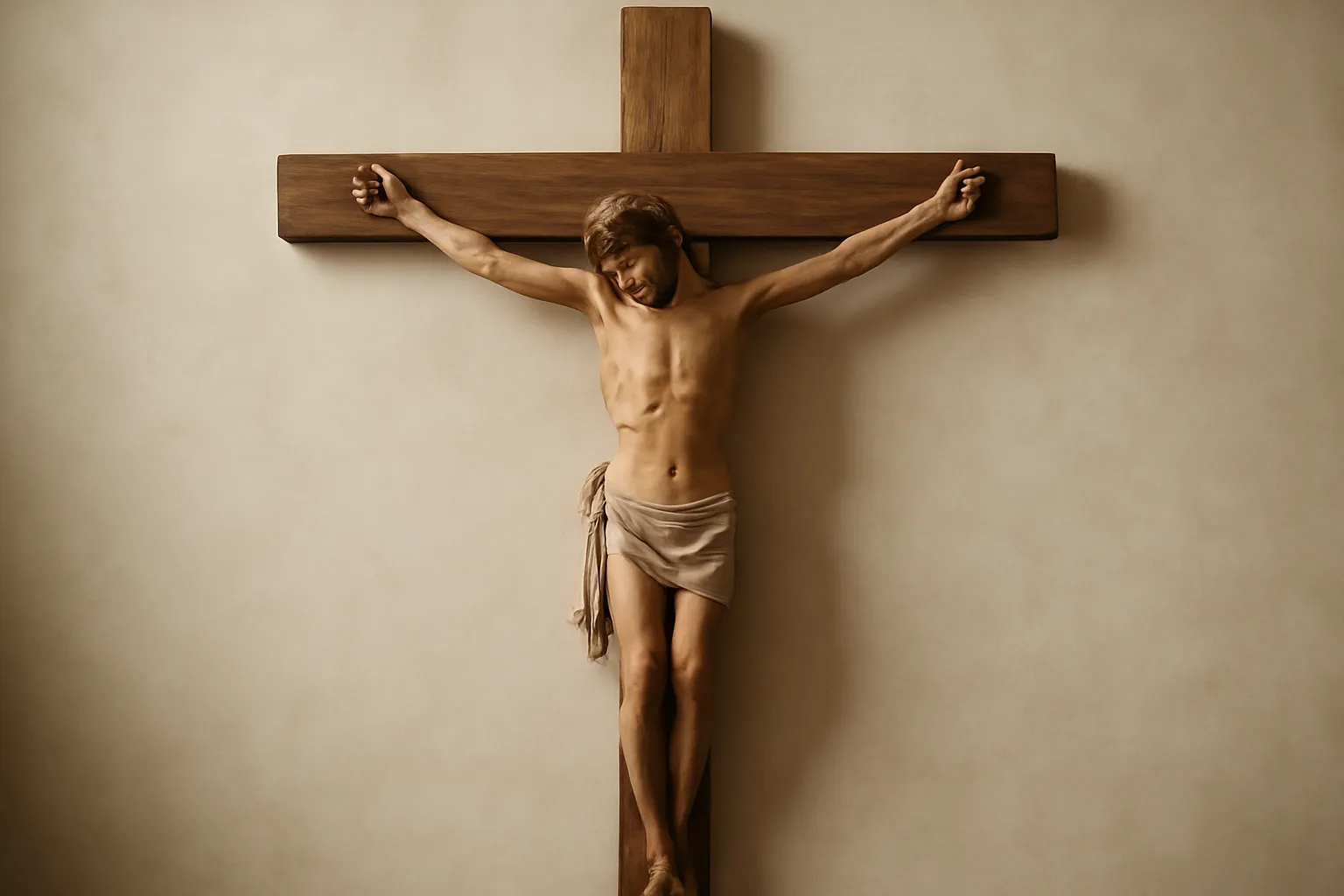
The crucifix is more than a piece of religious ornament. It is a compact, powerful symbol that communicates a complex set of beliefs about Christ, salvation, and the human experience of suffering. In its most recognizable form, the crucifix depicts the crucified Christ fastened to a cross, inviting reflection on the events of the Passion and the mysteries of atonement. Across centuries and cultures, this emblem has carried a spectrum of meanings—from solemn remembrance to active devotion, from political symbolism to purely artistic expression.
In this article, we explore crucifix symbolism, the history of the instrument and its imagery, and the diverse ways communities engage with the crucified Christ in worship, art, and daily life. We will use a variety of terms—crucifix, the crucifixion cross, Christ on the cross, the Corpus on the tree, and other related phrases—to broaden the textual landscape and make clear how the same idea can be expressed in different linguistic registers.
What is a crucifix?
At its core, a crucifix is a cross that bears the image or figure of Jesus Christ in the moment of his execution by crucifixion. This differs from a simple cross that might be used as a general symbol of faith or hope without an explicit portrayal of the victim. The corpus—the body of Christ—on the cross is the defining feature of the crucifix.
Some common elements include:
Vertical and horizontal beams forming the cross, typically made of wood but also represented in metal, stone, or ivory.
Christ’s body in various poses—lying prone, with arms outstretched, sometimes with a crown of thorns, nails, and wounds depicted.
Artistic style ranging from stark, minimalist forms to highlyDetailed iconography.
Function as an object of veneration, teaching, and meditation, and as a visible reminder of the Passion.
Historical roots and development
The crucifix as an icon did not appear overnight; it emerged gradually as early Christians wrestled with how to portray the events of the Passion in a visual form. The earliest Christian communities favored symbolic imagery—fish, chi-rho monograms, dove motifs—to communicate faith. It was not until the late antique and medieval periods that the crucified Christ figure became a dominant subject in sculpture, painting, and altar imagery.
Below are key phases in the history of the crucifix and its representations:
Early Christian period (roughly 2nd–6th centuries): clandestine worship, modest depictions, and occasional early depictions of the Passion in catacombs and tomb art.
Late antique to medieval (5th–15th centuries): increasing emphasis on the figure of Christ on the cross, with variations across the Eastern and Western churches.
Gothic and Renaissance (12th–17th centuries): elaboration of corpus details, ideals of beauty and suffering, and integration with altarpieces and sculptural programs.
Baroque to modern times (17th century onward): dramatic, emotive depictions designed to evoke personal devotion, sometimes integrating with counter-reformation aims or public monuments.
In the Eastern Orthodox world, crucifixion imagery often emphasizes the triumphal and salvific aspects of Christ’s death within a liturgical context. In many Western Christian traditions, especially within the Catholic and some Lutheran settings, the crucifix is a central devotional object, placed on altars and carried in processions.
Theological meaning: what the crucifixion cross conveys
The crucifix embodies a constellation of theological ideas about the person and work of Christ. It is not merely a historical record of a death; it is a representation that invites believers into the mystery of atonement, suffering, and redemption.
Important theological themes connected to the crucified Christ include:
Incarnation: God becoming flesh and sharing human vulnerability, mirrored in the physical vulnerability of the figure on the cross.
Atonement: the belief that Christ’s suffering reconciles humanity with God, offering forgiveness and restoring relationship.
Salvation and eternal life: the cross as the pathway through which life overcomes sin and death.
Love and obedience: the willingness of the Son to submit to suffering as an act of supreme love.
Public witness: the crucifixion as a visible proclamation of faith in a hostile world, inviting contemplation rather than mere admiration.
Key theological concepts commonly associated with the crucified Christ
Redemption as a universal invitation to participate in divine life.
Propitiation or the appeasement of divine justice, depending on theological emphasis.
Substitution: Christ bears the burden of sin on behalf of humanity.
Victory over death: not only a tragedy but a sign of triumph that leads to resurrection.
Symbolism and spiritual practice: meanings in daily life
Through the centuries, the crucifix has served multiple symbolic functions in worship, art, and personal devotion. Its meanings are layered and may vary by tradition, but several core resonances recur:
Humility and self-denial: the posture of Christ on the cross is a model of surrender and obedience.
Compassion for human suffering, inviting believers to respond with care for the afflicted.
Hope in the face of despair, grounded in the conviction of redemption and the promise of resurrection.
Remembrance: a ritual memory that reconnects contemporary believers with the events of Holy Week.
Identity as part of a community that professes faith in a God who enters human pain.
Crucifix versus cross: distinguishing a devotional object from a general symbol
A useful distinction for readers new to Christian imagery is the difference between a crucifix and a plain cross. A cross may symbolize faith, sacrifice, or the triumph of resurrection without depicting a living or wounded figure. A crucifix, by contrast, centers the body of Christ, anchoring theological reflections in the suffering and death of Jesus.
Some communities prefer the cross without the corpus for doctrinal or liturgical reasons. Others insist on the presence of the Corpus as essential to the sacramental character of the object. In either case, the decision reflects broader interpretive and devotional priorities within a tradition.
Regional and denominational variations in the use of the crucified Christ
The crucifix appears in a wide array of settings, and its form and function differ among traditions. Here are some illustrative patterns:
Eastern Orthodox: Icons and liturgical art frequently depict Christ on the cross in a highly stylized, symbolically saturated manner, emphasizing the cosmic and salvific dimension of the Passion.
Roman Catholic: The crucifix is central to altars, chapels, and private devotion; it often includes attention to the physical wounds, the nails, and the posture of Christ, inviting intimate contemplation.
Anglican and some Lutheran contexts: Both liturgical and devotional uses of the crucifix appear, though in many Protestant contexts a plain cross may be more common.
Specific regional trends
In Western Europe during the Middle Ages, the crucifix became an explicit narrative device—helping congregants visualize the events of the Passion when literacy was not widespread. In Eastern Europe and the Byzantine-influenced world, the emphasis often lies on the mystery of the mystery of the Passion, with the crucified Christ serving as a gateway to contemplation and liturgical prayer.
Art and iconography: how the crucifix has appeared in culture
Artists and artisans have used the crucifix to explore theology, politics, and human emotion. The imagery ranges from stark to ornate and from symbolic to literal. The Corpus on the cross has been rendered in media as diverse as carved wood, gilded metal, mosaic, painting, sculpture, and even modern digital art.
Notable approaches to the subject include:
Iconographic programs in churches that teach the Passion through repeated motifs on altars, rood screens, and frescoes.
Statues and altarpieces depicting Christ in varied emotional registers—from sorrow and pain to resignation and mercy.
Symbolic cross-pieces that highlight the Cross as an axis mundi, connecting heaven and earth, divine and human.
Contemporary interpretations that reframe the crucified figure in contexts of social justice, human rights, or personal struggle.
Devotional practices and everyday piety
For many believers, the crucifix is not merely a visual symbol but a tool for spiritual practice. Common devotional uses include:
Prayer and meditation on the Passion narratives, often conducted with the crucifix present to anchor attention.
The Sign of the Cross, a short ritual that traces the cross on the body as a confession of faith.
Veneration of relics or images of the crucified Christ as objects through which the faithful seek grace or consolation.
Processions during Holy Week that carry large crucifixes through streets, publicly testifying to faith and memory.
Practical considerations for devotion
Different traditions offer varied guidelines for using the crucifix in private spaces, churches, and communal rituals. Some guidelines emphasize:
Placement: elevated altars, intimate side chapels, or private devotional corners.
Care and respect: treating the image as a sacred object, with gentle handling and appropriate lighting.
Context: understanding the crucifix within the broader narrative of the Passion and Easter celebration.
In modern discourse, the crucifix continues to be a site of dialogue and sometimes controversy. Some topics include:
Iconoclasm and iconography: debates about devotional images versus idolatry have shaped how communities engage with the crucified figure.
Gender and representation: contemporary artists and theologians examine how the Passion is portrayed, including the presence of women and marginalized voices in the narrative.
Interfaith and secular contexts: museums, public spaces, and interfaith dialogues consider the crucifix as a symbol in a pluralistic society.
Ecumenical considerations: efforts to understand and respect different Christian traditions’ approaches to the crucified Christ.
Historical debates: shifting meanings across eras
Over centuries, the meaning attached to the crucifix and its 对 theologies has evolved. Some scholars emphasize its role as a pedagogy of the Passion in times when literacy was limited; others highlight its function in shaping moral imagination and ethical behavior. The cross with the corpus, as a symbol, has endured because it can express both the sorrow of Christ’s suffering and the hope of his resurrection.
Technical notes: crafting a crucifix in art and sculpture
For artists and craftsmen, representing the crucified Christ poses specific technical challenges. Choices about materials, dimensions, and iconographic details affect how the work communicates meaning. Common considerations include:
Proportion between the cross and the corpus to convey both fragility and burden.
Wounds and wounds’ portrayal (hands, feet, side) in a way that is respectful and resonant with tradition.
Expression: whether Christ’s face expresses agony, serenity, mercy, or a combination of these.
Context: placement within a church or museum can shape interpretation.
A glossary of terms related to the crucified Christ
The crucifix often anchors Christian liturgy and shapes the atmosphere of worship spaces. In many churches, it serves as a central focal point during the Easter cycle, a reminder of the Passion during Holy Week, and a symbol of hope during ordinary time. Its presence can influence the rhythm of prayer, song, and sacraments—especially the Eucharist, where the memory of Christ’s sacrifice is central to the ritual.
why the crucifix remains meaningful
The enduring significance of the crucifix lies in its capacity to communicate multiple layers of meaning at once: a historical record, a theological symbol, a work of art, and an invitation to personal and communal transformation. Whether encountered in a grand cathedral, a rural chapel, or a private home, the crucified Christ confronts viewers with questions about suffering, love, justice, and hope. Across centuries and cultures, the crucifix has remained a powerful bridge between human fear and divine mercy, a conduit for contemplation, and a call to live with greater compassion.