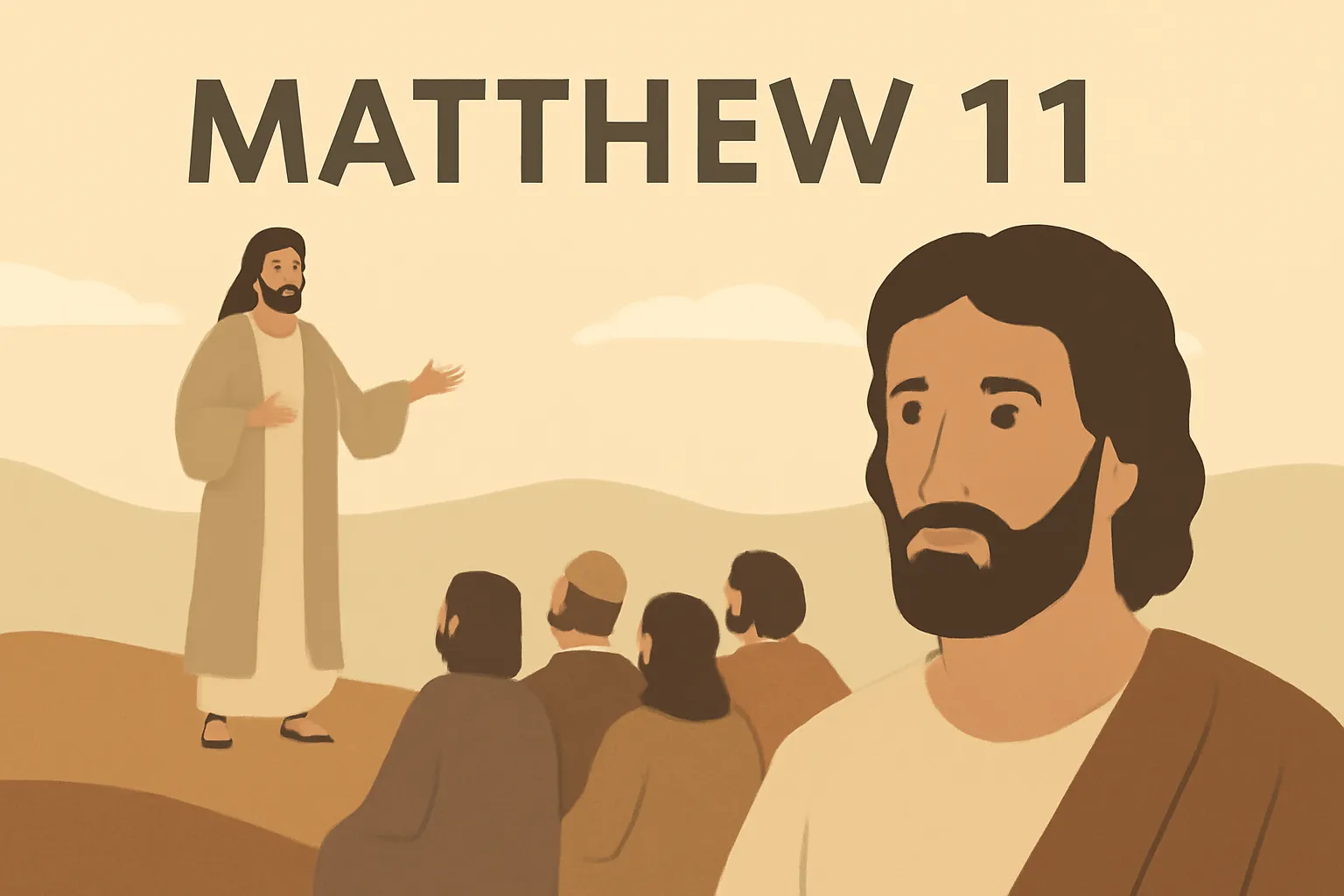
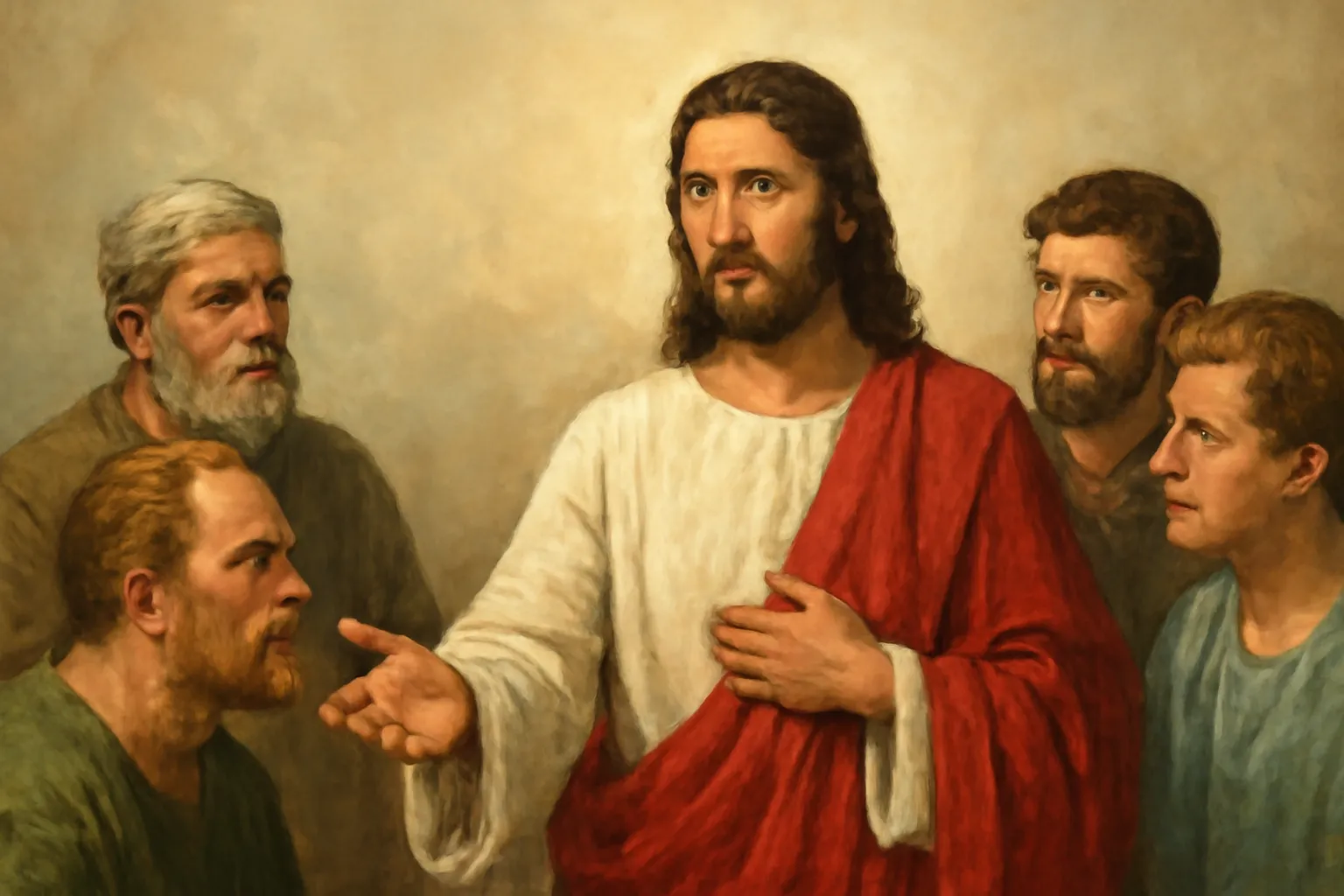
Verse-by-Verse Analysis and Insights for Matthew 11 offers a careful, multi-angle look at one of the most debated chapters in the Gospel of Matthew. This article provides a structured, interpretive journey through the chapter, highlighting literary features, historical context, and theological implications. The goal is to illuminate what Matthew 11 communicates to its original audience and how readers across time might engage with its key ideas today.
In this analysis, you will encounter verse-by-verse notes about the setting, the questions surrounding John the Baptist, Jesus’ responses, and the dramatic pronouncements against certain cities. You’ll also find sections that compare traditional and contemporary interpretations, examine the Greek terms underlying central concepts like basileia (kingdom), and consider how Matthew’s narrative structure advances his broader message about who Jesus is and what it means to follow him. Throughout, important themes are highlighted in bold to draw attention to ideas that recur across the Gospel and the broader biblical corpus.
11:1-6 — Context, Forerunners, and the Messenger’s Question
Verses 1–6 sit at a transition point in Matthew 11. Jesus has been teaching and performing works of power in Galilee, and John the Baptist’s circle of influence is carried forward into this episode. The setting underscores a movement from public demonstration to inward persuasion: the signs and words now invite readers to interpret who Jesus is, especially in light of John’s expectations and questions.
Verse 1 — The narrative arc continues after Jesus’s ministry in Galilee. The author notes that Jesus “caused his disciples to depart” or sent them on to continue their mission, signaling Jesus’ ongoing program and his intentional preparation of his followers for the next stage. The emphasis is on mission continuity and the hands-on leadership of Jesus.
Verse 2-3 — John the Baptist, imprisoned, sends two disciples with a pointed question: “Are you the One who is to come, or should we expect someone else?” This is one of the chapter’s most iconic moments. The question is not merely about identity; it probes whether Jesus fulfills the messianic expectations embedded in Jewish hope. John’s dilemma is not a failure of faith but a candid human moment that invites readers to consider how evidence and expectation interact in faith formation. In the Greek, the phrasing invites confirmation or correction, and it foregrounds the tension between expectation and revelation.
Verse 4-5 — Jesus responds by pointing to miraculous signs and prophetic fulfillment rather than a direct existential claim. He cites the healing and life-giving acts: the blind receive sight, the lame walk, lepers are cleansed, the deaf hear, the dead are raised, and the poor receive good news. These works fulfill Jewish prophecies about the Messiah’s works, connecting Jesus’ authority with Messianic fulfillment in Isaiah’s language and other prophetic strands. The list also highlights practical compassion as a metric of genuine messianic action.
Verse 6 — Jesus adds a surprising beatitude: “blessed is the one who does not stumble on account of me.” This invites readers to weigh the tension between expectations of how God should act and the reality of how God actually acts in Jesus. The term for “stumble” (skandalizesthe) signals that faith may be tested by encounters with apparent incongruities between the kingdom’s coming and present suffering. The verse ends with a hinge: the blessing rests on trust amid ambiguity, not on flawless comprehension.
Interpretive notes for this section emphasize several threads. First, the question from John shows how figures of faith can hold space for doubt while still seeking affirmation. Second, Jesus’ answer reframes messianic expectation through deeds rather than through political or militaristic conquest alone. Third, the passage models a method of witness: directing attention to tangible acts of mercy and signs to identify the in-breaking of the kingdom. Readers across traditions often highlight how this sets a precedent for interpreting contemporary miracles or transformative acts in the church today.
11:7-15 — The Verses About John and the Kingdom’s Preceding Signs
Verses 7–15 hinge on a literary “sandwich” around John’s identity and mission. After addressing John’s question, Jesus shifts to a broader portrait of the era and the prophetic place of John in the story of the kingdom. The passage is rich in character delineation and in the framing of what it means to recognize God’s work when it does not fit conventional expectations.
Verse 7 — Jesus begins with a hinge: what did you go out into the wilderness to see? A weak reed? A man dressed in soft clothing? The answer is no—you went to see a prophet. This affirms John’s prophetic vocation and his role as the forerunner who prepares the way for the Messiah. The rhetorical device is intended to recalibrate listeners’ expectations about what counts as evidence for a prophet’s presence.
Verse 8 — John’s austere lifestyle is highlighted as evidence of prophetic seriousness. He is not a man of luxury; his ascetic approach matches his message of repentance and readiness for the kingdom. The description also reinforces the ethical dimension of John’s ministry: repentance and readiness before God’s coming judgment.
Verse 9-10 — Jesus clarifies that John is more than a mere prophet; he is the one preparing the way, as foretold in prophetic literature and, in particular, as the messenger announced by Malachi. The emphasis on the Messiah’s arrival as the fulfillment of what John announced points to the continuity of divine initiative across generations. The phrase “the one who has ears to hear” recurs, inviting readers to respond with spiritual receptivity rather than mere intellectual assent.
Verse 11 — Jesus offers a high view of John: among those born of women, there has been none greater than John the Baptist, although the least in the kingdom of heaven is greater than he. This paradox highlights two key ideas: (1) John’s unique vocation in the pre-Messianic era, and (2) the new era inaugurated by Jesus, in which the kingdom’s marginal figures and the faithful poor are privileged access points to glory.
Verse 12 — The language of the kingdom being “taken by force” and the violent taking hold of it has been the source of diverse interpretations. Some read it as a reference to the intense urgency of the era; others see it as a description of spiritual struggle as people press into the kingdom. The verse invites readers to reflect on the dynamic tension between divine initiative and human response.
Verse 13-14 — Jesus situates John within the prophetic line: all the Prophets and the Law prophesied until John. If one is willing to accept it, he is Elijah who is to come. The interpretive emphasis here is on continuity—John’s ministry completes a prophetic circuit that points toward Jesus’ own mission.
Verse 15 — A concise call: “He who has ears, let him hear.” Like the earlier beatitude, this line underscores a response-based faith: hearing and heeding are prerequisites for recognizing God’s movement in history.
The themes here include prophetic succession, the paradox of greatness in the kingdom, and the call to discernment in a time of transition. Across different interpretive traditions, this passage is often used to discuss the nature of prophetic authority and how the church should relate to figures who embody bold, countercultural calls to repentance and faith.
11:16-19 — Receptivity, Moral Expectations, and the Response to Jesus’ Ministry
In these verses, Jesus shifts to a set of contrasts that address contemporary receptivity (or the lack thereof) to his ministry. The imagery of an “unresponsive generation” and the contrasting responses to John the Baptist and himself highlight the human propensity to demand conformity to expectations while resisting the disruptive, kingdom-centered reality Jesus brings.
Verse 16-17 — Jesus uses a child’s games as a rhetorical device to illustrate the puzzling nature of the current generation: they want entertainment or a concession to their preferences. They neither dance when John’s austere call required abstinence nor mourn when Jesus’ presence called for feasting with sinners. The point is that surface entertainments cannot capture the depth required for true repentance.
Verse 18-19 — The contrasting responses to John the Baptist and to Jesus are highlighted. John came “neither eating nor drinking,” and people said, “He has a demon.” Jesus came “eating and drinking,” and people accused him of being a glutton and a winebibber. The deeper critique is that moral and spiritual judgments were often shaped by preconceptions about purity and propriety rather than by the actual evidence of the kingdom’ s work.
Verse 19 — Despite the criticism, Jesus reaffirms the wisdom of God by pointing to both prophetic authenticity and convivial fellowship. The phrase “wisdom is proved right by her deeds” underlines a core interpretive principle: outcomes and tangible acts reveal truth more reliably than rumor or factional loyalties.
The passage invites readers to examine personal and communal reception of Jesus. Do we insist on a version of faith that fits comfortable expectations, or do we submit to a living, often challenging, presence that calls us to deeper transformation?
11:20-24 — Woes on Unrepentant Cities: Aharonics of Judgment and Mercy
Verses 20–24 present some of the harshest words in Matthew’s Gospel, directed toward Chorazin, Bethsaida, and Capernaum. The tone shifts from invitation and revelation to warning and indictment. The miracles performed in these cities but their lack of repentance become the focal point for Jesus’ lament. The passage emphasizes two pillars of New Testament interpretation: the seriousness of encountering divine grace and the accountability that comes with greater revelation.
Verse 20 — Jesus begins by rebuking the cities where most of his miracles had taken place, signaling that phenomenal signs do not automatically yield faith. The emphasis is on the relationship between divine action and human response.
Verse 21-22 — A striking series of cities is invoked with a rising rhetorical intensity: Woe to you, Chorazin and Bethsaida, because if Jesus’s works had been done in Tyre, Sidon, those cities would have repented long ago in sackcloth and ashes. The logic is not only geographical but moral: those to whom revelation comes bear the responsibility to respond with repentance. The storm of judgment is oriented toward refusal rather than ignorance.
Verse 23-24 — The invective intensifies as Jesus addresses Capernaum, the home base of his Galilean ministry. The verse set presents a paradox: a city that has seen the light (the “mystery of the kingdom” embodied in Jesus) will be humbled to a lower position than Sodom. The claim about being raised to heaven or cast to the depths uses stark poetic language to underscore accountability before God’s presence. The moral of this passage is not that physical disaster follows moral failure in a strictly mechanistic sense, but that God’s judicial activity responds to human receptivity and ongoing revelation.
From a pastoral perspective, these verses are often read as warnings against complacency in spiritual privilege. They invite readers and church communities to examine the fruit of their faith—not merely the presence of religious signs, but the actual transformation of life and societal action in light of the gospel.
11:25-27 — The Hidden Things Revealed: A Prayer of Thanksgiving and Revelation
Verses 25–27 present a shift toward divine revelation and relational knowledge: hidden things are disclosed by the Father to those who are willing to receive them. This section reads like a theological hinge in Matthew’s Gospel, showing how Jesus’ ministry embodies a convergence of divine plan and human receptivity.
Verse 25 — Jesus gives thanks to the Father that the Father’s plan is not revealed to “the wise and learned” but to “little children.” This paradox—humility as the criterion for divine disclosure—emphasizes the kingdom’s ethic of dependence, trust, and childlike receptivity. The adjective gracious (charis) is at play here, reminding readers of grace’s unearned nature in revelation.
Verse 26 — The pronouncement intensifies: God’s gracious choice to reveal these things to the humble is affirmed. The phrase suggests a divine economy in which wisdom and power are not primarily distributed according to human prestige but according to the Father’s will.
Verse 27 — The intimate, almost familial language concludes with two claims: the Father reveals the Son and the Son reveals the Father. This mutual knowledge inside the Trinity emphasizes unity of purpose and a shared governance of revelation. It also casts Jesus as the definitive revealer of God, while positioning the disciples as those who are given access to this revelation. The phrase “no one knows the Son except the Father” and “no one knows the Father except the Son” is often read liturgically as a deep invitation into relational knowledge with God through Jesus.
Scholars often view this section as a turning point: it marks a shift from public demonstration to intimate disclosure, inviting readers to participate in the knowledge of God through the Son. Theological interpretations emphasize the extra-biblical complexity of divine revelation, the role of spiritual discernment, and the accessibility of God to those who approach with humility and faith.
11:28-30 — The Invitation to Rest: Jesus’ Yoke and the Call to Discipleship
The final pericope of Matthew 11 offers some of the most resonant language about rest and discipleship in the Gospels. The invitation is not simply to rest but to take upon oneself a particular way of living—an invitation that has been central to Christian spiritual formation for centuries. The imagery of the yoke serves as a bridge between agricultural life in first-century Judea and the spiritual life of the believer.
Verse 28 — Jesus invites the weary to come to him for relief. The language emphasizes gentleness and accessibility: the one who invites is not harsh, but welcoming. The directive to come to him with “all you who labor and are heavy laden” includes those burdened by legalistic demands, ethical striving, or existential weariness. The promise is rest for the soul, a rest that is rooted in relationship with Jesus rather than mere cessation of activity.
Verse 29 — The invitation deepens with the call to “take my yoke upon you and learn from me.” The metaphor of a yoke, common in agrarian settings, reframes discipleship as participation in a shared work and a student-mentor relationship. The accompanying description—“I am gentle and humble in heart”—offers a temperament model for leadership and for living within the community of Jesus’ followers. The function of the yoke is not oppression but structured collaboration with God’s purposes, and the outcome is rest for the soul.
Verse 30 — The conclusion returns to the nature of the burden and the result: the yoke is easy and the burden is light. This statement, read within Matthew’s broader Christology, affirms that Jesus’ way, while demanding, is life-giving and leads to true peace. The verse has been interpreted in various ways—some as a practical statement about the burden of discipleship, others as a liturgical invitation to the church to adopt a lifestyle shaped by Christ’s character and priorities.
Interpretations emphasize that the invitation to rest is twofold: rest from the burden of trying to secure God’s favor through ceremonial rule-keeping, and rest in submitting to Jesus’ leadership as the true teacher and shepherd. The passage is widely cited in Catholic, Protestant, and Orthodox spiritual writings as a foundational text for spiritual formation, pastoral care, and church life shaped by grace, humility, and mission.
Cross-Cutting Themes and Interpretive Angles
Beyond verse-by-verse notes, several enduring themes emerge when reading Matthew 11 as a whole. The following sections gather insights that recur across verses and enrich understanding from multiple angles:
The Kingdom’s Inauguration — Matthew 11 presents the in-breaking of the basileia (kingdom) in Jesus’ ministry, with signs that align with prophetic expectations yet often defy popular political or military expectations. The kingdom is both present and contested, present in the actions and words of Jesus, and contested by those who resist the implications of his message.
Revelation and Responsiveness — The chapter foregrounds how God reveals truth to those who are receptive. The Father’s plan and the Son’s revelation are interwoven, inviting readers to cultivate spiritual discernment and humility in response to divine communication.
Prophetic Identity and Fulfillment — John the Baptist stands at a pivotal juncture: he points to Jesus, yet he also embodies an era of prophetic activity that culminates in the era of grace. Matthew’s readers are asked to see the continuity between the prophetic message and Jesus’ ministry as a unified story rather than as disparate acts.
Judgment and Mercy — The woes of 11:20-24 serve as a caution about rejecting divine revelation, while the invitation to come to Jesus in 11:28-30 presents the mercy that sustains believers in the journey of discipleship. The juxtaposition highlights the moral seriousness of the gospel and the compassionate call to rest and renewal.
Discipleship as a Way of Life — The yoke metaphor in 11:29–30 underscores that following Jesus is a practical, daily commitment that shapes thought, action, and community life. The call to be gentle and humble of heart translates into leadership styles, pastoral care, and daily interactions with others.
For contemporary readers, Matthew 11 offers a durable typology for faith formation, mission, and spiritual life. Here are some practical takeaways that scholars, pastors, and lay readers often emphasize:
Faith under Pressure — John’s imprisonment and his questions remind readers that faith often surfaces under hardship. The best response is ongoing testimony to God’s works and a willingness to reframe expectations about how God acts in history.
Listening for Signs — Jesus’ invitation to consider the signs—healings, restoration, life—urges readers to measure truth by outcomes that reflect mercy, justice, and compassion. Signs are not neutral; they carry interpretive value about the character of God and the nature of the kingdom.
Rejection and Mercy — The woes on Chorazin, Bethsaida, and Capernaum warn against spiritual complacency in the face of privilege. Yet in 11:28–30, mercy remains available to the weary who choose to rest in Jesus’ leadership, offering a hopeful balance between accountability and grace.
Humility and Revelation — The section on revelation (11:25–27) invites believers to cultivate a posture of humility—recognizing that true knowledge of God comes as a gift rather than as a trophy of human achievement. This has implications for prayer, worship, and theological study.
Discipleship as Growth — The invitation to bear Christ’s yoke reframes discipleship as a cooperative journey in which believers learn from Jesus’ character. This is relevant for church leadership, small groups, and personal spiritual practice alike.
Scholars and theologians across traditions approach Matthew 11 with different emphases. Here are some representative interpretive angles you may encounter in commentaries, sermons, and academic studies:
Historical-Critical — Focuses on the historical context of first-century Judea, the role of John the Baptist, and the Salient features of Galilean ministry. The emphasis is often on literary devices, source relationships (e.g., echoes of Luke and Q material), and how Matthew’s community might have used this chapter to define identity.
Redemptive-Historical — Treats Matthew 11 as a narrative arc that points toward the climactic revelation of Jesus as the Son of God. This perspective highlights the fulfillment motif, typology (Elijah forerunner), and how the chapter contributes to the gospel’s overarching story of salvation history.
Pastoral and Homiletic — Preachers and spiritual directors draw out practical implications for church life, pastoral care, and personal discipleship. The emphasis is on mercy, invitation, and the balance between discipline and rest in the Christian life.
Soteriological and Christological — Focuses on how Matthew’s portrayal of Jesus shapes beliefs about salvation, the nature of the Messiah, and the way believers relate to God through Christ. This angle often foregrounds the Jesus-as-King motif and the invitation to live under his authority.
Liturgical and Devotional — Uses the chapter to shape worship, prayer, and devotional life. The phrases about rest, yoke, and gentleness become templates for spiritual practices and communal rhythms that emphasize mercy and humility.
In sum, Matthew 11 provides a rich tapestry of questions, signs, judgments, and invitations. Its verse-by-verse texture rewards careful reading while inviting readers to consider how the ancient text speaks into modern life—how we respond to the signs of God’s kingdom, how we bear the yoke of discipleship, and how we live out humility, mercy, and trust in our daily journey of faith.