Overview: Understanding the Old Testament as a Library of Books
The Old Testament is not a single narrative but a rich collection of biblical books that together tell the story of a people, their relationship with God, and their evolving sense of identity. In many contexts, the phrase “book from the Old Testament” points to a given volume within this larger corpus, whether it be a standalone biblical book like Genesis or a composite collection such as the Pentateuch or the Prophetic Writings. The purpose of this guide is to offer a comprehensive overview of the individual old testament books, their primary themes, and the historical backdrop that shaped their composition.
Readers encounter a spectrum of literary genres across these volumes: narrative history, law codes, poetry, wisdom literature, prophetic oracles, and apocalyptic visions. The themes—covenant, land and exile, worship and holiness, leadership and kingship, suffering and hope—recur in varied forms, inviting close reading and cross-book comparisons. This article uses the phrase book from the Old Testament in flexible ways, highlighting how each title contributes to the larger architectural plan of the canonical collection. Throughout, you will see deliberate emphasis on terms such as covenant, exodus, land, wisdom, and prophecy, which recur as guiding motifs across different sections.
Canonical Structures and Variants
The canonical structure of the Old Testament varies by tradition. In most Protestant Bibles, the core divisions are the Pentateuch (also called the Torah), the Historical Books, the Wisdom Literature, and the Prophetic Books. Other traditions—Catholic and Orthodox—include additional writings often labeled deuterocanonical or apocryphal that are not universally regarded as scripture in all Christian communities.
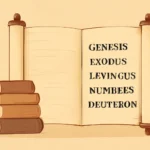
Pentateuch / Torah — the first five books (Genesis, Exodus, Leviticus, Numbers, Deuteronomy).
Historical Books — a sequence of narratives from the conquest of Canaan through the return from exile (e.g., Joshua through Esther in many canons, with Chronicles offering a retelling and emphasis on temple worship).
Wisdom Literature — poetry, proverbs, reflections on life and faith (e.g., Job, Psalms, Proverbs, Ecclesiastes, Song of Songs).
Prophetic Books — writings attributed to prophets who spoke about judgment, hope, and restoration (divided into Major and Minor Prophets in many traditions).
Each major division contains distinct voices and historical horizons, yet all contribute to a shared narrative arc: creation and calling, formation into a people, moral and spiritual testing, and hope for a future in alignment with God’s purposes. In what follows, you will encounter individual biblical books discussed in groups, with key themes and historical notes highlighted.
The Pentateuch (Torah): The Foundational Five
Genesis
The Book of Genesis opens the Old Testament with origin stories, setting forth the primal arc of creation, fall, flood, and the call of a people. Its narrative centers on the patriarchs and matriarchs—Abraham, Isaac, Jacob, and Joseph—and the beginnings of the covenant relationship between God and the families who will become the nation of Israel.
Key themes include covenant promises, the testing of faith, the expansion of blessing to all nations, and the formation of a distinct identity shaped by land and blessing. The book mixes mythic and historical elements to frame a robust theological worldview: God’s sovereignty, human agency, and the promise that a chosen people will be guided toward a divine end.
Exodus
The Book of Exodus traces Israel’s deliverance from slavery in Egypt and the reception of the Sinai Covenant. It foregrounds the act of redemption, the revelation of the Law (including the Ten Commandments), and the construction of the Tabernacle as a portable center for worship.
Major motifs include liberation, divine presence, obedience, and holiness. Exodus presents the turning point where God’s people move from oppression to a covenantal relationship that commits them to a distinctive way of life, undergirded by ritual law, priestly function, and sacred space.
The Book of Leviticus centers on laws, priestly duties, and holist prescriptions for sanctification. It develops the logic of ritual purity, sacrificial offerings, and the responsibilities of the Levitical priesthood as mediators of worship.
Important ideas include the concept of holiness as a calling for both leaders and laypeople, as well as the idea that pure worship must reflect ethical living. Leviticus helps readers understand how the covenant community maintains its relationship with God through purposeful ritual practice and communal accountability.
Numbers
The Book of Numbers follows the wilderness generation as they wander toward the Promised Land. It contains census records, travel itineraries, and episodes that reveal both faithfulness and failure among the people and their leaders.
Key themes include wilderness testing, the dynamics of leadership, and the restless tension between trust in God and fear in difficult circumstances. Numbers shows how a people marked by divine election must navigate obedience, discipline, and hopeful anticipation for the land promised by God.
Deuteronomy
The Book of Deuteronomy presents a series of Moses’ speeches that reframe and reaffirm the covenant as Israel stands on the verge of entering the land. It emphasizes covenant renewal, obedience, and the central role of memory and law in shaping communal life.
Central ideas include the command to love God fully, the call to remember the redemption story, and the warning against idolatry. Deuteronomy functions as a spiritual and legal recap that prepares the community for life in the land while retaining the seriousness of divine expectations.
Historical Books: From Conquest to Exile and Return
Joshua
The Book of Joshua narrates the conquest and settlement of Canaan, marking the transition from wilderness wandering to nation-building under a framework of divine guidance. It sets out the ethical and military consequences of obedience and disobedience to God’s commands.
Themes include conquest and covenant fidelity, as well as the ongoing tension between faithfulness to God and political power. Joshua demonstrates that success in the land is tied to allegiance to the divine will described in earlier scriptures.
Judges
In the Book of Judges, Israel experiences cycles of apostasy, oppression, deliverance by charismatic leaders, and moral decline. The period covered is one of relative tribal autonomy before the establishment of a centralized monarchy.
Key motifs include cycles of sin, oppression, repentance, and deliverance, and the recurring refrain that “everyone did what was right in their own eyes” reflects the fragility of ethical cohesion without steadfast devotion to God.
Ruth
The Book of Ruth presents a compact, personal story set in the period of the Judges. It centers on loyalty, family loyalty, and the providential line that leads to King David.
Highlights include faithfulness across cultural boundaries, the redemption motif, and the genealogical link to the Davidic line, which has implications for later messianic expectations.
1 and 2 Samuel
These two volumes together narrate the rise and fall of the monarchy, focusing on Samuel, Saul, and especially David. The transition from tribal confederation to a centralized monarchy is a defining moment in Israel’s political history.
Important themes include leadership, covenant faithfulness, sin and repentance, and how national success depends on fidelity to God’s ways. The books also underline the complexities of power, biography, and divine purposes intersecting in public life.
1 and 2 Kings
The Kings retell Israel and Judah’s monarchic era from Solomon’s reign to destruction and exile. It foregrounds prophetic voices and the consequences of covenant disobedience on national fate.
Key concerns are temple-centered worship, the integrity of leadership, and the responsibility to heed prophetic counsel, especially as kings compromise the covenant or align with foreign powers.
1 and 2 Chronicles
The Chronicles books offer a retelling of the same era with a distinct emphasis: the temple, priests, and the Davidic covenant. They often highlight genealogies and priestly concerns, shaping a religious memory that centers on worship and Jerusalem’s temple as the focal point of national identity.
Takeaway is that history is interpreted through a theological lens: success and prosperity are aligned with fidelity to God’s plan and the proper worship of the one God.
Ezra, Nehemiah, and Esther
The post-exilic writings cover the return from Babylonian exile and the rebuilding of the temple and walls. Ezra emphasizes the restoration of Torah observance and the reestablishment of religious life, while Nehemiah highlights physical reconstruction and political organization. The Book of Esther stands apart as a narrative about identity and providence within a foreign empire, highlighting how Jewish life endured in diaspora circumstances.
Core ideas include rebuilding, reform, and resilience, illustrating how a community reinvents itself after catastrophe while maintaining fidelity to its covenant commitments.
Wisdom Literature: Reflection, Discipline, and the Good Life
Job
The Book of Job tackles the problem of suffering and the means by which faithful people respond to inexplicable hardship. It wrestles with faith, doubt, and the mystery of God’s ways.
Major themes include suffering, integrity, and divine sovereignty. Job’s dialogical structure invites readers to explore what it means to remain faithful when circumstances challenge every assumption about justice and blessing.
Psalms
The Book of Psalms is a diverse anthology of prayers, hymns, and liturgical compositions. It captures the full range of human emotion before God—from lament to joy, from despair to praise.
Emphases include worship, petition, confession, and gratitude, and the Psalter provides a vocabulary for personal devotion and communal worship that has influenced Judeo-Christian spirituality for centuries.
Proverbs
The Book of Proverbs offers practical wisdom, ethical instruction, and observations about daily life. It emphasizes the value of discernment, diligence, and righteous living.
Key ideas include the fear of the Lord as the beginning of wisdom, and practical guidance for family, work, and community life.
Ecclesiastes
Often read as a meditation on the limits of human effort and the mystery of life, Ecclesiastes challenges readers to find meaning under divine sovereignty rather than in earthly achievement alone.
Central insight is the search for meaning and reverence in a world where many plans seem to decay, yet the book ultimately points toward appreciating life’s gifts as a gift from God.
Song of Songs
The Song of Songs is a lyrical, poetic dialogue celebrating love, beauty, and human intimacy. Interpreted in various traditions as an allegory of divine love, it speaks to the richness of human relationships and the sanctity of affection within a covenantal framework.
Takeaway includes celebration of love and fidelity, and it serves as a poetic counterpart to the more legal and prophetic sections of the Old Testament.
Prophetic Books: Voices of Judgment and Hope
Major Prophets
The Prophetic Books named as major prophets typically include Isaiah, Jeremiah, Lamentations, Ezekiel, and Daniel in many Christian canons. In the Hebrew Bible, some of these texts are placed among other sections, but their weight and role as prophetic voices remain central.
Common concerns in these works include judgment for sin, calls to repentance, reminders of covenant faithfulness, and messages of future restoration. The prophetic voice often connects present events to a larger divine plan, inviting readers to live in hope even amid crisis.
Minor Prophets
The Minor Prophets are a collection of twelve shorter books (often grouped as Hosea, Joel, Amos, Obadiah, Jonah, Micah, Nahum, Habakkuk, Zephaniah, Haggai, Zechariah, Malachi). Though shorter in length, these writings carry piercing ethical and theological critiques, social exhortations, and visions of divine justice and restoration.
Key themes include social justice, true worship, and the hope of renewal, with prophetic voices addressing rulers, priests, and ordinary people alike in a call to align life with the ways of God.
Historical and Literary Context: How These Books Got Written
Understanding the historical context and the literary genres of the Old Testament helps readers appreciate why these books exist in the form they do. The texts emerged from various communities, priestly circles, prophetic schools, and scribal cultures over a broad span of centuries.
Ancient Near Eastern setting — The world of empires, exile, and cultural exchange influenced the shaping of law, kingship, and covenant language.
Authorship and tradition — Some books bear the name of a key figure (e.g., Moses for parts of the Pentateuch), but many sections reflect multiple contributors and later redactors who wove together earlier sources.
Textual transmission — Hebrew manuscripts, Septuagint translations, and later manuscript traditions (including the Masoretic Text) reflect a dynamic process of preservation and interpretation.
Historical arcs — The movement from nomadic to settled life, the rise of the monarchy, exile in Babylon, and return to the land all inform the theological concerns of the books.
Across these layers, the grand narrative is not just a chronological history but a theological narrative about a people learning to live under God’s governance. The Old Testament as a collection invites readers to trace patterns—obedience and failure, blessing and hardship, judgment and mercy—that illuminate the character of God and the mission of God’s people.
Key Themes Across the Old Testament
Covenant as a binding relationship: God’s promises, expectations, and faithfulness to a chosen people.
Exodus and redemption: liberation from oppression and the formation of identity through divine acts of salvation.
Land and exile: the land as a gift and a responsibility, and the consequence of disobedience leading to exile.
Holiness and worship: how worship practices reveal and shape a community’s ethics and devotion.
Leadership and prophecy: the role of leaders, prophets, and reform movements in guiding the people back to fidelity.
Wisdom and meditation: practical and philosophical reflection on how to live well before God and neighbor.
Messianic anticipation: through various strands, the books anticipate a future in which God’s purposes would be fulfilled in justice, mercy, and restoration.
Approaching the Old Testament as a Whole
Reading the entire Old Testament requires a balance of narrative engagement, literary appreciation, and theological inquiry. Here are practical approaches:
Read in stages—start with the Pentateuch to ground yourself in foundational themes, then move to historical books, wisdom literature, and prophetic writings.
Note recurring motifs—watch for the repeated emphasis on covenant, holiness, and the presence of God in everyday life.
Compare translations—different translations highlight nuanced shades of meaning in key terms like “covenant,” “truth,” and “mercy.”
Use literary guides—commentaries and study guides can illuminate historical contexts, genre conventions, and intertextual connections.
Reflect on how themes intersect—how the law in Leviticus connects with wisdom in Proverbs, or how prophetic calls for justice relate to narratives in Kings and Chronicles.
Frequently Encountered Terms and Glossary
Covenant — a binding agreement with obligations and blessings.
Exodus — the act of God delivering the people from oppression.
Monarchy — a centralized system of rule that shapes national identity.
Exile — displacement from homeland as a consequence of disobedience.
Prophecy — divine messages delivered through chosen messengers.
Temple worship — central acts of devotion and sacrifice within a sacred space.
Wisdom literature — a collection of proverbs, reflections, and observations about life and living well.
Judgment and restoration — recurring patterns of consequence for unfaithfulness and hopeful promises of renewal.
Further Reading and Resources
For those who want to explore the topic further, consider consulting scholarly introductions to the Old Testament, curated reading plans, and reputable study guides. The following recommendations are not exhaustive but can deepen understanding:
Introductory surveys of the Old Testament can provide a broad map of content and chronology.
Commentaries on individual books offer in-depth historical background, linguistic notes, and interpretive frameworks.
Comparative studies of the Hebrew Bible and the Septuagint illuminate translation history and textual variation.
Historical-critical studies explore the social, political, and religious contexts in which the texts were produced.
Why the Collection Matters
A comprehensive guide to Old Testament books reveals a layered, interconnected library rather than isolated narratives. Each old testament book contributes to a larger story about identity, faith, and the ongoing relationship between God and humanity. Whether you read a single biblical book in depth or study several in sequence, you gain access to a tradition that asks enduring questions: What does it mean to belong to a people under divine care? How should justice, mercy, and righteousness shape daily life? In what ways does a people’s history point toward new possibilities for hope?
As you engage with this Old Testament collection, let the diversity of voices—narrators, sages, priests, and prophets—enrich your understanding of how faith, culture, and history co-create a living tradition. The journey through these books of the Old Testament is not merely a historical exercise; it is an invitation to reflect on the foundations of ethical life, communal memory, and the enduring promise that faithfulness to God can shape a community’s future.