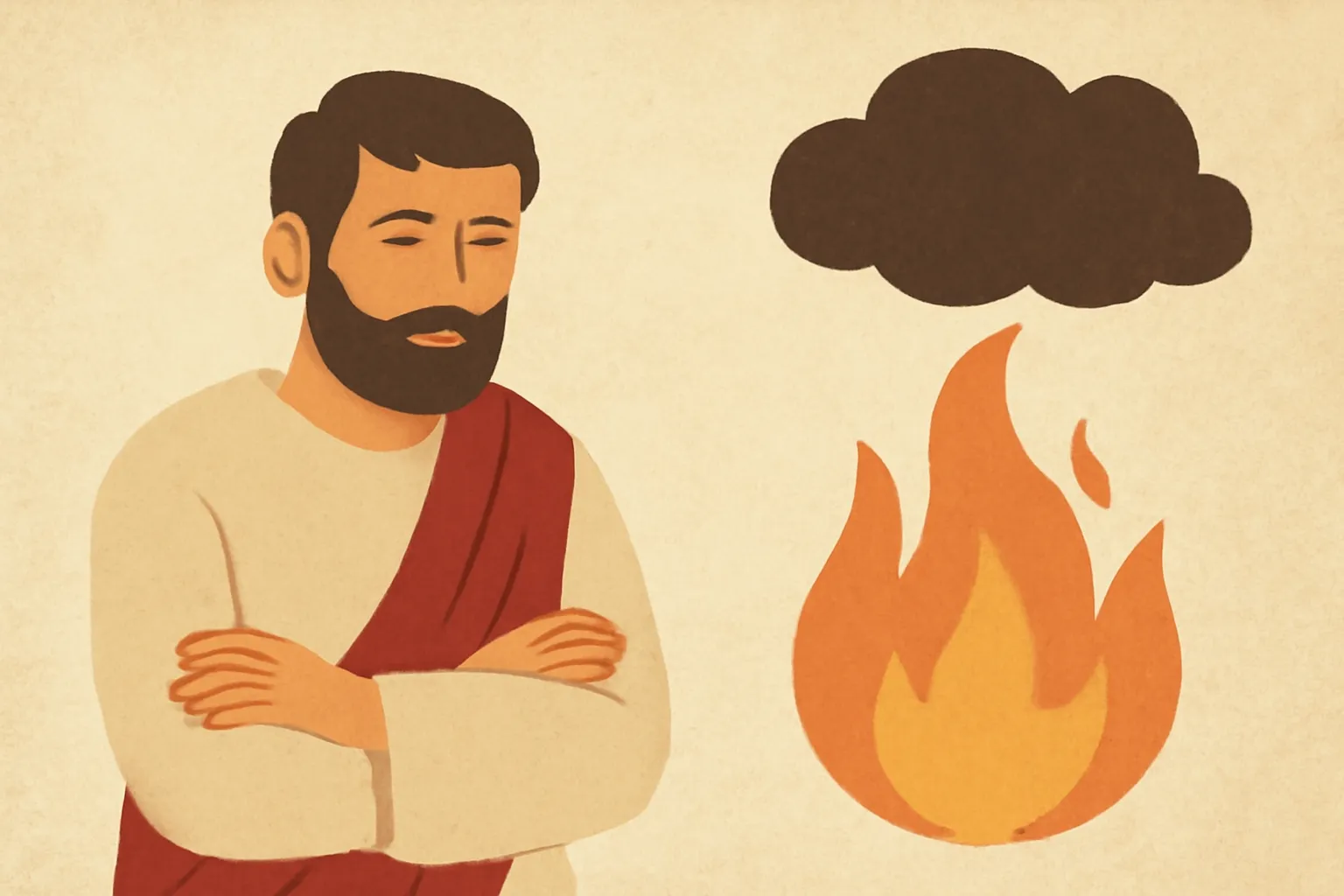
Bible Verse About Being Slow to Anger: James 1:19 Explained and Applied
In a world that often rewards quick reactions and louder voices, the biblical exhortation to be slow to anger stands out as a countercultural discipline. The verse most often cited for this virtue is James 1:19, a compact directive that ties together listening, speaking, and temper. This article explores the meaning, context, and practical application of that command, using the well-known verse as a guide to everyday life, relationships, and spiritual growth.
Why this verse matters in daily life
The instruction to be slow to anger is more than a polite suggestion. It is a pathway to wisdom, reconciliation, and mature faith. When tempers flare—whether in family conversations, workplace disputes, or social media exchanges—rash words and hasty judgments often do lasting harm. The biblical stance—to listen first, choose words carefully, and restrain anger—aims to protect relationships and align speech with the character of God. This article will unpack the verse, describe its original context, present variations that preserve its intent, and offer practical steps for applying it in various life situations.
Context of James 1:19
To understand James 1:19, it helps to situate it within the opening chapter of James’s letter. James writes to a community facing trials, temptations, and social pressures. The broader theme is practical righteousness—how faith should inform the way people live, speak, and respond to adversity. James emphasizes that real religion expresses itself in deeds, not merely beliefs. Against the backdrop of conflict and strained relationships, the exhortation to be swift to hear, slow to speak, slow to wrath becomes a countermeasure against the escalation of anger and the quickness to react that often accompanies hurt feelings or perceived offenses.
Wherefore, my beloved brethren, let every man be swift to hear, slow to speak, slow to wrath.
That concise verse captures three connected practices. First, swift to hear invites attentive listening. Second, slow to speak cautions against impulsive or careless words. Third, slow to wrath restrains anger, recognizing that unrighteous anger often undermines the justice and goodness God desires. The repetition of movement—hurrying to listen, delaying speech, and delaying anger—frames a holistic approach to communication that honors God and preserves community.
Key Teachings of James 1:19
The verse can be understood through three linked imperatives. In this section, we break down each phrase and explore what it means for personal character and interpersonal relationships.
Swift to hear
Hearing quickly is more than catching the words another person is saying. It means entering a conversation with humility, suspending judgment, and giving the speaker the benefit of the doubt. When we are swift to hear, we practice active listening: we seek to understand the other person’s perspective, ask clarifying questions, and resist the urge to interrupt. This posture is foundational to wise decision-making because understanding often reveals needs, emotions, fears, and motives that words alone cannot convey.
Active listening involves paying full attention, not planning your reply while the other person is speaking.
Empathetic posture invites the speaker to share honestly, knowing they will be heard.
Clarifying questions help prevent misinterpretation and reduce defensiveness.
One of the most natural reactions to a perceived offense is to defend, justify, or retaliate with our own sharp words. The admonition to be slow to speak counters this impulse. By choosing our words carefully, we reduce the chance of injuring others or exacerbating the conflict. Slow speech does not imply passivity or suppression of truth; rather, it invites discernment—speaking only when our words are wise, timely, and shaped by love.
Thoughtful responses instead of knee-jerk reactions.
Edifying communication that builds trust and understanding.
Timing—knowing when to speak and when to remain silent for the sake of peace.
Slow to wrath
The third component, being slow to wrath, targets one of the most destructive forces in human relationships: uncontrolled anger. Anger can be a surface emotion masking deeper hurts, fears, or perceived injustices. James connects anger with God’s purposes by warning that the wrath of man worketh not the righteousness of God (James 1:20, KJV). In other words, anger that does not lead to reconciliation or justice is not aligned with God’s will. Practically, slow to wrath means pausing before reacting, choosing restraint, and seeking avenues for righteous response—whether through prayer, constructive dialogue, or restorative actions.
Pause-and-pray before responding in a charged moment.
Seek peace and reconciliation, not simply victory in the argument.
Address root causes (hurt, fear, misunderstanding) rather than merely soothing or punishing the surface conflict.
Variations Across Translations and Paraphrases
Translations of James 1:19 express the same core idea with nuanced phrasing. While the public-domain King James Version (KJV) provides a precise, classic rendering, modern readers encounter paraphrases and alternative translations that preserve the same intention in accessible language. Below are representative variations and paraphrased renderings that help broaden semantic breadth while staying faithful to the verse’s meaning.
Wherefore, my beloved brethren, let every man be swift to hear, slow to speak, slow to wrath. (James 1:19, KJV)
Paraphrased and conceptual renderings inspired by James 1:19:
Be quick to listen, slow to speak, and slow to anger. A concise, contemporary restatement that mirrors the original order and emphasis.
Let everyone hurry to hear, take time before you speak, and delay your wrath. A slightly more poetic variation that foregrounds the pace of each action.
Listen first, choose your words with care, and restrain your temper. A practical synthesis that foregrounds everyday speech in relational contexts.
Quick to hear, slow to speak, slow to wrath. A compact motto that captures the triad as a single guiding principle.
Translations sometimes emphasize different nuances of the same ideas. For instance:
Public-domain context (KJV): emphasizes habitual disposition—being swift to hear and slow to speak and wrath.
Modern paraphrases emphasize practical application—how we listen, speak, and manage anger in family life, workplaces, and community settings.
Scholarly summaries may highlight how the verse sits within James’s warnings about anger, temptation, and the righteousness of God.
Applied Teachings: How to Live Out James 1:19
Knowing the verse is one thing; applying it consistently is another. The following sections offer practical steps for individuals, couples, families, and communities to embody the pace of listening, speaking, and anger management that James champions.
Practical steps for individuals
Pause before you respond. In tense moments, count to five, take a breath, or step away briefly to regain composure.
Ask questions to verify understanding instead of assuming motive or intent.
Rehearse a calm response in your mind before uttering anything you might regret.
Recall the goal of the conversation: reconciliation, truth, or mutual understanding—rather than simply «being right.»
Create listening routines—designate a time for family members to share what they’re feeling, with a talking object or timer to prevent interruptions.
Practices for calm speech—agree on phrases that invite dialogue (for example, «Help me understand…») rather than accusations.
Anger debriefs—after heated moments, have a brief, respectful debrief to restore trust and repair harm.
Practical steps for couples and friendships
Establish ground rules for disagreements: listen first, slow to interrupt, and seek a pause if emotions escalate.
Use «I» statements to express feelings without blaming language (e.g., «I felt hurt when…» rather than «You always…»).
Practice reconciliation rituals—a calm conversation, a sincere apology, and a plan to prevent the same pattern from recurring.
Practical steps for communities and workplaces
Conflict-resolution frameworks that begin with listening, move to problem-solving, and end with restorative outcomes.
Training in communication—workshops or resources that teach active listening and nonviolent communication.
Cultural norms of restraint—leaders modeling patience and measured responses, especially during crises or public debates.
Theological Implications: Why being slow to anger matters
Beyond practical wisdom, the admonition to be slow to wrath connects with deeper biblical themes. Anger, when not governed by wisdom and righteousness, can lead to actions that distort God’s purposes. James notes that the wrath of man worketh not the righteousness of God (James 1:20, KJV). This implies that anger directed at people, circumstances, or injustices must be transformed by divine wisdom if it is to become constructive rather than destructive.
Wisdom and nature of anger are important themes in Scripture. Proverbs portrays anger as a potential symbol of folly if not restrained, while the New Testament invites believers into the fruit of the Spirit, which includes self-control. The call to be slow to wrath sits at the intersection of personal virtue and communal flourishing—an invitation to temper, empathy, and grace in the way we communicate and respond to offense.
Putting James 1:19 into practice often requires intentional habits. The following tools are practical and doable within daily life, helping to cultivate the dispositions of listening, speaking carefully, and restraining anger.
Breathing techniques that calm the nervous system in moments of tension (for example, slow, deep breaths that engage the diaphragm).
Prayer and reflection—asking for grace to listen well, speak with kindness, and manage anger in a way that honors God and others.
Scripture memorization—placing the essence of James 1:19 in heart and mind to recall during challenging conversations.
Accountability partners—having trusted friends or mentors who can encourage, correct, and model patient communication.
Conflict-stewardship routines—a planned method for addressing conflicts that emphasizes listening first and reconciliation as the goal.
To illustrate how the principle plays out, consider two brief scenarios. These are not exhaustive templates, but they demonstrate how the verse can guide responses in diverse situations.
Workplace disagreement: In a tense meeting, a colleague makes a provocative comment. Instead of reacting, a teammate who is swift to hear asks clarifying questions, summarizes the point to ensure understanding, and responds with measured words that address the issue rather than attacking the person. The result is a collaborative solution rather than a personal confrontation, and the team maintains trust and respect.
Family conflict: During a family dinner, hurtful remarks are exchanged. A parent modeling slow speech chooses to pause, invites a brief break, and returns with a calm, compassionate message that acknowledges hurt and seeks to repair the relationship. This approach helps restore peace without suppressing legitimate feelings or avoiding accountability.
James’s instruction is not merely about social etiquette; it is about aligning with the righteousness of God. When anger drives decisions or speech, it can distort justice and harm the vulnerable. By contrast, being slow to wrath is a deliberate stance toward God’s truth, seeking to express grace and truth in a way that reflects God’s character.
In practical terms, this means recognizing that anger is not inherently sinful—it can be a legitimate signal that something is wrong. However, wrath that seeks revenge, domination, or public shaming diverges from the wisdom that God desires. The call is to channel righteous indignation into constructive action—advocacy, reform, or reconciliation—while resisting the impulse to vent anger in ways that injure people or obscure the truth.
Passing on the virtue of being slow to anger involves modeling, teaching, and creating space for practice. Here are some strategies:
Model the behavior by demonstrating attentive listening, measured speech, and controlled responses in ordinary conversations.
Teach through scenario-based discussions—use common conflicts to practice the threefold discipline in a safe setting.
Encourage accountability—team, family, or group members can remind one another of the verse when tempers flare.
Reinforce with reminders—line up helpful phrases and boundaries (e.g., “Let’s pause and listen first.”) that remind everyone of the goal to be slow to wrath.
The exhortation to be swift to hear, slow to speak, and slow to wrath offers a practical, spiritually rich framework for navigating life’s tensions. It invites a rhythm of listening before speaking, caution before condemning, and restraint before reacting. By embracing this rhythm, individuals can cultivate greater wisdom, healthier relationships, and a deeper experience of peace that aligns with God’s purposes. James 1:19 is not only a timeless verse to be memorized; it is a daily invitation to live in a way that honors God, nurtures others, and reflects the maturity of faith in action.
As you move forward, consider choosing one practical adjustment this week—a deliberate pause before speaking, or a commitment to listen more than you speak in a charged conversation. Small, deliberate steps toward being slow to anger can accumulate into a transformative pattern that touches every area of life: home, work, church, and community. In the end, this is less about a rule to follow and more about a life that mirrors the patient, merciful, and wise heart of God.