Adonai is a significant term in the religious and literary landscape of the Hebrew Bible and its later traditions. It is more than a simple word for “lord”; it carries layers of meaning about authority, relationship, worship, and the way people speak of the divine. In this article we explore Adonai meaning by looking at its origins, its theological and literary roles, and its varied use in biblical and post-biblical contexts. We will examine its linguistic roots, how it functions in relation to the divine name YHWH, its presence in liturgy and translation, and the broader implications for readers and students of Scripture. Throughout, key terms and phrases are emphasized to highlight the semantic breadth of this venerable word.
The word Adonai derives from the Hebrew root adon, a term that in ordinary usage means “lord,” “master,” or “owner.” In everyday Hebrew, an adon can refer to a master of a household, a ruler, or someone who holds authority over others. The form Adonai is a grammatical construction that scholars often describe as the “plural of majesty” or “plural of respect.” In Hebrew, using a plural form to express singular majesty is a well-attested feature of the language, especially in reference to supreme beings. Thus, the plural-looking form is not a statement about multiple gods or entities; rather, it is a singular, sovereign address to an ultimate, singular ruler—the God of Israel.
Two related forms help illuminate how the word functions in Hebrew and how readers encounter it in Scripture. The first is Adon (singular), meaning “my lord” or “my master” when used in everyday address. The second is Adonai (often vocalized with the vowels of Adonai under the consonants of YHWH in traditional manuscripts). The relationship between these forms is central to understanding how Adonai operates as a divine title and as a liturgical substitute for the divine Name. In many passages, the text distinguishes between Adonai as a respectful address to God and other terms that refer to God in more general or descriptive ways.
From a linguistic standpoint, Adonai has a parallel in other Semitic languages where similar terms exist for “lord” or “master.” For example, in ancient Phoenician or Aramaic, similar roots appear in forms that indicate authority or ownership. The continuity of this concept across related languages underscores how deeply the idea of a sovereign ruler is embedded in the cultural and religious imagination of the biblical world. In the Hebrew Bible itself, Adonai often appears in contexts that emphasize status, rank, and reverence, signaling that the divine figure is the ultimate master over all creation and history.
Adonai in the context of the Tetragrammaton
The divine name represented by the Tetragrammaton, YHWH, sits at the center of many discussions about how Adonai functions in Scripture. The Tetragrammaton is traditionally understood by scholars as the personal name of the God of Israel, often rendered in English as “the LORD” (in all capitals) in many Bible translations. This practice keeps the personal name distinct from the beloved, reverent title Adonai, used when reading Scripture aloud. In the Hebrew Bible, a common pattern emerges: when the text encounters the sacred name YHWH, readers are guided to substitute Adonai in vocalization and liturgical reading. This substitution avoids pronouncing the divine name and preserves a sense of reverence and awe in worshipers’ voices.
Several important dynamics accompany this relationship between Adonai and YHWH. First, the practice reflects a doctrinal stance that the personal Name is uniquely sacred and not to be spoken casually by human beings. Second, the use of Adonai in the vocalization preserves the integrity of the text for readers who encounter it in religious settings. Third, the combination of the two ideas—that God is both the personal name YHWH and the sovereign Lord addressed as Adonai—creates a robust framework for understanding God’s nature as both intimate and transcendent.
Scholars often point to passages that illuminate this relationship. For instance, in poetic and prophetic passages where the divine Name appears in the Hebrew, the surrounding language frequently shifts to evoke the authority and majesty of God when readers hear the substitution Adonai. In scholarly editions, you may see a dynamic equivalence: the text presents YHWH in consonantal form, while the Masoretic tradition supplies the vowels of Adonai to guide pronunciation during reading. This literary technique demonstrates how sacred language can function on multiple levels at once: the surface text names God’s personal identity, while the vocalized form communicates reverence and awe through a title that implies kingship and lordship.
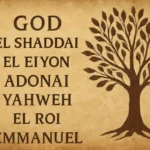
In the Hebrew Bible, Adonai appears in a wide range of contexts, from intimate supplications to cosmic declarations of sovereignty. In many prayers, the word functions as a direct address to God, signaling a relationship that is personal, communal, and liturgical. The term also appears in compound forms and epithet phrases that emphasize particular aspects of God’s rule or character, such as Adonai Elohim (often translated as “the Lord God”) and Adonai Tzevaot (often translated as “the Lord of hosts”). These compounds fuse the concept of lordship with other divine attributes—omnipotence, righteousness, faithfulness, and the sovereignty over the forces of history and nature.
In Jewish liturgy, Adonai takes center stage in daily prayers, seasonal liturgies, and public worship. There is a long-standing practice of reciting blessings that begin with reverent invocations of Adonai as the source of life, guidance, and protection. For example, many blessings read in synagogue or at home employ phrases like “Blessed are You, Adonai our God, King of the Universe”—a formula that acknowledges God’s sovereignty while situating worship within a relationship of gratitude and trust. In these contexts, Adonai is not merely a title; it is a doorway into an encounter with the divine presence, a linguistic anchor for prayer, and a social cue that signals communal devotion.
Beyond formal worship, the use of Adonai underscores a broader ethic of reverence in everyday speech among religious communities. Historically, many Jewish communities adopted a practice of avoiding the spoken names of God in casual conversation. This cultural stance—often summarized as “out of reverence” for the sacred name—shapes how people think and write about God in daily life as well as in liturgy. In written English or other languages, this reverence often translates into translations that render the personal name as “the LORD” (with capitals) or into substitutions such as HaShem, meaning “The Name,” in modern practice. These linguistic conventions reflect a shared concern for honoring God while preserving meaningful access to Scripture for worship and study.
Common phrases and epithet forms involving Adonai
Over the centuries the term Adonai has given rise to a rich set of idioms, epithets, and compound titles that express different facets of God’s rule. Here are some of the most influential and frequently encountered forms:
Adonai Elohim — a combination that foregrounds both lordship and divine power; often rendered as “the Lord God.”
Adonai Tzevaot — “the Lord of hosts” or “the Lord of armies,” emphasizing sovereignty over heavenly and earthly forces.
Adonai YHWH — a ritual pairing of the title with the divine name, typically read in worship as “the Lord Yahweh.”
Adonai Melech HaOlam — a liturgical formula that translates roughly to “the Lord, King of the World,” underscoring universal sovereignty.
Adonai Elohei Yisrael — “the Lord, the God of Israel,” tying divine lordship to a specific covenant people.
These phrases do more than label God; they encode a doctrinal stance about how God interacts with creation, history, and people. For readers and students, recognizing these patterns helps illuminate the biblical portrait of God as a sovereign master who rules with righteousness, mercy, and fidelity to covenant promises.
Adonai Elohim and related compound titles
Among the most important and enduring compound forms is Adonai Elohim, a paired expression that binds the master-lord concept to the distinctive biblical attribute of God as Creator and Judge. While Elohim is a grammatically plural noun that appears frequently in the Hebrew Bible, its usage with a singular verb and with Adonai signals a carefully shaped theological statement: the God who is Lord is also the God who interacts with humanity through covenant, judgment, mercy, and presence. The double designator communicates both majesty and personal relationship, reminding readers that sovereignty is not a distant abstraction but a living, redemptive reality within history.
Other composites, like Adonai Tzevaot, emphasize a martial or cosmic dimension of God’s lordship. The image of the Lord as commander of heavenly forces provides a theological framework for interpreting prophetic or apocalyptic material in which God’s people face existential challenges or cosmic upheavals. In many psalms and prophetic passages, these compound forms function as a liturgical banner—assurance that the one addressed as Adonai is the one who can deliver, judge, or sustain the community under trial.
Adonai in Christian interpretation and translation traditions
Christian readers encounter Adonai primarily through translations of the Hebrew Bible (Old Testament) and through the way translators render divine speech in the Psalms, Prophets, and Wisdom literature. In many English translations, passages that feature the divine Name YHWH are rendered with the LORD, preserving the practice of not pronouncing the sacred Name aloud while still allowing readers to engage with the text. In other traditions, particularly in devotional or study Bibles intended for Jewish-Christian readerships, the word Adonai is used as a direct vocalization in the commentary or the reader’s edition to help bridge understanding between the sacred Name and a reverent title.
In Christian theology, the concept of Adonai intersects with Christological claims about Jesus as the fulfillment of messianic expectations and as the Son who shares the divine sovereignty. The relation between Adonai and Kurios (the Greek term for “Lord”) in the New Testament sometimes mirrors the Hebrew idea of lordship and divine authority. While the New Testament writers often translate the notion of God’s lordship into the language of Greek philosophy and early Christian worship, the reverent approach to naming God, and the use of titles that imply kingship, resonates with the ancient Hebrew practice of pairing a personal name with a title of sovereignty. This cross-linguistic dialogue has shaped how readers understand the nature of God as both personal and transcendent in Christian interpretation.
Practical implications for readers and scholars
For readers approaching the Bible with an interest in linguistics, theology, or historical context, several practical observations emerge from the study of Adonai:
Respect for the divine name: The substitution of YHWH with Adonai in reading preserves reverence and aligns with historical practice. Understanding this substitution helps readers interpret translations and scholarly editions more accurately.
Distinction between name and title: Distinguishing YHWH (the personal name) from Adonai (the divine title) clarifies how biblical authors convey both identity and sovereignty. Recognizing this distinction helps resolve apparent tensions when reading passages that switch between a personal identifier and a formal address.
Liturgical function: In Jewish and Christian worship, Adonai serves as a practical and theological anchor for prayer, praise, and confession. Its frequent appearance in liturgical formulas connects doctrine with practice.
Textual transmission considerations: The Masoretic practice of writing YHWH with the vowels of Adonai provides insight into how scribes safeguarded the text’s sanctity while ensuring readers could pronounce it correctly in worship. This has informed modern editorial choices in many Bible translations and study editions.
Translation choices and diversity: Different Christian and Jewish traditions render or substitute Adonai in various ways. Some use “the LORD,” others keep a transliteration of the title, and some modern Jewish communities prefer HaShem in colloquial use. Awareness of these variations helps readers interpret cross-cultural scriptural passages without misunderstanding intent or reverence.
Scholars also note how Adonai interacts with other divine names and attributes in the biblical text. The recurring pairing with Elohim and with phrases like Adonai Elohim underscores a coherent portrait of God as both master and moral governor who acts within history. For students of theology, this becomes a lens through which to analyze biblical themes such as covenant fidelity, divine justice, mercy, and the anticipation of messianic fulfillment.
Theological significance and interpretive nuance
Beyond linguistic and liturgical concerns, the meaning of Adonai carries rich theological significance. It signals a robust vision of God’s sovereignty that is inseparable from God’s character and moral action. When readers pay attention to Adonai in the biblical text, they encounter a divine ruler who is not distant or arbitrary, but who engages with creation, binds himself to covenant, and invites worship that is both humble and transformative. The word thus embodies a tension between power and care: to speak of God as Adonai is to acknowledge authority while also inviting relationship, obedience, and trust.
In sermons, scholarly articles, and devotional readings, the phrase Adonai Yahweh or Adonai Elohim often serves as a doctrinal focal point. It invites readers to reflect on who rules the world, how divine leadership is enacted, and what it means for humans to live under a ruler who is just, merciful, and faithful. The biblical authors frequently present this sovereignty in connection with covenant obligations, prophetic admonitions, and the hope of restoration. Thus, the study of Adonai extends from mere nomenclature into the heart of biblical ethics, worship, and eschatological expectation.
Historically, the term Adonai has played a role in shaping religious practice, poetry, and even political rhetoric. In ancient Near Eastern contexts, master-and-subject relationships were part of everyday life, and biblical writers used similar metaphors to convey the relationship between God and humanity. The elevation of God’s lordship above human rulers in the Hebrew Bible can be read as a theological corrective to earthly sovereignty, a reminder that divine authority ultimately supersedes human authority. In later Jewish poetry and liturgy, this concept is often expanded to emphasize God’s justice, mercy, and steadfast faithfulness to the covenant people. In Christian tradition, the same term enters through translations and theological reflection, reinforcing a sense of God’s kingly authority over history, the church, and the cosmos.
In contemporary scholarship, careful attention to Adonai helps scholars trace the development of biblical language, the transmission of sacred texts, and the ways in which worship practices shape interpretation. By looking at how Adonai interacts with other divine names, readers can discern the layers of meaning that contribute to the Bible’s portrait of God as both intimate caretaker and transcendent sovereign. This multidimensional understanding encourages readers to approach Scripture with both reverence and critical curiosity, recognizing that language carries historical texture as well as theological weight.
Variations across traditions and contemporary usage
Different religious communities today approach Adonai with a blend of reverence, tradition, and practical considerations. In Jewish circles, pronouncing the divine Name YHWH is typically avoided in casual conversation and in most public readings. Instead, HaShem (The Name) is commonly used in everyday speech, while Adonai remains central in worship and study. This practice reflects a nuanced balance between acknowledging God’s unique Name and maintaining a disciplined, respectful approach to speech about the sacred.
In Christian communities, translations and devotional usage often render the divine Name in ways that foreground accessibility and doctrinal emphasis. Some Bibles maintain “the LORD” for YHWH, while others use Adonai in study notes or lexical glosses to help readers grasp the Hebrew background of certain passages. The interplay between translation choices and theological interpretation can influence how believers understand concepts of divine authority, personal relationship with God, and the unity of God’s person across the Hebrew Bible and the New Testament.
Scholars and translators continue to debate how best to convey the flavor of Adonai in contemporary languages. Some argue for a faithful retention of the title as a recognizable, reverent term; others advocate for explicit transliterations that preserve the sense of a sacred, multifaceted name. The ongoing conversation reflects both linguistic complexity and the enduring importance of the term in the life of faith communities around the world.
Guided reading tips for engaging with Adonai in Scripture
For readers who want to deepen their understanding of Adonai, consider a few practical approaches that honor both the linguistic depth and the devotional dimension of the term:
Note the context: Pay attention to where Adonai appears in the verse and what other titles (like Elohim or Tzevaot) surround it. This helps illuminate the theological thread the author is weaving.
Compare translations: Check how different Bible translations render Adonai and the divine Name in the same passages. Variations often reveal interpretive priorities and manuscript traditions.
Recognize liturgical function: When reading aloud in worship, notice how the substitution of YHWH with Adonai shapes the mood and reverence of the reading. This can enrich a congregational encounter with the text.
Explore compound forms: When you encounter phrases like Adonai Elohim or Adonai Tzevaot, take a moment to pause and reflect on what each element contributes to the sense of divine authority and presence.
Consult scholarly notes: If you’re studying a Bible with cross-references or lexical notes, read the explanations about the divine Name, the Masoretic vowels, and the historical development of the term. This can deepen your understanding of the text’s texture.
Through these approaches, readers gain not only a linguistic grasp of Adonai but also a more nuanced appreciation of how language informs faith, worship, and interpretation across generations.
In summary, the meaning and use of Adonai reflect a complex interplay of language, theology, and practice. It embodies the idea of God as sovereign master who rules with justice and mercy, while also inviting relationship, prayer, and covenant fidelity. The term’s multi-layered function—linguistic, liturgical, and interpretive—makes it a central anchor in biblical study and a meaningful guide for contemporary readers seeking to connect with the biblical story of God’s lordship over the world.