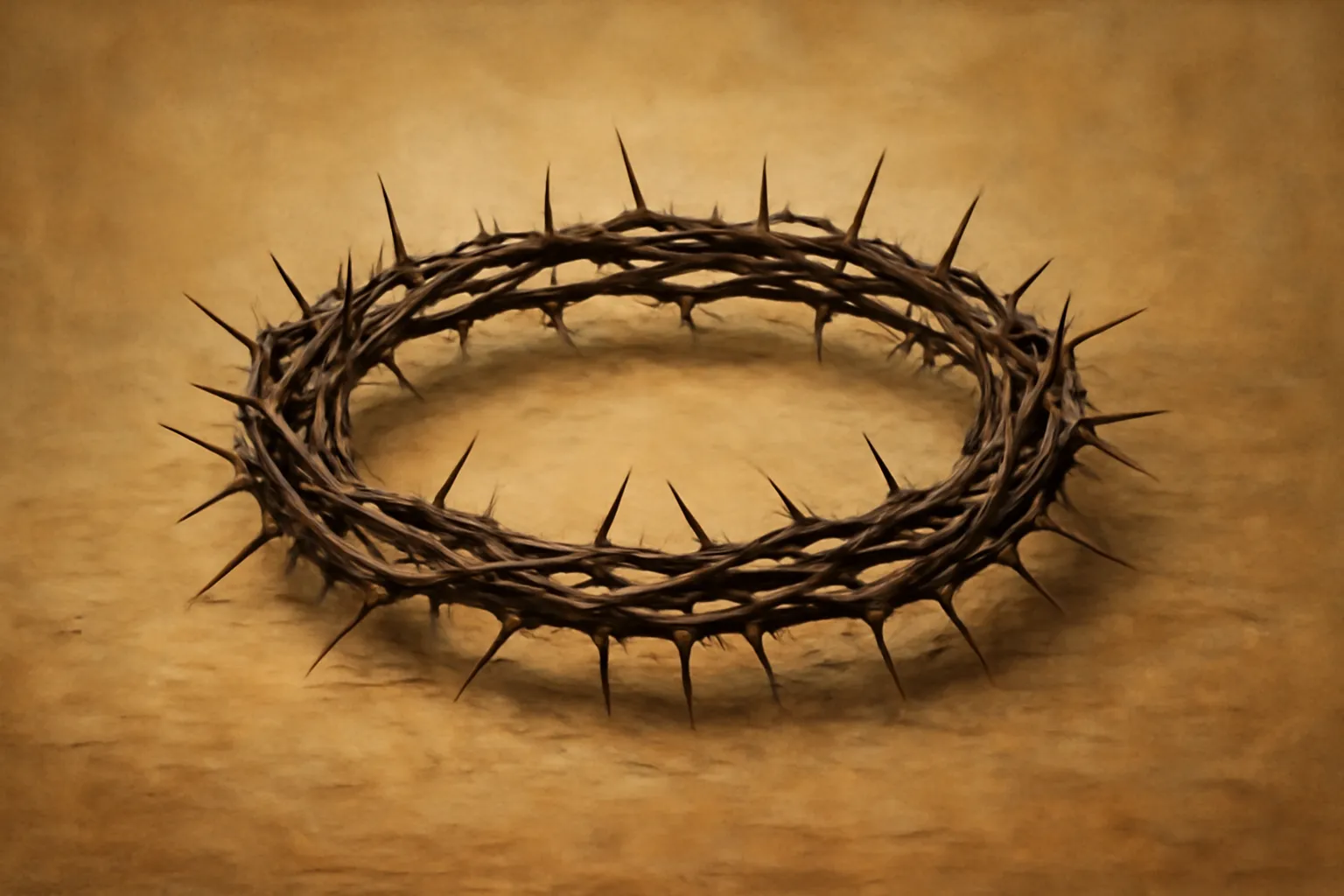
The phrase Jesuscrown of thorns evokes a powerful image inside Christian memory: a symbol of suffering borne by the central figure of the faith, and a paradoxical emblem of sovereignty wrapped in humiliation. The story of the thorny circlet placed upon Jesus’ head is not only a narrative moment in the Passion narratives but a symbol that has shaped art, liturgy, devotion, and ethical reflection for nearly two millennia. In this article, we explore the crown of thorns from its biblical roots, its historical manifestations as a relic, its multifaceted meanings in theology, and its enduring presence in culture and personal piety. We will use variations of the phrase to trace the semantic breadth of this emblem—from the thorn-crowned Jesus to the Christ’s thorny circlet, and from the Gospel accounts to contemporary reflections.
The image of a thorn crown placed on Jesus is first and foremost a biblical one. In the canonical Gospels, the event is described not as a mere embellishment of the narrative but as a deliberate act by the authorities and by soldiers who mocked the figure they presumed to be a pretender to kingship. The accounts in the Gospels of Matthew, Mark, and John describe how, after Jesus was condemned by the Sanhedrin, a crown fashioned from thorny branches was pressed onto his head, a reed was placed in his hand, and he was clothed in a purple robe to accompany the mock homage of “king.” This sequence culminates in the declaration that he is the King of the Jews, while the gaze of the crowd and the soldiers frame him in irony and pain.
The phrase “crown of thorns” also appears across early Christian art and literature as a symbol of the paradox between humility and sovereignty. The very idea that a symbol of political authority—reeds, robe, and scepter—would be replaced by thorns highlights a deliberate inversion: the one who is believed to rule over creation is crowned with prickly branches rather than precious metals. In this sense, the thorn crown becomes a sign of the suffering servant who enters into human vulnerability while bearing a mission of salvation.
The gospel narratives
The biblical core of the thorn crown appears most clearly in the Passion narratives. In Matthew 27:29, the soldiers fashion a crown of thorns, place it on Jesus’ head, and mock him as they cry, “Hail, King of the Jews!” In Mark 15:17, a similar scene unfolds with the crown of thorns pressed onto his head, an emblem of contempt framed as a joke about kingship. In John 19:2-3, the soldiers wove a wreath of thorns and placed it on him, adding, “Hail, King of Israel!” as they struck him with a reed. Taken together, these passages situate the thorn crown at the intersection of derision, sovereignty, and sacrificial mission.
It is important to note that the exact plant type of the thorn crown has been a topic of speculation among scholars and tradition alike. Ancient sources do not specify the species of the plant, and later medieval and modern debates have proposed possibilities such as the Christ’s thorn jujube (Ziziphus spina-christi) or other thorn-bearing shrubs native to the Mediterranean region. The precise botanical identity, however, is secondary to the symbol it carried: a veil of pain that insisted on the reality of Jesus’ Passion and the durable emblem of humility before divine purpose.
Beyond the biblical text, Christian tradition has long linked the thorn crown to tangible relics and sacred locations. One of the most enduring strands of this history concerns a relic known as the Crown of Thorns. In medieval Europe, it was associated with the Parisian royal chapel and the royal treasury, and for centuries it was kept in prominent church buildings as an object of devotion and pilgrimage. A widely circulated belief holds that a version of the crown—whether a single fragment or a composite relic—was housed in Sainte-Chapelle in Paris after being acquired by King Louis IX in the 13th century; later, it became part of the royal and ecclesial treasuries, and its veneration extended to the broader Catholic world.
The reality of relics is complex and layered. There are multiple relics that claim a connection to the original thorny circlet, and the trajectory from the biblical scene to the medieval reliquary is not a straightforward chain of custody. Historians emphasize both the devotion surrounding relics and the many commemorations that shaped Christian piety: the crown’s imagery informed liturgical calendars, inspired devotional practices, and served as a focal point for the contemplation of suffering, redemptive love, and human frailty.
Historical reception and debates
In the centuries that followed, the thorn crown underwent a reception that included theological interpretation, artistic representation, and political symbolism. The crown came to symbolize not merely a physical object but a set of ideas: the paradox of a sovereign who conquers not by force but by service, the intimate connection between power and sacrifice, and the invitation to the faithful to consider the depth of Christ’s voluntary suffering on behalf of humanity. Scholarly discussions have also engaged with questions about the material culture of relics, how such artifacts travelled, and how communities used them to shape their own identities—whether in submersion into contemplative prayer or public acts of compassion.
Biblical significance and interpretive frameworks
The thorn crown is not a mere curiosity of the Passion narrative; it functions as a vivid symbol within Christian theology. Read within the broader arc of the Gospels, the thorn crown becomes a lens through which to understand Jesus’ mission, the nature of suffering, and the meaning of divine kingship as understood in Christian faith.
Prophecy, fulfillment, and the paradox of kingship
The thorn crown is often contextualized in relation to Old Testament expectations of a royal figure who reigns with justice and mercy. Yet the New Testament presents a radical redefinition: the King is also the Servant who bears pain for others. The juxtaposition of suffering and glory invites readers to see Jesus as both the Messiah and the one who redeems through weakness. The thorn crown is a tactile reminder that divine sovereignty is not equated with political power or ornamental display, but with the capacity to endure, to forgive, and to reconcile.
Symbolism of pain, humility, and salvation
The circular form of a crown evokes rulership, but the character of the crown, made from prickly stems, points to affliction and endurance. For believers, the thorn crown communicates several intertwined themes: humility before God’s will, solidarity with human suffering, and the atoning work that Christian theology associates with the Passion. It is also a visual catechism about perception: seeing power through the lens of vulnerability challenges common assumptions about authority and glory.
Exegetical and devotional uses
In biblical exegesis and devotional practice, the thorn crown is a focal point for meditation during Holy Week, especially on Good Friday. Many readers approach the thorn crown as a sign not only of historical event but of ongoing spiritual meaning: how individuals inhabit vulnerability, how communities bear one another’s burdens, and how the divine events of the Passion inform present ethical commitments—especially toward the vulnerable and marginalized.
Across art, liturgy, and personal devotion, the thorn crown has appeared in countless forms. From medieval panel paintings to modern cinema, the image of a circlet of prickly branches atop a crowned head has served as a potent symbol of suffering intertwined with kingship. It has also functioned as a didactic tool: a way to instruct the faithful about the paradox of the crucified Christ who is a source of life.
Artistic representations
In Christian iconography, the thorn crown is frequently shown in scenes of the Passion, sometimes juxtaposed with the purple robe and the reed—each element representing a facet of mock sovereignty. Pain and compassion appear side by side: the artist’s brush or sculptor’s chisel may stress the physical agony of the crown’s prickly weight, while also highlighting the spiritual gravity of the moment. In many depictions, the crown becomes a lens through which audiences contemplate the depths of Christ’s love and humanity’s need for redemption.
Liturgy and devotional practices
The thorn crown also surfaces in liturgical settings—especially during Holy Week and the Passion narrative retellings. Some churches incorporate a small replica of a thorn crown into the Stations of the Cross, inviting worshippers to reflect on each stage of Jesus’ journey toward the cross. In many devotional traditions, meditations on the thorn crown accompany prayers for healing, mercy, and forgiveness. The symbol also appears in music, poetry, and sermons as a shorthand for the mystery of suffering yoked to love.
Relics and veneration in churches
Beyond the visual arts, the thorn crown—whether in symbolic form or as a relic—has shaped the architecture and treasury practices of many churches. A thorn relic collection, for example, may be displayed during certain liturgical seasons, prompting faithful to contemplate sacrifice and divine mercy. The reverence shown toward such objects reflects a long-standing belief that sacred artifacts can connect believers with the events of the Gospel and with the witness of early Christian communities.
Cultural impact, relics, and the life of faith
The influence of the thorn crown extends beyond strictly theological circles. It has left a mark on museums, cathedrals, and public memory. The debate about relic authenticity, provenance, and care reflects broader questions about how communities relate to sacred artifacts. Even when historical certainty is elusive, the thorn crown persists as a powerful symbol that can animate charitable action, ethical reflection, and interfaith dialogue around suffering, power, and mercy.
The idea that a fragment of the original thorn crown could voyage through centuries to be venerated by believers is a compelling narrative about continuity and sacred time. The veneration of thorn relics has been a common feature of medieval piety and continued in various forms into the modern era. For many, the thorn crown is less about the object’s exact materiality and more about what it represents: Jesus’ endurance, the invitation to share in others’ burdens, and the promise of redemption.
Public devotion and interfaith reflection
In contemporary life, the thorn crown invites not only Christians but seekers of moral insight to reflect on the nature of power and vulnerability. For some, it raises questions about how societies wield authority, how they treat the vulnerable, and how communities reconcile strength with compassion. In interfaith contexts, the thorn crown can serve as a bridge for conversations about sacrifice, mercy, and the sacred value of human life.
Modern perspectives: devotion, scholarship, and ethical reflection
In modern times, scholars, theologians, and lay readers continue to engage with the image of the thorn crown in diverse ways. Some emphasize its historical and textual foundations, while others explore its role in contemporary moral discourse. What remains striking across these diverse perspectives is that the thorn crown engages questions about suffering, community responsibility, and the possibility of a hopeful future that emerges through acts of compassion and justice—epitomized in the narrative of the Passion and the related symbols that have grown around it.
Ethical readings of the thorn crown
A number of modern commentators read the thorn crown as a reminder to address social injustice, to listen to marginalized voices, and to resist forms of domination that rely on violence. The image encourages a stance of solidarity with those who bear burdens—whether physical, emotional, or systemic. In this sense, the thorn crown becomes a summons to action: to stand with the vulnerable, to pursue peace, and to foster communities where mercy governs over mere enforcement of power.
The thorn crown’s symbolism also resonates in ecumenical conversations, where its meanings can bridge differing Christian traditions by focusing on shared themes—suffering, humility, and redemption. In interfaith contexts, the emphasis on the sacred value of human life and the ethical imperative to alleviate suffering can be a common ground for dialogue about compassion and justice across faith lines.
Frequently asked questions about Jesus’ thorn crown
What is the thorn crown? A symbolic headpiece described in the Passion narratives, made from prickly branches, placed on Jesus’ head by his captors as a mock sign of kingship and suffering.
Does the Gospel explicitly name the plant? No. The exact botanical species is not specified in the canonical texts, and scholars propose several possibilities based on regional flora of the time.
Were relics of the thorn crown real? Christian tradition holds that thorn relics existed and were revered in various locations, notably in medieval Paris, with multiple reliquaries claiming connection to the original crown.
What is the theological meaning? The thorn crown invites reflection on the paradox of divine sovereignty expressed through vulnerability, suffering, and self-giving love—ultimately pointing readers to the redemptive dimensions of the Passion.
How is it used in worship today? In many communities, the thorn crown appears in art, in meditative devotions during Holy Week, and in parish liturgies that encourage contemplation of sacrifice, mercy, and ethical action.
enduring resonances of the thorn crown
The Jesus crown of thorns remains one of the most enduring and multifaceted symbols in Christian memory. Its power lies in the way it communicates a single moment—an act of mockery that becomes a paradoxical emblem of love, sovereignty, and salvation. From the Gospel accounts to devotion, from relics to art, the thorn crown invites believers to consider what it means for power to be exercised through service, for glory to be found in vulnerability, and for humanity to participate in the divine drama of reconciliation. Whether one approaches it as a historical anecdote, a theological symbol, or a source of personal meditation, the thorn crown continues to challenge, comfort, and compel readers toward greater empathy, justice, and hope.