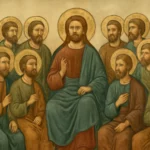
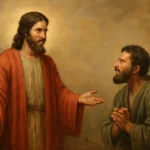
In the Gospel of Matthew, the climactic verses often titled the Great Commission appear as a culmination of the risen Jesus’ ministry with his closest followers. The passage, commonly known as Matthew 28:18-20, unfolds after the discovery of the empty tomb and the initial appearances of the risen Christ. The setting is not a private moment in an upper room but a public commissioning that moves the movement of Jesus beyond Jerusalem into the world. This makes the verses foundational for Christian mission and discipleship, guiding how communities understand their calling, authority, and ongoing presence of Christ with them.
From the perspective of literary design, Matthew 28:18-20 commentary frequently emphasizes a bridge between Christ’s death and resurrection and the church’s global mandate. The language signals a shift: Jesus asserts universal sovereignty, entrusts a mission to his followers, and promises sustained presence. A careful reader notices three core components that recur across many commentaries on Matthew 28:18-20: (1) Jesus’ authoritative commission, (2) the call to make disciples of all nations, and (3) the triune baptism and teaching that accompany this discipleship.
The Core Command: Make Disciples
The central verb in the passage is “make disciples”, rendered in Greek as mathēteusate, an imperative that directs the audience to actively form followers of Jesus. In the broader discussion of Matthew 28:18-20 commentary, this verb is often highlighted as the mission’s seed: it is not merely about converting individuals in a one-off moment but about nurturing a lifelong process of discipleship. The phrase implies a relational apprenticeship—students who learn to live under Jesus’ lordship, who observe his ways, and who participate in a shared life of following.
Important nuances emerge when we unpack what it means to be a “disciple.” Commentators typically identify several interlocking features:
Intentional movement from passivity to active engagement with Jesus’ teaching.
Comprehensive formation—not only belief but behavior, worship, ethics, and mission orientation.
Cross-cultural scope—the commission targets “all nations,” signaling outward expansion beyond a single locale or culture.
Community identity—discipleship occurs within the community of followers rather than as a solitary enterprise.
In Matthew 28:18-20 commentary, the phrase “make disciples” becomes a verb that shapes priorities for preaching, teaching, baptism, and ongoing instruction. It is helpful to see this command as the umbrella under which the subsequent actions—baptism and teaching—operate. Some scholars stress the sociocultural dimension: to disciple is to bring someone into the shared life, worship, and mission of the church, not merely to certify a doctrinal assent.
Authority and Sovereignty: “All Authority in Heaven and on Earth Has Been Given to Me”
A defining claim in Matthew 28:18-20 commentary is Jesus’ declaration of universal authority. The statement “All authority in heaven and on earth has been given to me” functions as the theological backbone of the Great Commission. From this perspective, the mission is not a human project with divine blessing appended; it is a divine-mandated program that proceeds from the risen Lord’s sovereign status.
Several interpretive angles frequently appear in discussions of this phrase:
The claim of universal sovereignty grounds the marching orders for the church; the authority of Christ authorizes action across space and time.
The scope of heaven and earth signals cosmic dimensions—moral, spiritual, and political realms alike are under Christ’s jurisdiction.
Authority precedes and enables obedience; the content of mission flows from the truth Jesus embodies and embodies in his person.
In Matthew 28:18-20 commentary, this authority also intersects with the Trinity in the final section, reinforcing a robust christological and theological frame for mission. The assertion of Jesus’ authority invites trust and obedience, inviting disciples to participate in a mission that is anchored in the person and work of Christ rather than in human ingenuity.
The Trinitarian Formula: Baptism in the Name of the Father, and of the Son, and of the Holy Spirit
A distinctive feature of Matthew 28:19 is the baptismal formula: “baptizing them in the name of the Father and of the Son and of the Holy Spirit”. This formulation has been the subject of rich theological reflection and practical discussion in matthew 28 18 20 commentary across church history.
Several key interpretive threads emerge:
The singular “name” (not “names”) points to the authority and reality that all three persons share, reflecting a confession of the triune God rather than a mere list of titles.
Baptism here is not a casual ritual but a consecrated entry into the fellowship of the Triune God, signifying identification with Jesus’ life, death, and resurrection.
The formula has liturgical and missional implications: baptism marks entry into the people of God and serves as a public confession of trust in the triune God.
In the broader dialogue of Matthew 28:18-20 commentary, this baptismal language is often contrasted with other baptismal formulas found in early Christian writings, inviting readers to reflect on how these early formulations shaped church practice. The triune baptism becomes a unifying touchstone for doctrinal integrity and liturgical continuity across diverse Christian communities.
Baptism and Discipleship: Entry, Identity, and Commitment
The sequence in Matthew 28:18-20 places baptism immediately after “going” and before “teaching.” This progression highlights baptism as the entry rite into the discipleship path. In many matthew 28 18 20 commentary discussions, baptism is viewed as more than a one-time act; it is a public, formative act that embodies a believer’s association with Christ and a church’s life.
Important themes associated with baptism in this context include:
Identification with the Triune God—Father, Son, and Holy Spirit.
Initiation into the church—the visible community that follows Jesus.
Participation in a shared mission—baptism is the first public step into a life of discipleship and service.
For modern readers, the baptismal aspect of the Great Commission is often discussed in relation to church practice and ecclesial identity. Some traditions emphasize infant baptism, others believer’s baptism; in either case, the underlying principle remains: baptism is a public, doctrinally charged sign of belonging to God’s people and of embarking on a lifelong apprenticeship under Jesus’ lordship.
Teaching and Obedience: The Content of Discipleship
The third vital component in the Great Commission is the command to teach them to observe all that I have commanded you. Here the word translated as “teach” (didássēte) is not merely cognitive instruction; it carries the sense of instruction that forms behavior—learning to observe, obey, and embody Jesus’ teachings in daily life.
In Matthew 28:18-20 commentary, several facets of this educative mandate are emphasized:
Content integrity—the curriculum comprises all that Jesus commanded, not a selective or truncated subset.
Holistic obedience—teaching involves habits, attitudes, and actions that reflect the reign of God in daily living.
Formation within community—discipleship happens in and through the church’s life, not in isolation.
The phrase “to observe all that I have commanded you” invites a long arc of formation: from basic doctrinal understanding to mature ethical living, from liturgical practices to mercy and justice, from personal piety to societal impact. Modern readers encounter this as both a guardrail against religious faddishness and a clarion call to comprehensive discipleship in every sphere of life.
The Enduring Presence: “I Am with You Always, to the End of the Age”
The final promise in Matthew 28:20—“I am with you always, to the end of the age”—holds a critical place in commentary on Matthew 28-20. It reframes mission not as a lonely task for human enterprise but as a shared journey under Christ’s abiding presence.
Divine accompaniment guarantees the viability of the mission.
The promise is not time-limited to a first-century audience but is enduring, spanning the entire era until Christ’s return.
Presence is experiential—Jesus accompanies his people in teaching, baptism, and witness across cultures and generations.
In practical terms, this assurance encourages perseverance in mission during trials, delays, and cultural challenges. It also fosters a hopeful note in church life: success isn’t measured solely by numerical growth but by faithful presence and faithful obedience, grounded in Christ’s ongoing companionship.
Variants, Textual Considerations, and How They Matter
Biblical scholars frequently engage with textual variants and how they influence interpretation of Matthew 28:18-20. While the core sense remains constant across most manuscripts, small variants invite careful exegesis.
Minor wording differences in the baptismal formula do not typically alter the doctrinal thrust of the Trinitarian baptism, but they can shape liturgical practice and ecumenical dialogue.
Some manuscripts emphasize the plenitude of Jesus’ authority in a way that foregrounds royal imagery and kingship language, which can enrich discussions on sovereignty and mission.
Textual notes often discuss the presence of a possible marginal addition or different punctuation that can influence how readers parse the sequence of actions (go, baptize, teach) and the timing of obedience.
In considering these textual nuances, Matthew 28:18-20 commentary tends to highlight the overarching continuity: Jesus’ authority, the mission to make disciples, the baptismal confession of the Triune God, and the ongoing teaching that roots disciples in a lifelong pattern of obedience.
Historical and Theological Interpretations Through the Ages
Throughout church history, Matthew 28:18-20 has shaped both doctrine and practice. Early church fathers and theologians read the Great Commission as a program that integrates evangelism, baptism, and instruction within the life of the Church. Augustine, Chrysostom, and Origen, among others, emphasized the continuity between Christ’s resurrection, ascension, and the mission of the church, drawing out implications for ecclesiology, missionary work, and catechesis.
In the Reformation era, reformers emphasized the authority of Christ and the centrality of Scripture in mission. The Great Commission was framed not only as a mandate to evangelize but as a call to reform discipleship—rooted in faith, nourished by baptism, and sustained by sound teaching of Jesus’ commandments. In contemporary theology, scholars often connect the Great Commission to missiology, urban mission, and cross-cultural engagement, arguing that the church’s vitality is measured by its fidelity to Jesus’ charge to make disciples among all peoples.
Cross-References: How Matthew’s Great Commission Compares with Other Gospels
A useful aspect of studying Matthew 28:18-20 commentary is to compare it with parallel passages in Luke, Mark, and Acts. For instance, Luke 24:46-49 adds a contextual frame about repentance and the Spirit’s empowerment for witness in Jerusalem, Judea, Samaria, and to the ends of the earth. Acts 1:8 picks up the momentum, describing the Spirit-empowered mission that unfolds after the Ascension. These cross-references help readers see the same mission from complementary angles: proclamation, empowerment, and expansion.
While Matthew’s Great Commission foregrounds a formal commission with an explicit baptismal formula, other Gospels offer breadth: Mark highlights the authority of Jesus and the signs that accompany the proclamation; Luke emphasizes proclamation and the Spirit’s role; Acts narrates the church’s expansion in real time. Taken together, these witnesses form a robust picture of what it means to be sent as witnesses of Christ to the ends of the earth.
Practical Applications for Individuals and Local Churches
Translating the Great Commission into everyday life involves concrete steps that individuals and congregations can take. The following applications are frequently underscored in commentary on Matthew 28:18-20:
Cultivate personal discipleship—commit to daily practices of prayer, Scripture study, and obedience that align with Jesus’ teachings.
Engage in mission—participate in evangelism and service that reflect the gospel’s good news across diverse communities and cultures.
Practice baptism as entry—rehearse baptism as a community rite that publicly identifies individuals with Christ and the church, while providing catechetical support for new believers.
Teach with integrity—build a discipleship pathway that moves people from initial belief to mature obedience; emphasize both knowledge and lived practice.
Foster cross-cultural partnerships—recognize the nations in the mission; partner with churches and missionaries to reach peoples who have not yet heard the gospel.
Lean into presence—offer assurance of Christ’s ongoing presence, especially when the mission feels daunting or when cultural barriers seem insurmountable.
A modular catechetical program that covers core doctrines, ethics, and ministry skills.
A baptismal preparation track for candidates that explains the meaning of baptism and integrates them into the church family.
A mission partnerships plan that identifies local and international opportunities for evangelism and service.
Common Misunderstandings and Clarifications
Even well-meaning readers can stumble over certain aspects of Matthew 28:18-20 in ways that distort or oversimplify the text. Here are some frequent misunderstandings accompanied by clarifications:
“Go implies only travel.” In the Matthew 28 context, “go” is best understood as a principle of mission that can be expressed through both cross-cultural travel and daily life in one’s own locale.
“Make disciples” equals merely winning converts. Discipleship entails ongoing formation, teaching, accountability, and shared life within a faith community.
“In the name of the Father, Son, and Holy Spirit” should be read as an ecclesial formula rather than a mere liturgical catchphrase; it anchors baptism in a confession of the Triune God and in the life of the church.
The Commission ends with baptism. While baptism is central, the command to teach “to observe all that I have commanded you” indicates that discipleship continues beyond the act itself into daily living and obedience.
The end of the age signals an ongoing mission across generations, not a finalized moment; the Church remains called to participate in God’s unfolding plan until Christ returns.
Theological Reflections on Mission, Discipleship, and Transformation
Beyond the historical details, the Great Commission invites deep theological reflection on how God works in the world through witnesses who embody the gospel. In many matthew 28 18 20 commentary traditions, mission is not a public-relations campaign but a theological act of loyalty to Jesus as Lord, coupled with a radical invitation to participate in God’s redemptive work among all peoples.
The kingdom-oriented frame—disciple-making as participation in God’s reign in the present age.
The sanctifying power of the Spirit that enables believers to live in obedience to Jesus’ commands.
The universal accessibility of the gospel—transculturally, across languages and cultures, in every nation.
In contemporary Christian ethics, the Great Commission is often paired with the faithful exercise of social responsibility, justice, and mercy. Some scholars argue that the mission of Jesus encompasses not only personal salvation but the transformation of societies through truth-telling, service, and love. When read within the larger arc of Scripture, Matthew 28:18-20 becomes a blueprint for a holistic missional life—one that honors Christ, serves neighbors, and embodies the gospel in tangible ways.
Closing Reflections: Keeping the Great Commission Central
The enduring significance of Matthew 28:18-20 in the life of faith communities is its clear articulation of purpose: Jesus’ sovereignty, a mission to all nations, and a life shaped by baptism and teaching within the framework of the Triune God. As readers and practitioners engage with Matthew 28:18-20 commentary, they encounter a charge that is as timeless as it is practical. The Commission remains a living invitation to participate in the ongoing story of God’s redemption—a story that continues through the church, through generations, and through every local gathering that seeks to love God and neighbor as Jesus taught.
For individuals exploring faith, studying Matthew 28:18-20 offers a robust starting point for understanding what it means to follow Jesus in a world of diverse cultures and pressing needs. For congregations, it provides a unifying mission statement that can shape worship, education, outreach, and global partnerships. And for theologians and pastors, it invites ongoing dialogue about how best to articulate and embody the Great Commission in changing contexts while staying faithful to the core content of Jesus’ teaching.