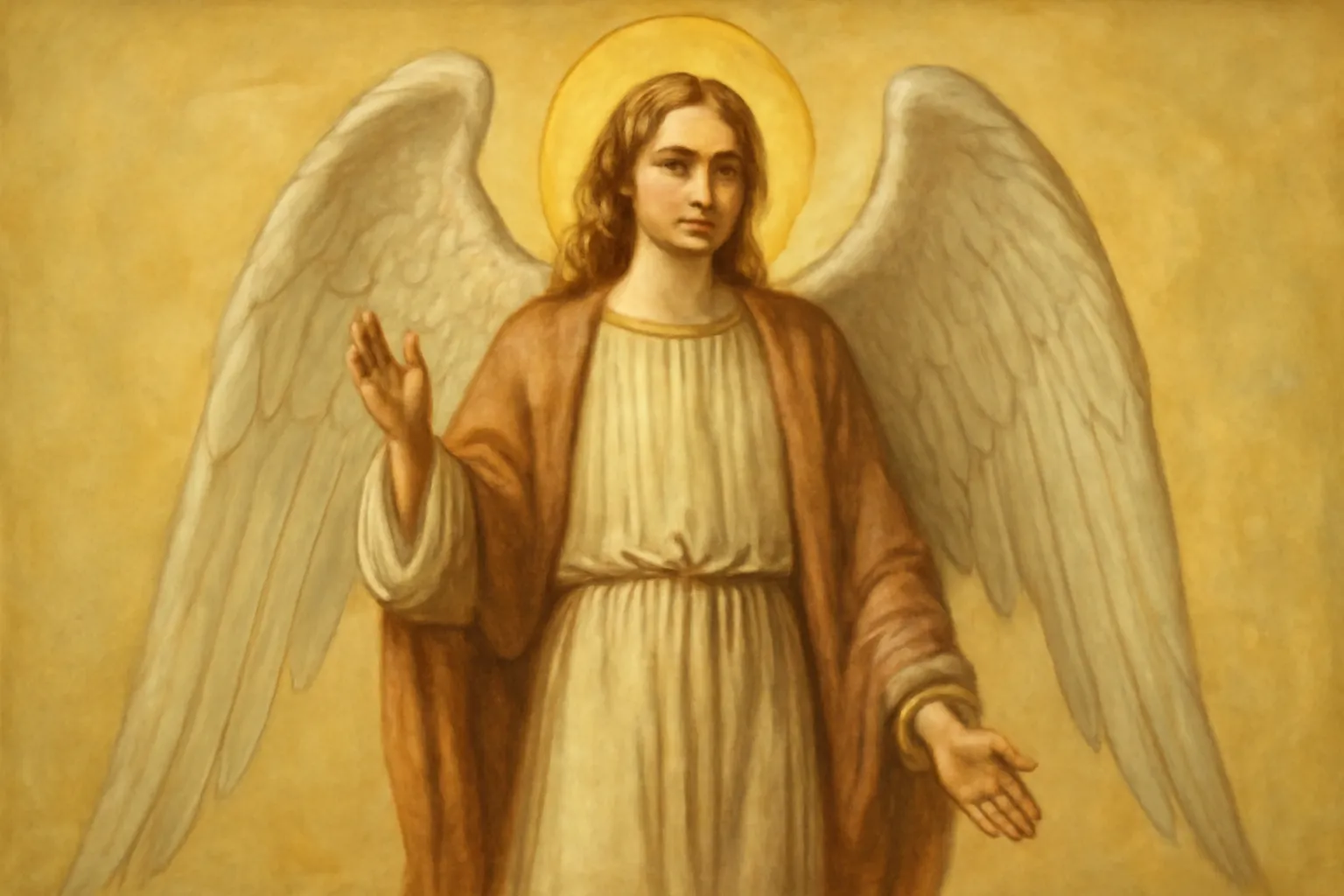
In the pages of Scripture, angels are portrayed as distinct, personal beings created by God to carry out divine purposes. They are not gods themselves, nor are they simply forces of nature; they are personal agents who act in obedience to the Creator. The Bible uses a range of terms and images to describe these beings, from plain descriptors like messenger (the literal meaning of the Greek aggelos) to more symbolic presentations such as living creatures with wheels, wings, and eyes. This breadth reflects the many roles angels fulfill: to deliver messages, to protect God’s people, to execute judgment, and to worship in heaven’s throne room.
This guide gathers the main biblical descriptions of angels, highlights representative types, and surveys how these beings appear in both Old and New Testament text. While some terms are well defined in Scripture, others are shaped by tradition and exegesis. The goal is to offer a clear map of biblical angelology that helps readers recognize the diverse forms and functions angels exhibit in Scripture.
What the Bible Means by “Angel”
The root meaning of angel in Scripture is messenger. Angles are not the same as God, nor are they the same as humans who have died. They are creatures who inhabit the spiritual realm, yet they are able to interact with humans when God calls them to do so. The biblical portrayal emphasizes several recurring features:
Created beings who serve the living God.
Spiritual and sometimes visible, capable of appearing in human form or in radiant, otherworldly appearances.
Ranged roles from messengers to guardians to warriors and worshipers.
Ministers of God’s plan who assist in accomplishing divine purposes without autonomy apart from God’s will.
The biblical data invites us to approach angels with reverence and caution: they are servants of the One True God, not objects of fascination in their own right. When they convey messages, they do so in a way that points beyond themselves to God, underscoring the theological truth that all glory belongs to the Creator.
Scripture presents several recognizable categories or motifs for angels. While not every category is explicitly named with a formal hierarchy in every text, these descriptions capture the best-known forms of angelic beings as they appear in Scripture.
Cherubim
Cherubim are among the most ancient and widely described angelic beings in Scripture. They symbolize God’s holiness, kingship, and the guarding of sacred spaces.
In Genesis 3, cherubim guard the entrance to the Garden of Eden after humanity’s fall, bearing a flaming sword that turns in every direction.
In Exodus and Ezekiel, they appear with multiple wings and a complex, animal-like set of features. Ezekiel’s vision describes them as four living creatures with faces of a man, a lion, an ox, and an eagle, accompanying the divine throne and moving in concert with heavenly wheels.
In Revelation, the cherubim-like imagery surfaces in the broader symbolism of the throne room, underscoring the universal sovereignty of God.
The image of the cherubim is often less about a single personal name and more about symbolic meaning: protecting holiness, guarding divine presence, and representing the dynamic and multifaceted character of God’s rule.
Seraphim
Seraphim appear primarily in Isaiah’s prophetic vision. They serve around God’s throne and proclaim His holiness.
In Isaiah 6, seraphim are described as having six wings—two covering their faces, two covering their feet, and two for flying.
They repeatedly cry out, “Holy, holy, holy is the Lord of hosts; the whole earth is full of his glory.”
The seraphim’s emphasis on holiness points readers to the character of God as utterly pure, to be revered, worshiped, and obeyed. Their intoxicating praise is not the end in itself but a liturgical echo of the reason angels exist: to glorify and serve the holiness of God.
Ophanim and Thrones
The Ophanim (often translated as “wheels”) and other heavenly beings connected to a thronelike framework appear in the prophetic and apocalyptic literature. Ezekiel’s vision of a divine chariot involves “a wheel within a wheel” that moves with remarkable coordination, covered with eyes and accompanied by living creatures.
The wheels’ imagery communicates omnidirectional awareness and dynamic mobility in heaven’s governance.
Thrones and related beings symbolize the hierarchical order of heaven and the authority of God’s rule over all creation.
Archangels and Other Named Angels
The Bible mentions a few angels by role and name, though not all are described with the same hierarchical language.
Michael, identified as an archangel in Jude 1:9, serves as a guardian and leader in heavenly warfare and as a protector of God’s people in certain historical contexts.
Gabriel is portrayed as a messenger who appears to Daniel and to Mary in the Gospel narratives, delivering important announcements and insights. Although not explicitly called an archangel in the canonical text, Gabriel is often treated as a high-ranking figure in Christian tradition.
Raphael appears in the deuterocanonical Book of Tobit, where he functions as a guide and healer in a human journey. While this book is accepted in Catholic and some Orthodox canons, it is not part of the Hebrew Bible or most Protestant canons.
These named angels highlight a key biblical pattern: even where not every angel is described in detail, God assigns specific individuals to particular tasks that advance His plans in the world.
Appearances and Symbolism: How Angels Look and Act
The Bible uses both literal and symbolic language to convey the presence and power of angels. Some appearances are strikingly otherworldly, while others are described in ordinary terms when the angels interact with people in crisis or mission.
Human-like forms: On many occasions, angels appear as ordinary humans—inviting, comforting, delivering messages, or guiding travelers.
Radiance and glory: In other encounters, angels are surrounded by light, shimmering appearances, and sometimes fear-inducing splendor that signals a holy visitation.
Wings: Wings appear in several accounts (seraphim, cherubim, and some visions). The wings emphasize swiftness and readiness to act in obedience to God.
Symbols: Unusual features such as wheels, multiple faces, or composite creatures carry symbolic messages about divine sovereignty, knowledge, and watchfulness.
A pervasive pattern in biblical descriptions is a deep awareness of fear and awe in human witnesses. The first instinct of many recipients is fear, followed by a calm invitation to hear a message from the Lord. The angel’s role, then, is not primarily to entertain but to disclose divine truth and empower the recipient to respond in faith and obedience.
Angles operate in a spectrum of offices, and the New Testament expands the language beyond “messenger” to include various ministerial roles. Here are some prominent functions:
Messengers: Perhaps the most recognizable role. Angels announce God’s will, reveal future events, and interpret visions (e.g., Gabriel’s announcements to Mary and Zechariah).
Protectors and guides: Scripture and tradition describe angels as guardians who protect individuals or communities and provide direction in dangerous circumstances.
Warfare and judgment: Angels execute God’s judgments, wage spiritual warfare against evil powers, and restrain or release spiritual forces according to God’s plan (e.g., Michael’s leadership in battle and the casting out of demons in Revelation).
Worshippers and attendants of God: In heaven, angels participate in continuous praise, proclaiming God’s holiness and glory.
The sum of these functions is that angels are mission-critical to the unfolding of God’s redemptive purposes in history. They accompany God’s people, assist in divine judgments, and continually point to the ultimate sovereignty of God in all things.
Angels in the New Testament: Continuity and Transformation
The New Testament extends the angelic presence into the life of Christ and the early church, reinforcing a consistent pattern of divine support and revelation.
The Nativity: An angelic chorus appears to announce the birth of Jesus to shepherds, proclaiming good news and directing their response to go and see the infant (Luke 2:8-14).
Jesus’ teaching and ministry: Angels attend Jesus in Gethsemane, minister to Him after His temptation, and witness His resurrection, underscoring their role in validating and supporting the Son’s mission (Luke 22:43; Matthew 4:11; Matthew 28:2-7; Mark 16:5-7).
Ministering to believers: Hebrews 1:14 describes angels as “ministering spirits” sent to serve those who will inherit salvation, highlighting their supportive function for God’s people.
Spiritual warfare: The book of Revelation features angelic agents participating in cosmic battles and conveying divine judgments, reminding readers that the spiritual realm remains active in history.
The New Testament thus confirms a continuity of angelic activity while situating it within the fuller revelation of Jesus Christ and the church’s mission. Angels remain worshipers of God and instruments of His will, pointing beyond themselves to the glory of God in Christ.
Named Angels and Their Roles: Gabriel, Michael, and Others
The canonical biblical record names a few angels explicitly and assigns them distinctive functions.
Gabriel as a messenger: In Daniel, Gabriel explains visions that concern future empires and God’s plan for His people. In the Gospels, Gabriel appears to Mary (Luke 1) to announce the Incarnation and to Zechariah (Luke 1) to foretell the birth of John the Baptist. These appearances emphasize the trustworthiness of God’s revelation and the significance of the coming Messiah.
Michael as a warrior and protector: Jude 1:9 speaks of Michael as “the archangel” who contends with the devil over Moses’ body, and Daniel 10–12 presents Michael as a prince who protects and assists God’s people in times of trouble.
Raphael in the deuterocanonical Book of Tobit: He serves as a guide, healer, and helper on a perilous journey, illustrating a more pastoral and practical side of angelic ministry. While not present in all canons, Raphael’s portrayal broadens the sense in which angels guide human beings through difficult circumstances.
While the Bible includes these named figures, the overall teaching remains that angels are servants of God who execute His will, often on behalf of His people. They are not fundamentally about personal celebrity or autonomous authority; their primary function is obedience to God and service to His people.
Common Misconceptions About Angels (and What Scripture Actually Teaches)
The Bible provides a robust but careful framework for understanding angels. Some popular beliefs fall outside the biblical text or risk mischaracterizing the nature of angels.
Angels as entertainment or as interchangeable helpers: Scripture emphasizes obedience to God over personal convenience. Angels serve God’s purposes and may help people in extraordinary ways, but they are not to be worshiped or treated as a personal genie.
Angels as human souls who become angels after death: The biblical record distinguishes between human beings and angels. Humans become saints in Christ through resurrection and transformation, not by becoming angels.
A fixed, exhaustive hierarchy: The Bible hints at order and rank in heaven (e.g., archangels, seraphim, cherubim, thrones), but it does not furnish a complete, detailed map of a universal angelic bureaucracy. The focus remains on God’s supremacy and the purpose of angels within His plan.
Angels as magical beings who override human freedom: The biblical portrayal often shows angels inviting faith and decision, not coercing it. They point toward God and encourage trust in His promises rather than substituting human responsibility with a miracle.
A careful reading of Scripture invites readers to respond to angels with reverence, humility, and worship directed to God alone. The angels’ presence invites us to consider God’s majesty, His holiness, and His redemptive purposes in history.
Imagery and Practical Takeaways from Biblical Descriptions
The vivid imagery surrounding angels serves not only to amaze but also to teach. Here are some practical takeaways that readers can carry into meditation, study, and worship:
God is sovereign: Angels appear in contexts where divine sovereignty is foregrounded—whether with the kingdom’s destiny, prophetic visions, or the church’s mission.
Holiness matters: Seraphim and cherubim repeatedly emphasize the holiness of God, inviting believers to reflect on purity, righteousness, and alignment with God’s will.
God uses means beyond the ordinary: Angels signal that God can act outside the constraints of human perception, while still inviting human faith and action within His plans.
Worship remains due to God: Angels themselves point worship toward the Creator, underscoring the ultimate object of devotion and praise in the universe.
In personal study or sermon preparation, these motifs can illuminate passages where angels appear and help believers reflect on how God is at work through both visible and unseen means.
Biblical angels present a diverse and compelling portrait of the spiritual realm. They are not monolithic beings but a spectrum of beings designed to carry out God’s purposes in creation. From the awe-inspiring, throne-ward visions of seraphim and cherubim to the intimate, mission-focused appearances of Gabriel and Michael, angels illuminate the character and plan of God. They remind readers that heaven is actively involved in history, that God’s purposes prevail, and that faith involves trust, obedience, and reverence.
Whether you are exploring the earliest chapters of Genesis or the final apocalyptic visions of Revelation, the biblical description of angels points toward a single, overarching goal: to render glory to God and to serve His people through His wise and powerful sovereignty. In the end, the most important takeaway is that angels exist to magnify the greatness of God and to assist human beings as God leads history toward its culmination in Christ.