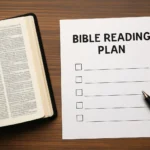
A Bible with Reading Plan is more than a stack of pages or a collection of verses. It is a guided path that helps readers engage with Scripture in a consistent, manageable way. The goal of a reading plan is not merely to check off chapters, but to cultivate regular exposure to the whole counsel of God—wisdom, history, poetry, prophecy, and the life and teachings of Jesus. When you adopt a simple daily reading schedule, you create a rhythm that can deepen understanding, sharpen memory, and invite reflection.
In this article, you will find a practical approach to a Bible reading plan that emphasizes simplicity, accessibility, and spiritual formation. Whether you are new to daily Scripture or returning after a season away, a Bible reading plan designed around a daily routine can be a reliable companion on your faith journey.
What is a Bible with Reading Plan?
A bible with reading plan combines two essential elements: the text of Scripture and a structured method for reading it. The plan provides guidance on what to read each day, while the Bible provides the authoritative content. This pairing helps readers avoid aimless browsing and reduces the cognitive load of deciding where to start.
In practical terms, a reading plan for the Bible may suggest a balance among the Old Testament, Psalms or Proverbs, and the New Testament. It might incorporate different reading modes—historical narrative, poetry, prophetic writing, gospels, and letters—to offer a broad and balanced exposure to the biblical storyline. A scripture reading plan that emphasizes repetition, variation, and reflection can support lasting habits rather than sporadic bursts of reading.
Why a Simple Daily Reading Schedule?
A simple daily reading schedule lowers barriers to regular engagement with Scripture. It does not require long stretches of time or specialized study skills. Instead, it focuses on steady, intentional daily practice that fits into ordinary days—morning coffee, commute, lunch break, or evening wind-down.
Consistency builds familiarity with biblical genres, key themes, and recurring motifs.
Retention improves when you read small portions consistently rather than large blocks irregularly.
Accessibility remains high when the plan uses short readings and clear divisions (such as one Old Testament passage, one New Testament passage, and a Psalm or Proverb).
Flexibility accommodates busy days: skip ahead, repeat a day, or adjust the order without losing the overall path.
Practice invites reflection, prayer, and journaling as natural complements to the reading itself.
This approach is not about rushing through a checklist; it is about making space for Scripture to shape thinking, character, and daily living. A Daily reading schedule can become a spiritual discipline that integrates with work, family, and church life.
The Core Elements of the Bible Reading Plan
A robust and practical bible with reading plan typically includes several core elements that keep it accessible while still meaningful. Here are the essential parts you’ll find in a simple daily reading plan:
Daily time commitment: around 15–20 minutes per day is common for a sustainable routine.
Three-part daily structure: a portion from the Old Testament, a portion from the New Testament, and a reading from Psalms or Proverbs or a short wisdom section.
Clear sequencing: a rotating schedule that ensures breadth over weeks and months (historical narratives, poetry, gospels, and letters).
Optional journaling: space to capture insights, prayers, or applications from the reading.
Flex days: built-in grace periods for catching up or re-reading a favorite passage without guilt.
Guidance for pace: suggestions for starting small, staying steady, and gradually deepening comprehension over time.
The combination of these elements in a reading plan for the Bible helps new readers establish a habit and seasoned readers maintain momentum. The plan is flexible enough to adapt to seasonal rhythms—school terms, holidays, or ministry commitments—while remaining faithful to the overarching goal: encounter with God through Scripture.
What a simple daily schedule looks like in practice
In practice, a daily reading schedule is a compact, repeatable routine. Here is a practical template you can adopt immediately:
Old Testament portion: 1–2 chapters (or a designated chunk, such as a story arc or a set of laws).
Psalms or Proverbs: 1 short reading (one psalm or a handful of verses in Proverbs).
New Testament portion: 1 chapter (often a gospel or a letter).
Together, these readings fit comfortably into a short sitting period and expose you to a wide range of biblical genres over the course of a week.
The Simple Daily Reading Schedule
Below is a practical, ready-to-use plan designed to be easy to start, yet adaptable for months of steady reading. The framework emphasizes variety, a gentle pace, and opportunities for reflection.
Plan at a glance:
Reading time: approximately 15–20 minutes per day.
Daily structure: 1 Old Testament passage, 1 Psalm or Proverb, 1 New Testament passage.
Weekly cadence: focus on progress through the Bible while allowing space for contemplation.
Catch-up and reflection days are built in, reducing pressure on busy days.
Here is a sample week to illustrate how the daily schedule can flow. The exact chapters can vary if you prefer a chronological order or a thematic grouping, but the rhythm remains the same.
Sample Week: A practical first week
Day 1 — OT: Genesis 1–2; Psalm 1; NT: Matthew 1
Day 2 — OT: Genesis 3–4; Psalm 2; NT: Matthew 2
Day 3 — OT: Genesis 5–6; Psalm 3; NT: Matthew 3
Day 4 — OT: Genesis 7–8; Psalm 4; NT: Matthew 4
Day 5 — OT: Genesis 9–10; Psalm 5; NT: Matthew 5
Day 6 — OT: Exodus 1–2; Psalm 6; NT: Mark 1
Day 7 — OT: Exodus 3–4; Psalm 7; NT: Mark 2
As you gain familiarity, you can continue in this pattern, using a rotating set of readings. Some prefer a chronological Bible reading plan, others a thematic plan, and many enjoy a simple, steady cycle like the one above.
Printable and digital options
A bible reading plan can be implemented with a printed bookmark, a notebook, or a digital tool. Some readers prefer a physical copy to mark progress, underline verses, and jot reflections. Others opt for a calendar app, a note-taking app, or a dedicated scripture reading plan feature in a Bible app. The key is consistency, not format.
Adjusting the plan to fit you
Your schedule will hardly be one-size-fits-all. Consider these practical adjustments:
Shorter days on busy seasons: read just the NT portion and a Psalm.
Longer focus days during weekends: add a second OT or NT reading if you have extra time.
Alternate pacing: some weeks you read three brief passages; other weeks you read longer chapters.
Family or group version: coordinate readings with a family calendar or small group plan to discuss weekly insights.
The important thing is stability in your rhythm. A simple daily reading schedule that you can maintain weekly will bear more fruit than a perfect plan you abandon after a few days.
Ways to Use and Customize the Plan
A Bible with Reading Plan can be customized to fit different goals, settings, and spiritual preferences. Here are several practical directions you might consider:
Spiritual formation: prioritize passages on faith, prayer, and character formation; include reflective questions after each reading.
Biblical literacy: aim to touch every genre and book over time, keeping a map of major themes.
Pastoral or teaching preparation: select passages relevant to sermons or classes and summarize key points for later use.
Customization by time
7-day cycle: repeat with fresh selections each week for a light, steady pace.
30-day module: complete a compact month with slightly longer pieces, then reset with a fresh module.
Yearly arc: plan through the Bible in a year by spacing readings evenly across days, with built-in rest days.
Group and family options
Family plan: assign roles (reader, note-taker, prayer leader) for each day or week to engage all ages.
Small group study: pair the daily reading with a weekly discussion, questions, and shared applications.
Accessibility considerations
Language simplicity: choose translations with clear, accessible language for new readers.
Format variety: use large-print editions or audio readings for different learning preferences.
Variations of the Bible with Reading Plan
To broaden the semantic breadth of the topic, here are several variations of the Bible with Reading Plan that emphasize different goals, structures, and theological emphases. Each variation remains a reading plan for the Bible, but the path through Scripture shifts to meet particular aims.
A chronological reading plan arranges passages in the order of historical events and canonical composition. This approach helps readers see the unfolding of biblical history and the development of biblical themes as they occur in time. Expect to move from the Creation narrative to historical books, poetry, prophecy, and the life of Jesus in a sequence that mirrors historical events as much as possible.
New Testament in 90 Days
If you want to dive deeply into the life of Christ, the teachings of the apostles, and the message of the early church, a New Testament in 90 days plan can be a refreshing sprint. In this variation, you read multiple NT portions each day, with a lighter Old Testament component to maintain balance. It is ideal for short focused periods of intensive study or for use after completing a longer year-long plan.
Psalms and Wisdom First
Some readers prefer to begin with the poetic and wisdom literature: Psalms and Proverbs, followed by the rest of the Old Testament and the New Testament. A Psalms-first plan emphasizes prayer, worship, and practical wisdom, and it can be a soothing start to each day.
Old Testament Survey Plan
An Old Testament survey plan moves through narrative, law, poetry, and prophecy with a high-level view. It is useful for building a framework of the Torah, historical books, poetry and wisdom, and the major prophetic books before turning to the New Testament.
Thematic Reading Plan
A thematic reading plan centers on particular themes such as faith, hope, mercy, kingship, or covenant. You rotate passages from different books that address the same theme, which can deepen connections and illuminate how Scripture speaks across genres.
Practical Tips for Sustaining a Bible Reading Plan
A bible with reading plan only becomes life-giving when it translates into daily practice. Here are practical steps to sustain momentum and avoid common pitfalls.
Set a fixed time each day. Consistency matters more than the exact time of day.
Prepare a dedicated reading space free from distractions.
Keep a simple journal to capture one insight, one question, and one prayer idea.
Choose a translation you trust and understand to minimize friction and maximize engagement.
Use a gentle approach to catch-ups: if you miss a day, read the missed passages rather than skipping ahead.
Reflection transforms reading into spiritual formation. After each daily reading, consider these micro-questions:
What stands out? Identify a verse, image, or story that catches your attention.
What does it reveal about God? Note attributes, promises, or actions of God that emerge.
What does it require of me? Consider a concrete step or posture of heart.
What prayer arises? Write a short prayer that corresponds to your reading.
Tools, Resources, and Support for Your Plan
Implementing a simple daily reading schedule is easier with the right tools. Here are some recommendations to support your journey.
Printed guides: compact booklets or bookmarks with the day-by-day plan.
Bible apps: many apps offer built-in reading plans, reminders, and reading progress tracking.
Journals or prayer books: use a dedicated notebook to capture notes, prayers, or insights.
Study aids: a concordance, a map atlas, or a simple commentary to illuminate difficult passages.
The point is to choose accessible formats that you will actually use. A plan that fits your lifestyle is more valuable than a theoretically perfect plan that never gets opened.
Starting small and growing
If you are starting from scratch, begin with a two-week micro-commitment. For example, read the daily OT portion, one Psalm, and one NT verse for 14 days. If you complete that stretch, extend to a month, then to a full season. Gradual growth helps you build confidence and avoid burnout.
Frequently Asked Questions
Is a daily Bible reading plan right for everyone?
A Bible reading plan can be adapted to most people, but the key aspect is consistency. If shorter, simpler routines help you start, begin there and gradually expand. If you have limited time, you can scale down the readings to fit your daily window while preserving the core structure.
Missing days is common. The right response is not guilt but a quick return. A catch-up strategy can involve rereading the missed passages in a shorter session or moving forward with the plan and recapturing the thread later in the week.
How long should a typical reading session last?
Most readers find 15–20 minutes to be a comfortable daily duration. If you have more time on weekends, you can extend some sessions to deepen reflection or do parallel study.
What translations do you recommend?
Choose a translation that reads clearly to you. Common choices include accessible modern English translations and study-friendly versions. The best translation is the one you will read faithfully day after day.
A bible with reading plan that emphasizes a simple daily schedule can transform how you experience Scripture. By balancing Old Testament passages, Proverbs or Psalms, and New Testament readings, you encounter the full arc of the biblical story while keeping the pace gentle and sustainable. The goal is not to rush through the Bible but to let the Bible become a steady companion in daily life.
Whether you adopt a chronological reading plan, a New Testament in 90 days sprint, a Psalms and Wisdom First rhythm, or a thematic approach, the important thing is to begin, to persist, and to invite God to speak through the text. A well-designed reading plan for the Bible can become a compass for daily living, a source of wisdom for decision-making, and a quiet space for prayer and worship.