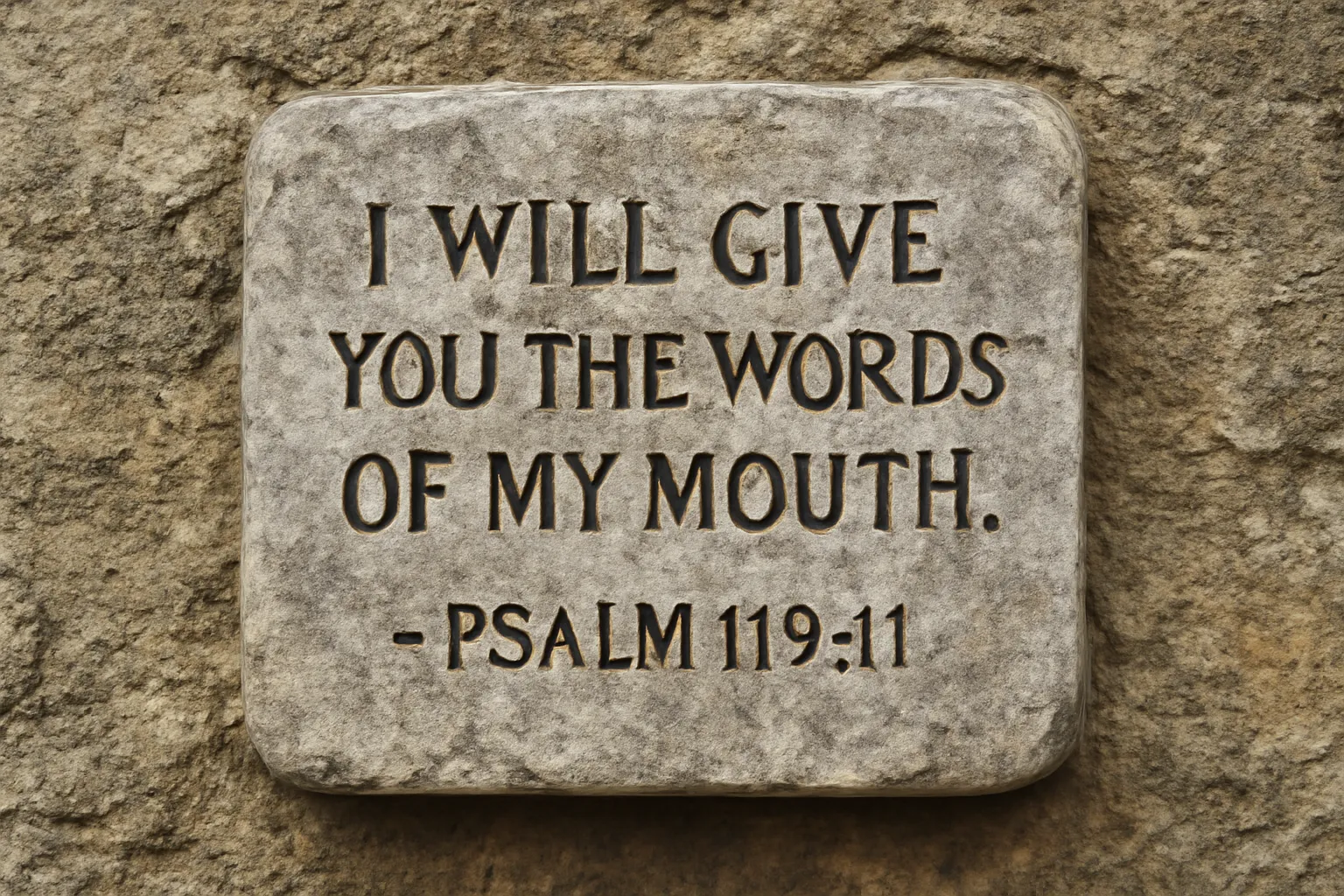
Bible Verse Stone: Discover Key Scriptures About Stones in the Bible invites readers to explore how a simple material—stone—becomes a powerful channel for truth, faith, and imagery across Scripture. Stones appear in narrative, in poetry, and in prophetic and apostolic writings, carrying meanings that range from tangible reliability to spiritual transformation. This article surveys the many facets of stone in Scripture, highlighting how biblical writers used stones to teach about God, faith, community, and salvation.
What does a stone signify in biblical context?
In the Bible, stones function on multiple planes. They can be literal objects—rock, boulders, or monuments—but they are also potent symbols. Some stones stand for stability and providence, others for judgment or remembrance, and still others for messianic hope. The plain material becomes a metaphor for divine action: a rock can shelter, a cornerstone can anchor a structure, and a memorial stone can preserve memory across generations. Reading the biblical text with attention to these layers reveals how people in ancient times understood God’s presence in the ordinary world, and how that understanding translates into Christian faith today.
Variations of the phrase bible verse stone appear in discussions of stone imagery in Scripture, stone symbolism, and stones in Scripture. The term “stone” may be used to speak about a literal rock in nature, a crafted monument, or a theological metaphor. In all cases, the underlying idea is that God’s truth often comes to us through what is solid, enduring, and reliable—qualities we associate with stones and rock alike. The following sections unpack the most common motifs and then connect them to personal and communal life for readers today.
Rocks as shelter, strength, and divine provision
In the Old Testament, rock imagery frequently conveys protection and sustenance. When God is called a “rock,” the term evokes safety, steadiness, and unshakable faithfulness. For example, in the event of the wilderness wanderings, God is described as the rock who provides water, food, and shelter in times of need. This motif invites readers to trust in God’s steadfastness even when circumstances appear barren or perilous.
Memorial stones: stones of remembrance
Another prominent use of the stone motif is as a tangible reminder of a divine encounter. The practice of setting up stones as memorials appears in several biblical narratives. A famous example is found in the book of Joshua, where the people set up a pile of twelve stones from the Jordan River as a memorial stone to remind future generations of God’s miracle. These stones serve as public testimony that God moved in history and that faith without remembrance might fade with memory.
Joshua 4 – The memorial stones symbolize continuity between generations and the faithfulness of God who led the people across the Jordan.
Genesis 28 – Jacob sets up a stone pillar after encountering God in a dream, transforming a simple rock into a sacred marker of divine encounter.
Cornerstone and building imagery: foundational significance
The cornerstone motif is central in both Old and New Testaments. In the ancient Near East, the cornerstone determined how a building would stand. In Scripture, the cornerstone of God’s design becomes a metaphor for Jesus, the church’s foundation, and the measure of faith. Psalm 118:22 famously declares, “The stone the builders rejected has become the cornerstone,” which Jesus later cites as fulfilled in his person and mission. The cornerstone motif thus weaves together expectation, rejection, and ultimate vindication in God’s redemptive plan.
Stones and judgment: stones as witnesses or instruments of discipline
Stones in prophetic and historical writing can also symbolize judgment or the consequences of turning away from God. When stones are used in ritual punishment or in the construction of altars to witness covenant faithfulness, they remind readers that moral responsibility is anchored in concrete, observable actions before God. The stone motif here fosters a sober awareness: our choices create a lasting legacy, much like a stone laid in place for a monument or a wall that will endure time and memory.
In the New Testament, stone imagery expands to express Christological realities. Jesus is portrayed as both the living stone and the cornerstone of the church. In 1 Peter 2:4-8, believers are described as “living stones” who are being built into a spiritual house, with Christ as the chief cornerstone. This establishes three powerful ideas: Jesus is the source of life (the living stone), he is the structural center of the community (the cornerstone), and believers find identity and belonging within that divine architecture. The idea of the church as a building made of living stones invites Christians to view themselves in relation to one another and to God, not as isolated individuals but as a community bound by faith in the cornerstone.
1 Peter 2:4-5 – Coming to him as to a living stone, chosen and precious… you also, like living stones, are being built into a spiritual house.
Matthew 16:18 – “You are Peter, and on this rock I will build my church.” This statement has been read in various ways, but it consistently centers on a foundational role for Christ in the life of faith and community.
The rock that followed Israel and related Christological interpretation
The apostle Paul explicitly connects the rock that accompanied the Israelites in the wilderness with Christ. In 1 Corinthians 10:4, he writes that they drank from “the spiritual rock that accompanied them,” and that rock was Christ. This identification deepens the symbolism: Christ is the source of spiritual sustenance and life, just as the literal rock supplied water in the desert. The stone motif in this passage invites readers to see the salvation narrative as a continuous thread linking the Old and New Testaments, with Christ as the ongoing fulfillment of ancient expectations.
Stones in early Christian worship and proclamation
Other New Testament passages use stone language to describe the response to Jesus. The paradigm of the rejected stone echoes across the Gospels and Early Church writings. Psalm 118:22’s imagery, quoted in the Gospel of Matthew and echoed in Acts, becomes a lens through which the church recognizes Jesus as the Messiah’s unexpected magnitude and, at times, displeasure of those who oppose him. The idea that the “builders” (the religious authorities or leaders of their day) rejected the stone who would become indispensable to God’s plan invites readers to evaluate how they respond to God’s working in their own time.
Faith anchored in the tangible: trust in the Rock
One of the foremost lessons from the biblical stone tradition is that faith is not a vague abstraction but a trust anchored in a reliable foundation. The recurring use of rock imagery invites believers to ground their lives in God’s steadfast character, rather than shifting sands of circumstance. When storms come, the metaphorical rock provides shelter, courage, and constancy. This is not mere sentiment but a call to a disciplined life of worship, obedience, and dependence on God’s promises.
Memorial stones serve as sermons that outlast generations. By recalling God’s power—water from the rock, victory over enemies, or deliverance through peril—believers strengthen faith in the present and pass on a treasury of faith to their children. The practice of setting up memorial stones, whether as physical markers or as liturgical remembrance, becomes a discipline that sustains trust across time and communities.
Christ as foundation: building a life and a church
The cornerstone doctrine has practical implications for Christian life and ministry. If Jesus is the foundation, then individuals and communities must align their beliefs, priorities, and practices with his teaching and example. Churches are called to be built on the solid truth of the gospel, with the living stones (believers) being coordinated to form a spiritually healthy, ethically coherent, and missionally vibrant community.
Witness through endurance: stones in times of trial
Stones are enduring in part because they withstand weather and time. The biblical use of stones to symbolize witness and endurance encourages believers to cultivate steadfast faith and patient perseverance. The presence of a “stone” in a difficult season can become a symbol of perseverance, transformation, and even hope for renewed life after hardship.
Poetic stones: prophetic and psalmic texture
In prophetic literature and the Psalms, stones often carry lyrical weight, serving as objects of praise or indictment. The diction around stone in poetry can emphasize steadfastness, judgment, or divine revelation, depending on the context. The poetic stone imagery enriches the reader’s sense of how God speaks through the created world and how human beings respond in worship and obedience.
Narrative stones: concrete episodes with lasting meaning
In historical narratives, stones function as markers of turning points—moments when God acts decisively in real places and at real times. The stones of Jordan, the pillar set up by Jacob, or the rock-split experiences are not merely old memories but anchors for faith that connect people today with the past faithful acts of God.
Theological stones: doctrinal implications
The broad category of stone symbolism also shapes core doctrinal themes: creation, covenant, redemption, and eschatology. When the Bible speaks about Christ as the cornerstone or the living stone, it is articulating a worldview in which salvation and church life depend on a divine, unshakable foundation. The stone motif helps believers articulate how God’s action in history converges with their present faith and hope for the future.
What is the significance of the cornerstone in biblical prophecy?
The cornerstone is not merely a structural component; it is a theological symbol. It represents the prima materia of God’s plan for salvation and the central reference point for the community’s life. In Jewish and Christian readings alike, the cornerstone stands as a test: do people align with the standard established by God, or do they seek to fashion their own foundation?
Are stones used only in a positive sense, or do they carry negative connotations too?
Stones are polyvalent signs. Some narratives depict stones as witnesses to God’s faithfulness; others as instruments of judgment when people turn from God. The stone motif therefore invites discernment: what do the stones in a given passage say about God, about human responsibility, and about the relationships between people and the divine? The moral texture of stone imagery varies with context, reminding readers that symbols acquire their meaning by how they are used within the story of God’s redemptive work.
How does the idea of living stones affect Christian community today?
1 Peter 2:5 speaks of believers as “living stones” being built into a spiritual house. This metaphor emphasizes communal identity, mutual care, and shared mission. If each believer is a stone in a larger edifice, then individual faith must be shaped by fellowship, service, and discipleship. The image invites churches to cultivate environments where people contribute their unique gifts to the community’s integrity and growth, all while remaining anchored to Christ as the Cornerstone.
The biblical stone tradition invites readers to see the visible world as a vehicle for understanding God’s invisible work. Stones are both ordinary and extraordinary: ordinary in their physical presence, extraordinary in their capacity to convey divine truth. By exploring bible verse stone imagery—ranging from rocks of refuge to memorial stones, from the cornerstone to the living stones of the church—readers gain a richer appreciation for how Scripture uses tangible signs to communicate eternal realities.
For personal devotion, one practical approach is to identify a stone image that resonates in Scripture and reflect on how it speaks into your current life. Do you need a stronger foundation for your decisions? Is there a memorial moment you need to remember, or a moment of grace you want to celebrate? If you are part of a faith community, consider a devotional practice that honors the stones of remembrance in your church’s history—perhaps by retelling a faith story, revisiting a baptismal moment, or naming a service project after a biblical stone motif.
Genesis 28:18–22 – Jacob sets up a stone as a pillar and experiences a divine encounter, turning a simple rock into a spiritual marker.
Exodus 17:6 – God commands Moses to strike the rock, and water flows for the people, illustrating God’s provision through stone imagery.
Joshua 4 – The twelve stones from the Jordan become memorial stones for future generations to remember God’s faithfulness.
Psalm 118:22 – “The stone the builders rejected has become the cornerstone,” a motif later cited in the Gospels.
Isaiah 28:16 – The Lord lays a precious cornerstone, a symbol of secure footing for a future people.
Matthew 21:42 – Jesus quotes the Psalm 118:22 line to reveal his identity as the fulfillment of cornerstone prophecy.
1 Peter 2:4–8 – Believers are living stones built into a spiritual house, with Christ as the cornerstone.
1 Corinthians 10:4 – The rock that followed Israel was Christ, highlighting Christ’s presence in the Exodus narrative.
stone language of Scripture in daily life
Stones in the Bible are more than ancient relics; they are living voices that invite readers to trust, remember, and build. By reading stone scriptures with attention to context and imagery, you can grow in understanding of who God is, how God acts in history, and how you are invited to respond. The bible verse stone tradition remains a compelling map for spiritual formation: a map that points to Christ the Cornerstone, to a community of living stones, and to a God whose enduring presence is as unshakable as stone itself.