In Scripture, the phrase justice of God and its closely related notion God’s righteousness recur from Genesis to Revelation. Far from a dry legalism, the divine justice described in the Bible is a dynamic attribute that governs creation, judges human affairs, shapes covenants, and grounds salvation. This article surveys how the Bible presents divine justice, how it is expressed in different literary genres, and what it means for readers who live under God’s moral order.
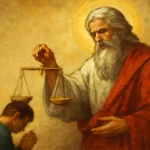
At its core, the justice of God denotes more than strict retribution; it encompasses the integrity of God’s character, the correct ordering of reality, and the faithful fulfillment of promises. In biblical terms, righteousness (often translated from Hebrew tzedeq or Greek dikaiosune) signals that God acts in a way that is right, true, and trustworthy. Judgment is not arbitrary; it is the application of God’s holy order to a broken world. The biblical writers weave together three interrelated threads: holiness (God’s separateness from sin), mercy (God’s compassion toward the repentant), and justice (God’s fair and authoritative governance of all things).
Throughout the Bible, discussions of divine justice are inseparable from other central biblical motifs: the creation order, the call to covenant faithfulness, and the anticipation of future restoration. While human justice seeks equity within human communities, the justice of God aims at the ultimate ordering of all creation according to God’s perfect wisdom. Readers encounter this justice in verdicts, promises, poems, laws, prophets’ proclamations, and the life and work of Jesus Christ in the New Testament.
Justice in the Old Testament: Covenant, Law, and Moral Order
Covenant faithfulness and the justice of the Creator
In the Hebrew Bible, justice is often described in the language of covenant: God establishes a relationship with a chosen people and requires fidelity to the terms of that covenant. When Israel adheres to the covenant, the Creator’s righteousness shines through in blessing, protection, and social equity. When the people turn away, injustice spreads—oppression, exploitation, and injustice against the vulnerable become signs that the moral order has been ruptured. The Old Testament presents God’s justice as both corrective and covenant-keeping: a just God disciplines sin and yet remains faithful to His promises.
Law and justice: The Torah presents justice as a social, moral, and divine mandate. Laws about care for the poor, fair weights, hospitality to strangers, and protection for the weak reveal a תורה (Torah) that orders society toward equity under a holy standard.
Judgment and mercy in action: Biblical justice routinely pairs judgment with mercy. When people repent and return to God, justice leads to restoration rather than final annihilation. The prophets insist that God’s justice cannot be separated from mercy and compassion for the afflicted.
Holiness as the ground of right ordering: God’s moral perfection—His holiness—is the standard by which all justice flows. Holiness ensures that divine judgments are not capricious but fit the moral universe God designed.
Justice, holiness, and the moral order in wisdom literature
Wisdom literature expands the sense of justice beyond punitive measures to the right way of living. The fear of the LORD is the starting point for wisdom, and the life ordered by wisdom aligns with the Creator’s moral design. The biblical authors emphasize that living justly is not merely a set of rules but a way of life that harmonizes with the created order. Divine justice in this tradition is attractive because it promises that the world will ultimately reflect truth, integrity, and righteousness.
Key features of divine justice in this stream include the reliability of God’s faithfulness, the steadfast love that sustains the righteous, and the certainty that human folly has consequences. Yet wisdom literature also invites readers to observe that human life is complex; the righteous may suffer, and the wicked may seem to prosper for a time. In light of this, the biblical authors teach trust in God’s overall justice, even when circumstances are mysterious.
Prophetic Voices: Judgment, Accountability, and Restoration
Righteous judgment and the call to repentance
The prophetic books stage dramatic scenes in which God addresses social injustice, religious hypocrisy, and exploitation of the vulnerable. The prophets announce that God’s justice will not overlook sin, but that mercy is available to those who heed the call to repentance. Prophetic judgments against nations are presented not as arbitrary cruelty but as part of God’s plan to restore moral order and to demonstrate the holiness of the Creator to all peoples.
In many prophetic oracles, divine justice is framed as a corrective measure designed to bring about a more perfect social and spiritual order.
Deliverance and restoration follow judgment, signaling that God’s justice also includes the renewal of people and communities, not merely the punishment of wrongdoers.
The prophets often connect justice with social concern: care for orphans and widows, honest business practices, and the protection of marginalized groups are the practical outworkings of God’s righteous rule.
From doom to hope: restoration as evidence of God’s justice
In many prophetic strands, the language of justice points toward a future where the suffering of the righteous is vindicated and the nations recognize the supremacy of the true Judge. The prophetic hope anticipates a time when divine justice will be visible in a restored creation, when peace, righteousness, and the rule of God extend to all corners of the earth. While the exact form of this future varies across books (from exile consolation to messianic promises), the core conviction remains: God will set all things right in accordance with His holy character.
New Testament Foundations: Righteousness in Christ and Justification by Faith
Imputed righteousness and the righteousness of God
The New Testament redefines how humans participate in God’s justice. Central to Christian theology is the concept of the righteousness of God made available through faith in Jesus Christ. The apostle Paul consistently teaches that human beings are made right with God not by their own works, but by receiving the gift of righteousness through faith. This means that God’s justice is not a barrier to fellowship with Him for those who trust Christ; rather, it is the ground on which believers stand in a right relationship with the holy Creator.
Justification by faith—a legal or forensic declaration that one is counted as righteous because of Christ’s work, not because of personal merit.
Imputed righteousness—the authoritative attribution of Christ’s righteousness to the believer. This is how the divine justice is satisfied in the life of the believer before God.
The Spirit’s work in believers produces real, ongoing righteousness, indicating that God’s justice is not only a past or forensic act but a living transformation.
Beyond the courtroom language of justification, the New Testament emphasizes a life oriented to divine justice through the Spirit. The ethical implications are substantial: love for neighbor, mercy toward the marginalized, honesty in speech, and a longing for justice in society all become signals that a person lives under God’s rule. The New Testament uses the language of justice to describe both God’s action for us and our calling to reflect that justice in the world.
Practical Implications: Living Under Divine Justice
Justice that transforms worship and community life
Understanding the justice of God affects how Christians worship, relate to one another, and engage with the world. If God is just, then worship should honor His holiness, reflect His mercy, and promote the welfare of the vulnerable. Communities that grasp divine justice tend to cultivate fairness in leadership, integrity in ministries, and transparency in finances. They also seek tangible justice—feeding the hungry, clothing the naked, defending the oppressed, and seeking systemic change where exploitation persists.
Corporate justice in a church or faith community includes fair sharing of resources, accountable leadership, and honest governance.
Personal ethics align with God’s standard for honesty, generosity, and respect for human dignity.
Advocacy for justice in society mirrors the biblical concern for the vulnerable and the creation’s order.
Hope in a world of brokenness
While the present age is marked by injustice and suffering, the biblical portrait of God’s justice offers hope: a future in which wrongs are righted, wounds are healed, and the good news of restoration becomes universal. Believers are invited to live in the tension between the already realized benefits of Christ’s work and the not-yet consummation of all things. In this sense, justice is both a present practice and a future expectation.
Common Questions About God’s Justice
How can a just God tolerate human wickedness? The Bible presents a God who desires repentance and offers mercy to the willing, while also upholding the moral order. The coexistence of judgment and mercy reveals the depth of God’s patience and the seriousness of sin.
What is the relationship between justice and love? God’s justice is inseparable from love. Justice expresses care for the right ordering of life and protection of the vulnerable, which flows from His character of love.
Does divine justice negate human responsibility? Not at all. Scripture presents human beings as responsible for choices that align with God’s righteous standards, while God’s justice accounts for the ultimate consequences of those choices.
How does the gospel reinterpret justice? The gospel reframes justice as grace received through faith and a life empowered by the Spirit to pursue righteousness, not merely legal conformity.
What about suffering of the righteous? The Bible acknowledges mystery in suffering, yet it points to a justice that transcends present circumstances and culminates in full vindication and restoration in Christ.
Terminology and Theological Nuances
The biblical discourse on justice uses a rich vocabulary across languages and genres. Some important terms and their emphases include:
Tzedeq / righteousness: A concept centered on right relationship with God, with others, and with the created order. It is both a virtue and a standing before God.
Mishpat / judgment or verdict: Often describes the way God administers justice in social and legal contexts, ensuring fair treatment and proper recompense.
Justification: A New Testament term for God’s declaration of righteousness over the believer, grounded in Christ’s atonement.
Sanctification: The ongoing process by which God’s people grow in practical righteousness through the Spirit.
Mercy and justice: A paired emphasis in many texts, revealing that mercy does not abolish justice but fulfills it in the context of grace.
For readers today, the doctrine of the justice of God has several practical implications. The biblical portrait calls people to trust in God’s perfect governance, to renounce exploitation and violence, and to participate in the ongoing work of establishing justice in their communities. It also grounds the Christian hope in a future where God’s righteous rule is fully established. As a result, the church is called to a double witness: proclaiming the justice of God in the gospel and modeling social justice as a reflection of God’s character.
Pastoral care and advocacy: a church that understands divine justice tends to show heightened concern for the vulnerable, the marginalized, and those harmed by oppression.
Ethical living: believers are urged to embody justice in personal choices, business practices, and civic participation.
Missional imagination: the gospel is seen not only as personal salvation but as good news that transforms social orders and institutions toward greater justice.
Key Takeaways: A Synthesis of God’s Justice in Scripture
God’s justice is anchored in His character: holiness, faithfulness, truth, and love are inseparably linked in the divine governance of the world.
Justice and mercy meet in the covenantal story: God’s actions toward humanity respond to human faith, repentance, and fidelity, resulting in restoration where possible.
Righteousness is both a status and a process: believers are declared righteous by Christ and are progressively made righteous by the Spirit.
Judgment serves the goal of restoration: divine judgment isn’t mere punishment; it is a pathway to justice that culminates in renewal and peace.
Christ’s work centers divine justice in the gospel: the cross and resurrection bring both the vindication of God’s justice and the provision of righteousness for humanity.
In sum, the justice of God in Scripture reveals a God who is utterly trustworthy, holy, and merciful. From the law given at Sinai to the cross of Calvary and the coming kingdom, the biblical witnesses insist that God’s righteousness governs history, sustains moral order, and invites human beings into a restored relationship with Him. By studying the Bible’s teaching on divine justice, readers gain not only a clearer view of God’s character but also a clearer path for living in light of His righteous rule.
For further reflection, readers may consider these questions: How does the emphasis on divine justice affect your understanding of suffering and vindication? In what ways can your faith community embody a more faithful expression of God’s justice in daily life, mercy, and social action? How does the gospel’s presentation of imputed righteousness shape your sense of identity and responsibility as a follower of Christ?