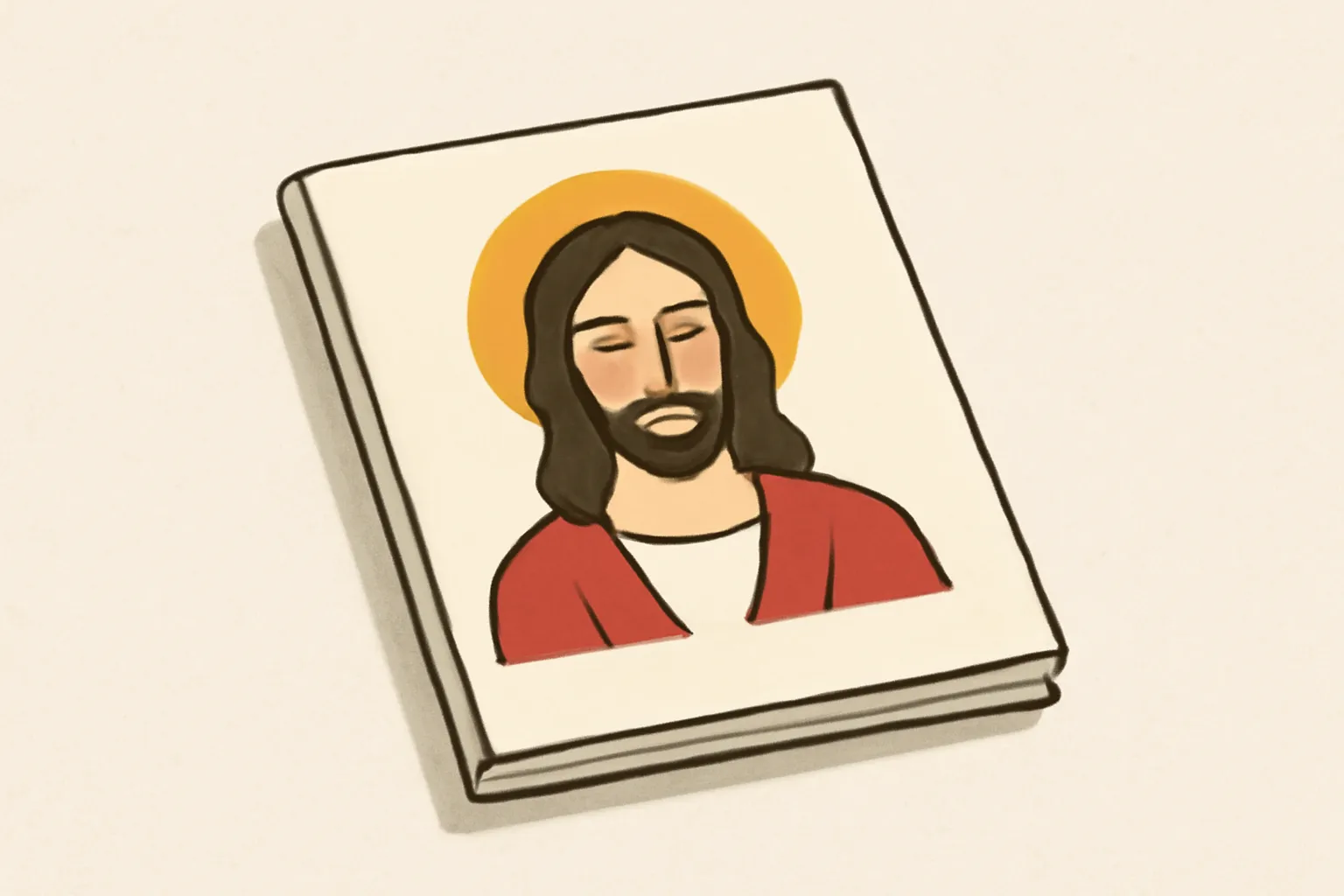
A Jesus booklet—often called a gospel pamphlet, a Christ-centered booklet, or a pamphlet about Jesus—is a compact, tangible tool designed to communicate the core message of faith in Christ. While the digital world moves fast, a well-crafted Jesus tract can reach people in moments of pause: in a hospital waiting room, on a street corner, at a campus event, or inside a church foyer. The goal is not merely to inform, but to invite readers into reflection, conversation, and, potentially, a life-changing encounter with the person of Jesus Christ.
This article provides a practical, design-focused guide to creating a powerful gospel pamphlet that communicates clearly, respects readers, and aligns with biblical truth. Whether you’re crafting a pamphlet about Jesus for outreach, a small group study, or a church-wide evangelism project, the principles below apply to a range of formats—from a compact 4-page tract to a longer 8- or 12-page booklet.
Clarifying goals and audience for a gospel pamphlet
Before you pick paper or choose a layout, define the purpose of your Jesus booklet design. Common goals include:
Introducing Jesus to someone who hasn’t heard the gospel clearly.
Clarifying the gospel in a concise, compelling way.
Encouraging discipleship and next steps after a personal encounter with Jesus.
Providing a resource for follow-up—such as a church contact, Bible study, or invitation to a worship event.
Next, consider the target audience for your booklet. Is it non-Christians exploring faith for the first time, new believers seeking foundational truths, or long-time church attenders who need a fresh approach to evangelism? Language, tone, and content should be calibrated to those readers. A gospel tract aimed at students may use different references, imagery, and questions than one intended for professionals or families.
Core content strategy for a powerful gospel pamphlet
A strong Jesus pamphlet presents a simple, coherent message. The conventional outline used by many gospel booklets focuses on the problem of sin, the person and work of Jesus, the response to the gospel, and next steps. While you’ll customize the wording to your audience, the underlying structure tends to work across cultures and contexts.
Key messages to include
The problem of sin and its consequences (separation from God, longing for meaning, accountability).
God’s love and solution in Jesus—his incarnation, life, death, resurrection, and Lordship.
Personal response to the gospel (repentance, faith, and surrender).
Assurance and next steps (biblical promises, baptism, community, Bible reading, prayer).
A gospel tract may also offer a short answer to the question, “What must I do to be saved?” while avoiding heavy doctrinal debates. Clarity and brevity are assets; complexity can be introduced in a follow-up chapter or through QR codes linking to longer resources.
The gospel outline suitable for a pamphlet format
Creation and purpose—humans are made to know God; there is a divine design for life.
The problem—sin distorts relationships with God, self, others, and creation.
Jesus as the solution—the gospel: God became human, lived a perfect life, died for sins, rose again, and offers new life.
Response—trust in Jesus, repentance, and a life oriented around him.
Next steps—find a local church, read the Bible, pray, and share the message responsibly.
Within the Jesus booklet family, you can adapt the order to fit the space and audience. Some versions begin with a personal story or a question to engage readers’ curiosity, while others open with a concise statement of the central claim of the gospel.
Design fundamentals: layout, typography, color, and imagery
Design choices can either illuminate the message or obscure it. The following principles help ensure that a Jesus pamphlet design is accessible, readable, and persuasive.
Layout and grid
Grid consistency ensures that pages feel coherent and easy to follow.
Use a clear hierarchy—title, subtitle, body text, captions—so readers can scan quickly.
Allow generous margins and whitespace to improve legibility, especially for readers with low vision.
Keep important content within the central column on each page to avoid crowding at edges when folded.
Choose a readable typeface for body text (e.g., a clean sans-serif or a friendly serif).
Limit to two or three font families per booklet: one for headlines, one for body text, and optionally a secondary for captions.
Use medium to larger font sizes for titles (e.g., 14–18px for body text on print) and slightly larger sizes for headlines.
Ensure high contrast between text and background for readability and accessibility.
Color and imagery
Use a cohesive color palette that reflects your brand or church community while remaining welcoming. Bold colors can highlight critical messages, but too many hues can be distracting.
Imagery should support the message—consider serene landscapes, symbolic icons (like a cross, dove, or open Bible), or portraits that convey hope and invitation.
Avoid visual clutter. A clean cover with a strong focal image or typographic statement often performs best for first impressions.
Branding and consistency
Maintain consistency with your church’s or ministry’s branding guidelines so the pamphlet feels like a legitimate extension of your community.
Include a recognizable logo, contact information, and a short statement that ties the pamphlet to your broader mission.
When distributing multiple formats (print, digital, social), ensure the gospel tract remains consistent across channels, even if the layout adapts to each medium.
Content structure examples you can adapt
To help you visualize, here are two common structure examples for the pamphlet about Jesus—one compact 4-page format and one more expansive 6-page version. You can tailor these outlines to your audience, language, and cultural context.
Example 1: 4-page tract outline
Cover — Engaging image and a compelling, concise promise (e.g., “Discover a new life in Jesus”).
Page 2 — The problem and the need for a solution, framed in relatable terms.
Page 3 — The gospel summary: who Jesus is, what he did, and how to respond.
Back cover — Next steps: church contact, invitation to a small group, QR code to online resources.
Tips for this format:
Keep text crisp and scannable; use short paragraphs and bold key phrases to guide readers.
Include a clear call to action—e.g., “Learn more at your local church” or “Talk to a leader after you read.”
Embed a QR code or short URL to direct readers to a longer explanation or a contact form.
Example 2: 6-page booklet outline
Front matter — Title, subtitle, a brief declaration of purpose.
Page 2–3 — A reader-friendly explanation of the problem of sin and the need for transformation.
Page 4 — The life and work of Jesus in a concise narrative, highlighting incarnation, atonement, and resurrection.
Page 5 — Personal response: what it means to believe and to trust Jesus as Lord.
Page 6 — Practical next steps: Bible reading plan, local church information, and ongoing resources.
Copywriting and tone: writing your Jesus booklet effectively
Words carry weight in a gospel pamphlet. The tone should be approachable, respectful, and hopeful. Here are guidelines to help you write with clarity and sensitivity.
Plain language and accessibility
Avoid jargon and theological terms without brief explanations. If a technical term is necessary, define it in simple terms.
Use short sentences and active voice to keep readers engaged.
Write for a broad audience—include diverse examples and inclusive language where appropriate.
Thematic anchors to emphasize
Love and compassion as the core motives of the gospel.
Hope in a tangible relationship with God through Jesus.
Transformation that begins now and continues in community.
Ethical considerations and witness
Present the gospel truth without coercion or manipulation; invite readers to respond freely.
Honor readers’ autonomy and dignity; avoid shaming or oversimplifications of complex life situations.
Provide accurate contact information and a respectful invitation to continue the conversation.
Visual elements: icons, photos, and illustrations
Images should complement the message rather than overwhelm it. Carefully chosen visuals can evoke curiosity and invite empathy.
Choosing icons and illustrations
Icons can symbolize concepts: a cross for faith, an open Bible for truth, a light for hope, or a doorway for invitation.
Illustrations should be culturally sensitive and inclusive, reflecting diverse communities without stereotyping.
Photography versus illustration
Photography can ground the message in real life and create emotional resonance, but ensure consent and model releases where appropriate.
Illustrations offer universality and brand coherence; a consistent illustration style creates a recognizable identity for your tract family.
Accessibility and readability considerations
Accessibility is essential for a gospel pamphlet to reach as wide an audience as possible. Consider:
High-contrast color schemes for legibility.
Large print options or alternative formats for readers with visual impairments.
Plain language versions alongside more formal translations to reach multilingual communities.
A layout that adapts well to both print and digital formats, including screen readers and text-only versions.
Production choices: paper, size, and print quality
The physical quality of a pamphlet about Jesus can influence readers’ first impressions and perceived credibility. Consider these production choices:
Paper size and folding options
Common formats include 4-page folded sheets (a single sheet folded into four panels) or a compact 8-page booklet.
Other options include trifold or z-fold layouts for street distribution, where quick readability is essential.
Choose a paper weight (gsm) that balances durability with cost; many outreach pamphlets use 90–120 gsm with a smooth finish.
Printing and binding considerations
Full-color printing enhances impact but increases cost; consider a two-color approach for emphasis and cost control.
Coated vs. uncoated stock affects readability and tactile experience; coated stock often enhances color, while uncoated stock feels more approachable.
Special finishes (spot varnish, foil accents) can highlight key phrases but should be used sparingly to avoid distraction.
Distribution strategies and measuring impact
A well-designed gospel tract is only as effective as its distribution and follow-up. Plan thoughtfully to maximize reach and impact.
Distribution channels
On-site outreach during worship services, community events, or street evangelism encounters.
Partnerships with local organizations, schools, or community centers that welcome thoughtful conversations about faith.
Direct mail or door-to-door outreach in neighborhoods with context-sensitive messaging.
Digital augmentation—include QR codes or short URLs to lead readers to study guides or online groups.
Use this practical checklist to ensure your Jesus booklet design is ready for production.
Have you defined the audience and the primary goal of the tract?
Is the core gospel message accurately and succinctly conveyed?
Is the layout clear, with a consistent typographic hierarchy and ample whitespace?
Are the images and icons culturally appropriate and supportive of the text?
Is the color palette cohesive and accessible (sufficient contrast, legibility for all readers)?
Have you included a practical next steps section (address, contact, QR code, social media)?
Is the printer’s proof ready, with exact page counts, fold lines, and trim marks?
Have you tested the pamphlet with a small audience group and gathered qualitative feedback?
Best practices for a durable, shareable Jesus booklet
To maximize impact and longevity, employ these practices:
Partner with a trusted printer who understands your goals and can advise on stock and finishes that balance durability with affordability.
Maintain a modular design where pages or sections can be swapped for different contexts or languages without altering the entire layout.
Provide digital equivalents or translations to extend reach beyond print and support readers who prefer online formats.
Train volunteers or staff in a respectful, non-coercive approach to discussing the pamphlet’s content with readers who want to talk.
Your journey in Jesus booklet design
Designing a gospel pamphlet is about more than aesthetics—it is a thoughtful process of translating timeless truths into a form that respects readers, invites curiosity, and points toward meaningful next steps. A well-conceived pamphlet about Jesus can become a bridge between a person’s questions and a life of encounter with Christ. By focusing on clear messaging, accessible design, practical next steps, and responsible distribution, you can create a Christ-centered booklet that endures in households, groups, and communities.
As you embark on or refine a Jesus booklet project, remember that the ultimate aim is not to produce a perfect format but to extend an invitation to know Jesus in a personal and transformative way. Whether you think of it as a Jesus tract, a gospel booklet, or a pamphlet about Jesus, the power rests in clear communication, authentic care for readers, and faithful follow-through. May your efforts bear fruit in readers’ lives, as they encounter the message of Christ—and as they discover a pathway to practical faith and community.