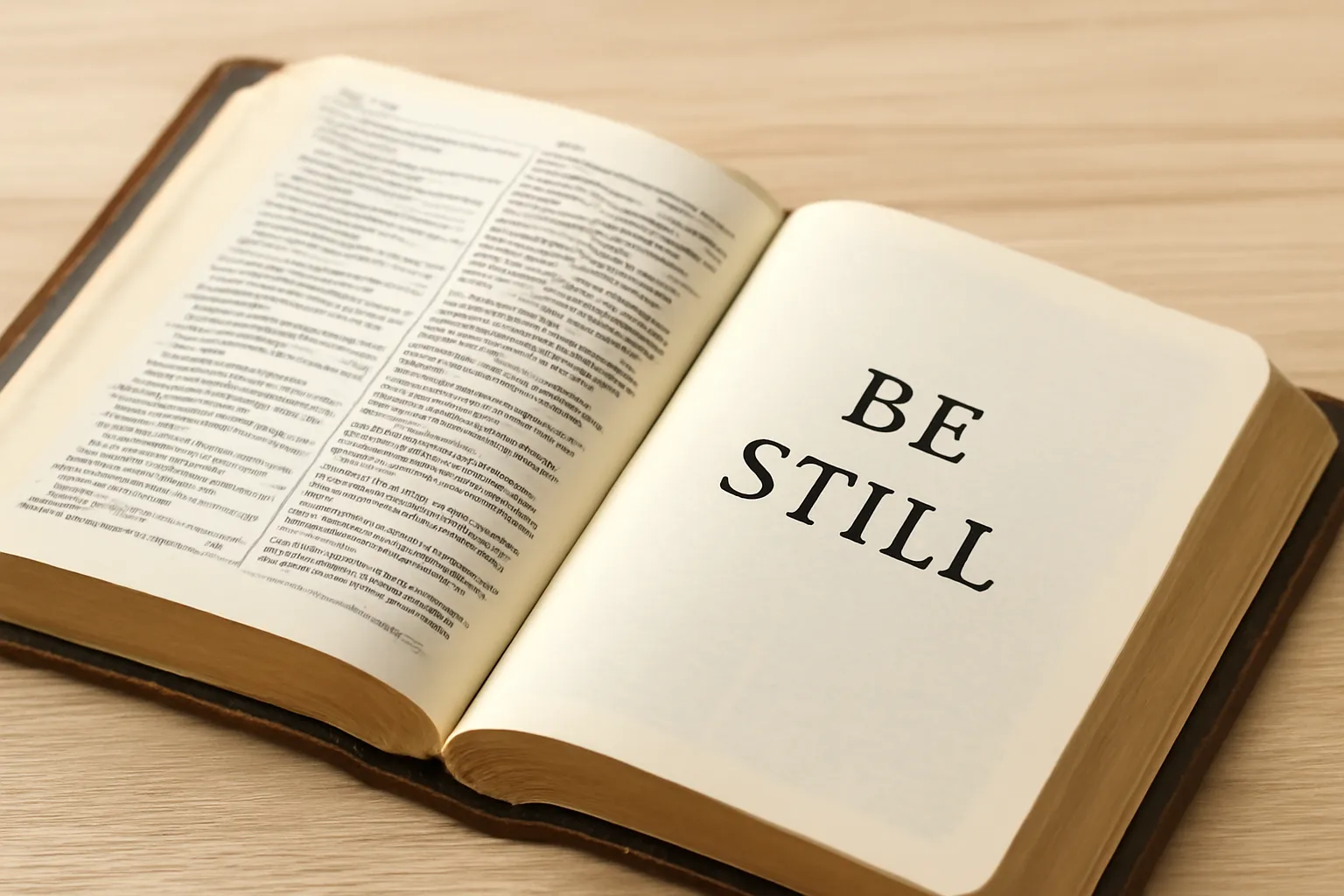
The Bible contains many short, potent moments that invite readers into a deeper awareness of God’s presence. One of the most recognizable and comforting of these moments is found in Psalm 46:10: “Be still, and know that I am God.” This compact directive—two simple clauses—has inspired countless generations to pause amid storms of worry, conflict, or fear, and to anchor themselves in the truth of God’s sovereignty. In English translations, the phrase is often presented with slight variation: “Be still, and know that I am God,” or “Be still and know that I am God.” The variations are minor in form but meaningful in impact, signaling a universal invitation to rest in God’s character.
In this article, we will explore the depth and breadth of this verse: its biblical context, its linguistic nuances, and its practical applications for life today. We will also examine related verses that use the theme of stillness or quiet trust to cultivate peace, and we will offer practical guidance for individuals and communities who seek to live out this call in a noisy world.
What does “Be still” mean?
The words “Be still” carry a multi-layered sense that invites more than a fleeting moment of quiet. In the original languages, the expression conveys:
To pause from activity or effort
To settle the mind and release anxious striving
To refrain from judgment and control, opening space for God’s action
To accept a posture of trust in God’s purposes
When the text tells us to be still, it is not a withdrawal into passivity or mere resignation. Instead, it is an intentional stance: a choice to cease manipulating outcomes, to quiet the inner noise, and to recognize that the true seat of power and wisdom belongs to God. The companion idea in this verse—“know that I am God”—answers the ache of fear with a declaration about identity and sovereignty. The emphasis shifts from the turmoil of human circumstances to the reality of God’s character and rule.
Psalm 46:10 in Context: A Psalm of Assurance
Psalm 46 stands as a powerful song about God’s protection and presence in the face of danger. The psalm moves through images of waters that roar and foam, mountains that tremble, and nations that rage—yet it climaxes with a call to stillness and trust. The overall context balances two important motifs:
God as refuge and fortress—a dependable sanctuary in times of distress
God’s sovereignty over creation and history—an assurance that God will prevail in every sphere
The imperative “Be still” is not a dismissal of reality; it is an invitation to orient one’s attention toward God’s presence and action. The second half of the verse, “I will be exalted among the nations; I will be exalted in the earth”, reinforces a broader cosmic scope: when people pause and acknowledge God, the world’s gaze shifts toward God’s glory. In practice, this means that personal peace is deeply connected to a recognition of God’s ultimate authority and faithfulness, which, in turn, shapes communal life, worship, and service.
The Psalter often uses this cadence—call, response, trust—as a framework for living. In Psalm 46:10, the call to stillness becomes a gateway to knowledge: not merely knowledge about facts, but experiential knowledge of God’s presence and character. This knowledge is transformative, producing courage, stability, and courage to act with wisdom in the world.
Variations of the Verse Across Translations
Across Bible translations, the essential idea remains the same, though phrasing varies. Exploring these variations helps us see how the thread of stillness and knowledge threads through different linguistic traditions and theological emphases.
KJV: “Be still, and know that I am God: I will be exalted among the nations, I will be exalted in the earth.”
NIV: “He says, ‘Be still, and know that I am God.’”
ESV: “Be still, and know that I am God. I will be exalted among the nations; I will be exalted in the earth.”
NLT: “Be still in the presence of the Lord, and wait patiently for him to act.”
CSB: “Be still and know that I am God—I will be exalted among the nations, I will be exalted in the earth.”
WEB/WEBBE: “Be still, and know that I am God; I will be exalted among the nations, I will be exalted in the earth.”
The slight stylistic shifts—such as “be still in the presence of the Lord” in some modern translations—highlight a related, practical dimension: stillness is not abstract silence but a posture before God, often accompanied by waiting or expectancy. The recurring theme across translations is the pairing of stillness with knowledge of God’s identity and activity. This pairing is where peace originates: knowing who God is shapes how we respond to what we face.
For readers who prefer reading with study notes, a helpful approach is to note how each translation handles the command and the outcome: stillness as a divine invitation, and knowledge of God as the fruit of that invitation. Together, they describe a life oriented around God’s presence rather than the chaos of circumstance.
Be Still in the Bible: A Broader Semantic Field
The concept of being still appears in several key biblical places, often with the twin goals of calming fear and aligning with God’s will. Two cross-references illuminate how stillness functions within the biblical narrative:
Exodus 14:14 — “The Lord will fight for you; you need only to be still.” Here, stillness accompanies the act of reliance on God’s intervention. The faithful are not commanded to manipulate outcomes; they are invited to witness God’s rescue and let the divine deliverance redefine their view of danger.
Psalm 4:8 — “In peace I will lie down and sleep, for you alone, O Lord, make me dwell in safety.” While not using the exact phrase “be still,” this verse captures a related posture: a rest that arises from trust. It demonstrates that peace and sleep are not merely physical states but spiritual outcomes of turning to God.
When we read Psalm 46:10, we can see it as part of a larger biblical rhythm: stillness as a doorway to trust, a shift from human effort to divine sovereignty, and a posture that makes room for God to act. This rhythm recurs throughout Scripture, inviting readers to cultivate inner quietness in the midst of external noise.
In a modern setting, the call to “be still” can intersect with practices such as contemplative prayer, silent Scripture meditation, and even creative disciplines that slow down the pace of life. The aim remains simple: to move from peripheral stimuli to a central focus on God.
Theological Significance: Trust, Sovereignty, and Peace
Trust as the Ground of Stillness
The command to be still is fundamentally a call to trust. Trust does not erase problems; it reframes them in light of God’s presence and character. When we choose stillness, we admit that human plans and fears are insufficient on their own, and we turn our attention to the One who sees history from beginning to end.
God’s Sovereignty and World History
The second clause, “I will be exalted among the nations, I will be exalted in the earth”, expands the horizon from individual peace to cosmic significance. God’s exaltation across nations and the earth implies that peace is not merely the absence of conflict but alignment with God’s redemptive purposes for all creation. In this sense, to be still is to participate in God’s larger project of restoration.
How Stillness Relates to Worship
Stillness in Scripture often sits beside acts of worship, prayer, and praise. When we be still before God, we create space for worship to emerge—not only through words but through posture: listening, gratitude, and humble dependence. This devotional posture nurtures a whole-life worship that spills over into relationships, work, and service.
Practical Pathways to Live Out “Be Still”
The invitation to be still is practical, not merely theoretical. Here are several concrete pathways to cultivate stillness and peace in daily life.
Begin with a pause: Set aside a few minutes each day to stop and breathe. Close your eyes, release tension, and declare a simple sentiment: God is present, today I will notice His steady faithfulness.
Breath prayers: Use short, repetitive phrases as you breathe: “Lord, sustain me.” “Be with me.” “You are God.” This rhythmic prayer helps quiet the mind and anchor you in God’s presence.
Scripture meditation: Read a portion of Psalm 46 or a related passage, then linger on the phrases that pull at your heart. Repeat a verse slowly, letting its cadence shape your awareness of God’s nearness.
Journaling: Write a reflection on what makes you anxious and how the truth of God’s sovereignty reframes that anxiety. End with a brief note of gratitude for God’s care.
Solitude and silence: Carve out regular times of solitude, away from screens and noise, to listen for God’s voice in the stillness.
Worshipful activity: Engage in acts of worship—singing, confessional prayers, or creative expressions—that honor God’s lordship and invite quiet trust.
Community rhythm: Build environments—family devotions, small groups, or church gatherings—that prioritize reflective listening, shared silence, and prayerful presence.
These pathways do not guarantee immediate peace in every circumstance, but they cultivate a posture that aligns heart and mind with God. In the long run, such disciplines deepen trust, sharpen discernment, and enable a more resilient peace that endures imperfect outcomes.
Study and Reflection: Questions for Personal or Group Exploration
If you are studying Psalm 46:10 with others or using it for personal reflection, consider these questions to deepen understanding and application.
What fears or pressures tend to disrupt your peace? Reflect on how the invitation to be still challenges or confirms your usual responses.
How does the phrase “know that I am God” shape your understanding of what God is like? List attributes that come to mind and consider how they affect your trust in difficult times.
In what ways does stillness relate to action? How can you balance quiet faith with courageous steps when needed?
What modern practices help you cultivate stillness? Rate their effectiveness and brainstorm new ones that fit your context.
How can you incorporate the wider biblical pattern of God’s sovereignty into your daily routine? Consider journaling, family routines, or church-life rituals that reinforce this truth.
Share a time when you experienced peace in the midst of chaos. How did stillness contribute to that experience?
Read Exodus 14:14 together. How does the concept of God’s wrestling on our behalf complement the command to be still?
Use Psalm 46:10 to guide a short time of mutual prayer for personal needs and world events. Close with a short time of silent listening for God’s voice.
The invitation to be still can be tailored to various life circumstances. Below are some common contexts and practical suggestions.
Family life: Establish a regular family moment for reflective silence and shared prayer. Even young children can participate by drawing or quietly listening to a simple reading of the Psalm.
Work and vocation: Start meetings with a minute of silence or a breath prayer. Use the concept of being still to frame decision-making that honors integrity and compassion.
Stress management: Integrate micro-practices of stillness into daily routine—short pauses between tasks, mindful walking, or brief aloud affirmations of God’s care.
Grief and loss: In times of sorrow, stillness can become a sanctuary where lament meets trust. Allow space for honest expression before God and in community.
Spiritual formation: Use Psalm 46:10 as a recurring prayer focus during spiritual retreats, sermon series, or personal fasting days, to re-center attention on God’s sovereignty.
The short verse “Be still, and know that I am God” invites readers into a daily practice of trust that has both temporal and eternal dimensions. In a world saturated with noise, deadlines, and shifting certainties, the call to stillness offers a countercultural but deeply human response: to pause, to listen, and to remember who God is. It is a call that resonates not only in moments of crisis but in ordinary days when fear can creep in through the margins of routine. By embracing stillness, we open ourselves to a stabilizing truth: God is present, God is above all things, and God is faithful to perform what concerns us (Psalm 138:8). This is the peace that surpasses human understanding, a peace that sustains through changes, losses, and joys alike.
If you are new to the practice, begin gently. Pick a time and place, choose a translation that speaks to your heart, and commit to a small daily rhythm. Over time, you may discover that being still is less about forcing peace on the world and more about discovering the quiet place within you where God already dwells. In that space, knowledge of God—the core of the verse—awakens: you begin to see the world through God’s sovereign lens, you rest in his faithful purposes, and you move forward with hopeful intent.