Understanding the Bible Tribulation Period and Its Place in the End Times Timeline
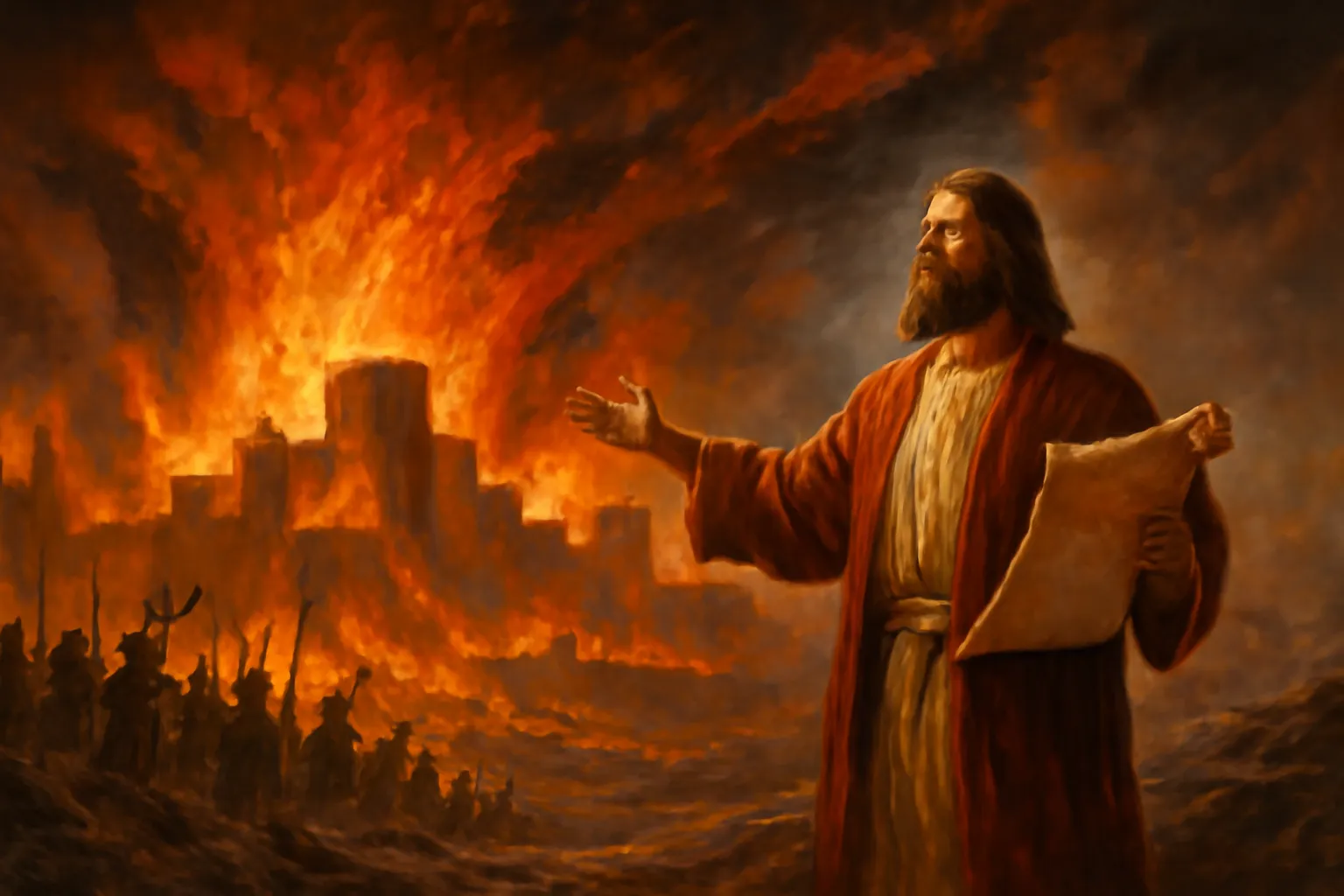
The topic of the Bible tribulation period has fascinated and divided readers for centuries. Across Christian traditions, this era is described as a time of intense upheaval, spiritual testing, and cosmic judgment that precedes the return of Christ and the establishment of a new heavens and earth. This article aims to provide a comprehensive, structured guide to the end times timeline, focusing on how scholars, pastors, and lay readers interpret the major events, signals, and interpretive frameworks surrounding the tribulation. While many details remain a matter of interpretation, the central thread across denominations is a sequence of prophetic events that culminate in Christ’s decisive victory and the renewal of creation.
Defining Terms: What We Mean by the Tribulation and Related Phrases
To navigate the debate clearly, it helps to define a few key terms that appear throughout biblical prophecy. Below are common labels and how they relate to the tribulation period.
Tribulation period or end-times tribulation: the broad interval when believers anticipate increasing trials, persecution, and divine judgments, often linked to the appearance of the Antichrist and the rise of ultimate evil.
Great tribulation: a phrase used in Scripture to describe a particularly intense portion of the trials, typically associated with the latter half of the seven-year framework in Daniel and Revelation.
End-times timeline: the sequential sequence of prophetic events that scholars place before Christ’s return and the subsequent millennial era.
70th week of Daniel: a specific seven-year period described in Daniel 9, commonly interpreted as the core timeframe of the tribulation in many eschatological schemes.
Rapture: a debated event in which believers are caught up to meet the Lord, with varying views about its timing in relation to the tribulation (pre-tribulation, mid-tribulation, post-tribulation, etc.).
Millennium: the prophesied 1,000-year reign of Christ on earth, which follows the tribulation in some interpretations and precedes the final judgment in others.
Foundational Biblical Basis: Where the Timeline Comes From
The outline of the tribulation rests on a blend of Old Testament prophecies, Jesus’ teaching in the Gospels, and the visions recorded in Revelation. The most frequently cited anchors are the Danielic prophecies in the Hebrew Bible, the Olivet Discourse in the Gospels, and the apocalyptic visions in the Book of Revelation.
Old Testament Foreshadowing: Daniel’s Weighty Timeline
In the book of Daniel, especially Daniel 9, many scholars see a prophecy often called the “seventy weeks” prophecy. It lays out a framework in which a defined period is subdivided, with a decisive interruption and a subsequent “end-time” event. The interpretation commonly linked to the tribulation identifies the latter portion of this timeframe with a seven-year sequence known as the 70th week. Within this window, the text is read as predicting a covenant, a covenant-breaking act, and a period of distress that signals the culmination of redemptive history’s predetermined timetable.
New Testament Foundations: Jesus, Paul, and John in Agreement on a Difficult Horizon
In the Gospels’ Olivet Discourse, Jesus speaks of wars, famines, earthquakes, and persecution as events that precede the end. He emphasizes watchfulness, endurance, and the need to avoid deception. The apostle Paul, writing to early Christians, speaks of “the day of the Lord” coming like a thief in the night for some, and invites communities to live soberly in light of these events (1 Thessalonians 4–5). The most expansive and dramatic visions appear in Revelation, where seals, trumpets, and bowls unfold a sequence of judgments, culminating in a final confrontation and the establishment of Christ’s kingdom.
Timeline Overview: A High-Level Map of the End Times Timeline
The following outline presents a traditional flow of events that many readers associate with the tribulation period. It is designed to be neutral about disputed timing while offering a clear map of the major milestones.
The Church Age and signs pointing to the last days. In this view, the church has a central role during an era of gospel proclamation, martyrdom, and spiritual warfare before the tribulation begins.
The Rapture (in some traditions) or a simultaneous transition into end-times events. Depending on the viewpoint—pre-tribulation, mid-tribulation, or post-tribulation—this moment occurs before, during, or after the first major events of distress.
The Beginning of the Tribulation marks the formal start of a seven-year period in which a dramatic sequence of covenants, deceits, and judgments unfolds.
The Rise of the Antichrist and the formulation of a deceptive political-religious alliance. The figure commonly associated with this era is described as presenting a temporary peace and then breaking it.
The Abomination of Desolation—a pivotal act in which sacrilege and idolatry are introduced in a rebuilt or reinterpreted temple setting; this is often highlighted as a key sign for many readers.
The Great Tribulation—a period marked by intensified persecution, celestial signs, and intensifying trials for faithful followers, sometimes subdivided into two halves in various interpretive schemes.
Divine Judgments in the form of seals, trumpets, and bowls—each series brings intensified plagues and cosmic disturbances designed to reveal truth and bring about repentance.
The Battle of Armageddon and the climactic confrontation between divine justice and human rebellion, leading to the defeat of the forces of evil.
The Second Coming and the establishment of a visible, triumphant reign of Christ. This is followed by a period of judgment and reward.
The Millennium—the 1,000-year reign some traditions associate with a peaceful and just era on earth ruled by Christ, after which final judgment occurs.
The Core Phases Within the Tribulation: What Happens When Time Tightens
Beyond the broad timeline, theologians distinguish several critical phases that shape the reader’s understanding of the end-times sequence.
Phase I: The Covenant and Its Break
In many readings, a political or diplomatic covenant is formed that grants a sense of security to nations. This arrangement is often read as initiating the tribulation period, because it sets up the conditions under which deception and spiritual hardness can flourish.
Phase II: The Antichrist Emerges
A charismatic yet persuasive world leader rises to power, presenting solutions to global crises. This figure often becomes the focal point for a powerful, organized coalition and a system of governance that runs counter to biblical standards.
Phase III: Abomination and Sacrilege
The abomination of desolation marks a turning point in which true worship is compromised, triggering increased persecution of faithful communities and unsettling celestial signs that capture attention across the world.
Phase IV: The Great Tribulation
This is the period of intensified suffering, spiritual warfare, and moral testing. Believers are urged to remain steadfast, even in the face of persecution and the pressure to conform to a global system opposed to divine authority.
The prophetic record describes a cascade of judgments—plagues, natural disasters, and unusual celestial phenomena—that accompany a decisive spiritual turning in humanity. The imagery emphasizes that these events serve to reveal truth and reveal who is loyal to the Lamb.
Phase VI: The Battle and the Return
A climactic battle culminates in victory for Christ, followed by His return in power and glory. This moment inaugurates the visible revelation of divine kingship and the defeat of evil.
For some readers, the long horizon following the tribulation includes a literal 1,000-year reign of Christ on the earth and a final judgment, after which God creates a new heavens and a new earth.
The 70 Weeks Prophecy and the Tribulation: How Daniel Shapes the Clock
A central interpretive tool for the end-times timeline is Daniel’s prophecy about the “seventy weeks.” While the language is ancient and layered, many scholars connect the conclusion of this prophecy with the appearance of the Antichrist and the onset of the tribulation period. The text suggests a predetermined chronology: a sequence of divine decrees, a congregational turning away, and a climactic “end” that inaugurates a new era. In some streams, the last seven-year segment is identified as the final seven years before Christ’s return, with the midpoint marking a dramatic disruption.
Rapture and Timing: Exploring Different Theological Interpretations
A major source of diversity within Christian eschatology concerns the timing of the rapture relative to the tribulation. The landscape is commonly described using a few interpretive grids:
Pre-tribulation: Believers are caught up to meet the Lord before the tribulation begins, suggesting that the Church will be spared from the worst judgments.
Mid-tribulation: The rapture occurs at the midpoint of the seven-year period, after the rise of the Antichrist and the onset of the Great Tribulation.
Post-tribulation: The rapture occurs at the end of the tribulation, coinciding with Christ’s second coming and the gathering of believers.
Pre-wrath or others: A nuanced position that places the rapture sometime before the final, most intense judgments but not necessarily at the midpoint.
Each position draws on biblical passages, typology, and historical tradition. In teaching or study groups, it is common to discuss the strengths and weaknesses of each view, while recognizing that sincere believers can arrive at different, biblically grounded conclusions.
Prophetic Signs and Their Interpretation: Signals to Watch For
The biblical portrait of the tribulation period highlights a number of major indicators believed to accompany the end-time sequence. Readers should approach these signs with care, recognizing the difference between symbolic language and literal expectation.
Cosmic disturbances: Signs in the heavens and on earth that align with the prophetic expectation of universal scale events.
Rise of a world ruler who consolidates power and promotes a system of worship or allegiance that opposes divine authority.
Martyrdom and persecution of faithful believers who refuse to compromise their conscience.
Religious deception and persecution: A system that compels conformity, often framed in political-religious terms.
Economic and social upheaval: Scarcities, controls, or coercive systems associated with the “mark” or mark-like devices.
Conflict and Armageddon: A climactic confrontation in which divine justice is decisively executed.
Common Questions: How Should Readers Approach Bible Prophecy?
Readers often ask how to read prophetic material responsibly. Here are some practical guidelines that help keep study balanced and meaningful.
Context matters: Remember historical context, genre (apocalyptic literature vs. prophetic narrative), and original audience when interpreting prophecy.
Let Scripture interpret Scripture: Use clearer passages to illuminate more difficult ones, and avoid over-literalizing symbolic language.
Consider multiple viewpoints: Explore different eschatological frameworks to understand how they interpret the same texts.
Humility: Prophecy often invites humility rather than certainty; many details remain debated among faithful scholars.
Pastoral application: Focus on moral and spiritual lessons—faithfulness, watchfulness, and hope for renewal—rather than sensational forecasts.
Theological Varieties: How Different Traditions Understand the Tribulation
Across Christian traditions, the bible tribulation period is understood within a broader eschatological framework that includes the nature of the millennium, the resurrection of the dead, and the final judgment. Some traditions emphasize a literal, future fulfillment of every prophecy, while others view much of the prophecy as already fulfilled in history or as symbolic for ongoing spiritual realities. Here is a snapshot of the major families of interpretation.
Dispensational premillennialism: Typically advocates a pre-tribulation rapture and a literal seven-year tribulation, followed by Christ’s millennial reign on earth.
Historical premillennialism: Emphasizes a future tribulation but often rejects a strict pre-tribulation rapture, placing the church within the tribulation itself.
Amillennialism: Takes a symbolic approach to the millennium, often interpreting Revelation’s numbers as representing spiritual realities rather than a literal timeline.
Postmillennialism: Historically less common today, it envisions a progressive ushering in of Christ’s kingdom and a broader era of peace before the final judgment.
Practical Guidance: Reading the End Times Timeline with Wisdom
For readers who want to engage with the prophetic literature without succumbing to fear, here are practical approaches that foster healthy engagement.
Study the literary genres: Apocalyptic literature uses vivid symbols; understand its structures and symbols before drawing concrete predictions.
Balance doctrine and devotion: Let prophetic study enrich worship, ethics, and hope rather than cause anxiety about the future.
Use reliable resources: Compare commentaries, consult scholarly writings, and weigh evidence from multiple translations to avoid a skewed reading.
Hold fast to core truths: The central claims of Christian faith—redemption, resurrection, and the coming of God’s kingdom—remain constant regardless of interpretation.
Historical and Theological Reflections: Why the Tribulation Remains Controversial
The debate over the bible tribulation period touches on how Christians understand God’s timing, human responsibility, and the nature of evil. Some argue that prophecy must unfold in a literal, future period tied to current events; others contend that much of the imagery is symbolic and points to broader spiritual realities that persist across ages. Both camps highlight the same goal: to honor God, to care for the vulnerable during times of trial, and to live with faithfulness in the light of ultimate redemption.
Implications for Faithful Living During the End Times Era
Even while the exact chronology remains debated, believers are called to live with vigilance, courage, and compassion—qualities that are essential whether one reads the tribulation as imminent or distant. The biblical portrait of this period emphasizes fidelity under pressure, bold witness to truth, and steadfast trust in a sovereign God who ultimately overcomes evil.
A Comprehensive View of the End Times Timeline
The subject of the tribulation period sits at the intersection of prophecy, history, and personal faith. By tracing the core anchors—the Danielic timeline, Jesus’ Olivet Discourse, and the Revelation visions—readers gain a framework for understanding how the end-times timeline is imagined across traditions. Although scholars disagree about the precise chronology and timing of events like the rapture or the exact length of the tribulation, the central motifs—spiritual warfare, divine judgment, the rise and fall of world powers, and the triumphant return of Christ—remain consistent across interpreters. For readers today, the study of this topic offers a lens on moral living, a call to hopeful expectant faith, and a reminder of the ultimate justice and renewal promised in scripture. Whether you come to this topic with a pre-tribulation, mid-tribulation, or post-tribulation perspective, the overarching message remains: remain watchful, remain faithful, and keep your eyes fixed on the hope of Christ’s kingdom.