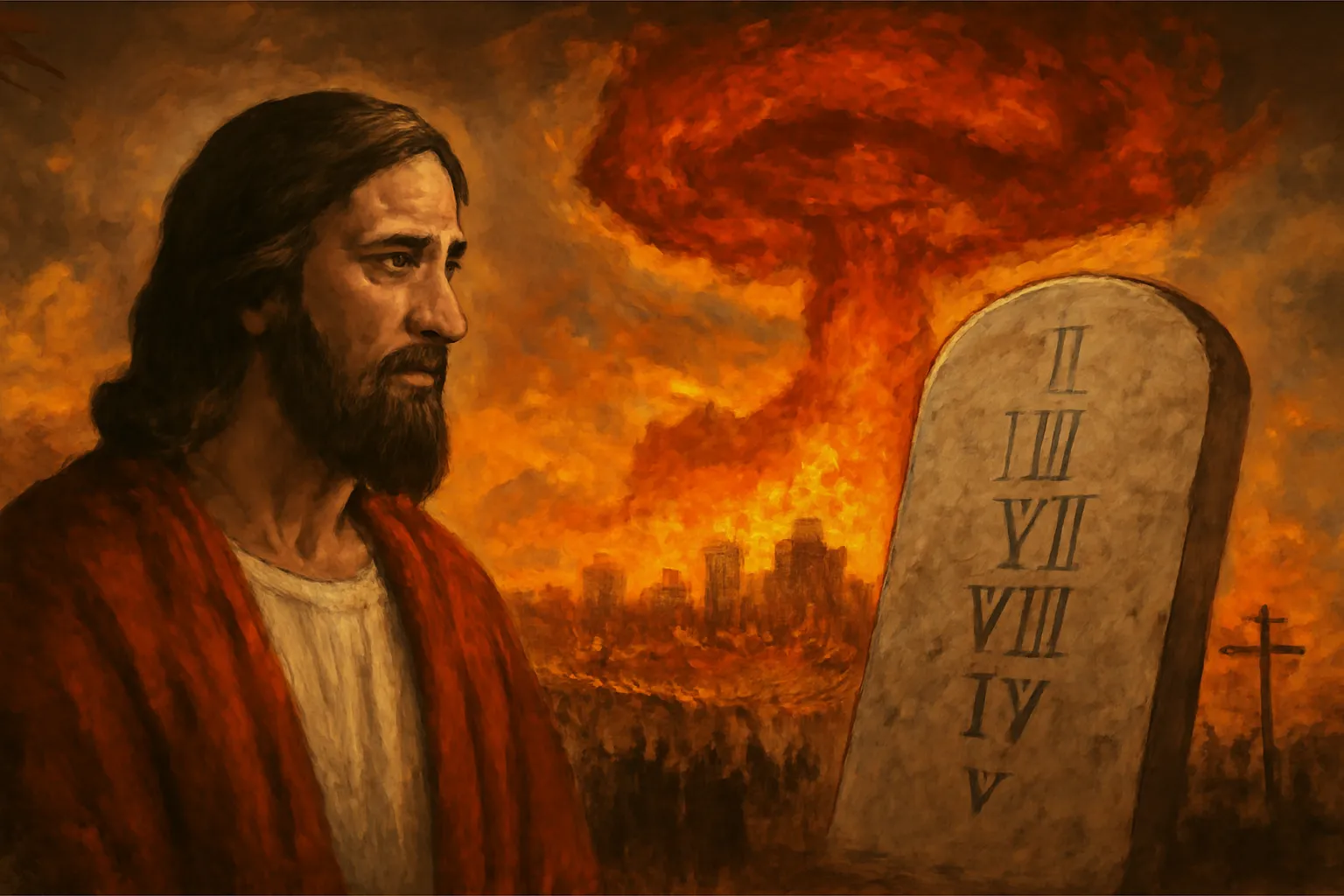
Overview of the seven-year tribulation in biblical interpretation
The phrase seven-year tribulation is a shorthand often used in contemporary
Christian teaching to describe a future period of intense upheaval, judgment, and
spiritual testing described in biblical prophecies. While the exact timing and sequence
are debated among scholars and church traditions, most readers recognize that the central
themes center on divine judgment, cosmic disturbance, and the ultimate restoration of
God’s order. In some theological frameworks, this period is linked to Daniel’s 70 weeks
and to the apocalyptic visions found in the Book of Revelation.
This article presents an accessible, educational overview of the concept known as the seven-year tribulation, including a proposed timeline of key phases, the
main signs described in Scripture, and the range of biblical interpretations that have
shaped how churches understand this eschatological moment. It uses several widely used
terms to broaden semantic coverage, such as the tribulation period, the Great Tribulation, Daniel’s 70th week, and the great turning point in prophetic literature.
Common terminology and variations you’ll encounter
Seven-year tribulation — a traditional phrase denoting a roughly seven-year future period of trials and judgments.
Daniel’s 70 weeks — a critical prophetic framework in prophecy study that interprets a week as seven years, yielding a focus on a defined seven-year span within Daniel 9.
The Great Tribulation — often used to refer to the most intense portion of the end-time trials in Revelation and Jesus’ Olivet Discourses.
Olivet Discourse — Jesus’ teaching in Matthew 24, Mark 13, and Luke 21 that discusses end-time signs and events.
Beast and Antichrist — symbolic figures in Revelation and other prophetic passages representing pursuing adversaries of God’s people.
Abomination of Desolation — a key event described in Daniel and echoed by Jesus in the Olivet Discourse, signaling a blasphemous desecration set against sacred space.
Rapture — a term used in popular teaching to describe the moment when believers are caught up to meet Christ; not explicit in every canon, but widely discussed in connection with pre- or mid-tribulation timelines.
Premillennial, Amillennial, Postmillennial — broad eschatological families that influence how people read the timing of tribulation relative to Christ’s return.
Key phases and a proposed timeline: what the Bible describes
Readers should note that there is no single, universally agreed-upon, chronological blueprint
for the tribulation. What follows is a synthesis of commonly cited phases in popular eschatology,
particularly within premillennial dispensational lines of interpretation. The aim is
to outline how the seven-year tribulation is often segmented and understood
across different biblical schools.
Pre-tribulation or early events (some views) — In several frameworks, a period of
relative peace precedes the central events. Proponents of pre-tribulation rapture
argue that believers are removed from the earth before the major trials intensify, while others
place the church within the tribulation timeline in varying ways.
Beginning of sorrows and deception — The opening signs include widespread
confusion, false teaching, and escalating social and political pressures described in Jesus’
Olivet Discourse and in Revelation’s early chapters. This phase is often associated with rising
antichrist narratives and initial judgments that set the stage for more intensive events.
The first half of the seven years — Some interpreters see a period where political,
economic, and religious systems are reorganized. This stage may include the enactment of controversial
covenants, shifts in global governance, and the initial enactment of persecutions that target
faith communities.
Midpoint crisis and intensified judgment — The middle of the week is commonly linked
to a decisive event such as the “abomination of desolation” described in Daniel 9 and echoed in
the Olivet Discourse. At this point, the intensity of judgment and persecution often increases,
and persecution of faithful witnesses intensifies.
Seals, trumpets, and bowls — Revelation presents a three-part sequence of judgments: the seals, the trumpets, and the bowls. These symbolic plagues intensify the
crisis and reveal the spiritual and political apostasy of the nations, culminating in final judgments.
Close of the tribulation and the return of Christ — The sequence typically culminates
in a cosmic battle, the defeat of the forces of evil, and the return of Jesus to establish his rule.
This culminates in the establishment of God’s kingdom and the ultimate consummation of history as
described in Revelation and related prophetic texts.
Within this broad skeleton, supporters disagree about whether the rapture happens
before, during, or after the tribulation, and how the Great Tribulation relates
to the entire seven-year period. The details of who is exempt from suffering, the identity of the
Antichrist, and the precise sequencing of cosmic signs differ from tradition to tradition.
Biblical signs and indicators: what many readers look for in the end-time scenario
The biblical record offers a constellation of signs that are often cited by readers who study
the seven-year tribulation and related prophecies. These signs span geopolitical,
cosmic, religious, and moral dimensions. Below is a guided survey of commonly cited indicators.
Wars and rumors of wars — Jesus highlights global conflict as a signature of the season.
Famines, pestilences, and natural disasters — Earthquakes, famine, and widespread
disasters are described as part of the distress in the end times.
Persecution of believers — The faithful are tested under intense pressure, and
their endurance becomes a characteristic mark of the period.
Deception and false signs — Many claim religious or political revelations; spiritual
deception proliferates, testing discernment among communities of faith.
Worldwide proclamation of the gospel — A significant motive in prophecy is that the
gospel reaches all nations in some form, fulfilling a commission described in scripture.
The Abomination of Desolation — A pivotal crisis described in Daniel and echoed by Jesus
in the Olivet Discourse, signaling a profound desecration that marks a turning point in the sequence.
Rise of a powerful political-religious figure — The emergence of a compelling adversary,
often labeled as the Beast or Antichrist, who consolidates power and challenges the people of God.
Cosmic signs and celestial events — Apocalyptic imagery in Revelation invites readers to
anticipate remarkable changes in the heavens as part of the climactic drama.
It is important to note that different biblical interpretations weigh these signs differently.
Some readers emphasize literal fulfillment in future history, while others see much of the language
as symbolic or applicable to broader patterns of human history and spiritual conflict. Regardless of
the interpretive lens, the signs are presented as a call to vigilance, moral seriousness, and
steadfast faith for those who study these prophecies.
Major interpretive frameworks for the seven-year tribulation
Premillennial dispensational interpretation
The premillennial dispensational approach is one of the most influential ways modern readers hear
about the seven-year tribulation. In this framework, the church is not destined to suffer
during the entire period; instead, God preserves believers from the worst judgments through a deliberate
intervention so that a future professional or institutional event (often described as a rapture) occurs
prior to the most intense trials. After a period of testing, Christ returns to establish a literal,
physical kingdom on earth (the millennial reign).
Rapture before the tribulation (pre-tribulation) — Believers are removed from the world
prior to the peak of trials, ensuring they do not experience the most severe judgments.
Mid-tribulation or post-tribulation variations — Other variants place the rapture
at the midpoint or after the tribulation, with different implications for the timing of the second coming.
Futurist emphasis — The primary events are seen as future, not primarily symbolic or symbolic-but-present.
Historicist interpretation
In the historicist view, the prophecies of Daniel and Revelation are viewed as symbolic
representations of events throughout church history. The seven-year window is often recast as a symbolic
period representing intensification of conflict across the timeline of the church—from the early church
era through the end of the age—rather than a literal, fixed seven-year block in a future calendar.
Idealist (spiritual or symbolic) interpretation
The idealism approach treats the prophetic images as timeless and universal truths about
spiritual warfare between good and evil. In this view, the scriptures convey enduring lessons about faith,
perseverance, and God’s sovereignty, rather than a precise timetable for future events.
Amillennial interpretation
The amillennial perspective generally does not expect a literal millennial kingdom on earth
between the present age and Christ’s return. For amillennial readers, the tribulation is often read as a
symbolic or spiritual framework describing ongoing period of trial for believers, culminating in Christ’s
return rather than a distinct future seven-year block on a calendar.
Several core passages frame the discussion of the seven-year tribulation and its
associated events. While readers vary in how they interpret each text, the following are among the
most frequently cited sources in scholarly and devotional discussions.
Daniel 9:24–27 — The prophecy of the 70 weeks, including a final seven-year period
and a covenant with many, which is central to discussions about the timing of events surrounding the tribulation.
Daniel 12 — Prophetic insights about endurance and the eventual resurrection, often read as part of the broader end-time framework.
Matthew 24 (Olivet Discourse) — Jesus’ teaching on the signs of the end times, including wars, deception, and the abomination of desolation.
Mark 13 and Luke 21 — Parallel accounts of the Olivet Discourse, offering complementary perspectives.
Revelation 4–19 — The most vivid apocalyptic imagery, including the seals, trumpets, bowls, and the cosmic signs that culminate in Christ’s return.
2 Thessalonians 2 — The restrainer, the man of lawlessness, and the dynamics surrounding the revelation of evil in the end times.
Each of these texts is complex, and readers often approach them with different methods of
exegesis—historical-grammatical, grammatical-historical, symbolic, or a combination of
approaches. The interpretive method shapes how one understands the length of the tribulation,
the identity of key figures, and how literal or figurative the predictions are intended to be.
Historical and theological context
To understand the seven-year tribulation concept, it helps to situate it within two
broad historical streams of interpretation. First, the emergence of dispensationalism in the
19th and 20th centuries gave rise to a framework that emphasizes a distinct church-age gap and a
literal, futurist reading of Daniel and Revelation. Second, earlier Christian interpreters often
emphasized the symbolic and moral dimensions of the prophetic texts, focusing on how the church should
live in light of the anticipated return of Christ rather than projecting a calendar of events.
The dialogue between theological traditions—including Reformed, evangelical,
Pentecostal, and Catholic perspectives—has produced a spectrum of expectations about the
tribulation. Across this spectrum, a shared interest persists: the texts call readers to faithfulness,
discernment, and hope in the sovereignty of God even as they anticipate the culmination of human history.
Pastoral implications: how churches approach teaching about the tribulation
Pastoral caution — Many pastors emphasize that end-time passages should not detract from daily discipleship,
justice, and care for the vulnerable. The emphasis often rests on how scripture speaks to character,
perseverance, and hope rather than on a precise timetable.
Ethical living in light of prophecy — The signs narrative can motivate ethical living, unity,
and mission, encouraging believers to be prepared to respond to hardship with faithfulness.
Unity amid disagreement — Because interpretations vary widely, churches are encouraged to
approach eschatology with humility, avoiding dogmatic rigidity when possible and focusing on shared
essentials of faith.
Hope over fear — A central pastoral aim is to help people understand prophecy as a source of
hope for God’s eventual justice and the restoration of all things, rather than a reason for anxiety.
Concluding reflections: understanding the Bible’s end-time language today
The seven-year tribulation remains one of the most debated topics in biblical
interpretation. Whether one reads these prophecies as future literal events,
as symbolic descriptions of spiritual warfare, or as a combination of historical patterns,
the central takeaway in many Christian communities is consistent: the trajectory points toward
the consummation of all things under Christ. For believers today, the eschatological horizon invites
faithful living, discernment, and communal witness that transcends speculative timelines.
As readers explore Daniel’s 70 weeks, the fires of Revelation, and Jesus’
warnings in the Olivet Discourse, they encounter a shared call to humility, wisdom, and
steadfast hope. The end-times conversation is not merely about predicting the future; it is
about forming a community that remains faithful to God, loves neighbor, and embodies
justice and mercy even in uncertain days.