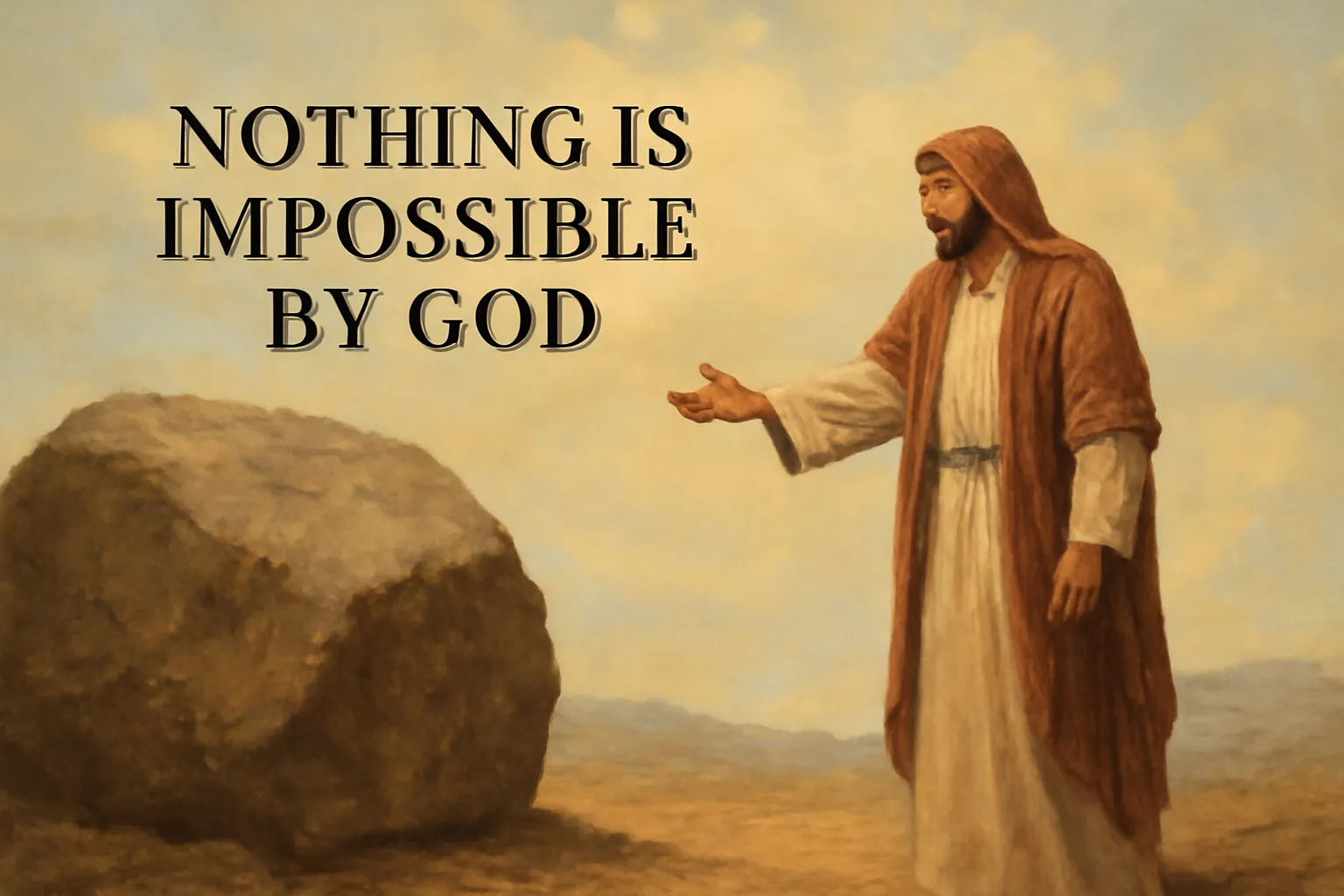
Across cultures and generations, a simple yet profound claim has echoed in sermons, sermons, songs, and quiet moments of prayer: Nothing is impossible by God. This statement, sometimes framed as With God, all things are possible, sits at the intersection of faith, hope, and action. It invites believers to consider not what humans can achieve through skill alone, but what can be accomplished when divine power is acknowledged, aligned with purpose, and engaged through persistent trust. In this article, we will explore Nothing Is Impossible by God from multiple angles: biblical foundations, historical and contemporary examples, theological interpretations, practical applications for daily life, and common misunderstandings that people raise when facing daunting odds. By tracing the thread of faith through scripture and lived experience, we will illuminate how faith has, in many moments, helped people move mountains—whether those mountains are fear, illness, financial strain, or social barriers.
Foundations in Scripture: The Language of Possibility
Old Testament glimpses of divine possibility
The oldest intimations of universal possibility with God come from narratives that remind us that human limits are not the final word. In the book of Genesis, the Lord asks a provocative question that transcends human capacity: Is anything too hard for the Lord? (Genesis 18:14). This rhetorical question is not a challenge to divine power but an invitation to a different posture—a posture of reliance rather than control. When the narrative centers on promises given to aging couples or lifetimes of waiting, the implication becomes clear: nothing is impossible for the One who authored the plan, even when human foresight sees only obstacles.
New Testament assurances: the core promise in Christ-centered faith
The New Testament crystallizes the idea in statements that Jesus and the apostles repeatedly emphasize. For example, the Gospel writers record Jesus saying, “With God all things are possible” (Matthew 19:26; Mark 10:27). In Luke 1:37, the angel declares to Mary, “For with God nothing will be impossible.” These verses are not merely pious slogans; they establish a paradigm in which divine power operates in response to faith, obedience, and a sense of call. The larger arc of Christian teaching reframes impossibility as a relative term—relative to human plans and limited vision—when set against the limitless horizon of God’s purposes.
What the phrase does and does not mean
What it does mean: faith that aligns with God’s will, trust that God’s timing is perfect, and courage to act when the path is unclear.
What it does not mean: a guarantee that every personal desire will be immediately fulfilled, or a license to demand outcomes as if divine power were a vending machine. The emphasis is on alignment with divine purposes, not self-will.
What it can produce: courage to persevere, humility in dependence, endurance in trial, and the possibility of miracles that reframe human experience.
Historical and Biblical Examples: The Narrative of Mountains Moving
Patriarchs and prophets: faith under pressure
The stories of Abraham and Sarah illustrate a faith that believes beyond statistical likelihood. In their old age, the couple receives a promise that looks humanly improbable, yet they respond with trust. The mountain, in this case, is the obstacle of barrenness, the test of waiting, and the trust that God’s promise remains intact regardless of visible evidence. Similarly, the leadership of Moses demonstrates that when people feel cornered by insurmountable odds—an unstoppable army, a treacherous desert, or a stubborn political climate—faith in God’s presence and guidance can redirect the course of history.
Nehemiah and the wall: organizational faith as a force multiplier
In the Book of Nehemiah, a seemingly impossible task—rebuilding a ruined wall under political resistance and public risk—becomes a case study in coordinated faith. Nehemiah’s leadership models several key practices: prayerful discernment, practical planning, communal participation, and steady resolve. The phrase “Nothing is impossible with God” is echoed in the way people who fearfully faced ruin choose to step forward together, each person contributing according to their gifts. The mountain is the broken city, the fear of danger, and the inertia of despair—and faith learns to mobilize resources, both spiritual and material, to overcome it.
Gospels and early church: healing, exorcism, and resourceful faith
In the Gospels, Jesus responds to situations that, in human terms, appear impossible: illnesses that resist medicine, storms that threaten boats, and social barriers that exclude. Each account highlights a pattern: recognition of God’s authority, a declaration of faith, and a corresponding action—whether it is laying on of hands, speaking a healing word, or stepping into a risky mission. When the early church faced persecution or a scarcity of resources, the accounts of radical generosity and transformative miracles continued to multiply. The implicit claim remains clear: When faith is anchored in God’s power, the natural limits of a situation do not determine the outcome.
Modern Testimonies and Everyday Faith: Contemporary Echoes of the Ancient Promise
Personal stories of transformation
Across communities, countless individuals describe moments when the ordinary boundaries of possibility expanded because they clung to the conviction that Nothing is impossible by God in practice. A parent facing a medical diagnosis can experience peace and perseverance that looks, to outsiders, like a miracle of endurance. A student navigating poverty and barriers may discover opportunities that unlock a future once thought inaccessible. A business owner facing layoffs might find a strategy that preserves livelihoods through principled stewardship and creative risk. In every case, the core dynamic remains: faith engages with reality in a way that opens doors that human planning alone could not open.
When faith communities embrace the belief that there is no limit to God’s power, they often shift from a posture of fear to one of service. This shift manifests in practical acts such as relief work, advocacy for the vulnerable, and bold initiatives that address systemic challenges. The idea that faith can move mountains translates into action steps—collaboration, resource mobilization, and measured risk taken in light of moral and spiritual aims. The result is not magical thinking but a disciplined confidence that aligns effort with divine purpose.
Theological Perspectives: How Different Traditions Understand Possibility
Providence, sovereignty, and human freedom
The claim that Nothing is impossible by God sits within a larger theological framework that includes divine providence and sovereignty. Many traditions teach that God holds ultimate authority over creation, history, and destiny, yet human beings exercise agency within that divine frame. The apparent paradox—God’s sovereignty and human responsibility—becomes a training ground for faith: we do not passively wait for miracles; we participate in the processes of prayer, discernment, and action while trusting God’s ultimate control.
A nuanced reading differentiates between miraculous intervention and the ordinary grace that sustains life. Some traditions emphasize ongoing miracles as a sign of God’s nearness, while others stress the daily, often unseen, providence that carries people through suffering and scarcity. In either case, the conviction remains that God is able to intervene decisively when it serves his purposes and aligns with love, justice, and mercy. The phrase “With God, all things are possible” becomes a banner under which believers learn to distinguish between wishful thinking and faithful discernment.
Practical faith across denominations
Across Christian denominations, people wrestle with how to translate the assurance “Nothing is impossible” into concrete life. Some emphasize contemplative prayer and inward transformation; others emphasize social action and visible deeds. Yet the common thread is the recognition that faith is not mere sentiment; it is a posture that shapes decisions, relationships, and communities. For many, the belief in divine possibility invites a commitment to integrity: working honestly for justice, caring for the vulnerable, and pursuing excellence in work and service as expressions of trust that God can reorder the broken parts of life.
Practical Ways to Embrace Faith: How to Live as Though Mountains Can Move
Prayer, Scripture, and discernment
The most accessible path to experiencing the reality behind the phrase “Nothing is impossible by God” starts with daily disciplines. Begin with prayer that is honest about fear and honest about faith. Pair it with Scripture study to ground expectations in timeless truths. Seek discernment in community—opinion shared in love often reveals insights that solitary reflection misses. A practical triad is: honesty, habits, and humility.
Faithful action: pairing belief with works
Faith without deeds, as the saying goes, often fails to illuminate what is truly possible. The approach that has repeatedly proven effective is to couple trust in God with concrete steps:
Clarify purpose: name the mountain and the outcome that would honor God and serve others.
Assess resources: inventory gifts, people, time, and money; consider how to mobilize them ethically and effectively.
Make small, brave moves: begin with achievable milestones that confirm the direction and build momentum.
Stay persistent: keep faith alive through setbacks, recalibration, and steadfast prayer.
Acknowledge dependence: celebrate every breakthrough as a sign of God’s grace rather than human prowess.
Faith communities that act as engines of transformation emphasize accountability and shared purpose. They identify mentors, foster safe spaces for honest dialogue, and practice mutual aid. When people gather around the belief that God’s power is not exhausted by human limits, they cultivate resilience and creativity that enable them to address complex social and personal challenges with wisdom and grace.
Addressing Common Misconceptions and Challenges
Myth: Faith guarantees immediate results
A common misunderstanding is that Nothing is impossible by God implies instant miracles for every genuine need. In reality, faith often works through slow, incremental progress, inner healing, or the reframing of a situation in a way that reveals a better path forward. It may require endurance, patience, and adjusted expectations. Recognizing the difference between a miracle and a miracle-in-process helps prevent disappointment while honoring the divine possibility at work.
Myth: Faith replaces prudence and responsibility
Another misperception is that belief in divine possibility excuses reckless decisions. The robust view of faith insists on wisdom and responsibility—prayerful discernment, consultation with mentors, and ethical action. The belief that God can do anything does not absolve a person from thinking through consequences, seeking counsel, and acting with integrity. Rather, it invites a more courageous and disciplined approach to risk and opportunity.
Myth: Impossible things only pertain to personal outcomes
Faith’s horizon extends beyond private success to communal flourishing—justice, mercy, and reconciliation. When believers say “Nothing is impossible with God”, they are often asserting that systemic change—such as healing communities fractured by violence, poverty, or hatred—remains within the realm of possibility through divine aid and human action. The mountains here include entrenched injustice, broken trust, and despair, and the faith response is collective perseverance grounded in hope.
Conclusion: Embracing a Life Where Mountains May Move
The timeless message behind Nothing Is Impossible by God invites a life of faith that does not shrink back from difficulty but approaches it with a different lens: a lens that sees possibilities where others see roadblocks, that remembers promises in the midst of waiting, and that acts with courage while clinging to divine wisdom. The refrain “With God, all things are possible” is not a slogan to chant in a moment of desperation but a framework for daily living. It shapes how we pray, how we plan, how we respond when doors close, and how we celebrate when doors open. It underlines a relationship with the divine not as a passive wish, but as an active partnership in which faith mobilizes grace, courage, and practical love.
In reading the biblical accounts, listening to testimonies, and discerning in community, readers and believers alike can cultivate a posture that welcomes the unknown with trust while embracing responsibility with wisdom. The mountains may be fear, doubt, or impossible-looking circumstances, but the conviction remains: Nothing is impossible by God when faith is anchored in God’s character, guided by discernment, and expressed through compassionate action. The phrase is more than a claim about outcomes; it is a way of living—one that opens doors to healing, restoration, and transformation for individuals and communities alike.