Introduction: Embracing a No Spirit of Fear Mindset
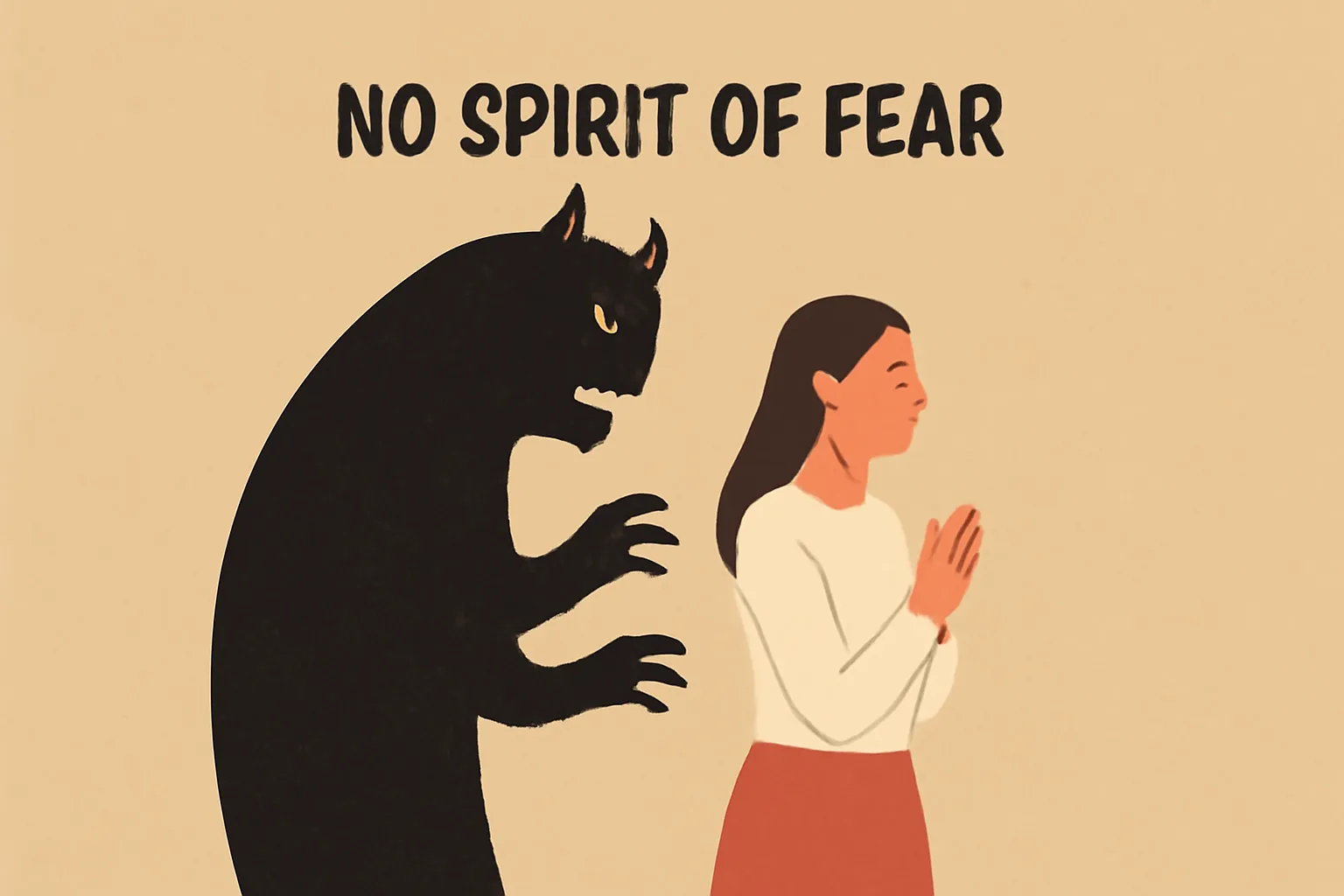
No Spirit of Fear is not a magical chant or a cure-all; it is a practical, action-oriented approach to seeing anxiety as a signal to respond rather than a verdict that confines you. This guide outlines a comprehensive path to cultivate a fearless mindset, reduce overwhelming worry, and build durable courage. Whether you struggle with daily nervousness, persistent anxiety, or moments of fear that stall your ambitions, this article offers strategies that are concrete, evidence-informed, and applicable to real life.
The idea of banishing fear is often misunderstood as erasing every uncomfortable feeling. In truth, a No Spirit of Fear approach recognizes fear as a natural human signal while guiding you to respond with purpose, clarity, and resilience. You will learn to identify the sources of anxiety, practice techniques that calm the nervous system, reframe anxious thoughts, and take consistent steps toward bold living. The goal is not to abolish fear completely—because fear has evolutionary value—but to prevent fear from dictating your choices.
Understanding Fear and Its Impacts
Fear is a multi-layered process involving biological arousal, cognitive appraisal, and emotional meaning-making. When fear becomes chronic, it can shape everyday behavior, limit opportunities, and erode self-efficacy. The first pillar of a practical guide to overcoming anxiety is understanding how fear operates:
Physiological responses: racing heart, shallow breathing, muscle tension, and adrenaline release.
Cognitive patterns: catastrophic thinking, overgeneralization, all-or-nothing judgments, and rumination.
Behavioral consequences: avoidance, procrastination, self-doubt, and missed chances.
A healthy view distinguishes between legitimate danger and anxious anticipation. Much of what we fear is not immediate harm but uncertain outcomes. The practice of no-spirit-of-fear thinking helps you clearly assess risk, plan measured action, and maintain agency even in uncertain situations.
Core Principles: No Spirit of Fear in Action
At the heart of this guide are several enduring principles that support a fearless living and a spirit of courage in daily life:
Awareness before action: notice fear signals without judgment, then decide deliberately what to do.
Acceptance of discomfort: you can tolerate anxiety while still pursuing meaningful goals.
Small, consistent steps: progress compounds over time, reducing the power of fear.
Reframing of thoughts: shift from threat-focused language to opportunity-focused language.
Accountability to values: align actions with what matters most, not with what fear tries to push you toward.
When these principles are woven into daily routines, fear loses its grip and courage gains momentum. You’ll notice a recurring pattern: awareness leads to choice, choice leads to action, and action leads to experience, which then fuels greater confidence.
1) Breathwork and Relaxation to Calm the Nervous System
The body’s state directly shapes thoughts. When anxiety spikes, the breath often becomes shallow and rapid, which can feed a loop of fear. A practical approach is diaphragmatic breathing and other slow-breathing techniques that physiologically counteract the fight-or-flight response.
Practice box breathing: inhale for 4 counts, hold for 4, exhale for 4, hold for 4. Repeat for 4–6 cycles.
Use paced breathing apps or a simple watch timer to maintain rhythm during stressful moments.
Incorporate brief daily sessions, such as 5–10 minutes, to establish a baseline calm that makes no-spirit-of-fear choices easier.
2) Cognitive Techniques: Reframing and Rational Inquiry
Thoughts shape feelings, and feelings drive actions. By learning to reframe anxious narratives, you can reduce their influence.
Thought labeling: name the thought (e.g., “That’s a worst-case scenario thought”).
Evidence gathering: list supporting and opposing evidence for the fear-producing belief.
Probability estimation: assess how likely the feared outcome actually is and what you could do to mitigate it.
Replace catastrophic phrases with balanced language: “This is uncomfortable, but I can handle it,” rather than “I will fail completely.”
3) Exposure and Gradual Challenge: Building Tolerance
A key component of building a fearless practice is deliberate, incremental exposure to feared situations. This is not reckless risk-taking; it is a controlled, planned process of testing yourself against the triggers of anxiety.
Identify a ladder of challenges from least to most fear-provoking.
Begin with small steps, such as talking briefly in a meeting or initiating a casual conversation with a stranger.
Progress gradually, giving yourself time to recover between steps and reflecting afterward on what worked.
Document outcomes to reinforce the sense that you can handle more than fear anticipated.
4) Journaling and Self-Reflection
Writing about your fears can externalize them and reveal patterns. Journaling supports the practice of no-spirit-of-fear reflection, helping you track progress and adjust strategies.
Keep a daily anxiety log: triggers, intensity (scale 1–10), thoughts, actions, and outcomes.
Review weekly to identify recurring themes and successful coping strategies.
Use prompts like: “What is the smallest action I can take today that aligns with my values?”
5) Physical Health Interventions: Sleep, Nutrition, Movement
The body supports the mind. Poor sleep, erratic meals, and inactivity amplify anxiety and magnify the sense of threat.
Establish a regular sleep routine and a wind-down ritual to improve sleep quality.
Choose meals that stabilize energy and mood: balanced proteins, complex carbohydrates, healthy fats, and hydration.
Incorporate regular physical activity, even brief daily walks, to reduce baseline anxiety and increase resilience.
Limit stimulants in the afternoon and evening, and create a calming pre-sleep environment.
Strengthen Courage: Daily Habits for a Durable Fearless Practice
Courage is a habit cultivated through consistent, values-aligned actions. The following daily practices help you sustain a no-spirit of fear lifestyle.
Morning intention: identify one courageous action for the day that aligns with your values.
Gratitude and resilience: note one thing you’re grateful for and one difficulty you faced, reframing it as an opportunity for growth.
Micro-challenges: set small, manageable tasks that push your comfort boundary slightly each day.
Accountability partner: share goals with a trusted friend or mentor who can provide support and feedback.
Recovery strategy: plan how to recover if a challenge feels overwhelming, including signaling a pause or seeking help.
Addressing Common Anxieties: Situational Focus
Social Anxiety: Finding Confidence in Connection
Fear of social judgment often paralyzes people. A No Spirit of Fear approach encourages practical social skills and gradual exposure.
Prepare a few open-ended questions for conversations to reduce the pressure of improvisation.
Practice presence in conversations: listen actively, maintain eye contact, and respond with curiosity.
Set small social goals, such as speaking up once in a meeting or initiating a short greeting with a colleague.
Reframe mistakes as learning opportunities rather than evidence of personal failure.
Performance Anxiety: Performing with Presence
When the stakes feel high, the mind can race toward worst-case outcomes. A practical method is to separate pre-performance anxiety from actual performance.
Use a pre-performance routine that signals readiness (breath, posture, a short cue phrase).
Visualize a successful outcome without eliminating the possibility of mistakes; plan how to recover gracefully.
Focus attention on the process—what you can control in the moment—rather than external outcomes.
Fear of Failure: Embedding Growth Mindset
The fear of failing can stop you from trying. Embrace a growth-oriented attitude that treats mistakes as essential data for improvement.
Document lessons learned from every setback.
Set learning goals in addition to performance goals.
Celebrate incremental progress, not only final outcomes.
Fear of the Unknown: Navigating Uncertainty
The unknown is a natural part of life. A resilient approach blends curiosity with practical planning.
Gather information but avoid over-researching to the point of paralysis.
Develop flexible plans with built-in contingencies.
Practice investigative curiosity: ask questions like “What is within my control here?” and “What is simply unknown?”
Creating a Plan for a No-Fear Life: Step-by-Step Guidance
Building lasting courage requires a practical, repeatable plan. Here is a structured framework to help you implement the principles of No Spirit of Fear in daily living.
Identify your core fears: write down which situations most often trigger anxiety and assess why.
Define your values: clarify what matters most to you in personal, social, and professional domains.
Create a fear ladder: list feared situations from least to most challenging, with a plan for gradual exposure.
Build a toolkit: assemble a set of techniques (breathwork, cognitive reframing, journaling) you will use when anxiety arises.
Schedule regular practice: designate daily or weekly time for skill-building, reflection, and exposure exercises.
Track progress: maintain a simple log of actions taken, outcomes, and feelings to reinforce momentum.
Review and revise: monthly, reassess fears, goals, and strategies; adjust as needed.
Even with a solid plan, challenges will arise. Being aware of common pitfalls helps sustain progress on the path of fearless growth.
All-or-nothing thinking: avoid labeling efforts as “perfect or ruined.” Embrace gradual improvement.
Avoidance cycles: do not let fear dictate what you never attempt. Small steps beat stagnation.
Over-reliance on willpower: combine motivation with structured routines and external support.
Underestimating sleep and recovery: neglecting rest undermines emotional resilience.
Myths and Realities About Fear
Many beliefs about fear hinder rather than help. Here are common myths debunked, with a focus on sustainable practice.
Myth: Fear is a sign of weakness. Reality: Fear is a universal signal; thriving is about how you respond.
Myth: Courage means never feeling afraid. Reality: Courage often means acting despite fear.
Myth: If I prepare enough, fear will vanish. Reality: Preparation reduces fear, but acceptance and action are essential.
Myth: Pain-free living is possible. Reality: Discomfort is part of growth; skills help you navigate it.
Resources and Tools for Further Growth
A robust journey toward a no-spirit-of-fear lifestyle benefits from guided resources and practical tools. Below are categories and examples you can explore.
Books: titles on cognitive-behavioral strategies, mindfulness, and courage-building.
Apps: anxiety trackers, breathing coaches, and habit-forming tools to sustain practice.
Therapy and coaching: CBT-based approaches, acceptance-based therapies, and performance coaching.
Support groups: communities that share strategies, accountability, and encouragement.
Measuring Progress: How to Know You’re Moving Forward
Progress in reducing the power of fear can be observed through tangible shifts in thoughts, feelings, and behaviors. Consider these indicators:
Reduced avoidance: you choose to engage in activities you previously avoided.
Increased tolerance: longer exposure to uncomfortable situations without spiraling into panic.
Better decision-making: more deliberate choices rather than impulsive reactions to anxiety.
Consistency: steady adherence to routines that promote calm and courage.
Conclusion: Living with Courage, Free from the Spirit of Fear
The journey toward a No Spirit of Fear life is ongoing, not instantaneous. It requires patience, practice, and a willingness to face discomfort with curiosity and resolve. By combining breath, reframing, gradual exposure, journaling, and healthy lifestyle habits, you equip yourself with a durable toolkit to navigate anxiety and embrace courageous action. Remember: fear is a natural human experience, but it does not have to command your choices. With intention, support, and steady practice, you can cultivate a fearless mindset and a fear-free life—a life in which anxiety serves as a guide rather than a prison.
Whether you are beginning this journey or reinforcing an established practice, keep returning to core principles: awareness, acceptance, deliberate action, and alignment with your deepest values. The goal is not to eliminate every moment of discomfort, but to transform how you respond to it. By treating fear as information rather than a verdict, you step into a more expansive life where courage grows with every deliberate choice.