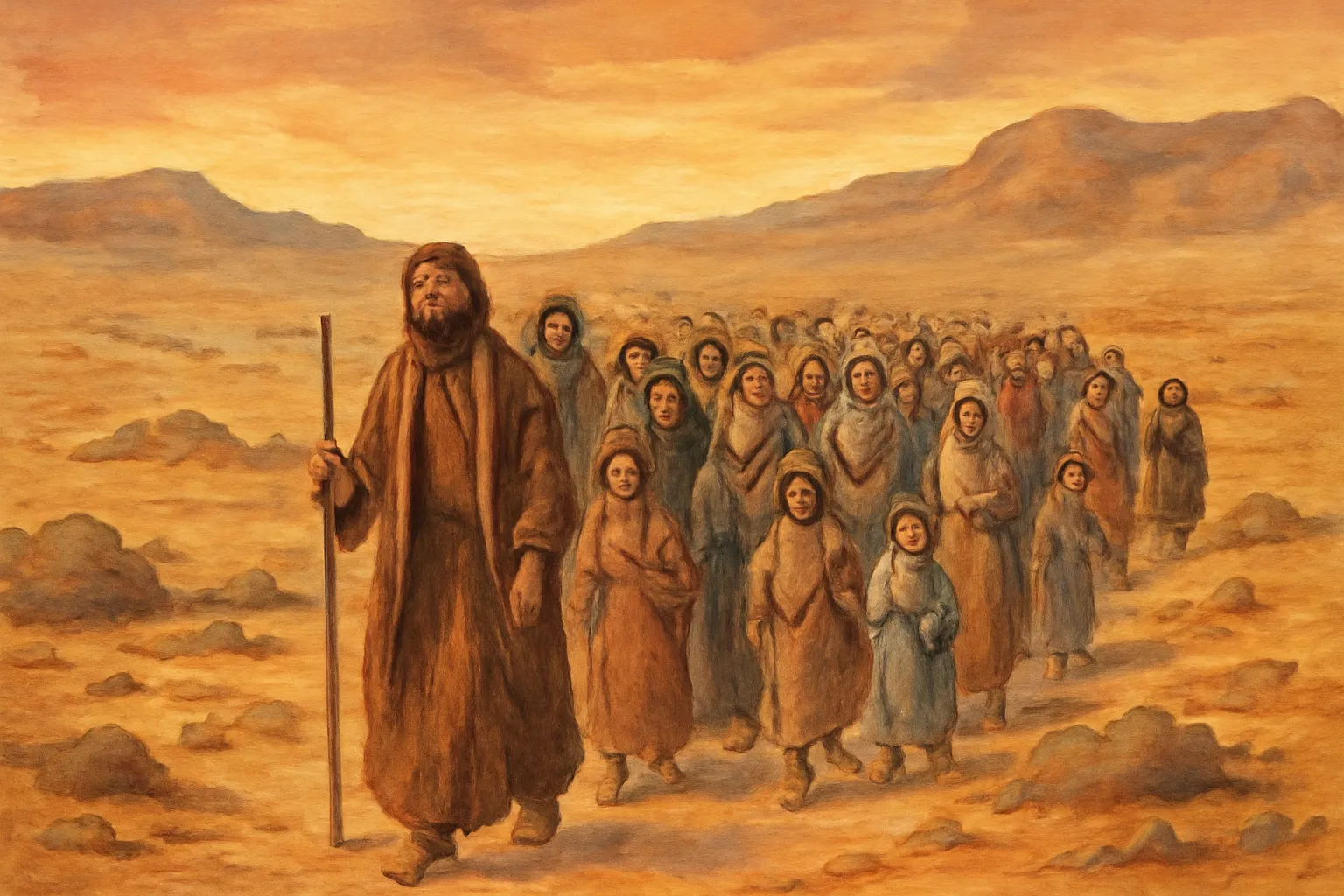
Exodus study represents a dynamic and interdisciplinary field that examines one of the Bible’s most influential books. This guide is designed to illuminate the findings, methodologies, and implications of scholarly work on the Exodus. Whether you are a student, educator, faith leader, or curious reader, you will find in this article a structured overview of how researchers approach the narrative, its historic and literary context, and its enduring significance for faith communities and public discourse.
Exodus study: scope, aims, and what counts as knowledge
In its broadest sense, Exodus study encompasses the systematic investigation of the book of Exodus, including its origin, composition, transmission, and reception. This field invites inquiries across several axes: historical-critical analysis, literary and rhetorical examination, theological interpretation, and empirical considerations from archaeology and related disciplines. Because the text exists within a long tradition of oral and written transmission, exodus scholarship also attends to how various communities have understood, reinterpreted, and applied the Exodus story over time.
Two phrases you will encounter repeatedly in this literature are textual-criticism-driven inquiry and interpretive-contextual analysis. The former asks: what are the textual witnesses, variants, and transmission history of Exodus? The latter asks: how do the texts work as literature and as theological argument within specific communities and eras? Both perspectives are essential for a robust Exodus investigation.
To organize the conversation, researchers often distinguish among several sub-fields or sub-disciplines within the broader Exodus study ecosystem. These include historical-critical research, literary analysis, theological interpretation, and archaeological and material-cultural inquiry. Each approach contributes distinct kinds of evidence and reasoning, and most scholars blend methods to produce a more nuanced understanding.
Key findings in Exodus study: what the evidence and analysis point to
The exodus research corpus yields a diverse set of findings, some broadly agreed upon, others more contested. Below are several core conclusions that frequently appear in reputable scholarship across disciplines.
Narrative architecture: The Exodus story is a sophisticated composite narrative with a clear arc: oppression in Egypt, miraculous intervention, liberation, and participation in covenant life at Sinai. This arc is often analyzed in terms of plot structure, scene-to-scene progression, and the pacing of revelations and signs.
Sources and composition: Many scholars contend that Exodus reflects multiple sources and layers. The Deuteronomistic History framework is frequently invoked to explain how earlier material about the Israelites’ origins was integrated, revised, or reinterpreted in light of later theological and political goals.
Historical plausibility and limits: While some events in Exodus are treated as historical memory or mythicized history, most researchers emphasize caution about historicity. The consensus acknowledges that a historical kernel may exist—perhaps a memory of migratory groups or a set of events in a broader Near Eastern context—but distinguishing legend, ritual memory, and actual sequence is complex and debated.
Law and covenant discourse: The Sinai legislation, including the Decalogue and the broader legal corpus, is examined for its literary function and its relationship to other legal traditions in the ancient Near East. Scholars discuss whether the law is primarily a practical code, a theological statement, or a vehicle for identity formation.
Redaction and transmission: The evidence supports the view that Exodus has undergone significant redaction and editorial shaping. This has implications for how readers understand character motivation, agency, and the role of various groups within the narrative.
Feminine and communal voices: In recent scholarship, there is increasing attention to the presence and absence of certain voices within the text, including the roles of women, elders, and other marginalized figures, and what their portrayal reveals about ancient Israelite society and its values.
Archaeology and material culture: Archaeologists routinely assess whether physical remains—settlement patterns, inscriptions, and material culture—corroborate or challenge canonical readings of Exodus. While direct evidence for the Exodus event as described remains elusive, material culture can illuminate the broader world in which the narrative emerged and was later interpreted.
Theological and ethical implications: Exodus study consistently engages with how the story informs questions of divine justice, liberation, obedience, and ethical leadership. The narrative frequently serves as a test case for ideas about God, power, suffering, and human responsibility.
Across these findings, a common theme is the interpretive versatility of the Exodus. The same passages can be read as history, myth, law code, ritual handbook, or a compelling moral drama, depending on the questions scholars ask and the methodological lens they employ. This plurality is not a weakness but a strength of exodus scholarship when it is methodical and transparent about its assumptions and aims.
Methodologies in Exodus research: how scholars approach the text
Understanding the methodology of Exodus study helps readers evaluate claims and participate in informed discussions. Here is a structured overview of the main methodological strands used in modern inquiry into the Exodus narrative.
Textual and linguistic analysis
Textual criticism: tracing variants among witnesses such as the Masoretic Text, Septuagint, Dead Sea Scrolls, and other ancient translations to reconstruct the most likely original wording.
Philology and semantics: examining word meanings, syntax, and lexical relations to clarify ambiguous or contested passages.
Form and redaction criticism: identifying genres (legal code, myth, hymn, narrative) and detecting editorial redactors who shaped the text for particular theological or societal purposes.
Historical-critical and source-critical approaches
Source criticism: exploring potential strands or sources within Exodus and how they interact, including relationships to the broader Pentateuch and to neighboring literature.
Historical-critical synthesis: integrating textual evidence with extrabiblical sources from the ancient Near East to situate Exodus within its wider historical milieu.
Historical geography and chronology: assessing possible locations, routes, and dates associated with the narrative, while acknowledging uncertainties and contested claims.
Literary and thematic analysis
Narrative technique and structure: looking at character development, motif progression, repeated patterns (e.g., plagues as divine pedagogy), and the uses of divine speech.
Intertextuality: tracing echoes and reinterpretations of Exodus motifs in later biblical books and in other ancient literature to understand how the story functions within a larger scriptural tradition.
Character studies: examining Moses, Aaron, Pharaoh, Miriam, and other figures as embodiments of leadership, doubt, courage, or resistance to power.
Theological interpretation and ethics
Theology of liberation and covenant: exploring how the Exodus shapes Israelite identity, divine governance, and ethical obligations toward vulnerable communities.
Cosmology and divine pedagogy: asking how divine actions reveal character, authority, and presence in crisis moments.
Ethical implications for contemporary communities: applying ancient insights to modern concerns about justice, freedom, and human rights.
Archaeology and material-cultural approach
Material culture studies: examining material remains to infer social organization, technology, and mobility patterns of ancient populations associated with the Exodus narrative.
Inscriptions and comparative archaeology: using inscriptions, iconography, and settlement data to contextualize the broader world of the narrative and test specific historical claims.
Interdisciplinary collaboration: employing methods from anthropology, geology, and environmental science to understand events described in Exodus with greater nuance.
Reception history and pedagogy
Reception history: tracing how different communities—from ancient to contemporary—have heard, adapted, and reinterpreted the Exodus story for liturgy, theology, and politics.
Pedagogical applications: developing classroom and preaching strategies that convey the complexity of Exodus study without reducing it to a single “correct” reading.
Major debates in exodus scholarship: tensions and convergences
As with any robust field, the study of Exodus features lively debate. Here are several central tensions that shape current discussions, along with notes on where scholars converge.
Historicity vs. literary midrash: How much of the Exodus event is historical memory versus a crafted literary and theological artifact? Most scholars would say the text blends both, but they differ on the weight given to historical kernels versus literary goals.
Redactional unity vs. composite authorship: Is Exodus the product of a single editorial program, or a tapestry of sources and redactors who shaped the text across generations?
Debate over the sea crossing: The location and nature of the crossing—whether the Red Sea, Reed Sea, or another crossing—remains a focal point for discussions about geography, geology, and the rhetorical function of the miracle narrative.
Legal material and faith practice: How to interpret the Sinai legislation in light of later prophetic and wisdom traditions, and how it should influence contemporary practice and ethics.
Voice and representation: Who is included or marginalized in the Exodus narrative, and how does that shape understandings of leadership, authority, justice, and communal memory?
Despite these tensions, scholars often converge on certain methodological commitments: transparency about sources, careful differentiation between emphasis on history and emphasis on meaning, and a willingness to read Exodus in conversation with related texts from the Pentateuch and the broader ancient world.
Implications of Exodus study for theology, ethics, and public life
The findings of exodus research have ripple effects beyond academic circles. Here are several areas where the study of Exodus informs lived faith, public discourse, and policy considerations.
Theology of liberation: The Exodus narrative is frequently invoked in discussions about freedom from oppression, emancipation movements, and human rights advocacy. Researchers and educators explore how liberation language has functioned historically and how it can be deployed responsibly in contemporary contexts.
Identity formation and community ethics: The Sinai covenant story provides a framework for collective identity and moral obligation toward justice, hospitality, and solidarity with the vulnerable.
Dialogue between science and faith: Archaeology, geography, and environmental studies prompt conversations about how sacred texts interface with empirical inquiry, encouraging humility and nuance in both spheres.
Interfaith and cross-cultural understanding: As a shared narrative in multiple religious traditions, Exodus study invites dialogue across faith communities, enriching comparative theology and mutual respect.
Education and public pedagogy: Lessons drawn from Exodus—leadership under pressure, resilience in crisis, and the ethical use of power—are used in school curricula, sermon preparation, and public lectures to illustrate universal themes.
Ethical leadership and governance: The Exodus story raises enduring questions about leadership styles, accountability, and the role of law in safeguarding human dignity.
In short, the implications of Exodus study extend from the ivory tower of academia to classrooms, houses of worship, civil society, and policy conversations. The narrative’s enduring appeal lies not only in what happened in antiquity but in how its questions about power, freedom, community, and responsibility remain pressing today.
Exodus study and the broader biblical project: intertextual connections
To understand Exodus well, many scholars situate it within the wider biblical corpus. Here are some of the most productive connections researchers explore.
Genesis and the formation of a people: The Exodus story often interacts with Genesis’s accounts of ancestors, emphasizing a sense of divine election and covenantal promise that extends across generations.
Deuteronomistic History: The relationship between Exodus and the later Deuteronomic reinterpretation or redaction helps explain how the book’s themes of law, covenant, and national memory evolve in the later biblical framework.
Canonical theology: As part of the Pentateuch, Exodus contributes foundational themes that resonate in Psalms, Prophets, and Wisdom literature, shaping a cohesive biblical theology about God’s actions in history.
Intertestamental and early Christian reception: The Exodus narrative influenced early Christian reading, ethical exhortation, and liturgical practice, demonstrating the text’s capacity to be re-read across contexts.
By tracing these intertextual links, scholars of exodus scholarship demonstrate how a single narrative can generate multiple layers of meaning across time and culture, without sacrificing textual integrity or clarity about its sources.
Practical tools for engaging with Exodus study
Whether you are new to the field or seeking a structured way to explore Exodus research, the following tools and practices can enhance understanding and critical engagement.
Primary textual corpora: Masoretic Text, Septuagint, Samaritan Pentateuch, Dead Sea Scrolls fragments, and early translations—comparing these witnesses illuminates transmission history and interpretive choices.
Commentaries and monographs: Reputable, multidisciplinary volumes provide carefully argued perspectives on composition, archaeology, and theology. Look for works that articulate clearly their methods and evidentiary basis.
Interdisciplinary databases and digital humanities projects: Digital concordances, textual alignment tools, and maps for ancient geography can offer fresh insights and help visualize connections across sources.
Academic journals across disciplines: Studies in biblical literature, theology, archaeology, and ancient Near Eastern studies often publish targeted articles about Exodus topics and related issues.
Study guides and classroom resources: For educators, curated reading lists, discussion prompts, and structured lesson plans support effective teaching about exodus study.
When engaging with these tools, it is important to maintain critical habits: note assumptions, check the evidentiary basis for claims, and recognize the diversity of scholarly opinion. This approach ensures a nuanced understanding of the Exodus narrative and its interpretations.
Exodus study in practice: examples of scholarship in action
To illustrate how Exodus investigation unfolds in real-world scholarship, consider a few representative case studies and approaches:
Analyzing the theological trajectory of the narrative—from oppression to covenantal fidelity—and how this arc informs later prophetic critiques and reform movements.
Evaluating the legal corpus within Exodus in light of neighboring legal traditions, such as Mesopotamian or Hittite law codes, to identify unique features and shared motifs.
Exploring the liberation rhetoric and its role in social justice discourse, including how communities after the biblical period have used Exodus language to frame struggles for freedom.
Investigating narrative technique and character agency, including how the text presents leadership, faith, doubt, and perseverance under extreme circumstances.
Integrating archaeological findings with textual interpretation to modulate claims about migration, settlement patterns, and the broader historical context of the narrative’s setting.
These kinds of studies demonstrate how a comprehensive approach to the Exodus can yield a richer, more textured understanding than any single method alone could achieve. They also reveal the practical value of exodus study for readers who want to engage with the text empathetically, accurately, and responsibly.
Future directions: where the field is heading
The landscape of exodus scholarship continues to evolve as new questions emerge and new methods become available. Here are several trajectories that scholars are exploring today:
Digital humanities and data-driven philology: Large-scale textual analysis, machine-assisted comparisons, and spatial mapping of ancient routes can reveal patterns not easily seen through traditional close reading.
Interdisciplinary collaboration: More projects involve archaeologists, climate scientists, linguists, and anthropologists partnering with biblical scholars to craft integrative explanations for Exodus-related phenomena.
Reception history expansion: Systematic studies of how Exodus has been interpreted in diverse religious traditions, including Judaism, Christianity, Islam, and secular humanist thought, can illuminate power dynamics and interpretive creativity.
Ethical pedagogy: Developing teaching models that address sensitive topics—colonial memory, oppression, displacement—while honoring the complexity of ancient texts and modern readers’ experiences.
As the field advances, the core goal remains the same: to hear the text clearly, recognize its contexts, and reflect responsibly on its meanings and implications. The ultimate value of Exodus study lies in its capacity to illuminate not only the past but also how a living tradition can continually inform present-day questions about justice, community, and faith.
Glossary of key terms in Exodus study
— the overall academic and interpretive project focused on the book of Exodus.
Exodus research — another common phrase used interchangeably with Exodus study, often emphasizing empirical inquiry and evidence gathering.
Exodus scholarship — a broader designation that includes theoretical, methodological, and practical contributions to understanding the text.
Historical-critical method — a framework for evaluating ancient texts by considering their historical context, sources, and likely historical circumstances.
Redaction criticism — a method that examines how later editors shaped existing materials into the final form of the book.
Deuteronomistic History — a scholarly concept referring to a particular editorial perspective that shapes the history from Deuteronomy through Kings, sometimes invoked to interpret Exodus within a larger redactional program.
Archaeology and material culture — the study of physical remains to illuminate the historical world of Exodus and the society that produced the text.
Reception history — the study of how readers across time and cultures have interpreted and used the Exodus narrative.
Liberation theology — a theological framework that emphasizes God’s preferential option for the oppressed and the ethical imperative of liberation in social justice contexts, often drawing on Exodus as a foundational story.
embracing a comprehensive, nuanced Exodus study
In sum, the study of the Exodus is a vibrant, multi-dimensional field that blends textual discipline, historical investigation, literary analysis, and theological reflection. By engaging Exodus research with methodological transparency, researchers build a composite portrait of a text that continues to speak with clarity to new audiences. The findings—ranging from how the narrative is constructed to how it has influenced generations—have meaningful implications for how we understand authority, freedom, and communal responsibility. Whether approached as a piece of ancient literature, a window into ancient cosmologies, or a living source of ethical imagination, the Exodus remains a powerful subject for ongoing inquiry and public conversation.