Does God allow divorce? This question sits at the crossroads of biblical ethics, pastoral care, and personal circumstance. Across the Bible there are clear statements that challenge divorce and equally strong passages that acknowledge difficult realities in broken marriages. In this article we explore biblical perspectives on divorce, examine God’s stance from both the Old and New Testaments, discuss common exceptions and interpretations, and offer practical guidance for individuals and communities wrestling with this deeply human issue.
To understand whether divorce is allowed by God or whether it is prohibited, it helps to trace the biblical trajectory. The Bible does not present a single, simple answer; rather, it contains a spectrum of statements shaped by covenant theology, moral responsibility, and pastoral concern. Here are the major strands theologians and pastors consider when answering the question, what does the Bible say about divorce and its allowances.
In the Old Testament, divorce is acknowledged within the Mosaic Law, but even there it is surrounded by caveats and social realities of ancient Near Eastern life. Several key passages are often cited in discussions about divorce in the Old Testament:
Deuteronomy 24:1-4 outlines a procedure for divorce. It permits a man to write a certificate of divorce if he finds some «indecency» in his wife, and it regulates a subsequent remarriage. While this passage legitimizes divorce in certain circumstances, it does not endorse divorce as a preferred outcome; it sets boundaries for a process meant to protect parties, especially women, within a patriarchal society.
Malachi 2:14-16 contains a pointed admonition: “For I hate divorce, says the Lord, the God of Israel.” This verse is frequently quoted as a strong statement against divorce, emphasizing God’s desire for covenant faithfulness. Yet even here the text is speaking to a situation of broken covenant and unfaithfulness, and the surrounding context calls believers to deliberate fidelity in marriage, not to ignore harsh realities.
Hosea and the prophetic literature use marriage as a vivid metaphor for God’s relationship with Israel. Hosea’s marriage to Gomer pictures how God loves, redeems, and persists with a faithless people. The overarching message is not to encourage divorce as a normative solution but to highlight God’s mercy and the complexity of human faithfulness.
From these Old Testament strands, the key takeaway regarding divorce in the Old Covenant context is that it exists within a framework of law and social custom, with an insistence that God longs for faithfulness and reconciliation whenever possible.
New Testament teachings
With the coming of Christ, the teaching on marriage and divorce is often presented with a heightened ethical standard and a focus on the integrity of the marital covenant. Several passages are central to discussions about divorce in the New Testament:
Matthew 5:31-32 (Sermon on the Mount) introduces a strict provision: “It was said, ‘Whoever divorces his wife, let him give her a certificate of divorce.’ But I tell you that anyone who divorces his wife, except for sexual immorality, makes her the victim of adultery, and anyone who marries a divorced woman commits adultery.” This passage is widely discussed for its strong consolidation of the marriage bond, yet it is read in conjunction with other teachings to understand possible exceptions and pastoral applications.
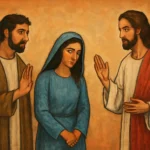
Matthew 19:3-9 (and parallel accounts in Mark 10) recount the Pharisees’ question about divorce and Jesus’ response. He grounds marriage in creation (“they are no longer two, but one flesh”) and states that divorce is permitted only because of “hardness of heart,” specifically in cases of sexual immorality. This passage is often treated as the New Testament’s primary framework for biblical grounds for divorce.
Mark 10:2-12 presents a parallel account with a similar emphasis: the original design for married life is a lifelong, exclusive bond, with divorce permitted in the context of sexual immorality.
Luke 16:18 (the concise Luke version) echoes the prohibition more succinctly, reinforcing the moral weight of the divorce/remarriage issue in Jesus’ teaching.
Beyond the Gospels, Paul’s letters add a dimension focused on Christian communities living in diverse circumstances:
1 Corinthians 7:10-16 addresses marriage involving believers and unbelievers, offering guidance about separation and reconciliation, and making an important distinction: if a unbelieving partner leaves, the believing spouse is not bound in such cases. This passage is frequently cited in discussions of divorce and desertion within mixed-faith marriages.
1 Corinthians 7:15 introduces another significant nuance: if the unbelieving partner departs, the remaining believer is “not under bondage in such cases,” emphasizing the principle that God desires peace and safety in relationships, even if divorce occurs due to one partner’s abandonment.
Together, these New Testament passages underscore a high view of marriage and a strong discouragement of divorce, while acknowledging real-life situations in which separation becomes a painful necessity, especially when trust and safety are compromised.
Porneia and the divorce-for-infidelity question
A central interpretive issue in the biblical discussion is the meaning of the Greek term porneia (often translated as “sexual immorality”). In many translations it serves as the basis for exception clauses allowing divorce and remarriage. Debates center on whether porneia refers strictly to marital unfaithfulness, to other forms of sexual immorality, or to broader contexts. The different theological traditions interpret this nuance in varied ways, shaping respective conclusions about when divorce is permissible or even commanded.
Does God permit divorce? Exceptions and the hardness of heart
The question “Does God permit divorce?” cannot be answered with a single word. Across biblical texts, the posture toward divorce is both stringent and compassionate, often summarized as: God honors the covenant of marriage, yet God also confronts hard-heartedness and harm. A helpful way to frame the discussion is to distinguish biblical exceptions from a general prohibition, while recognizing that pastoral circumstances often require careful discernment.
The exception clauses in Jesus’ teaching
Adultery or sexual immorality as a potential ground for divorce in Jesus’ teaching (Matthew 5:32; 19:9). This is commonly treated as the primary “exception” clause in many Christian traditions.
Some traditions also consider desertion by an unbelieving spouse (as discussed in 1 Corinthians 7:15) a distinctive case in which separation may be permissible while hoping for reconciliation.
Hardness of heart and pastoral reality
In Matthew 19:8, Jesus says that Moses allowed divorce because of the hardness of people’s hearts, not because it was God’s ideal. This indicates:
The biblical ideal is lifelong, faithful union.
Disciplines of forgiveness, reconciliation, and restoration should be pursued wherever possible.
Nevertheless, the Bible acknowledges that some marriages may experience ongoing harm, abuse, or deep irreconcilable conflict. In these cases, many churches encourage safety, accountability, and, when necessary, separation for protection, while offering ongoing pastoral care and aiming toward eventual healing if feasible.
Divorce, remarriage, and covenant renewal: how different traditions respond
Across Christian traditions, there is a spectrum of positions on remarriage after divorce and what constitutes a legitimate biblical cause. Here is a landscape of common perspectives to understand remarriage after divorce in light of Scripture:
Conservative or traditional evangelical view: Divorce is generally discouraged, with remarriage permitted only in narrow circumstances—typically adultery by the spouse or abandonment by an unbeliever (depending on the denomination). Within this view, remarriage after divorce may be considered permissible but not ideal, especially for Christians seeking to honor the original covenant.
Moderate or balanced evangelical view: Recognizes the seriousness of divorce but allows for remarriage in cases of sexual immorality or abandonment, while encouraging ongoing forgiveness, reconciliation, and supportive communities for healing.
Grace-centered or some Protestant approaches: Emphasize the grace of God, the possibility of fresh starts, and the importance of pastoral care. In practice, churches may bless or recognize remarriage for those who have experienced divorce under difficult circumstances, while teaching responsibility and accountability before God.
Roman Catholic perspective (noting pastoral distinctions): The Catholic Church views marriage as a sacramental, lifelong covenant, with divorce not recognized a valid dissolution. Remarriage in the Church is typically not permitted unless an annulment is granted, validating that a valid marriage never existed. This approach is theologically distinct from many Protestant frameworks.
When discussing divorce and remarriage from a Christian theological standpoint, many scholars emphasize the biblical goal of healing groaning relationships, the dignity of the person, and the need for communities to accompany those in broken marriages with mercy, accountability, and truth.
Pastoral guidance: what to do when facing divorce or marital crisis
For people who ask, “What should I do if I’m considering divorce?” or who are already navigating separation, here are practical steps grounded in biblical guidance and compassionate care. The aim is to help individuals and couples seek faithfulness to God while protecting safety, dignity, and hope.
Seek wise counsel from a pastor, trusted spiritual mentor, or Christian counselor who understands Scripture and can offer practical, nonjudgmental guidance.
Prioritize safety in situations of abuse or serious danger. The Bible condemns harm and calls for protection of the vulnerable (including women, children, and all who are endangered).
Pray and seek discernment together with your spouse if possible, inviting God to illuminate truth, forgiveness, and pathways toward healing where feasible.
StudyScripture in community: engage with passages about forgiveness, covenant, and marriage to gain clarity about God’s will for your life.
Consider reconciliation where possible, but acknowledge that reconciliation may not always be safe or healthy. In some cases, separation or a structured plan for safety and accountability is the prudent choice.
Engage the church community in a way that fosters support, accountability, and resources for healing, while respecting the emotional and spiritual rhythms of those involved.
Plan for the future: whether you remain married or pursue divorce, seek outcomes that honor God, protect your dignity, and cultivate hopeful futures for yourselves and any children involved.
Pastoral care emphasizes listening, humility, and discernment. It is not simply about applying a rule but about guiding people toward God’s peace in the midst of real-life complexities.
In conversations about divorce and God’s will, several misconceptions frequently surface. Clearing these up can help churches and families engage more faithfully with the topic:
Divorce is the unforgivable sin. Not true. Scripture teaches forgiveness is available through repentance and faith in Christ. While divorce wounds, it does not disqualify from God’s grace, and healing is possible.
All divorces are equal in weight. The Bible distinguishes between different circumstances. Some cases involve harm or abandonment, while others involve betrayal. The moral reproof is heavier in cases of cruelty, deception, or exploitation, but all marital breakdowns require careful, compassionate handling in community life.
Remarriage is always wrong after divorce. This is not universally true across traditions. While some traditions caution against remarriage, others recognize legitimate grounds for remarriage given certain biblical criteria and pastoral situations.
God hates the person who wants a divorce. The biblical statements about divorce focus on the covenant’s fragility, not on the value or dignity of the people involved. God desires restoration and healing for those who have been harmed as well as for those who have harmed others.
One of the challenges in discussing divorce under God’s law is that the Bible rarely offers a one-size-fits-all formula. The complex interplay between divine command, human fallibility, cultural context, and pastoral situations means that communities often rely on a combination of:
Pastoral wisdom (counseling, safety planning, community support)
Ecclesial discernment (the church’s roles as teachers, caretakers, and accountability partners)
Legal and social considerations (protection, civil law, rights, and child welfare)
In practice, the question often shifts from “Is divorce allowed?” to “What is the most faithful step given this couple’s unique situation?” The answer tends to emphasize love, justice, mercy, and truth, rather than merely a legalistic ruling.
Ultimately, the question “Does God allow divorce?” can be reframed in a way that centers on faithfulness to God and care for people. The biblical record presents a high view of marriage as a sacred, lifelong covenant, coupled with a compassionate recognition of human brokenness. The biblical guidance on divorce invites believers to pursue reconciliation when possible, to protect the vulnerable when reconciliation is unsafe or impractical, and to navigate remarriage with discernment and accountability within a faith-filled community.
In sum, divorce is neither celebrated nor condemned arbitrarily in Scripture, but situated within a broader narrative about covenant, dignity, and the healing work of God. For many believers, the path forward involves:
Embracing the gravity of marital commitment
Seeking healing and reconciliation where feasible
Protecting the vulnerable and ensuring safety
Practicing grace and truth in leadership, counseling, and community life
As you explore biblical guidance on divorce, you’ll encounter a spectrum of voices within faithful Christian communities. While the language of Scripture emphasizes fidelity and covenant, the pastoral concern is practical: to walk with people toward God’s peace, to honor the image of God in every person, and to build communities that reflect mercy, resilience, and hope even in brokenness.