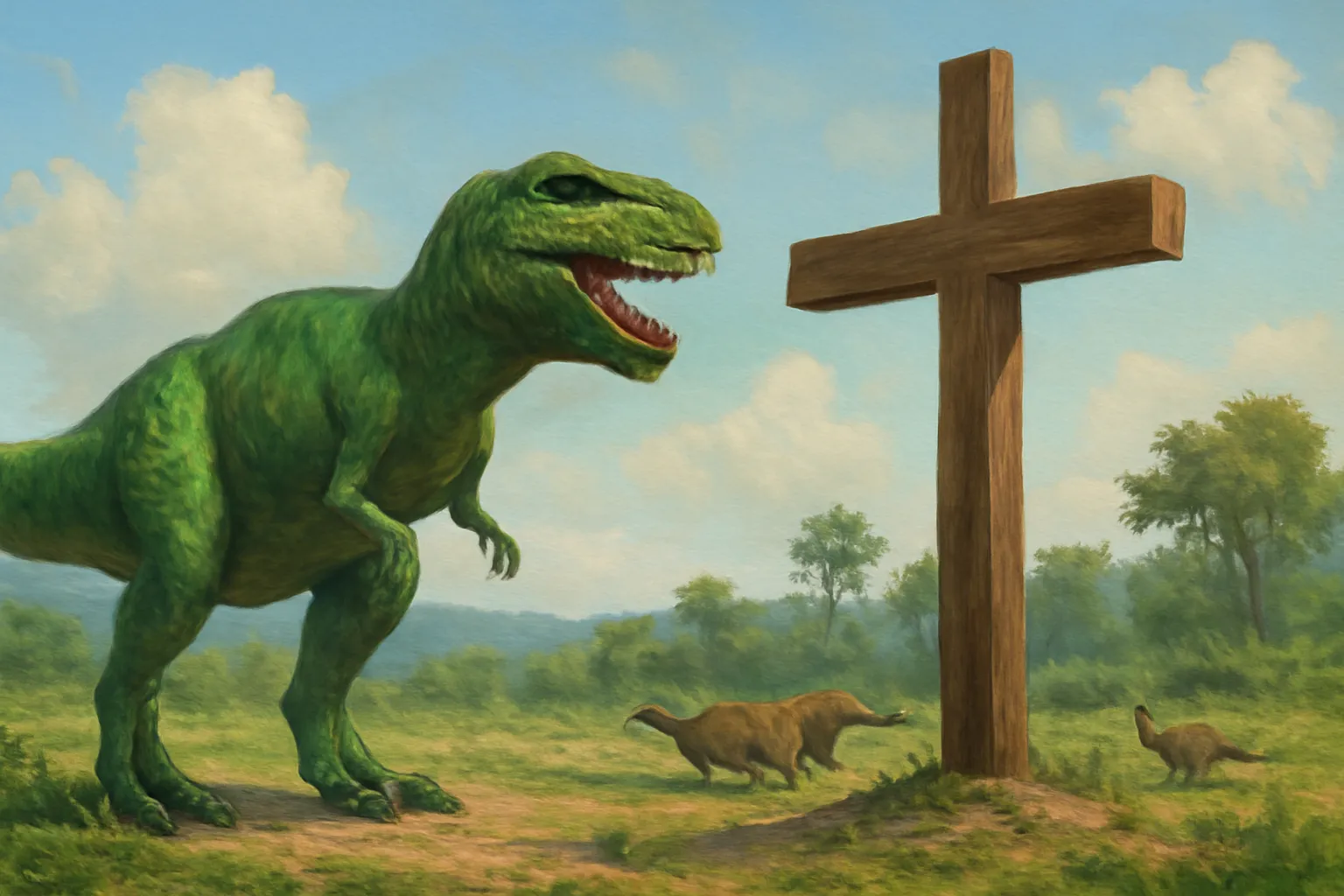
Across the centuries, dinosaurs have captivated the imagination as symbols of ancient mystery and awe, while Christian faith has sought to understand humanity’s place in creation. When these two domains come into contact—science and faith—the result is often a dynamic conversation rather than a clash. This article explores how dinosaurs, the fossil record, and the vast expanse of geological time interact with diverse Christian perspectives, from literal creation traditions to theistic and non-literal readings of Scripture. The aim is not to prescribe a single answer, but to illuminate how faith communities worldwide engage with paleontology, evolutionary science, and the larger questions about meaning, origin, and purpose.
The Fossil Record and Faith: How Science Informs Faith
Before examining Christian interpretations, it helps to anchor our understanding in what the fossil record reveals. Dinosaurs were a dominant group of vertebrates that lived during the Mesozoic Era, spanning roughly 186 million years, from about 230 million years ago to 66 million years ago. The record shows three major periods: the Triassic, Jurassic, and Cretaceous, each marked by distinct ecosystems, climates, and life forms. This scientific chronology stands in conversation with literary and theological readings of the biblical text, which were formed long before fossil discovery transformed our sense of deep time.
In many Christian communities, the natural sciences are treated as a way to read a creation that is fundamentally intelligible and good. The following points summarize how science contributes to the understanding of dinosaurs within a broad Christian frame:
Time scales described by paleontology reveal a cosmos far older than a few thousand years, prompting thoughtful theologians to consider how divine sovereignty unfolds across long eras.
Biological continuity—the unity of life—invites reflections on the image of God and humanity’s kinship with other creatures, including dinosaurs.
Evolutionary processes (variation, natural selection, adaptation) are interpreted in varied ways within Christian thought, leading to the question of how God works—whether through direct creation or through ordained natural processes.
Extinctions provoke reflection on suffering, stewardship, and the fragility of life, as well as the hope of renewal in belief traditions that emphasize restoration and purpose.
For believers, the task is not to pit science against faith but to integrate credible knowledge about the natural world with the experience of God as Creator. This integration is often articulated through diverse interpretive frameworks, which we will explore in the sections that follow.
Christian Perspectives on Dinosaurs: A Spectrum
Youthful Creationism and Dinosaurs
In youthful creationist frameworks, many adherents insist that the Genesis creation account is a literal, historical narrative describing a recent creation—a few thousand years ago. Within this view, dinosaurs were created during the same six-day creation period as other life and would have coexisted with humans either in the same era or in a pre-Flood world, depending on the specific denomination or school of thought. Common features of this approach include:
Liturgical chronology that places creation within a recent historical window, typically around 6,000 to 10,000 years.
Interpretations of dinosaurs as part of a holistic creation, with some proponents suggesting that their large sizes reflect a prelapsarian world or other theological explanations rather than an ancient schedule of geologic phases.
An emphasis on the biblical authority of Scripture as the primary lens through which origins are understood, sometimes accompanied by cautious engagement with scientific data that does not threaten doctrinal commitments.
Critics of this approach often raise questions about the compatibility of a young Earth with the robust evidence for deep time and for a large and diverse Mesozoic ecosystem. Proponents, however, argue that apparent age in the natural world can be understood as part of a created order that serves divine purposes, and that the scientific method should be used to describe natural history without displacing the theological message of creation, fall, and redemption.
Old-Earth Creationism and Dinosaurs
Old-earth creationism accepts an ancient Earth and the long timeline revealed by geology and paleontology while maintaining a belief in God as the ultimate agency in creation. Within this view, dinosaurs are part of Earth’s long history, and ancient life forms are not read as mere metaphor but as genuine chapters in creation. Key characteristics include:
Respect for the geological time scale and a distinction between methods of interpretation for Scripture (theology) and methodological naturalism (science).
Reframing of Genesis to accommodate historical layers, while maintaining integrity to biblical theology about creation, the image of God, and human vocation.
Support for scientific inquiry as a way of marveling at God’s workmanship, often together with a conviction that scientific knowledge deepens reverence rather than undermines faith.
Advocates of this approach frequently engage with models such as the day-age interpretation or framework interpretation of Genesis, which read the creation account as conveying theological truths about order and purpose rather than a strict, chronological history. This path seeks harmony between biblical authority and empirical discovery, including the discovery of dinosaur fossils and the understanding of their extinction in an ancient world.
Theistic Evolution and Dinosaurs
Among many contemporary Christians, the theistic evolution perspective sees God as actively guiding the process of natural history, through which life—including dinosaur lineages—emerges, diversifies, and adapts. In this view, the scientific account of evolution is compatible with Christian faith and even enriching for belief. Central features include:
The conviction that evolutionary biology and the existence of dinosaurs do not threaten biblical truth but illuminate the grandeur of creation.
Interpretive flexibility about Genesis as a theological narrative that conveys truths about God, creation, and humanity, while not denying methodological naturalism in science.
Recognition that God’s creativity and ongoing providence can be understood through natural processes observed in paleontology, geology, and related sciences.
Proponents of theistic evolution often point to scientists who themselves are people of faith and who have argued that science and faith can cohabit meaningfully. They emphasize that the existence of dinosaur life and their eventual extinction reflect themes of change, adaptation, and the dynamic order of the cosmos, all under the sovereignty of a purposeful Creator.
Non-literal Readings: Framework, Day-Age, and Symbolic Interpretations
Some Christians favor non-literal or semi-literal readings of Genesis that permit a long history of life on Earth while preserving essential theological commitments. These approaches include the Day-Age view, which equates “days” with longer periods of time, and the Framework interpretation, which presents creation as a literary arrangement designed to teach about God’s order and care rather than a chronological timetable. Features of this strand include:
Emphasis on Genesis’ literary genre as ancient Near Eastern poetry and prose, not a modern science textbook.
Assert that God’s truth can be communicated through theological messages about creation, Sabbath, and human stewardship, without requiring a literal, 24-hour chronology for each day.
Open engagement with fossil discoveries and paleontological models as part of the broader story of life’s history, without feeling compelled to fit every datum into a single interpretation of Scripture.
These interpretive approaches often appeal to Christians who want to preserve a high view of Scripture while acknowledging robust scientific findings about dinosaurs and geologic time. They also encourage dialogue between theologians and scientists, recognizing that human beings may approach truth from multiple, complementary angles.
When Christians engage with the science of dinosaurs, several enduring questions tend to surface. Below are some themes that frequently arise in Christian dialogue about paleontology and the faith-science interface:
Origin and purpose: How does the existence of ancient life forms like dinosaurs illuminate or complicate the divine purposes in creation?
Time and interpretation: How should believers interpret Genesis and other biblical texts in light of deep time and the fossil record?
Human uniqueness: If dinosaurs predate humans by millions of years, what does that imply about human dignity, the image of God, and the fall?
Science as witness: Can the scientific study of dinosaurs be a form of awe-filled worship, recognizing creation’s complexity as evidence of a Creator?
Ethics and stewardship: How should knowledge about ancient life influence Christian ethics of care for biodiversity, creation care, and environmental responsibility?
Each of these questions invites careful analysis, respectful disagreement, and, crucially, ongoing learning. A healthy faith community often models curiosity, humility, and a shared commitment to truth—whether the inquiry begins from a biblical passage or a fossilized bone.
Dinosaurs in Christian Thought and Education
Across churches, schools, and museums, the encounter with dinosaurs shapes both education and spiritual formation. Communities approach this topic in varied ways, but common objectives include fostering scientific literacy, nurturing wonder about creation, and cultivating a robust theological imagination. Here are several practical considerations in integrating dinosaurs in Christian education:
Curriculum design that presents multiple interpretive options, inviting students to explore how faith can accommodate science without compromising core beliefs.
Encounters with paleontologists and scientists, including guest lectures or field trips to museums, as opportunities for students to see how evidence is gathered, tested, and debated.
Encouragement of critical thinking about scientific models while maintaining respect for diverse theological convictions within a congregation or institution.
Dialogue about the responsibilities of science and religion in public life, including discussions around education policies and the interpretation of scientific evidence in classrooms.
In many Christian contexts, the exploration of dinosaurs leads to broader conversations about creation, wonder, and worship. Rather than reducing theology to a set of answers about chronology, communities are encouraged to cultivate a posture of humility before the vastness of the natural world and the mystery of existence. This attitude helps believers see the fossil record not as a challenge to faith but as a prompt to praise the Creator’s ingenuity and sovereignty.
Common Misconceptions and Clarifications
Misconceptions can cloud the discussion at the intersection of dinosaurs and Christianity. Here are several common ones, along with clarifications that aim to keep the conversation constructive and accurate:
Myth: Dinosaurs disprove the Bible. Clarification: For many Christians, the biblical text and scientific discoveries address different kinds of questions. Many interpret Genesis as conveying theological, not scientific, truth, and see the fossil record as compatible with faith under a coherent interpretive framework.
Myth: All Christians reject science. Clarification: A large and varied spectrum of Christian thought affirms mainstream science. Prominent figures in theology and science have argued that belief in God and acceptance of scientific evidence about dinosaurs and deep time can cooperate fruitfully.
Myth: Dinosaur extinction proves a young Earth. Clarification: The most widely supported scientific explanations for dinosaur extinction rely on events millions of years ago, while many Christians acknowledge a long Earth and interpret the biblical text in ways compatible with such science.
Myth: Theistic evolution erases moral responsibility. Clarification: Theistic evolution maintains humans as morally responsible agents with special roles in creation. The technological and scientific capacities of humans emerge within a framework of biblical anthropology and moral law.
Myth: Dinosaurs are irrelevant to faith communities. Clarification: Dinosaurs can be entry points for conversations about God, science, purpose, and care for creation, helping people connect wonder with worship and responsibility.
Addressing these misconceptions with patient explanation and well-supported evidence helps churches and schools create spaces where faith and reason can flourish together. The goal is not to settle every debate but to cultivate a thoughtful, honest, and hopeful approach to the natural world and its origins.
Addressing the Practical Challenges: How to Teach Dinosaurs with Integrity
Teaching about dinosaurs in faith communities involves practical decisions about pedagogy, sources, and humility. The following considerations can guide educators and pastors toward integrity and clarity:
Source diversity: Present a range of Christian perspectives on dinosaurs and origins, including theistic evolution, old-earth creationism, and non-literal readings, while clearly distinguishing scientific conclusions from doctrinal statements.
Evidence-based pedagogy: Emphasize how scientists gather evidence from fossils, dating methods, clustering of fossil species, and climate reconstructions to build models of the past.
Ethical framing: Use dinosaurs as a platform to discuss ethics of care for living beings today, stewardship of creation, and humility before the unknown.
Age-appropriate materials: Tailor content to different audiences—young children, teens, and adults—while preserving accuracy and openness.
Open dialogue: Encourage questions and respectful disagreement, modeling how to examine evidence, differentiate belief from doubt, and seek wisdom collectively.
In practice, this translates into children’s Sunday school units about the age of the Earth that incorporate stories about God’s good creation, followed by middle- and high-school modules that discuss fossil evidence, stratigraphy, and the nature of scientific inference, all within a framework that honors diverse Christian convictions.
The conversation about dinosaurs and Christian faith is less about choosing a single “correct” interpretation than about cultivating a posture of curiosity, humility, and reverence for truth. The encounter between the fossil record and biblical faith invites believers to contemplate questions about time, significance, and the nature of creation itself. Whether one leans toward young-earth creationism, old-earth creationism, theistic evolution, or a non-literal reading of Scripture, the core convictions can converge around a shared sense that the universe is intelligible, worth studying, and deeply meaningful.
Ultimately, the study of dinosaurs can become a conduit for spiritual growth: a reminder of human curiosity, the beauty of natural history, and the enduring conviction that the Creator’s artistry extends across the entire cosmos, from the deepest fossil beds to the loftiest heavens. As Christian communities continue to engage with science, it is possible to honor both the trustworthiness of Scripture and the credibility of paleontological discoveries, recognizing that both domains illuminate truth in their own ways. In this spirit, the exploration of dinosaurs becomes more than a scientific inquiry; it becomes a sacred invitation to wonder, gratitude, and responsible stewardship of the living world we inhabit today.
In the end, dinosaurs Christianity—in its many variations and voices—invites a shared pursuit: to know the Creator through the grandeur of creation, to understand humanity’s place within that creation, and to pursue wisdom that honors both faith and reason. The dialogue between faith and science, when conducted with humility and respect, offers a richer, more nuanced portrait of a universe that is vast, intricate, and profoundly meaningful.