Daniel 8 Explained Verse by Verse: A Verse-by-Verse Guide
Daniel 8 is a compact, highly symbolic chapter that sits between the apocalyptic imagery of chapter 7 and the prophetic emphasis on time and Messiah found in later chapters. It uses animal symbols—the ram with two horns and the goat with a notable horn—to depict the rise and fall of empires and the persecution of the people of God. In this article, we will walk through the chapter verse by verse, unpack the imagery, discuss historical context, and consider how scholars interpret the text from ancient to modern perspectives. This guide aims to be thorough yet accessible, helping readers grasp both the surface drama and the deeper theological lessons.
Overview: What Daniel 8 Seeks to Convey
The vision in Daniel 8 unfolds in the time of the Medo‑Persian empire and then moves into the era of the Greek world after Alexander the Great. A divine messenger (the angel Gabriel) explains the symbols in the latter portion of the chapter, linking the earthly powers to divine purposes and indicating a period when the people of God experience oppression, followed by a period of eventual restoration. Important motifs include the authority and limits of human kingdoms, the vindication of God’s people, and the tension between immediate historical events and broader redemptive history.
Historical and Literary Context
Understanding Daniel 8 benefits from a compact set of contextual anchors:
Historical setting: The vision occurs in the third year of Belshazzar king of Babylon, a time when the Persian empire had already risen to power but still faced rivalries and internal pressures. The imagery centers on two great world powers of the ancient Near East: Media and Persia (the ram) and, subsequently, Greece (the goat) after the conquests of Alexander the Great.
Symbolic framework: Daniel often uses animals and cosmic imagery to convey political and spiritual realities. The ram with two horns represents the dual kingdoms of Medes and Persians; the goat represents the Greek empire, particularly its rapid westward expansion and the later division into four parts.
Key interpretive hinge: The mysterious little horn (a leader who rises among the four Greek kingdoms) is the focal point of persecution against the people and the temple, culminating in events associated with Antiochus Epiphanes in the second century BCE in many traditional interpretations.
Near-term exegesis with longer horizons: While the chapter has clear historical fulfillment in the Greco‑Roman period, many readers also ask about potential broader or future fulfillments. Scholarly positions range from preterist (primarily historical within the ancient world), to historicist (a continuous timeline), to futurist (primarily future), with many readers adopting a fulfilled near-term reading for the first half of the chapter and a more open-ended eschatology for the latter portions.
In these opening verses, Daniel situates the vision in the third year of King Belshazzar, and he sees himself by the river Ulai in the province of Susa. The setting is not incidental; it places the reader within a real historical locale, even as the text moves into symbolic language.
The river Ulai designates a real geographic setting, grounding the vision in a tangible world before unveiling its symbolic content.
Daniel’s report emphasizes the appearance of a vision that he understands requires interpretation, signaling that the events symbolize more than purely natural phenomena.
Interpretive note: The initial emphasis on setting primes the reader to see the events as geopolitical, yet with spiritual supra-structuring. The symbols will map to political powers, but their significance also includes the stability or vulnerability of God’s people during times of upheaval.
Daniel then sees a large ram standing by the river, with two horns, tall and powerful. The ram charges in directions—west, north, and south—without strength opposing it, and it becomes >great< by its own might until it is opposed only by a rare intervention.
The two horns stand for the two kingdoms of the Medes and Persians, which at the time functioned as a unified imperial power yet retained distinct identities.
The ram’s inexorable charge in three directions signals the expansive, aggressive reach of this empire as it dominates the known world.
Symbolic takeaway: The ram represents an empire that appears invincible in its own strength, yet the vision will soon pivot to the Greek world that arises on the other side of this dominance.
Verse 5–8: The Goat, Alexander, and the Four Winds
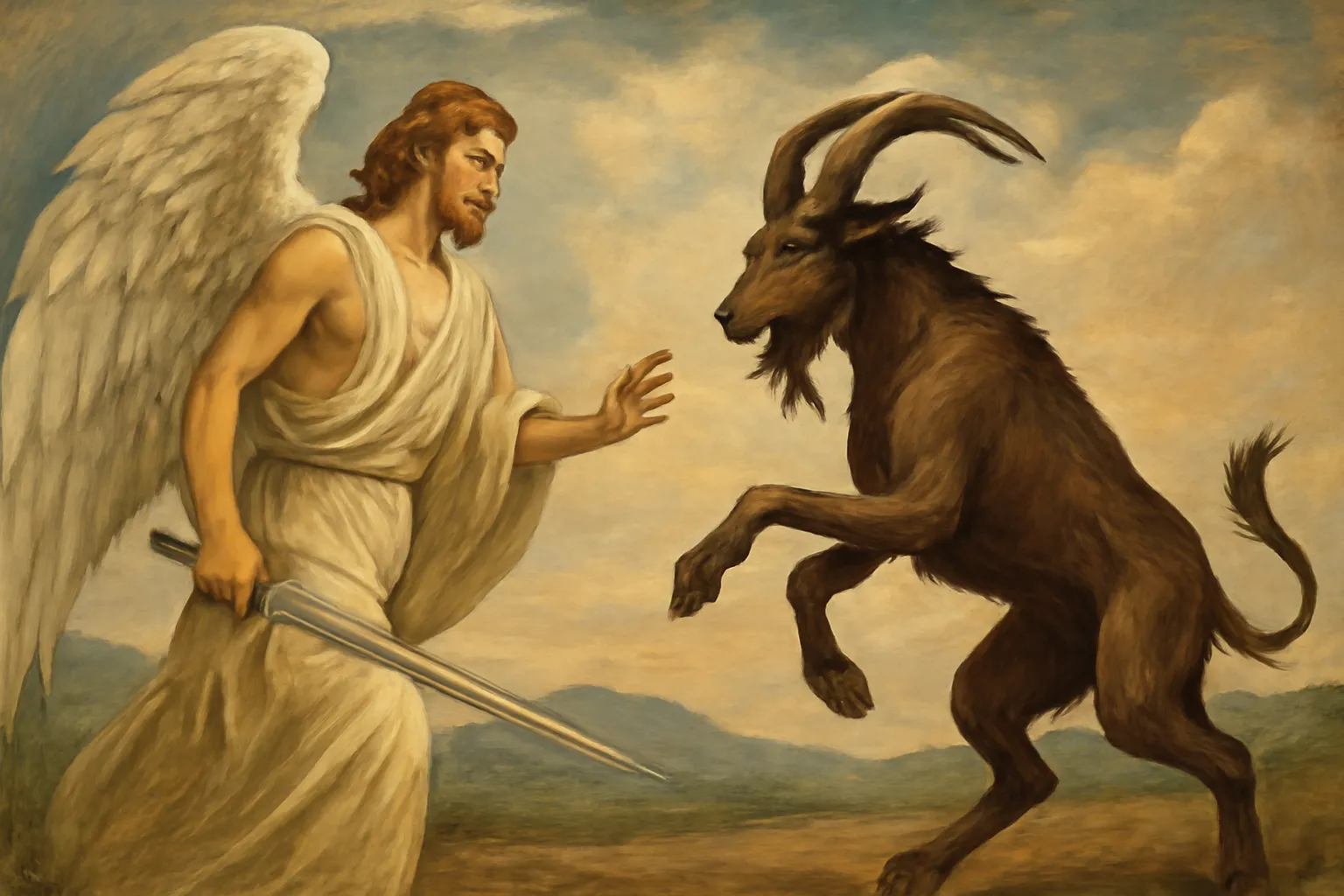
A swift goat appears from the west, moving with exceptional speed toward the ram. The goat has a notable horn that grows mighty, and in its ascent it collides with the ram, shattering it. The goat’s horn then breaks, and four notable horns arise in its place.
The goat stands for the kingdom of Greece, and its rapid westward movement mirrors Alexander the Great’s swift campaigns.
The single great horn symbolizes Alexander himself, whose early conquests create a vast, unified Hellenistic world.
The break of the great horn and the emergence of four horns point to Alexander’s death and the division of his realm among his generals—commonly remembered as the four kingdoms that followed him (the Diadochi).
Interpretive note: The emergence of the four horns lays the groundwork for the later appearance of a distinct power among them—the little horn—which arises from one of these four kingdoms and embodies a renewed threat to the people of God.
Verse 9–12: The Rise of the Little Horn and Its Persecution
From among the four horns arises a little horn that grows aggressively toward the south, toward the east, and toward the glorious land (a term often understood to refer to Israel). This horn grows powerful, and it eventually casts down some of the host and stars, challenges the heavenly realm, and aggressively suppresses the daily sacrifice while desecrating the sanctuary.
The little horn is a figure of intensified persecution and power, often associated in traditional readings with Antiochus IV Epiphanes, whose reign as a Seleucid ruler intensified oppression of the Jews and the temple’s worship.
The phrase host and stars has been interpreted variously as the heavenly host, angelic beings, or leaders among the people—the imagery communicates that spiritual warfare accompanies political action.
The daily sacrifice being taken away and the sanctuary being cast down mark a period of desecration that historically aligns with events in the second century BCE, when the temple’s worship was suppressed and later defiled.
Key connection: The destruction and suppression of the temple’s regular worship become a central test of faith for the people, highlighting the conflict between earthly empires and divine purposes.
Verse 13–14: The Question, the Timeframe, and the Sanctuary’s Restoration
Two voices or questions arise: one who asks how long the vision concerning the daily sacrifices and the transgression of desolation will continue, and another who responds with a precise timeframe: 2,300 days; after that period, the sanctuary will be cleansed.
The question reflects a common biblical theme: believers asking how long a season of oppression will last before divine intervention and restoration occur.
The 2,300 days (often read as evenings and mornings) is a contentious and debated figure among scholars, with traditional interpretations tying it to the length of the desecration and oppression under the Greek rulers, especially Antiochus IV, culminating in a rededication era known in Jewish history as Hanukkah.
The promise that the sanctuary will be cleansed points to eventual restoration—the reestablishment of proper worship and the return to temple service after a period of defilement and suppression.
Important nuance: The precise count and the means of calculation (days versus prophetic days) vary among translations and commentaries. Some scholars see the days as literal 2,300 24-hour days, others view them as prophetic days (evening/morning symbolism) that map to years. The historical read commonly aligns the culmination with the Maccabean rededication (164 BCE), but readers should note the interpretive diversity that exists across traditions.
Verse 15–16: The Messenger Is Called to Explain
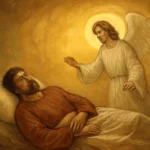
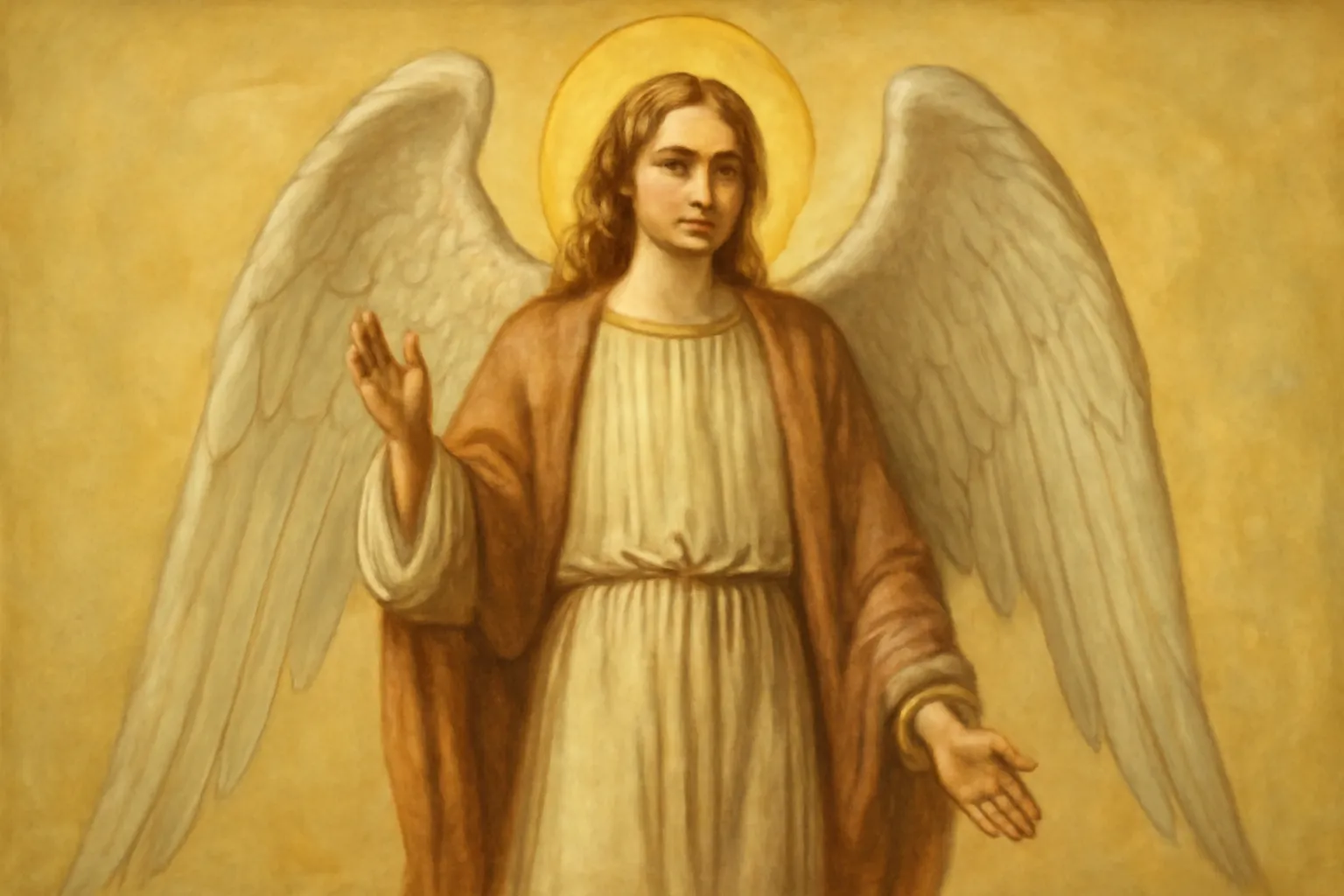
Daniel’s exasperation gives way as a voice from between the banks of Ulai calls to Gabriel, requesting an explanation for the vision. Gabriel, identified as a messenger from God, is summoned to provide the interpretation so that Daniel can understand what he has seen.
The appearance of Gabriel underscores the authoritative, revelatory nature of the message—this is not merely a political chronicle but a divine communication with interpretive meaning.
The prompt to make this man to understand the vision signals that the vision’s purpose is not merely to amaze but to instruct God’s people about the times and their significance.
Verse 17–19: The Time Frame and the End
Daniel is reassured that the vision concerns a specific time frame, often rendered as «the time of the end» in many Bibles. The heavenly messengers caution Daniel that the events will unfold with precision in God’s calendar, even if the exact timing remains a mystery to the human receiver.
The phrase “the time of the end” is debated, with some readers connecting it to a broader eschatological horizon and others seeing it as a reference to the historical termination of this particular oppressive period.
Daniel is urged to keep the vision private until its appointed time, which invites readers to recognize that some prophetic insights require discernment and patience.
Verse 20–22: The Symbolic Keys Revisited
Gabriel provides the interpretive keys: the ram is the Medes and Persians, the goat represents the kingdom of Greece, and the great horn on the goat symbolizes Alexander the Great. The four horns that replace the great horn correspond to the four principal rulers who arise after Alexander’s death.
The identification of the ram with Medes and Persians confirms the historical stage of the vision’s opening.
The identification of the goat with Greece and the four horns with the successor kingdoms clarifies the political transition from the Persian era to the Hellenistic era.
The emergence of a little horn among those four kingdoms frames the later persecution that the text foregrounds for God’s people.
Verse 23–25: The Little Horn’s Deceit, Power, and Demise
The little horn, a figure of deceit and cunning, rises with a fierce countenance and establishes might through manipulation. It persecutes the people and acts against the “holiness” of the sanctuary, yet Gabriel notes a divine capstone: this comeuppance will occur at the appointed time, and the little horn’s activity is allowed only within the constraints of God’s plan.
The horn’s cunning and persecution illustrate the way political power can be used to suppress religious worship and attack those who uphold divine law.
The prophecy emphasizes that the little horn’s activity has a limited window, and ultimate justice rests with God’s sovereignty rather than human plots.
Verse 26–27: The Divine Explanation and Daniel’s Response
The angel delivers a concise explanation of the earlier visions and then notes Daniel’s reaction: the vision deeply troubles him, and he remains perplexed for a time. The divine speech confirms that the events have a clear historical anchor, even as they point toward larger spiritual dynamics.
The line “the vision of the evenings and mornings” and the associated timeframe again keep the interpretive emphasis on the calendrical and symbolic dimensions of the prophecy.
Daniel’s distress signals that prophetic truth, while intended to guide and fortify, can also unveil grim realities about power, persecution, and the costs of fidelity to God.
Beyond the specific historical anchors, Daniel 8 offers enduring themes that resonate for readers across eras.
Sovereignty of God over empires: Even when powerful kingdoms dominate, the text insists that divine purposes prevail in the end.
Persecution and faithfulness: The little horn’s oppression tests the people of God, yet fidelity remains a core virtue in the face of political pressure.
Insight and discernment: The angelic interpreter equips Daniel (and readers) to interpret signs, encouraging careful study and prayerful discernment when reading prophetic texts.
Temple worship as a litmus test: The erosion and subsequent restoration of the daily sacrifice highlight the spiritual stakes of public worship and communal faithfulness.
Historical awareness and eschatological curiosity: The chapter invites readers to connect concrete historical episodes with broader questions about the timeline of God’s redemptive work.
How to Read Daniel 8: A Practical Approach
For readers who want to engage deeply with Daniel 8, a practical approach combines historical cross-checks with careful attention to symbolism.
Cross-reference with history: Compare the narrative elements (ram, goat, little horn, desecration) with reliable historical markers surrounding the Persian and Hellenistic periods.
Note the two layers of meaning: The text often provides a near-term historical fulfillment (Antiochus Epiphanes era) while suggesting larger, ongoing themes about suffering, endurance, and divine justice.
Be mindful of interpretive diversity: Different biblical scholars and traditions see these verses through varying lenses (preterist, historicist, futurist, or symbolic readings). Engage multiple viewpoints to enrich understanding.
Glossary of Key Terms and Symbols
To help keep the imagery clear, here are brief definitions of central terms found in Daniel 8.
Ram: Represents the Medes and Persians.
Two horns: The two kingdoms within the Persian empire (Media and Persia).
Goat: Represents the Greek empire.
Great horn: The reigning ruler, Alexander the Great.
Four horns: The four kingdoms that follow Alexander’s death (the Diadochi successors).
Little horn: A power of significant oppression among the four kingdoms, traditionally linked to Antiochus IV Epiphanes in many readings.
Glorious land: A term often connected to Israel or the land of God’s people.
Daily sacrifice: The regular temple worship, which is threatened during the era of oppression.
Sanctuary: The temple and its holy place, the center of Jewish religious life.
Guided Reflection: Questions for Personal Study
What does the vision reveal about how powerful kingdoms interact with God’s people?
How does the dream-like, symbolic imagery affect your interpretation of political power in history and today?
What is the significance of the angel Gabriel’s explanation in Daniel 8:16–26 for understanding the text’s purpose?
How does the 2,300-day timeframe influence your reading of the chapter’s timeline and its historical anchors?
Daniel 8 as a Bridge Between Power, Persecution, and Providence
Daniel 8 presents a compact but richly layered account of how great empires arise and fall, how persecution testing God’s people may intensify during times of change, and how God’s sovereign plan remains at work through it all. The chapter’s verse-by-verse structure invites careful attention: a wakeful mind that can distinguish historical narrative from symbolic language, while not losing sight of the moral and theological stakes. The accompanying angelic explanation anchors the vision in a recognizably historical moment, yet the broader arc—justice, restoration, and fidelity—speaks to readers in every generation.
If you would like, I can tailor a study guide with discussion prompts for a group, a printable diagram of the vision’s symbols, or a timeline that aligns the events of Daniel 8 with other biblical prophecies for comparative study.