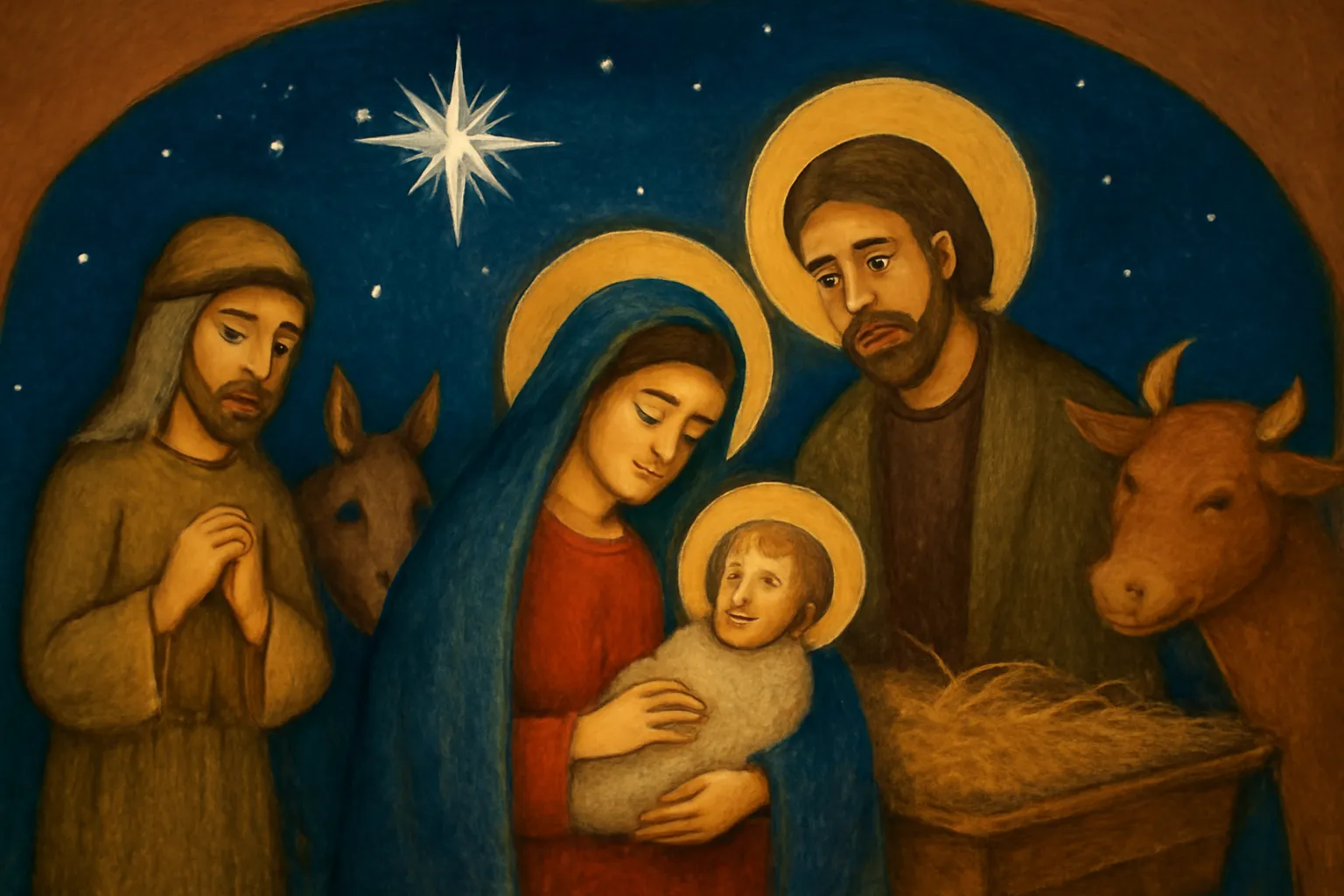
Christmas is a season saturated with imagery of birth, light, and glad tidings. For many readers, the prophecies of Isaiah offer some of the richest foreshadowings of the Nativity found in the Bible. Isaiah contains a constellation of verses that Christians have historically tied to the birth of Jesus, ranging from the sign given to Ahaz about a miraculous birth to the exalted expectations of a future King whose reign embodies justice, peace, and salvation for all nations. This article surveys key Christmas verses from Isaiah, explains their original context, and traces how these prophecies illuminate the Nativity within biblical theology. By looking at these passages side by side, readers can gain a broader, deeper sense of how the Advent story is envisioned in the Old Testament as a divine initiative that reaches the world in the birth of a Child.
The book of Isaiah spans a long and complex history, but several passages repeatedly surface in Christian reading during Advent. Isaiah’s prophecies operate on multiple levels: they speak to immediate historical crises (such as threats from invading powers), they point toward a future messianic figure, and they articulate a vision of God drawing all peoples into a share in his redemptive plan. The Nativity, from a Christian perspective, is the fulfillment of God’s long-suffering promise to be with his people in the most intimate and transformative way possible: God with us, Immanuel. In Isaiah, this idea manifests through a mix of motifs: a virgin birth sign, a child-king who governs with wisdom, a shoot or Branch from Jesse who brings peace, a light that shines in darkness, and a suffering servant whose suffering accomplishes healing. Each of these strands contributes to a robust, multi-faceted understanding of the Nativity and its meaning for individuals and nations alike.
Throughout this article you will see brief quoted phrases, each under a short character count to reflect how readers encounter these themes in different translations while preserving accuracy. When you see a bold phrase, it often signals a cluster of ideas that scholars and readers frequently connect to Christmas meditation: a sign, a name, a title, or a central image that helps articulate the gospel good news found in Isaiah.
Key Christmas Verses in Isaiah
Below are several pivotal passages from Isaiah that Christians commonly associate with Christmas. For each passage, we summarize the context, the main image, and how it informs our understanding of the Nativity today.
Isaiah 7:14 — The Sign: Behold, a Virgin Shall Conceive
Context: In the era of Ahaz, king of Judah, Israel faces a dangerous alliance against Judah. The prophet Isaiah offers a sign from the Lord as a reassuring testament to God’s protection. The verse sits within a tense political moment, yet it delivers a message about divine intervention that transcends immediate circumstance.
Verse and meaning: “Behold, a virgin shall conceive”, and bear a son, and shall call his name Immanuel.
What this contributes to the Christmas conversation is twofold. First, the immediate sign demonstrates God’s direct involvement in human history: a miraculous birth marks the dawn of a new era. Second, the title Immanuel—“God with us”—grounds the nativity narrative in the claim that divinity enters the human story in a personal, intimate way. For readers and worshippers, this verse is not merely about a birth but about the presence of God in a specific moment of history who will guide, rescue, and accompany his people. In Advent devotion, this passage invites believers to reflect on the mystery of God’s initiative in coming near to humanity.
In broader themes, this prophecy anticipates the idea that the Messiah will bear a weighty identity — not as an ordinary king or a distant deity, but as one whose birth signals a renewed relationship between heaven and earth. The image of a child born under divine sign becomes a recurrent anchor for the Christmas imagination: a vulnerable infant who carries the future of the world in the small, ordinary hours of a family life in Bethlehem’s environs.
Isaiah 9:6–7 — The Child-King: Wonderful Counselor, Mighty God, Everlasting Father, Prince of Peace
Context: Isaiah speaks into a cultural climate of fear and political uncertainty. The prophecy shifts from a sign given to Ahaz to a claim about an extraordinary child whose birth inaugurates a new and righteous rule, characterized by justice, mercy, and peace.
Key phrases and titles (briefly quoted): “For unto us a child is born … Wonderful Counselor, Mighty God, Everlasting Father, Prince of Peace”, and the government shall be upon his shoulder. The zeal of the Lord of hosts will do this.
What this adds to Christmas understanding is the royal and divine nature of the Messiah as described in Scripture: a child who governs with wisdom and authority that transcends human power, yet who embodies divine attributes in practical leadership. The titles listed above offer a palette of character traits that Christians link to the Nativity: the child who brings guidance (Wonderful Counselor), mayorship of the divine presence (Mighty God), enduring care (Everlasting Father), and a peace that reshapes the world (Prince of Peace). Many Advent meditations center on how a baby’s first days can reveal a life that embodies these qualities in action—gentle leadership, justice for the vulnerable, and a salvific mission that transforms both personal life and public affairs.
In verse form, this prophecy invites readers to consider the paradox of a King who arrives not with coercion but with grace, a ruler who blesses without fomenting fear. The Christmas message, then, is not only about a miraculous birth but about the nature of the reign inaugurated by that birth: a reign that redefines what power looks like when measured by mercy, truth, and systemic reform. Modern readers may reflect on how to embody these divine attributes in everyday life, particularly in situations of conflict, poverty, or division, seeing Christmas as a call to participate in God’s renewed administration of peace and justice.
Isaiah 11:1–5 — The Branch: A Shoot from Jesse and the Spirit’s Gifts
Context: This prophecy unfolds in the language of trees and growth: a Branch from the stump of Jesse (David’s father) will rise in a time of restoration and hope. It imagines a ruler saturated with the Spirit and marked by righteousness, justice, and mercy.
Key image: The Branch (or shoot) growing from David’s line, symbolizing new life and faithful leadership. The passage goes on to describe the Spirit’s work—wisdom, understanding, counsel, might, knowledge, and fear of the Lord (the sevenfold gifts in some readings)—and a remarkable vision of peace among creation: the wolf with the lamb, the child playing near the adder’s den, and a world freed from danger.
In Advent ecology and ethics, this passage invites readers to imagine a future when leaders govern not through domination but through the Spirit’s empowerment. The branch from Jesse language becomes a bridge for readers to connect Jesus’ lineage with the prophetic expectation of a just, wise, and peace-bringing king. As Christmas meditations, Isaiah 11 calls us to consider the kind of leadership we celebrate and imitate during the season: leadership that protects the vulnerable, upholds truth, and pursues reconciliation across social and national divides.
Isaiah 42:6–7 — The Light to the Nations
Context: This oracle emphasizes the mission of the Servant—that God calls him in righteousness to be a covenant for the people and a light for the nations. It defines a universal scope for the servant’s ministry, extending beyond Israel to all peoples.
Key phrases: I the LORD have called you in righteousness, to be a light to the nations, to open the eyes that are blind, and to bring the prisoner from the dungeon. The image of light breaking through darkness is a powerful motif in Christmas art, carols, and preaching, often invoked to describe how Jesus reveals God’s saving presence in a world shadowed by sin and fear.
Discussing this passage in Christmas contexts helps readers see the Nativity as not merely a private, personal event but an historical revelation with global consequences. If the birth of Christ is the moment when God enters time in the most intimate way, Isaiah 42 positions that moment as the initiation of a mission to illuminate all nations, calling people from many backgrounds into the city of God’s peace. Churches and households often pair this verse with carols about light—O Holy Night, Joy to the World, and related texts—so that Advent helps believers meditate on the breadth of God’s salvation plan.
Isaiah 52:7 — How Beautiful Upon the Mountains: The Messenger of Good News
Context: Isaiah’s further poetic articulation of joyful news. The image of feet that literally bring news on mountaintops has resonances for the Advent season, as people recount the message of Christ’s birth and what it means for hopeful expectation.
Key line: “How beautiful upon the mountains are the feet of him who brings good news” who proclaims peace, who brings glad tidings, who proclaims salvation, and who says to Zion, “Your God reigns.”
This verse’s appeal to sound and movement invites contemplation of how the Christmas message travels—through witnesses who bear testimony, through storytelling, through music, and through acts of mercy. The image of the messenger emphasizes evangelistic joy: the Nativity is not only a miracle but a message that invites reception and response. For modern readers, the verse suggests celebrating Christmas by sharing the good news in words and deeds, modeling peace, and participating in reconciliation and blessing in community life.
Isaiah 53:3–5 — The Suffering Servant: Compassion, Healing, and Redemption
Context: Often read in the crucifixion sequence, Isaiah 53 also illuminates the Christmas season by describing the lover of souls who bears suffering for others. The servant’s humanity and vulnerability underscore the profound depths of God’s love entering the world as a child who will experience pain, rejection, and ultimate rescue for many.
Key lines (paraphrased and condensed for clarity): a figure who is “despised and rejected,” who bears our sorrows and carries our pain, who is pierced for our transgressions and by whose wounds we are healed. This is not a note of despair alone; it is a note of redemptive invitation: God’s love enters the human condition to transform it from within. In Christmas devotion, this serves as a reminder that the Nativity is inseparable from the path of healing God intends to reveal through the life, death, and resurrection of Jesus.
Scholars and theologians often emphasize two connections: first, that the infant in the manger foreshadows a life of sacrificial love; second, that the story of Christmas is intrinsically linked to the broader arc of salvation that Isaiah articulates. Reading Isaiah 53 alongside the birth narratives helps believers hold together joy and sorrow, mercy and judgment, in a way that deepens gratitude for the fullness of God’s work in Christ.
Theological Themes Across Isaiah’s Christmas Verses
As readers survey these passages, several consistent themes emerge. Understanding these can enrich both personal devotion and communal worship during the Christmas season:
Incarnation and Immanuel: The sense that God dwells with humanity is central. The title Immanuel frames the Nativity as a divine decision to enter the human condition personally and intimately.
Divine Wisdom in a Child: The child who is born is not merely a political leader but a source of divine wisdom and guidance for the broken world.
Global Light and Mission: The prophecies consistently extend beyond Israel to the nations, framing the Christmas story as a global turning point in which salvation is offered to all peoples.
Peace and Justice: The images of the prince of peace and the peaceable kingdom invite readers to reflect on the ethical implications of Christmas for justice work, mercy, and reconciliation.
Suffering and Healing: The servant’s wounds and healing remind readers that God’s redemptive plan involves both personal transformation and communal healing, even in the face of suffering.
Studying Isaiah’s Christmas verses in parallel with Gospel accounts highlights continuity in the biblical narrative: the ways in which Jesus’ birth fulfills, reframes, and transcends the expectations of ancient prophecy. The Isaiah passages provide an interpretive lens through which to view Jesus as the Messiah who embodies both divine glory and humble humanity, political authority and spiritual servanthood, national blessing and universal invitation.
Historical Context and Reading Strategies
To interpret Isaiah’s Christmas verses responsibly, it helps to keep several scholarly and devotional considerations in view. Isaiah wrote in a pre-exilic and exilic context with recurring themes of judgment and salvation. The immediate audience faced threat and disappointment, yet these prophecies point toward a future hope that God will not abandon his people. In Advent readings, readers can hold these two tensions together: the ache of current hardship and the assured hope of God’s presence in a coming day when the promises will be fulfilled.
When approaching Isaiah for Christmas meditation, consider these practical reading strategies:
Compare translations: Different Bible translations render words like “virgin,” “Immanuel,” and “branch” with nuance. Reading side by side can illuminate how language carries imagery and significance.
Note the images: Visual motifs—light, shoots, branches, wings, and instruments of peace—help anchor theological reflection and artistic expression (carols, paintings, stained glass, and devotional readings).
Observe the interplay of immediate and future fulfillment: Isaiah often speaks to present circumstances while pointing ahead to a greater, messianic future. Advent readings can honor both layers.
Bridge to the Gospels: Notice how New Testament authors quote or allude to Isaiah to frame Jesus’ life and mission within the larger story of God’s salvation plan.
From Isaiah to the Gospels: How the Nativity Is Framed in the New Testament
Many readers encounter Isaiah’s Christmas verses in light of the Gospel narratives. The author of Matthew, for example, explicitly cites Isaiah 7:14 in the birth story of Jesus: a sign of divine presence breaking into human history. The Gospel writers often present Jesus as the fulfillment of prophetic language, confirming that the Advent event is the culmination of God’s ancient promises. Luke’s Gospel, with its nativity songs and annunciations, echoes the language of light, peace, and glad tidings that Isaiah helps to shape. In church tradition, the connection between Isaiah and the Nativity deepens the sense that Christmas is not merely an isolated event but part of a grander arc toward salvation for all nations and all creation.
For readers today, this linkage invites a more expansive practice of Christmas devotion: to read the infant narrative with Isaiah’s prophetic imagination in view, to listen for echoes of “Immanuel” in worship and song, and to reflect on how the values of the prophecy—justice, mercy, and peace—call for faithful witness in families, churches, and communities during the Advent and Christmas seasons.
Practical Reflections for Modern Readers
Incorporating Isaiah’s Christmas verses into daily life can take several practical forms. Below are some ideas for personal devotion, family tradition, and community worship:
Advent devotions: Create a weekly or daily practice centered on one passage (e.g., Isaiah 7:14, 9:6–7, 11:1–5, 42:6–7). Read, pray, and reflect on how each verse speaks to the moment in which you live and the world you are called to serve.
Carols and readings: Build a liturgy around Isaiah-inspired phrases in Christmas carols and readings. Let the images of light, peace, and salvation guide the borrowing of verses for spoken meditations or reflections.
Family conversations about leadership and peace: Use Isaiah 9:6–7 or 11:1–5 as a springboard to discuss what kind of leadership and parenting, workplace ethics, or community service embodies the Spirit’s gifts described in the prophecies.
Artistic expression: Encourage drawing, painting, or poetry that engages with images from Isaiah—branches, light in darkness, the wolf and the lamb—linking art to faith in the Christmas season.
Mission and outreach: Let Isaiah’s universal scope inspire acts of mercy, hospitality, and justice, reminding communities that Christmas is, at heart, a gift given for the benefit of all nations.
Additional Resources for Deeper Study
For readers who wish to explore Isaiah’s Christmas themes further, the following approaches and resources can be helpful. Consider starting with well-regarded study Bibles that place Isaiah in its historical context and cross-reference with the Gospel accounts. Public-domain translations, such as the King James Version (KJV), may be used for quotation without copyright concerns, but modern readers may also consult scholarly commentaries that address the nuances of prophecy, messianic expectation, and theological interpretation.
Study Bibles and commentaries focused on Isaiah and the prophetic literature.
Devotional guides for Advent that pair Isaiah with Gospel readings.
Historical background resources on the Assyrian and Babylonian contexts that shaped Isaiah’s audience.
Poetry and art collections that explore the imagery of light, branches, and peace in Isaiah.
Conclusion: Isaiah’s Christmas Verses as a Rich Gospel Taproot
In sum, Christmas verses from Isaiah offer a robust and multifaceted account of what the Nativity means. They present a triple surprise: a divine initiative that enters human life in the most intimate form; a Messiah whose identity blends kingship with servanthood; and a salvation that is gracefully comprehensive, reaching the vulnerable and the nations alike. The prophetic words about a virgin birth, a child who is divine in wisdom, a Branch who embodies righteousness, a light penetrating darkness, a messenger who brings good news, and a suffering servant who heals—these images together form a deep reservoir of meaning for Christmas meditation and Christian life throughout the year.
As you engage with Isaiah this Christmas season, may you encounter anew the sense of awe that accompanies the Incarnation: God with us in the fragile, ordinary days of a child’s early years; God at work in creation and history; and God inviting you, your family, and your community to participate in the ongoing fulfillment of these ancient promises. Whether through prayer, study, song, or acts of mercy, let Isaiah’s Christmas verses draw you into a vibrant, hopeful faith that embraces the world with light, love, and peace.